Introduction: The R1T and the Shift to Lifestyle EVs
The automotive landscape is undergoing a seismic shift, and at the forefront of the electric pickup truck revolution is the Rivian R1T. Initially launched as a high-end, low-volume halo product, the R1T has rapidly evolved into a cornerstone of the modern lifestyle EV segment. As we look toward the future of the electric vehicle industry, understanding how the R1T functions not just as a weekend toy, but as a viable daily driver and rugged adventure vehicle, is crucial for prospective buyers. According to comprehensive testing by Car and Driver, the R1T consistently defies the traditional compromises associated with pickup trucks, offering sports-car acceleration, luxury-car refinement, and genuine off-road prowess. But how does this translate to long-term ownership, daily commuting, and the future of electric adventure?
Daily Driver Dynamics: Commuting and Urban Agility
When evaluating an electric truck as a daily driver, the primary concerns typically revolve around range anxiety, charging logistics, and urban maneuverability. The R1T addresses these with a surprisingly compact footprint. Despite its full-size truck classification, its wheelbase and overall length make it remarkably easy to park and navigate through tight city streets compared to the Ford F-150 Lightning or the Chevrolet Silverado EV.
The regenerative braking system is highly customizable, allowing drivers to engage one-pedal driving modes that drastically reduce brake wear and make stop-and-go traffic effortless. Inside the cabin, the minimalist, eco-conscious interior utilizes premium vegan leather and real wood accents, providing a serene environment for the daily commute. Furthermore, Rivian's over-the-air software updates continuously refine the user interface, navigation routing, and battery management systems. This software-defined approach ensures that your daily driver actually improves over time, a key industry trend that separates modern EVs from legacy internal combustion vehicles.
Adventure Capabilities: Beyond the Pavement
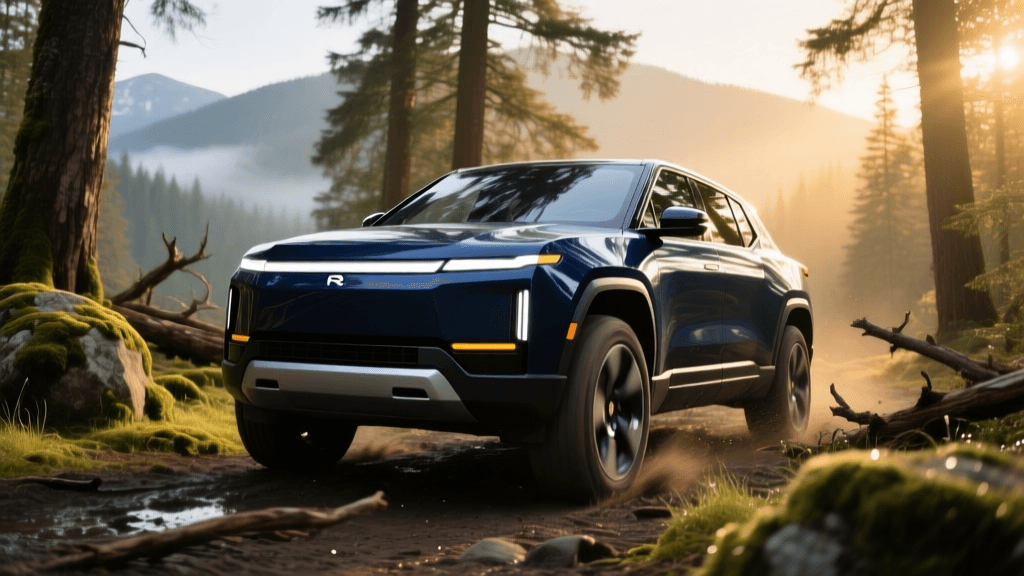
Where the R1T truly separates itself from the pack is in its adventure credentials. The innovative Gear Tunnel, a massive, lockable, climate-controlled pass-through compartment situated between the cabin and the bed, is a game-changer for overlanding and camping. It allows adventurers to store dirty, wet, or bulky gear outside the main cabin without sacrificing bed space.
Off-road, the R1T's independent air suspension offers up to 14.9 inches of ground clearance, rivaling dedicated off-road SUVs. The quad-motor variant provides precise torque vectoring to each wheel, functioning similarly to a locking differential but with instantaneous digital response. For those planning remote expeditions, range planning is critical. While the EPA-estimated range is impressive, real-world off-roading, towing, and cold-weather driving can reduce range by 20% to 40%. The industry is actively addressing this through expanded charging networks, but adventure seekers must still rely on meticulous route planning and portable solar or generator backups for extreme backcountry excursions.
Future Trends: NACS Integration and Software-Defined Hardware
Looking at the industry outlook, the most significant immediate trend for Rivian owners is the transition to the North American Charging Standard (NACS). Rivian has officially committed to equipping future vehicles with native NACS ports and providing adapters for existing R1T owners, granting access to the expansive Supercharger network. This move drastically reduces range anxiety for adventure travelers and solidifies the R1T's viability for cross-country road trips.
Furthermore, the industry is moving toward zonal architecture and centralized computing. Rivian's in-house developed hardware and software stack positions the company to push advanced driver-assistance systems and autonomous features in the coming years. While the current R1T hardware is robust, the anticipated Gen 2 platform promises to reduce manufacturing costs, increase production volume, and introduce next-generation battery chemistries like Lithium Iron Phosphate for standard-range models. For current buyers, this means the existing models will likely hold their value as premium, early-adopter vehicles, supported by a dedicated update pipeline for years to come.
Actionable Guide: Dual-Motor vs. Quad-Motor Configurations
Choosing the right R1T configuration is essential for balancing daily practicality with adventure readiness. Below is a structured comparison to help you decide which powertrain aligns with your lifestyle.
| Feature | Dual-Motor (Standard/Large) | Quad-Motor (Max Pack) | Best Use Case |
|---|---|---|---|
| Estimated Range | 270 - 350+ miles | 320+ miles | Dual for commuting; Quad for remote towing |
| 0-60 mph Acceleration | 4.5 seconds | 3.0 seconds | Dual for daily; Quad for performance enthusiasts |
| Off-Road Capability | Excellent (via software modes) | Unmatched (Torque Vectoring) | Quad for extreme rock crawling and sand |
| Price Point (Approx) | $70,000 - $80,000 | $90,000+ | Dual for value; Quad for no-compromise luxury |
| Weight & Efficiency | Lighter, higher MPGe | Heavier, lower MPGe | Dual for daily efficiency and tire longevity |
For 80% of buyers, the Dual-Motor with the Large battery pack offers the perfect intersection of range, cost, and capability. Reserve the Quad-Motor for those who plan on frequent heavy towing, extreme off-roading, or who simply demand the ultimate performance envelope.
Home Charging Setup for Daily and Adventure Prep
To maximize the R1T's potential, a robust home charging setup is non-negotiable. According to the U.S. Department of Energy, Level 2 home charging is the most cost-effective and convenient way to maintain an EV battery.
Actionable Advice:
- Install a Hardwired 60-Amp Circuit: While a NEMA 14-50 outlet is common, a hardwired setup eliminates the risk of outlet overheating during continuous 40A+ charging sessions.
- Choose a Smart Charger: Opt for the Rivian Wall Charger or a reputable third-party like the ChargePoint Home Flex. These integrate directly with the R1T app, allowing you to schedule charging during off-peak utility hours.
- Utilize Preconditioning: Always set a departure time in the Rivian app. This preconditions the battery and cabin using grid power, ensuring you leave home with a full state of charge and optimal battery temperature for regenerative braking.
- Adventure Prep: Before a long trail run, use the app to check tire pressures and ensure the air suspension is set to Standard or Sport for highway efficiency, switching to Off-Road only when you hit the dirt.
Final Verdict: Is the R1T Future-Proof?
The Rivian R1T is more than just a capable electric pickup; it is a harbinger of where the broader automotive industry is heading. It proves that sustainability and rugged utility are not mutually exclusive. As the charging infrastructure expands via NACS and Rivian's software ecosystem matures, the R1T's value proposition as a daily driver and adventure companion will only strengthen. While legacy automakers scramble to build compelling electric trucks, Rivian's first-mover advantage, combined with its agile, tech-forward approach, ensures the R1T will remain a highly relevant and desirable vehicle well into the next decade. For those willing to embrace the electric frontier, the R1T offers a compelling, future-proof gateway to the next generation of automotive exploration. For more insights on EV environmental impacts and battery longevity, refer to the EPA guide on electric vehicle facts and myths.