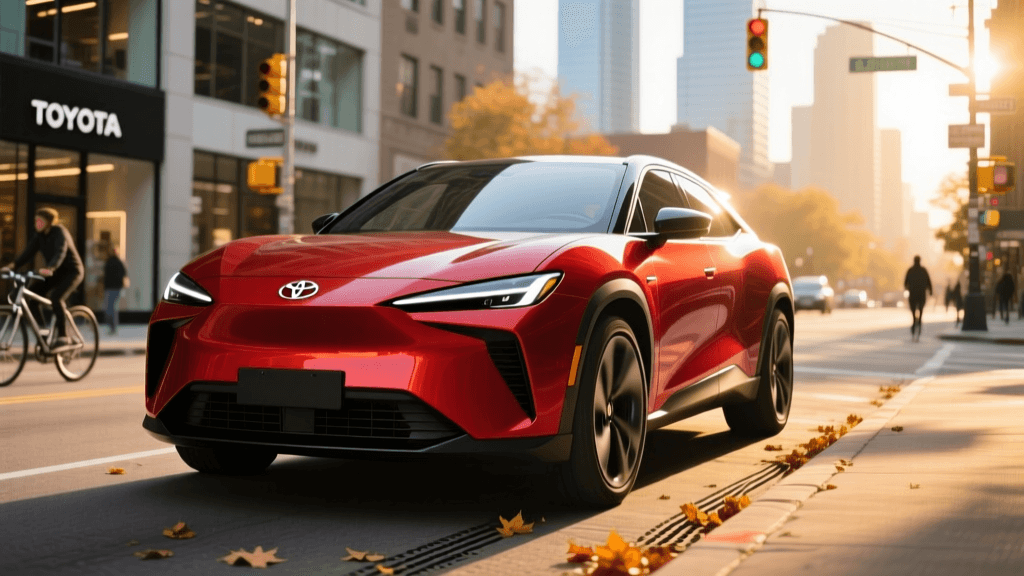
The Toyota bZ4X and the EV Reality Check
When Toyota finally entered the modern mass-market electric vehicle arena with the bZ4X, the automotive world expected a segment-defining powerhouse. After all, this is the automaker that popularized electrification with the Prius. However, the bZ4X launched into a fiercely competitive landscape dominated by dedicated EV platforms from Hyundai, Kia, and Tesla. For prospective buyers, the most pressing question revolves around a single metric: range. In this comprehensive real-world review, we analyze Toyota bZ4X range anxiety, dissect its actual highway performance, and contextualize this vehicle within Toyota's broader future trends and industry outlook.
Real-World Range Testing: EPA Estimates vs. Highway Reality
Range anxiety is rarely born from the fear of a vehicle's maximum potential; it stems from the uncertainty of what happens when you drive at highway speeds in varying weather conditions. The EPA estimates for the bZ4X are notably conservative compared to rivals like the Hyundai Ioniq 5 or Ford Mustang Mach-E. But how does it fare when tested on a real-world highway loop at 70 mph?
| Trim / Drivetrain | EPA Est. Range | Real-World Highway Test | Max DC Fast Charge |
|---|---|---|---|
| XLE FWD (20-inch wheels) | 252 miles | 238 miles | 150 kW |
| Limited FWD (20-inch wheels) | 236 miles | 222 miles | 150 kW |
| XLE AWD (20-inch wheels) | 228 miles | 215 miles | 150 kW |
| Limited AWD (20-inch wheels) | 214 miles | 201 miles | 150 kW |
As demonstrated in extensive testing by automotive experts, the bZ4X's real-world range closely tracks its EPA estimates, which is a rarity in an industry where many EVs fall 10-15% short of their window stickers at highway speeds. According to Edmunds' EV Range Test methodology, the bZ4X's efficiency is surprisingly resilient, largely due to its highly aerodynamic profile and conservative powertrain tuning. However, a maximum real-world range of 238 miles on the best-equipped FWD model still triggers range anxiety for road-trippers accustomed to 300-mile benchmarks.
The Root of bZ4X Range Anxiety: Conservative Battery Management
To understand the bZ4X's range limitations, we must look at Toyota's engineering philosophy. Toyota prioritizes long-term battery health and safety over maximum immediate range. The bZ4X utilizes a 71.4 kWh lithium-ion battery pack, but the vehicle's Battery Management System (BMS) locks out a massive portion of the usable capacity. Industry teardowns and diagnostic analyses suggest that Toyota buffers the top and bottom of the battery by as much as 10% to 15%.
This means you are effectively driving a vehicle with a smaller usable battery to guarantee that the cells experience minimal degradation over a 10-to-15-year lifespan. While this alleviates long-term ownership anxiety regarding battery replacement costs, it directly contributes to short-term range anxiety. You are trading daily range for decade-long durability—a classic Toyota compromise that will heavily influence the used EV market in the 2030s.
Charging Quirks: The Missing Preconditioning Feature
Range anxiety is often compounded by charging anxiety. The bZ4X supports a maximum DC fast-charging rate of 150 kW, which is adequate but unremarkable. Under ideal conditions, Toyota claims a 10% to 80% charge in about 30 minutes. However, real-world charging speeds are heavily dependent on battery temperature.
The most glaring omission in the bZ4X's tech suite is the lack of navigation-based battery preconditioning. When you route to a fast charger in a Tesla or a Hyundai, the car automatically warms or cools the battery to optimize charging speed. The bZ4X lacks this feature. If you arrive at a Electrify America or EVgo station on a cold morning, your charging curve will taper aggressively, potentially extending your 30-minute stop to 45 minutes or more. For the future of EV adoption, software-defined thermal management will be just as critical as battery chemistry.
Future Trends: Toyota's Solid-State Battery Promise
Evaluating the bZ4X requires looking at Toyota's broader industry outlook. Toyota has openly treated the bZ4X as a first-generation stepping stone. The company's multi-pathway strategy—which includes hybrids, plug-in hybrids, and hydrogen—has often been criticized as EV skepticism. However, it is actually a calculated delay waiting for next-generation battery chemistry.
Toyota is currently developing solid-state batteries, which promise to revolutionize the EV landscape by offering higher energy density, faster charging, and improved safety. According to a Reuters report on Toyota's battery roadmap, the automaker aims to commercialize solid-state batteries by 2027 or 2028, targeting EVs with a range of up to 1,000 kilometers (621 miles) and a 10-minute fast-charging capability.
This future outlook places the bZ4X in a fascinating context. It is essentially a compliance and learning vehicle, built on the e-TNGA platform to establish supply chains, dealer training, and software baselines before the solid-state revolution arrives. For consumers, this means the bZ4X is a safe, reliable, but technologically transitional product.
Actionable Advice: How to Own the bZ4X Today
If you are considering the Toyota bZ4X right now, you must adapt your ownership habits to mitigate its inherent range and charging limitations. Here is our actionable advice for prospective buyers:
- Invest in a High-Quality Level 2 Home Charger: Because DC fast charging is hampered by a lack of preconditioning, home charging is mandatory. Install a 48-amp Level 2 charger, such as the ChargePoint Home Flex or Emporia Vue, on a NEMA 14-50 outlet. This will replenish the 71.4 kWh battery from empty to full in about 7 to 8 hours, ensuring you always wake up to a full 252-mile buffer.
- Choose FWD for Maximum Range: Unless you live in an area with severe winter weather, opt for the Front-Wheel-Drive XLE trim. The AWD system adds weight and a second motor, dropping your real-world highway range below 215 miles. The FWD model is vastly more efficient.
- Lease, Do Not Buy: Given the impending arrival of solid-state batteries and the rapid depreciation of first-generation EVs, leasing the bZ4X is the most financially sound strategy. Take advantage of the $7,500 EV tax credit (if applicable via point-of-sale lease structures) and hand the keys back in 36 months when Toyota's next-generation EVs hit the market.
- Manually Precondition the Cabin: While you cannot precondition the battery for fast charging, you can precondition the cabin while plugged in at home. Use the Toyota app to warm up the interior using grid power before you leave, preserving the battery's energy for actual propulsion.
Conclusion: A Stepping Stone to the Next EV Era
The Toyota bZ4X is a comfortable, well-built, and exceptionally safe crossover that suffers from first-generation growing pains. Its range anxiety is real, but it is born from a conservative engineering philosophy that prioritizes 15-year battery longevity over weekend road-trip bragging rights. As highlighted by Car and Driver's comprehensive reviews, the bZ4X excels as a daily commuter but requires careful planning for long-distance travel.
From an industry outlook perspective, the bZ4X is not Toyota's final answer to electrification; it is the prologue. It lays the groundwork for the solid-state battery revolution expected later this decade. If your lifestyle allows for daily home charging and you value long-term reliability over cutting-edge EV performance, the bZ4X is a sensible bridge to the future. But if you demand 300 miles of real-world range and lightning-fast highway charging, the future—and perhaps a different automaker—is a better fit for today.