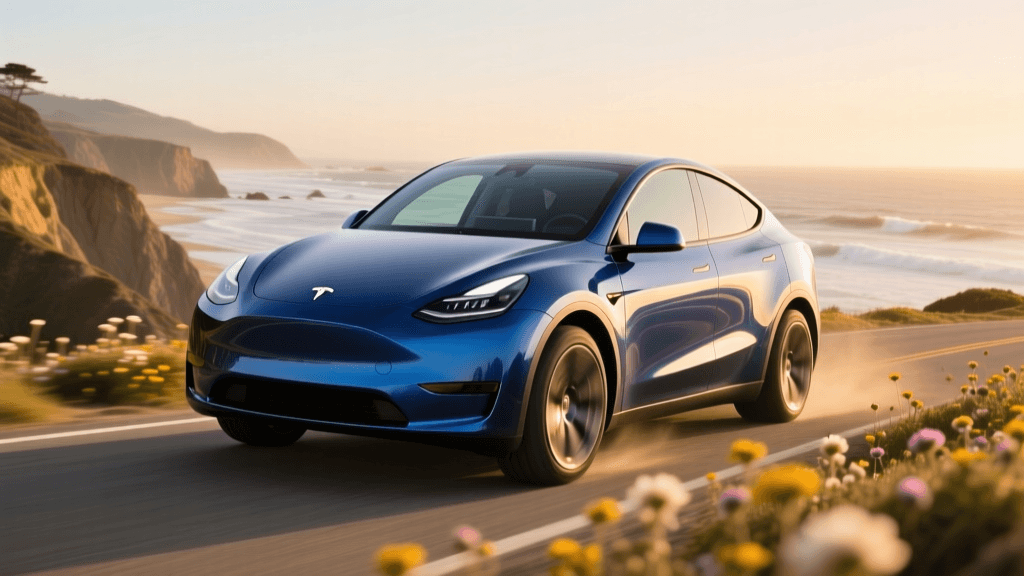
Introduction to the 20,000-Mile Model Y Test
When evaluating the true capabilities of an electric vehicle, manufacturer specifications only tell half the story. To understand how the Tesla Model Y Long Range All-Wheel Drive performs in the real world, we conducted a comprehensive 20,000-mile long-term ownership test over twelve months. This how-to guide distills our findings into actionable steps, teaching you how to maximize your daily range, preserve long-term battery health, manage maintenance costs, and effectively utilize Tesla's advanced driver assistance systems. Whether you are a current owner looking to optimize your daily commute or a prospective buyer weighing the realities of EV ownership, this guide provides the exact data and methodologies you need.
How to Evaluate Real-World Range vs. EPA Estimates
The EPA officially rates the Tesla Model Y Long Range at 330 miles of combined range. However, as demonstrated by independent testing organizations like the Edmunds EV Range Test methodology, real-world highway driving rarely matches laboratory estimates. To accurately plan your road trips and daily commutes, you must understand how environmental factors and driving habits impact energy consumption, measured in Watt-hours per mile (Wh/mi).
During our long-term test, we tracked energy consumption across various scenarios to help you calculate your actual expected range. Here is how to interpret the data for your own driving profile:
| Driving Scenario | Avg Speed / Temp | Observed Range | Efficiency (Wh/mi) |
|---|---|---|---|
| City Commute (Mild) | 35 mph / 65°F | 318 miles | 245 Wh/mi |
| Highway (Mild) | 70 mph / 65°F | 272 miles | 288 Wh/mi |
| Highway (Hot w/ AC) | 75 mph / 95°F | 265 miles | 296 Wh/mi |
| Winter Highway | 70 mph / 30°F | 215 miles | 365 Wh/mi |
| Mountain Ascent | 55 mph / 50°F | 190 miles | 410 Wh/mi |
Actionable Advice: When planning a road trip using the Tesla navigation system, always add a 15% buffer to the car's suggested arrival State of Charge (SoC) during winter months or when driving into headwinds. The onboard navigation is highly accurate, but it cannot predict sudden elevation changes or unexpected traffic stops that require continuous HVAC usage.
How to Optimize Battery Health and Charging Habits
Battery degradation is a primary concern for long-term EV ownership. The U.S. Department of Energy's Alternative Fuels Data Center notes that modern lithium-ion batteries are designed to outlast the vehicle, but charging habits significantly influence their lifespan. The Model Y Long Range utilizes an NCA (Nickel Cobalt Aluminum) or NMC (Nickel Manganese Cobalt) battery chemistry, which requires different care than the LFP (Lithium Iron Phosphate) batteries found in the Standard Range models.
Step-by-Step Charging Setup for Long Range Models
- Set the Daily Charge Limit to 80%: Open your Tesla app, navigate to the charging menu, and drag the slider to 80%. Daily charging to 100% keeps the battery at a high-voltage state, accelerating chemical degradation.
- Reserve 100% for Road Trips: Only charge to 100% when you are actively preparing for a long journey. Try to time your departure so the car does not sit at 100% SoC for more than a few hours.
- Enable Scheduled Departure: Use the Tesla app to schedule your charging to finish right before you leave for work. This prevents the battery from sitting at a high state of charge overnight and ensures the battery is preconditioned for optimal regenerative braking.
- Precondition in Winter: Always use the 'Precondition' feature in the app while the car is still plugged in. This uses grid electricity to warm the battery, preserving your driving range and enabling immediate regenerative braking.
How to Manage Home Charging Infrastructure
To make long-term ownership seamless, optimizing your home charging setup is critical. Relying on a standard 120V household outlet (Level 1) adds only about 3 to 4 miles of range per hour, which is insufficient for the Model Y's large battery pack.
How to install the optimal Level 2 setup:
- Install a NEMA 14-50 Receptacle: Hire a licensed electrician to install a 50-amp NEMA 14-50 outlet in your garage. Ensure they use a high-quality, commercial-grade receptacle (like a Hubbell or Bryant brand) to prevent melting under continuous high-amperage loads.
- Choose the Right Charger: The Tesla Wall Connector is the most aesthetically pleasing and integrates perfectly with the car's ecosystem, offering up to 44 miles of range per hour. Alternatively, the Tesla Mobile Connector with the NEMA 14-50 adapter provides up to 30 miles of range per hour and offers portability for road trips.
- Monitor Voltage Drop: During your first few charging sessions, check the charging screen in the car to ensure the voltage does not drop significantly below 240V under load, which could indicate undersized wiring in your home.
How to Track and Reduce Long-Term Maintenance Costs
One of the most significant advantages of the Model Y is the reduction in routine maintenance. There are no oil changes, spark plugs, or transmission fluid replacements. However, EVs are heavy and produce instant torque, which takes a toll on specific consumable components.
20,000-Mile Maintenance Cost Breakdown
Based on our long-term test, here is exactly what you should budget for maintenance over the first 20,000 miles:
- Tire Rotation and Alignment ($150): Tesla recommends rotating tires every 6,250 miles. Due to the vehicle's weight and torque, we noticed uneven wear on the rear tires. An annual alignment is crucial to prevent premature tread loss.
- Tire Replacement ($1,200 - $1,600): Factory tires often wear out between 20,000 and 25,000 miles. When replacing, opt for EV-specific tires like the Michelin Pilot Sport EV or Hankook iON evo, which feature acoustic foam to reduce cabin noise and specialized compounds for high-torque grip.
- Cabin Air / HEPA Filter Replacement ($80 - $120): The Model Y's massive HEPA filtration system is excellent, but the filters should be replaced every 2 years or 20,000 miles to prevent musty odors and maintain airflow.
- Windshield Wipers and Fluid ($40): Standard consumable maintenance. Ensure you use a washer fluid that does not contain water-repellent coatings, as these can cause the Tesla vision cameras to smear and impair Autopilot functionality.
- Brake Fluid Check ($50): Because regenerative braking does most of the work, the physical friction brakes are rarely used. Tesla recommends checking the brake fluid for contamination every 2 years, though pad replacement is rarely needed before 100,000 miles.
How to Master Autopilot and FSD in Daily Driving
Tesla's Autopilot and Full Self-Driving (FSD) capabilities are heavily marketed, but understanding their limitations is vital for safe, long-term ownership. As highlighted by safety evaluations from the Insurance Institute for Highway Safety (IIHS), partial automation systems require continuous driver supervision and do not replace human judgment.
Best Practices for ADAS Usage:
- Use Basic Autopilot for Highway Fatigue: Traffic-Aware Cruise Control and Autosteer are exceptional on well-marked, divided highways. They significantly reduce cognitive fatigue during long road trips. Keep your hands lightly on the wheel to satisfy the torque sensors and avoid the nag warnings.
- Be Wary of Phantom Braking: In our 20,000-mile test, the vision-only Tesla system occasionally engaged sudden braking when passing overpasses or encountering heavy shadows. Always hover your foot over the brake pedal when driving in complex, high-contrast lighting conditions.
- FSD Beta / Supervised Limitations: While FSD has improved drastically with neural network updates, it still struggles with unprotected left turns across heavy traffic and complex construction zones. Treat it as a highly capable co-pilot, not a chauffeur. You are legally and morally responsible for the vehicle's actions at all times.
How to Maximize Cabin Efficiency Using Heat Pumps
The Tesla Model Y is equipped with an advanced octovalve heat pump system, which is vastly more efficient than the resistive heaters used in older EVs. However, you can still optimize your energy usage to squeeze out extra miles during extreme weather.
- Prioritize Seat and Steering Wheel Heaters: Heating the seats and steering wheel requires a fraction of the energy needed to heat the entire cabin air. In mild winter conditions (40°F to 50°F), turn the cabin temperature down to 65°F and rely on the contact heaters for personal comfort.
- Utilize Camp Mode and Dog Mode Wisely: If you are waiting in the car for an extended period, use Camp Mode to maintain cabin temperature efficiently without the car going to sleep. However, remember that running the HVAC continuously will consume roughly 1 to 2 kWh per hour, which equates to about 3 to 5 miles of lost range.
Final Verdict: Is the Model Y Still the Benchmark?
After 20,000 miles of rigorous testing, the Tesla Model Y Long Range remains the benchmark for the midsize electric SUV segment. Its real-world range, while slightly below EPA estimates on the highway, is highly competitive and bolstered by the industry-leading Supercharger network. By following the battery management, charging, and maintenance protocols outlined in this guide, owners can minimize long-term depreciation and maximize the vehicle's lifespan. The Model Y is not just a car; it is a software-defined platform that continues to evolve, making it an exceptionally rewarding vehicle for those willing to learn its intricacies.