Introduction: The Halo EV with a Premium Price Tag
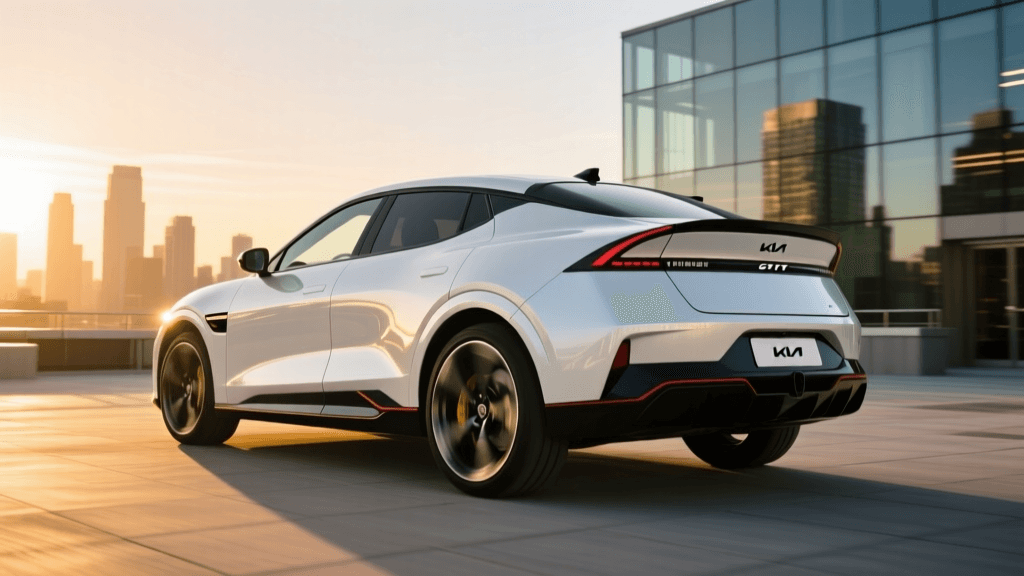
When Kia introduced the EV6, it fundamentally shifted the automotive landscape, proving that mainstream brands could deliver striking design, cutting-edge technology, and impressive electric range. But the automaker didn’t stop at the standard models. Enter the Kia EV6 GT, a 576-horsepower, dual-motor performance beast that serves as the halo car for Kia’s electric lineup. With a starting MSRP hovering around $63,000, the EV6 GT is a significant financial commitment. This raises a critical question for prospective buyers: does the immense performance and exclusive technology justify the steep premium over the standard EV6 Wind or GT-Line trims? In this comprehensive cost and value breakdown, we analyze the real-world performance data, range trade-offs, and long-term ownership costs to determine if the Kia EV6 GT is a genuine performance bargain or an overpriced enthusiast toy.
Performance and Range Data: The Numbers Behind the GT Badge
The primary justification for the EV6 GT’s price premium is its staggering performance. Kia equipped this model with a high-output rear motor that pushes total system output to 576 horsepower and 545 lb-ft of torque. According to testing by Car and Driver, the EV6 GT rockets from 0 to 60 mph in just 3.4 seconds, making it the quickest vehicle Kia has ever produced. But straight-line speed is only part of the story. The GT features an electronic Limited Slip Differential (e-LSD), specially tuned adaptive dampers, and high-performance brakes, transforming it into a genuinely capable corner carver.
The Range and Efficiency Trade-Off
However, extracting supercar-rivaling acceleration from a family crossover comes with a thermodynamic tax. The EV6 GT utilizes the same 77.4 kWh lithium-ion battery pack as the lesser trims, but the aggressive tuning, wider 21-inch summer tires, and increased curb weight severely impact efficiency. The EPA estimates the EV6 GT’s range at just 206 miles. For comparison, the dual-motor EV6 Wind AWD achieves up to 274 miles on a single charge. If your daily commute is lengthy, or if you frequently take road trips through areas with sparse charging infrastructure, this 68-mile deficit is a crucial factor to weigh against the performance benefits.
Competitor Comparison Chart
To understand the EV6 GT’s value proposition, we must look at how its cost and specs stack up against its direct rivals in the performance EV crossover segment.
| Feature | Kia EV6 GT | Tesla Model Y Performance | Ford Mustang Mach-E GT |
|---|---|---|---|
| Starting MSRP | $62,900 | $54,990 | $59,995 |
| Horsepower | 576 hp | 510 hp | 480 hp (w/ Perf Upgrade) |
| 0-60 mph Time | 3.4 seconds | 3.5 seconds | 3.5 seconds |
| EPA Estimated Range | 206 miles | 285 miles | 260 miles |
| Max DC Fast Charging | 350 kW (800V) | 250 kW (400V) | 150 kW (400V) |
| Federal Tax Credit | Ineligible | Eligible (up to $7,500) | Eligible (up to $7,500) |
Cost and Value Breakdown: What Does the Premium Buy You?
Evaluating the EV6 GT requires looking past the sticker price and analyzing the total cost of ownership, incentives, and daily usability. As noted by Edmunds, the EV6 lineup offers excellent warranty coverage and standard features, but the GT trim operates in a different financial reality.
The Tax Credit Dilemma and Purchase Price
The most significant hurdle to the EV6 GT’s value proposition is its ineligibility for the $7,500 federal EV tax credit. Because the EV6 is manufactured in South Korea, it fails to meet the strict North American final assembly requirements of the Inflation Reduction Act. When you compare the EV6 GT’s $62,900 price tag to a Tesla Model Y Performance—which starts lower and often qualifies for the full $7,500 point-of-sale rebate—the effective price gap widens dramatically. To bridge this gap, buyers should aggressively seek out local or state-level incentives, such as California’s CVRP or New York’s Charge NY programs, which may still offer rebates based on income and MSRP caps, though the GT's price often pushes it to the edge of these limits.
Charging Costs and the 800V Architecture Advantage
Where the EV6 GT reclaims some of its financial footing is at the public fast charger. It is one of the few vehicles on the market built on an 800-volt electrical architecture. While the Mach-E GT and Model Y are limited to 150 kW and 250 kW respectively, the EV6 GT can accept up to 350 kW of DC fast charging. Under optimal conditions, it can charge from 10% to 80% in just 18 minutes. For road trippers, this time-saving capability is a massive value-add. Furthermore, at home, charging the 77.4 kWh battery from empty to full using the national average electricity rate of $0.16 per kWh costs roughly $12.38, yielding a remarkably low cost-per-mile for a vehicle with this level of performance.
Depreciation, Insurance, and Maintenance
Performance vehicles traditionally suffer from steeper depreciation curves, and EVs are currently experiencing volatile resale values. According to data from Kelley Blue Book, Kia’s brand-wide depreciation has improved, but the EV6 GT’s niche appeal and high initial cost mean it will likely lose a higher percentage of its value in the first three years compared to a standard EV6 Wind. Additionally, insuring a 576-hp performance crossover will command a premium. Buyers should secure insurance quotes before purchasing, as rates for the GT trim can be 20% to 30% higher than the standard dual-motor trims. On the maintenance side, the EV6 GT requires minimal routine servicing—primarily tire rotations and cabin air filter replacements—though you should budget for expensive tire replacements; the bespoke Michelin Pilot Sport EV 21-inch tires can cost upwards of $400 per corner.
Interior, Tech, and Daily Livability
Value isn't just about numbers on a spreadsheet; it's about the daily experience. The EV6 GT interior features exclusive suede and vegan leather bucket seats with neon green stitching, a GT-specific steering wheel with a dedicated drive mode button, and a 12.3-inch dual-panoramic display setup. The inclusion of Kia’s Vehicle-to-Load (V2L) system is a standout value feature. Using the included adapter, the EV6 GT can output up to 1.9 kW of power, allowing you to run laptops, power tools, or even a coffee maker while camping or working remotely. The ride quality in the default 'Normal' mode is surprisingly compliant, making it a comfortable daily driver, though the aggressive regenerative braking in the GT-specific modes takes some acclimation.
The Verdict: Is the Kia EV6 GT Worth the Investment?
The Kia EV6 GT is an engineering marvel that punches well above its weight class in terms of raw performance and charging technology. If your primary goal is to own a thrilling, head-turning performance EV that can embarrass sports cars at stoplights while still offering crossover practicality, the EV6 GT delivers immense emotional value. The 800V charging architecture alone is a future-proof investment that makes road-tripping vastly superior to its 400V rivals.
However, from a strict financial and practical standpoint, the value proposition is highly nuanced. The loss of 68 miles of range compared to the standard AWD model, combined with the lack of a federal tax credit and higher insurance premiums, makes it a tough pill to swallow for budget-conscious commuters. For the rational buyer, the EV6 GT-Line AWD offers 90% of the aesthetic appeal, vastly superior range, and a much friendlier price tag. But for the driving enthusiast who views their vehicle as a passion purchase rather than a mere appliance, the Kia EV6 GT remains one of the most compelling, high-performance bargains on the EV market today.