The Nostalgia Trap: Separating Hype from Family Reality
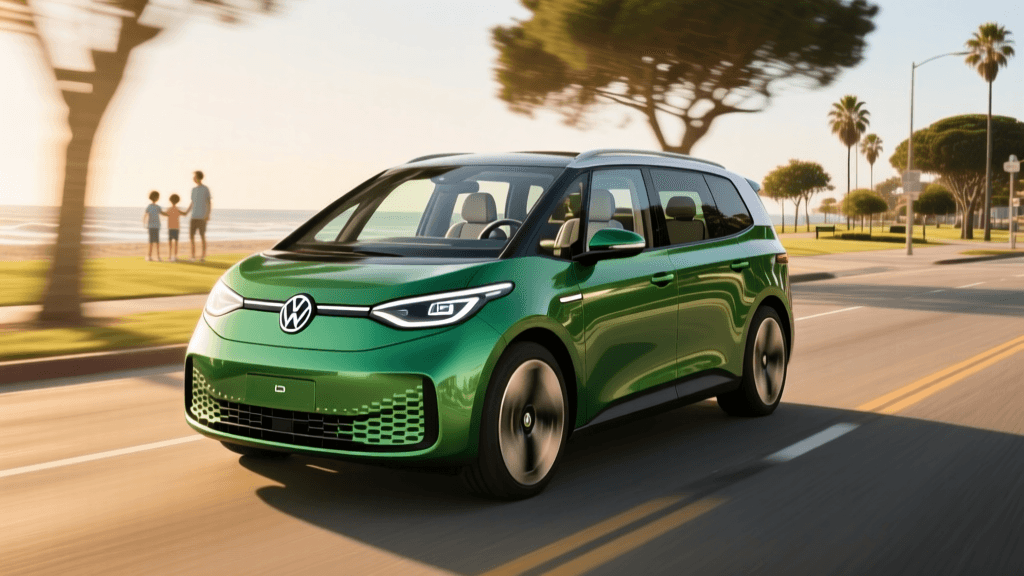
The Volkswagen ID.Buzz has arrived in North America, bringing a massive wave of retro-futuristic nostalgia with it. For families, the promise of a zero-emission, three-row electric van that channels the spirit of the classic 1960s Microbus is incredibly alluring. However, when it comes to spending upwards of $60,000 on a primary family hauler, nostalgia isn't enough to justify the purchase. Prospective buyers are flooded with conflicting information regarding electric vehicle (EV) road trips, battery degradation, and interior practicality. As a senior reviewer for AutoEdgeView, I have spent extensive time analyzing the ID.Buzz's architecture, real-world performance, and daily usability. In this review, we are cutting through the noise, busting the most pervasive myths surrounding the VW ID.Buzz, and highlighting the common mistakes families make when spec-ing and living with this unique electric van.
Myth 1: 234 Miles of Range is Useless for Family Road Trips
The most common criticism levied against the ID.Buzz is its EPA-estimated range. The rear-wheel-drive (RWD) Pro S model is rated at 234 miles, while the all-wheel-drive (AWD) variant dips slightly to 231 miles. Critics argue that once you load up six passengers, cargo, and hit the highway at 75 mph, that range will plummet to under 180 miles, making road trips a nightmare. The Reality: While highway efficiency in a boxy van is undeniably lower than in a sleek sedan, the 'useless' label is a myth born of poor route planning. According to Car and Driver's comprehensive VW ID.Buzz hub, the van's real-world highway testing shows predictable, manageable consumption. More importantly, family road trips inherently require stops every 2 to 3 hours for bathroom breaks, meals, and letting the kids burn off energy. The ID.Buzz is designed around these natural pauses, not non-stop endurance runs.
Myth 2: The Third Row is Only for Toddlers or Punishment
Many three-row SUVs feature a third row that is essentially a penalty box, suitable only for small children or very short trips. Because the ID.Buzz is built on a dedicated EV platform, skeptics assume the battery pack eats into the floor height, forcing third-row passengers into a 'knees-up' seating position. The Reality: The ID.Buzz's boxy, commercial-van-derived roofline is its secret weapon. The headroom is exceptional across all three rows. Furthermore, the second-row bench slides forward and backward on integrated tracks. By simply sliding the second row forward by just two inches, you can provide adequate legroom for average-sized adults in the third row without severely compromising the second-row passengers. It is vastly more accommodating than the third row in popular midsize SUVs like the Toyota Highlander, though it falls just short of the cavernous third row in the larger Kia EV9.
Myth 3: Charging a Massive 91 kWh Battery Takes Forever
The ID.Buzz Pro S houses a large 91 kWh (usable) battery pack. A common misconception is that pushing electrons into such a massive battery will result in hour-long charging stops, ruining the flow of a family vacation. The Reality: Volkswagen has equipped the North American ID.Buzz with robust DC fast-charging capabilities. The RWD model accepts up to 170 kW, while the AWD model can peak at 200 kW. Under optimal conditions at a 350 kW Electrify America or Tesla Supercharger (using an adapter), the ID.Buzz can charge from 10% to 80% in approximately 26 minutes. As noted on the official Volkswagen US ID.Buzz specifications page, the vehicle also features Plug & Charge technology, meaning you simply plug the cable in at compatible networks, and the billing and authentication happen automatically—saving you from fumbling with apps while wrangling children.
Myth 4: A Boxy Retro Van Will Drive Like a Boat
Given its blunt aerodynamic profile and tall stature, many assume the ID.Buzz will suffer from severe body roll, crosswind instability, and a sluggish, boat-like driving experience. The Reality: The ID.Buzz is built on VW's highly regarded MEB (Modular Electric Drive Matrix) platform. The battery pack is mounted low in the chassis, giving the van a surprisingly low center of gravity. The RWD model produces 286 horsepower and offers a tight, car-like turning radius that makes school drop-off lines and grocery store parking lots remarkably stress-free. The AWD model bumps output to 335 horsepower, providing confident merging power and all-weather traction. While it will never corner like a Golf GTI, it drives with a composed, planted demeanor that completely defies its retro-minibus silhouette.
3 Common Mistakes Families Make When Buying the ID.Buzz
Busting myths is only half the battle. To truly enjoy ownership, families must avoid these critical spec-ing and setup mistakes:
Mistake 1: Ignoring the Home Level 2 Charging Setup
The ID.Buzz features an 11 kW onboard AC charger. Many buyers mistakenly plug their van into a standard 120V wall outlet (Level 1), which adds a pathetic 2 to 3 miles of range per hour. To properly utilize the 11 kW onboard charger, you must have a qualified electrician install a dedicated 240V NEMA 14-50 outlet or a hardwired Level 2 EVSE capable of delivering at least 48 amps. Failing to budget $500–$1,200 for this home infrastructure upgrade before the van arrives is a massive error that will lead to immediate range anxiety.
Mistake 2: Overestimating Cargo Space Without Using the Tracks
With all three rows in use, the ID.Buzz offers 10.7 cubic feet of cargo space behind the third row. Some buyers look at this number and assume it's too small for a family weekender. The mistake is leaving the seats in their default, rearmward positions. By utilizing the sliding tracks and moving the second and third rows forward, you can significantly expand the rear cargo well without sacrificing passenger comfort. Additionally, the third-row seats fold flat, and the second-row seats can be removed entirely (though they are heavy) to unlock a massive 142.5 cubic feet of maximum cargo volume.
Mistake 3: Overlooking the NACS Adapter Reality
Currently, the North American ID.Buzz ships with a CCS (Combined Charging System) port. However, the industry is rapidly shifting to the NACS (Tesla) standard. A common mistake is buying the van and immediately driving to a Tesla Supercharger without realizing you need a CCS-to-NACS adapter. Volkswagen has announced plans to provide adapters and eventually transition to native NACS ports in future model years, but early adopters must ensure they procure a high-quality, certified adapter to access the vast Tesla Supercharger network, which remains the most reliable road-trip charging infrastructure available.
Family Hauler Showdown: ID.Buzz vs. The Competition
To put the ID.Buzz into perspective, here is how it stacks up against two other popular family haulers: the all-electric Kia EV9 and the plug-in hybrid Chrysler Pacifica. Data compiled from manufacturer specifications and Electrek's ongoing coverage of the ID.Buzz rollout.
| Vehicle | EPA Range / EV Mode | Cargo (Behind 3rd / 2nd / 1st) | Peak DC Charge Rate | Starting MSRP (Approx.) |
|---|---|---|---|---|
| VW ID.Buzz (Pro S RWD) | 234 miles | 10.7 / 75.5 / 142.5 cu-ft | 170 kW | $59,995 |
| Kia EV9 (Land AWD) | 270 miles | 20.2 / 43.5 / 81.7 cu-ft | 236 kW | $63,900 |
| Chrysler Pacifica PHEV | 32 miles (EV only) | 32.3 / 87.5 / 140.5 cu-ft | N/A (Gas/PHEV) | $51,095 |
As the table illustrates, the ID.Buzz sacrifices a bit of maximum range and peak charging speed compared to the Kia EV9, but it offers vastly superior cargo volume behind the second row and a level of interior modularity and charm that the Kia cannot match. Against the Pacifica PHEV, the ID.Buzz offers zero tailpipe emissions and a smoother, quieter ride, though the Pacifica still wins on total maximum range for cross-country drives where charging infrastructure is sparse.
The Final Verdict for Families
The Volkswagen ID.Buzz is not a compromised science experiment; it is a highly capable, deeply practical, and incredibly joyful family vehicle. By looking past the myths surrounding its range and charging times, and by properly preparing your home charging infrastructure, the ID.Buzz reveals itself as one of the most unique and rewarding EVs on the market. It proves that you do not need to sacrifice personality for practicality, making the daily school run feel just a little bit more like a weekend getaway.