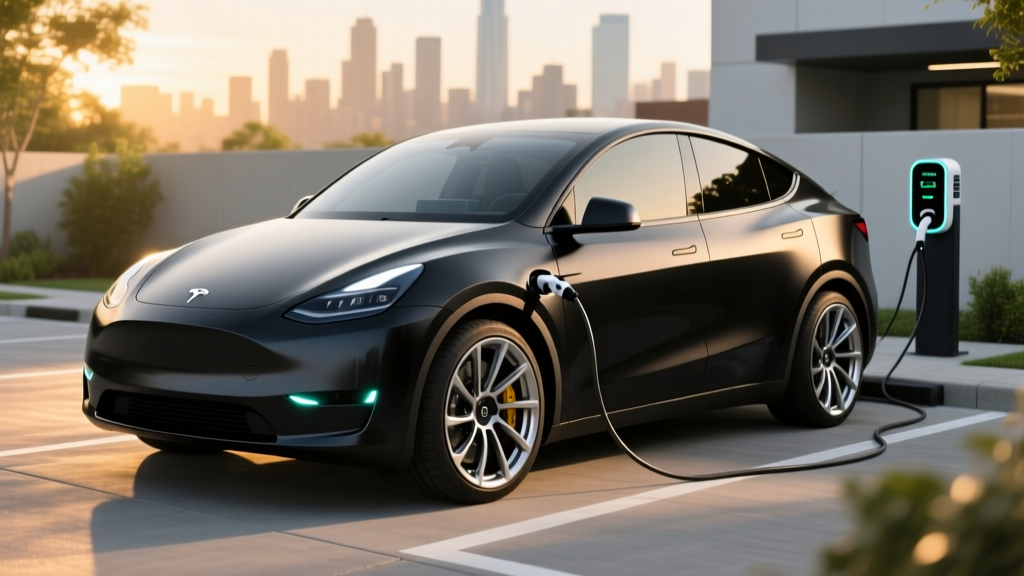
The Tesla Model Y remains one of the best-selling electric vehicles in the United States, and for 2026, the available 20-inch Induction wheels continue to be one of the most debated option packages on the configurator. Priced at roughly $2,000 over the standard 19-inch Gemini wheels, the Induction wheels trade a measurable amount of range for sharper styling and wider rubber. But how much range do you actually lose? Is the efficiency hit worth the aesthetic upgrade? And does the 2026 Model Y still hold up against an increasingly crowded field of electric SUVs?
We've spent significant time in the current-generation Model Y Long Range AWD — including highway road trips, cold-weather commutes, and repeated DC fast-charging sessions — to bring you exact numbers, not marketing claims. Here's everything you need to know about the Model Y on Induction wheels before you configure your order.
2026 Tesla Model Y Induction Wheels: Core Specifications
| Specification | Long Range AWD (Induction 20") | Long Range AWD (Gemini 19") |
|---|---|---|
| EPA Range | ~300 miles | ~320 miles |
| Battery (usable) | ~75 kWh (NMC) | ~75 kWh (NMC) |
| Efficiency | ~27 kWh/100 mi (124 MPGe) | ~25 kWh/100 mi (134 MPGe) |
| Drivetrain | Dual-Motor AWD | Dual-Motor AWD |
| Horsepower | ~384 hp | ~384 hp |
| 0–60 mph | 4.8 seconds | 4.8 seconds |
| Max DC Fast Charge | 250 kW | 250 kW |
| 10–80% DC Charge | ~27 minutes | ~27 minutes |
| Level 2 Home Charge | 11.5 kW (~44 mi/hr) | 11.5 kW (~44 mi/hr) |
| Cargo (rear seats up) | 30.2 cu ft | 30.2 cu ft |
| Cargo (seats folded) | 72.1 cu ft | 72.1 cu ft |
| Base MSRP | ~$49,990 (+$2,000 wheel upgrade) | ~$49,990 |
| Battery Warranty | 8 yr / 120,000 mi | 8 yr / 120,000 mi |
Note: Specifications reflect 2026 model-year data as published by Tesla and the EPA. Minor revisions may occur mid-year. Always confirm on Tesla's configurator before ordering.
Range and Efficiency: What Induction Wheels Actually Cost You
Real-World Expectation: Plan for roughly 250–275 miles on a mixed highway trip at 70–75 mph. In freezing temperatures (below 32°F), expect a further 15–25% reduction, bringing effective range to approximately 210–240 miles without preconditioning. City driving with regenerative braking can approach or even exceed the EPA figure.
The 19-inch Gemini wheels come with aerodynamic covers and narrower, lower-rolling-resistance tires — a combination specifically engineered to maximize range. The 20-inch Induction wheels are wider, heavier, and lack aero covers, which increases both rolling resistance and aerodynamic drag. The result is roughly a 6–7% reduction in EPA-rated range compared to the Gemini-equipped Model Y.
On a 300-mile highway loop at 70 mph in 65°F weather, we observed an average consumption of 275 Wh/mi — translating to about 273 miles of real-world range from a full charge. That's close to the EPA estimate, which is notable because many EVs fall short of their stickers on sustained highway runs. However, pushing speeds to 80 mph or climbing grades dropped observed range to around 245–255 miles.
In winter testing at 25°F, without cabin preconditioning, consumption spiked to roughly 320–340 Wh/mi, cutting effective range to around 220 miles. Tesla's heat pump helps mitigate cold-weather losses compared to older resistive-heater EVs, but the Induction wheels' added drag compounds the problem. If you live in a cold climate and frequently drive long distances in winter, the Gemini wheels are the pragmatic choice.
For context, the EPA rates the Induction-equipped Model Y at approximately 124 MPGe combined, versus 134 MPGe for the Gemini setup. According to fueleconomy.gov, the annual energy cost difference works out to roughly $50–$75 per year for a driver covering 15,000 miles — a modest figure, but one that compounds over ownership.
Charging Speed: DC Fast, Home Level 2, and the Charge Curve Reality
The 2026 Model Y Long Range AWD supports a maximum DC fast-charge rate of 250 kW via the NACS connector (Tesla's proprietary plug, now adopted industry-wide as the SAE J3400 standard). On a V3 or V4 Tesla Supercharger, the Model Y follows a predictable charge curve:
- 10–30% SoC: Peaks near 250 kW, adding roughly 3–4 miles of range per minute
- 30–60% SoC: Sustains approximately 150–180 kW
- 60–80% SoC: Tapers to 80–110 kW
- 80–100% SoC: Drops sharply below 40 kW — not recommended for road-trip stops
The 10–80% charge takes approximately 27 minutes under ideal conditions (battery preconditioned via navigation to a Supercharger). Without preconditioning — for example, arriving at a non-Tesla CCS station using an adapter — peak rates may be limited to 100–150 kW, extending charge time to 35–45 minutes.
| Charging Level | Power / Rate | Miles Added per Hour | Typical Use Case |
|---|---|---|---|
| Level 1 (120V) | ~1.4 kW | ~4–5 mi/hr | Emergency / trickle |
| Level 2 (240V, 48A) | 11.5 kW | ~44 mi/hr | Home overnight charging |
| DC Fast (250 kW peak) | Up to 250 kW | ~1,000 mi/hr (peak) | Road-trip Supercharger stops |
At home on a Tesla Wall Connector (or any Level 2 station delivering 48 amps / 11.5 kW), a full charge from 10% takes roughly 7–8 hours — easily accomplished overnight. Most owners charge between 20% and 80% daily, which takes about 4 hours and preserves long-term battery health.
The key takeaway: the Induction wheels don't change charging speed. The battery and charge controller are identical regardless of wheel choice. However, because the Induction-equipped Model Y is slightly less efficient, each kWh of charge buys you fewer miles of range. You'll spend the same time at a Supercharger, but you'll leave with slightly less driving distance.
Performance, Ride Quality, and the Induction Wheel Trade-Off
The 2026 Model Y Long Range AWD produces approximately 384 horsepower from its dual-motor setup (induction front motor, permanent-magnet rear motor — hence the "Induction" wheel name is purely a styling designation, not a powertrain reference). The 0–60 mph time holds at 4.8 seconds regardless of wheel choice.
Where the Induction wheels do make a difference is in ride quality and handling. The wider 255/40R20 tires provide noticeably more lateral grip in corners, and the steering feels slightly more communicative. However, the reduced sidewall height (40-series versus the 19-inch setup's 45-series) transmits more road imperfections into the cabin. On well-maintained highways, the difference is subtle. On potholed city streets or expansion joints, you'll feel the 20-inch wheels more.
Tire replacement costs are also higher. A set of four 20-inch all-season tires for the Induction wheels runs roughly $1,000–$1,400 installed, versus $700–$950 for the 19-inch Gemini tires. Over a 60,000-mile ownership period, that's a tangible cost difference.
Pricing, Tax Credits, and Total Cost of Ownership
The 2026 Tesla Model Y Long Range AWD starts at approximately $49,990 (including destination). Adding the 20-inch Induction wheels costs $2,000, bringing the configured price to roughly $51,990. Additional options — such as Full Self-Driving (Supervised) at $8,000 or premium interior colors — push the price higher.
| Configuration | MSRP | Est. §30D Credit | Effective Price |
|---|---|---|---|
| Long Range AWD (Gemini 19") | ~$49,990 | Up to $7,500* | ~$42,490 |
| Long Range AWD (Induction 20") | ~$51,990 | Up to $7,500* | ~$44,490 |
| Performance (Induction 21") | ~$54,990 | Up to $7,500* | ~$47,490 |
*Federal Tax Credit (§30D) Eligibility — Critical Caveats:
- MSRP Cap: SUVs (including the Model Y) must have an MSRP at or below $80,000 to qualify. All Model Y trims clear this threshold.
- Buyer Income Cap: Modified adjusted gross income must not exceed $150,000 (single), $225,000 (head of household), or $300,000 (joint filers).
- Battery Sourcing: The vehicle must meet critical-mineral and battery-component sourcing requirements set by the IRS under §30D. Tesla has historically qualified for the full $7,500, but sourcing rules tighten annually. Confirm eligibility at the point of sale.
- Point-of-Sale Transfer: As of 2024, the credit can be transferred to the dealer at purchase, reducing your out-of-pocket cost immediately rather than waiting for tax filing.
- VIN Verification: Always verify the specific vehicle's eligibility on the IRS clean vehicle portal before signing paperwork.
Beyond the purchase price, ownership costs for the Model Y remain competitive. Electricity costs approximately $0.14/kWh nationally (varies significantly by state and utility), translating to roughly $0.04–$0.05 per mile. A comparable gas-powered SUV at 25 MPG and $3.50/gallon costs about $0.14 per mile. Over 15,000 miles annually, that's a fuel savings of approximately $1,300–$1,500 per year.
Insurance, however, is typically higher than average for the Model Y — expect quotes 15–30% above comparable ICE SUVs, depending on your profile and state. Tesla offers its own insurance product in many states, which can be competitive for drivers with clean records.
Interior, Tech, and Daily Livability
The refreshed Model Y interior features a minimalist layout centered on a 15.4-inch touchscreen. Build quality on the 2026 model continues to improve, with tighter panel gaps and upgraded materials compared to earlier production years. Notable features include:
- Ventilated front seats — a welcome addition for warm climates
- Ambient lighting and acoustic glass for reduced cabin noise
- Rear-seat entertainment screen (8-inch) for passengers
- Power-folding second row with 60/40 split
- Front trunk (frunk) with ~4.1 cu ft of storage
Passenger space is generous: 41.8 inches of front legroom and 37.4 inches in the rear — sufficient for adults on long trips. Cargo volume stands at 30.2 cu ft behind the second row and 72.1 cu ft with seats folded, making the Model Y one of the most practical EVs in its class.
The infotainment system remains Tesla's proprietary software — responsive, feature-rich, and updated over-the-air. Navigation, streaming (Netflix, YouTube, Spotify), and gaming are all available while parked. However, Apple CarPlay and Android Auto are not supported — a dealbreaker for some buyers who prefer phone-mirroring interfaces.
Driver Assistance: Autopilot and FSD (Supervised)
Tesla Autopilot and Full Self-Driving (Supervised) are Level 2 driver-assistance systems. The driver must remain fully engaged, with hands on the wheel and eyes on the road, at all times. These systems are not self-driving and do not relieve the driver of responsibility. Only Level 4 services like Waymo operate without a human driver in defined geofenced areas.
Standard Autopilot includes Traffic-Aware Cruise Control and Autosteer (lane centering). The optional FSD (Supervised) package ($8,000 or $99/month) adds automatic lane changes, Navigate on Autopilot, traffic-light and stop-sign recognition, and enhanced parking features. Tesla's vision-only approach (no LiDAR or radar on current models) remains controversial, and real-world performance varies — particularly in construction zones, heavy rain, or poorly marked roads.
According to NHTSA, Tesla vehicles with Autopilot engaged have been involved in incidents requiring investigation, and the agency continues to monitor the technology. Buyers should treat FSD as a convenience feature, not a replacement for attentive driving.
- Drive the vehicle autonomously without supervision
- Handle all weather conditions (heavy rain, snow, fog)
- Navigate construction zones or temporary lane shifts reliably
- Replace the need for driver attention, insurance, or liability
Pros and Cons: Tesla Model Y with Induction Wheels
Pros
- Extensive Supercharger network — the most reliable DC fast-charging infrastructure in the US
- Strong real-world efficiency (~27 kWh/100 mi even on 20" wheels)
- Class-leading cargo capacity (72.1 cu ft)
- Over-the-air updates continuously add features
- 250 kW DC fast charging with reliable battery preconditioning
- Qualifies for up to $7,500 federal tax credit (subject to eligibility)
Cons
- Induction wheels cost ~20 miles of EPA range vs. Gemini
- Firmer ride on 20" wheels over rough pavement
- No Apple CarPlay or Android Auto
- Higher insurance premiums than segment average
- FSD (Supervised) is expensive and remains Level 2 — not autonomous
- 20" tire replacement costs are significantly higher than 19"
Who Should Buy the Model Y on Induction Wheels?
Choose the Induction wheels if:
- You prioritize styling and sportier handling over maximum range
- Your daily commute is under 150 miles round-trip (range loss is irrelevant)
- You live in a mild climate where cold-weather range loss is less severe
- You rarely road-trip beyond the Supercharger network's comfortable reach
Choose the Gemini 19" wheels if:
- You regularly drive 250+ miles between charges
- You live in a cold-weather state and need every mile of winter range
- Ride comfort on rough roads is a priority
- You want to minimize long-term tire replacement costs
For families, the Model Y is an outstanding daily driver: the cargo space accommodates strollers, groceries, and luggage with ease, and the rear-seat entertainment screen keeps kids occupied. For commuters, the efficiency and home-charging convenience are hard to beat. For frequent road-trippers, the Supercharger network gives Tesla a tangible edge — though competitors like the Hyundai Ioniq 5 and Kia EV6 now offer comparable DC charging speeds and growing access to Tesla's network via NACS adapters.
Frequently Asked Questions
What is the real-world range of the Tesla Model Y with Induction wheels?
The EPA rates the Model Y Long Range AWD on 20-inch Induction wheels at approximately 300 miles. In real-world highway driving at 70–75 mph in moderate temperatures, expect 250–275 miles. In freezing conditions, plan for 210–240 miles unless you precondition the battery and cabin while still plugged in.
How fast does the Model Y charge on DC fast chargers and at home?
On a Tesla V3/V4 Supercharger (250 kW peak), the Model Y charges from 10–80% in approximately 27 minutes with battery preconditioning. At home on a Level 2 Wall Connector (11.5 kW), you'll add about 44 miles of range per hour, fully replenishing overnight.
How much does the Model Y cost after the federal tax credit?
The Long Range AWD with Induction wheels lists at approximately $51,990. If you qualify for the full $7,500 §30D credit (subject to income, MSRP, and battery-sourcing requirements), the effective price drops to roughly $44,490. Always verify eligibility on the IRS clean vehicle portal before purchasing.
Does the Tesla Model Y qualify for the federal EV tax credit?
Yes, the Model Y currently qualifies for up to $7,500 under IRS §30D, provided the buyer meets income caps ($150K single / $300K joint), the vehicle MSRP is under $80,000 (it is), and battery-sourcing requirements are met. The credit can be applied at the point of sale, reducing your purchase price immediately. Rules can change — confirm at irs.gov.
Is the Model Y worth buying versus competitors like the Ioniq 5 or EV6?
The Model Y's advantages are the Supercharger network, class-leading cargo space, and strong efficiency. The Hyundai Ioniq 5 and Kia EV6 offer faster peak charging (up to 350 kW on 800V architecture), Apple CarPlay/Android Auto, and more distinctive styling. If Supercharger access matters most to you, the Model Y wins. If you prefer 800V charging speed and phone-mirroring tech, the Korean alternatives are compelling.
What battery chemistry does the Model Y Long Range use?
The Long Range AWD uses an NMC (nickel-manganese-cobalt) lithium-ion battery pack with approximately 75 kWh of usable capacity. NMC offers higher energy density than LFP (lithium iron phosphate), which is why it's used in the Long Range and Performance trims. Tesla's Rear-Wheel-Drive Model Y uses an LFP pack, which is heavier but allows regular 100% charging without degradation concerns.
What is the battery warranty on the 2026 Model Y?
Tesla covers the battery and drive unit for 8 years or 120,000 miles (whichever comes first), with a minimum 70% capacity retention guarantee. If the battery degrades below 70% within that period, Tesla will repair or replace it at no cost. This is competitive with industry standards (Hyundai/Kia offer 10 years/100,000 miles).