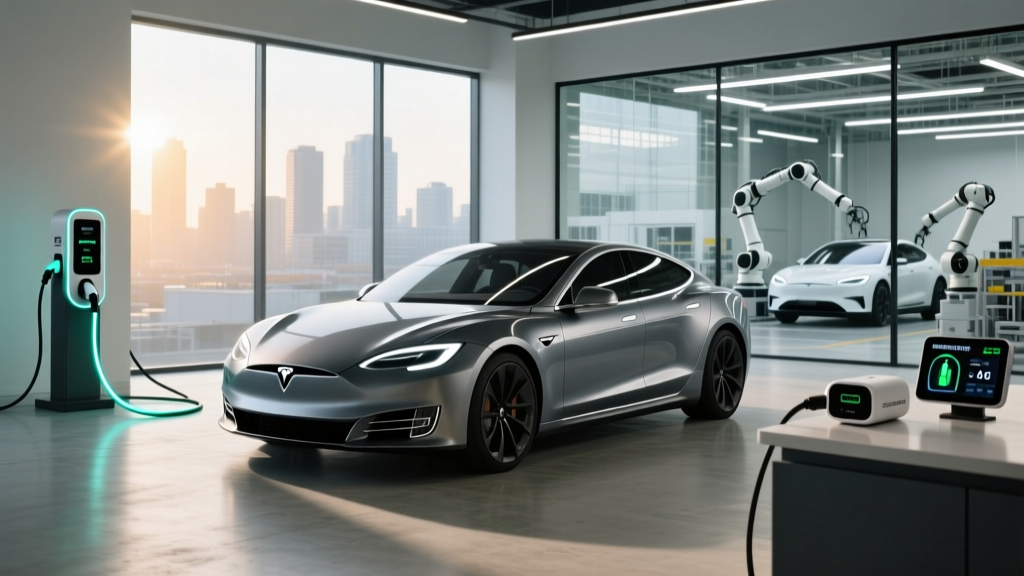
If you've ever typed "tesla are made where" into a search bar, you're not alone. Tesla's manufacturing footprint has expanded dramatically over the past decade, and knowing which plant builds your specific model matters for everything from delivery timelines to federal tax credit eligibility under IRS §30D battery-sourcing rules. This guide maps every Tesla Gigafactory producing vehicles in 2026, then digs into the real-world specs buyers actually need: EPA range, DC fast-charge curves, LFP vs. NMC battery chemistry, and after-credit pricing.
Tesla's Global Vehicle Factories at a Glance
As of the 2026 model year, Tesla assembles passenger vehicles at four primary plants. Each facility supplies specific regions and models, and the origin of your car directly affects §30D critical-mineral and battery-component compliance.
| Factory | Location | Models Built (2026) | Primary Market |
|---|---|---|---|
| Fremont Factory | Fremont, California | Model S, Model X, Model 3 (partial), Model Y (partial) | North America, export |
| Giga Texas | Austin, Texas | Model Y, Cybertruck | North America |
| Giga Shanghai | Shanghai, China | Model 3, Model Y | Asia-Pacific, Europe, Canada |
| Giga Berlin | Grünheide, Germany | Model Y | Europe |
For U.S. buyers, your vehicle almost certainly rolls out of Fremont or Giga Texas. Vehicles from Giga Shanghai occasionally reach Canada but not the U.S. consumer market. The Nevada Gigafactory produces battery cells and drive units but does not assemble complete vehicles.
2026 Tesla Model Lineup: Range, Battery & Performance
Below is a consolidated spec sheet for every Tesla currently on sale in the U.S. market. All figures reflect 2026 model-year data; specs can shift mid-year, so confirm with Tesla's configurator before ordering.
| Spec | Model 3 Long Range AWD | Model Y Long Range AWD | Model S Long Range | Model X Long Range |
|---|---|---|---|---|
| EPA Range | 363 mi | 320 mi | 402 mi | 348 mi |
| Battery (usable) | ~75 kWh (NMC) | ~75 kWh (NMC) | ~95 kWh (NMC) | ~95 kWh (NMC) |
| Drivetrain | Dual-motor AWD | Dual-motor AWD | Dual-motor AWD | Dual-motor AWD |
| Horsepower | ~346 hp | ~384 hp | ~670 hp | ~670 hp |
| 0-60 mph | 4.2 sec | 4.8 sec | 3.1 sec | 3.8 sec |
| Peak DC Charge | 250 kW | 250 kW | 250 kW | 250 kW |
| 10-80% DC Time | ~25 min | ~27 min | ~32 min | ~34 min |
| Level 2 Rate | 11.5 kW (~44 mi/hr) | 11.5 kW (~44 mi/hr) | 11.5 kW (~44 mi/hr) | 11.5 kW (~44 mi/hr) |
| MPGe (combined) | 132 MPGe | 122 MPGe | 120 MPGe | 111 MPGe |
| Efficiency | 25 kWh/100mi | 28 kWh/100mi | 28 kWh/100mi | 30 kWh/100mi |
| Cargo (rear seats up) | 23 cu ft | 30 cu ft | 28 cu ft | 88 cu ft (seats folded) |
| Base MSRP | $47,740 | $48,990 | $79,990 | $84,990 |
Sources: EPA / fueleconomy.gov, Tesla product pages.
The EPA numbers above assume a mix of city and highway driving at moderate temperatures. Expect highway-only range to drop 10-15% below the EPA sticker due to sustained high-speed aero drag. In sub-freezing winter conditions, plan for a 20-30% reduction unless you precondition the battery while plugged in. A Model Y Long Range rated at 320 miles EPA typically delivers 260-280 miles on a 70°F highway trip and as low as 220 miles at 20°F without preconditioning.
Charging Speed: From Superchargers to Your Garage
Tesla's NACS (North American Charging Standard) connector is now the industry default, with Ford, GM, Rivian, and others adopting it. Here's what charging actually looks like across all three levels.
| Charging Level | Power (kW) | Approx. Miles Added per Hour | Typical Use Case |
|---|---|---|---|
| Level 1 (120V household) | ~1.4 kW | ~5 mi/hr | Emergency / overnight trickle |
| Level 2 (240V home) | 11.5 kW | ~44 mi/hr | Daily home charging |
| DC Fast (V3 Supercharger) | Up to 250 kW | ~1,000 mi/hr (peak) | Road trips, 10-80% in ~25 min |
| DC Fast (V4 Supercharger) | Up to 350 kW* | Varies | Next-gen stations; vehicle-limited |
*Most current Tesla vehicles cap at 250 kW on the vehicle side. V4 stations can deliver higher power to future architectures.
A critical detail: peak kW is not sustained kW. Teslas charge fastest between roughly 10-50% State of Charge (SoC), then taper significantly. The "10-80% in 25 minutes" figure already accounts for this taper. Pushing from 80-100% at a Supercharger can add another 20+ minutes — plan your stops to 80% for efficiency.
Federal Tax Credit Eligibility (§30D): What You Actually Qualify For
The federal EV tax credit under IRS §30D offers up to $7,500, but eligibility depends on MSRP caps, buyer income limits, and battery-component/critical-mineral sourcing. Here's how the 2026 Tesla lineup stacks up:
- MSRP Caps: Sedans (Model 3, Model S) must be ≤$55,000. SUVs/vans/pickups (Model Y, Model X, Cybertruck) must be ≤$80,000.
- Buyler Income Caps: Modified AGI ≤$150,000 (single), ≤$225,000 (head of household), ≤$300,000 (joint).
- Battery Sourcing: Battery components must be manufactured or assembled in North America (phased percentages increase annually). Critical minerals must be sourced from the U.S. or FTA partners.
- Point-of-Sale Transfer: You can transfer the credit to the dealer at purchase for an immediate price reduction, rather than waiting to claim it on your tax return.
| Model / Trim | Base MSRP | MSRP Cap Status | Est. After-Credit Price* |
|---|---|---|---|
| Model 3 Long Range AWD | $47,740 | ✅ Under $55K cap | ~$40,240 |
| Model Y Long Range AWD | $48,990 | ✅ Under $80K cap | ~$41,490 |
| Model S Long Range | $79,990 | ❌ Exceeds $55K sedan cap | $79,990 (no credit) |
| Model X Long Range | $84,990 | ❌ Exceeds $80K SUV cap | $84,990 (no credit) |
*Assumes full $7,500 credit eligibility. Battery-sourcing rules tighten annually; confirm current-year compliance on the IRS clean vehicle list before purchasing. Always consult a tax professional for your specific situation.
Battery Chemistry: LFP vs. NMC in Tesla's Lineup
Tesla uses two primary lithium-ion chemistries across its fleet, and the distinction affects how you should charge and maintain your vehicle.
| Factor | LFP (Lithium Iron Phosphate) | NMC (Nickel Manganese Cobalt) |
|---|---|---|
| Used In | Model 3 RWD (Standard Range) | Model 3 LR, Model Y LR, Model S, Model X |
| Energy Density | Lower (heavier for same kWh) | Higher (more range per kg) |
| Cycle Life | 3,000+ cycles (excellent longevity) | 1,500-2,000 cycles |
| Charge Recommendation | Charge to 100% regularly | Charge to 80% daily; 100% before trips |
| Cold-Weather Performance | Weaker in extreme cold | Better low-temp performance |
| Cost | Lower (no cobalt/nickel) | Higher |
If you're choosing between a Model 3 RWD (LFP) and Model 3 Long Range (NMC), consider your charging habits: LFP rewards daily 100% charges and excels in longevity, while NMC delivers more range per charge but prefers 80% daily limits to reduce degradation.
Tech, Driver Assistance & Safety
All 2026 Teslas come standard with Basic Autopilot, a Level 2 driver-assistance system providing adaptive cruise control and lane centering. Full Self-Driving (Supervised) — Tesla's optional $8,000 upgrade — adds automated lane changes, traffic light recognition, and city-street navigation, but remains a Level 2 system requiring continuous driver attention and hands-on-wheel supervision.
No Tesla vehicle sold today is "self-driving." Autopilot and FSD (Supervised) are SAE Level 2 systems. The driver is legally and operationally responsible for the vehicle at all times. Only Level 4 robotaxi services like Waymo operate without a human driver, and those are geofenced to specific cities.
Other standout tech includes a 15.4-inch center touchscreen (17-inch in Model S/X), over-the-air updates, Sentry Mode dashcam recording, and the Tesla mobile app for remote preconditioning and charge monitoring. Notable drawbacks: no Apple CarPlay/Android Auto, minimal physical button controls, and panel-gap quality that still trails legacy luxury automakers.
Warranty & Ownership Costs
Tesla's warranty structure is straightforward:
- Basic Vehicle: 4 years / 50,000 miles
- Battery & Drive Unit: 8 years / 100,000 miles (Model 3/Y) or 8 years / 150,000 miles (Model S/X), with a minimum 70% capacity retention threshold
For a 5-year ownership estimate on a Model Y Long Range, expect roughly $3,200 in electricity costs (at $0.15/kWh national average), compared to approximately $8,500 in gasoline for a comparable 25 MPG crossover. Insurance premiums run 15-25% higher than segment averages, so get quotes before ordering.
Who Should Buy a Tesla in 2026?
Choose Model 3 if you prioritize efficiency, lower cost, and sedan dynamics for commuting and moderate road trips.
Choose Model Y if you need crossover cargo space, family seating, and the best value after the §30D tax credit.
Choose Model S/X if budget is secondary and you want flagship performance, air suspension, and maximum range — but know you won't qualify for the federal credit.
Frequently Asked Questions
Where are Teslas made for the U.S. market?
U.S.-market Teslas are built primarily at the Fremont, California factory (Model S, Model X, some Model 3/Y) and Giga Texas in Austin (Model Y, Cybertruck). Battery cells come from the Nevada Gigafactory and from suppliers like Panasonic and CATL.
What is the real-world range of a Tesla Model Y?
The 2026 Model Y Long Range AWD carries a 363-mile EPA rating, but expect 280-300 miles in real-world highway driving and as low as 220-240 miles in freezing temperatures without preconditioning.
How fast does a Tesla charge at a Supercharger?
Most 2026 Teslas peak at 250 kW on V3 Superchargers, achieving a 10-80% charge in approximately 25-30 minutes. The charge rate tapers significantly above 80% SoC.
Does the Tesla Model Y qualify for the $7,500 federal tax credit?
The Model Y Long Range at $48,990 falls under the $80,000 SUV MSRP cap and generally qualifies, provided the buyer meets income limits (≤$300,000 joint AGI) and the vehicle meets current-year battery-sourcing requirements. Confirm on the IRS clean vehicle list before purchasing.
Is Tesla's Full Self-Driving actually self-driving?
No. FSD (Supervised) is an SAE Level 2 driver-assistance system. The driver must remain fully attentive with hands on the wheel. It is not autonomous driving.
How does Tesla's warranty compare to competitors?
Tesla's 8-year/100,000-mile battery warranty (150,000 for S/X) is competitive with Hyundai's 10-year/100,000-mile coverage and similar to Ford and GM's 8-year/100,000-mile EV powertrain warranties.