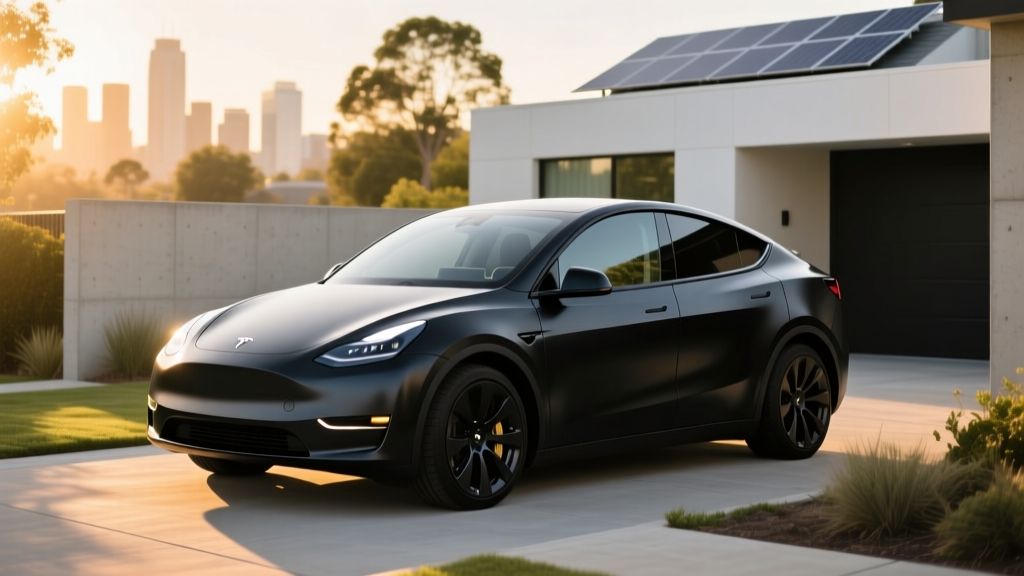
Quick Verdict: Is Now the Time to Buy a Model Y?
The 2026 Tesla Model Y remains the best-selling electric vehicle in the United States for good reason: it offers a compelling blend of range, Supercharger access, cargo versatility, and over-the-air updates that keep it competitive against a growing field of rivals. But with the refreshed "Juniper" styling, revised pricing, and evolving federal incentive rules, finding genuine Tesla Model Y deals requires understanding exactly what you're paying for — and what the real-world ownership experience looks like beyond the sticker.
This guide breaks down every 2026 Model Y trim, the true cost after federal and state incentives, real-world range expectations, and whether the numbers pencil out against competitors like the Hyundai Ioniq 5, Ford Mustang Mach-E, and Chevrolet Equinox EV.
| Spec | Long Range RWD | Long Range AWD | Performance AWD |
|---|---|---|---|
| EPA Range | 320 mi | 300 mi | 280 mi |
| Battery (usable) | ~75 kWh (LFP) | ~75 kWh (NMC) | ~75 kWh (NMC) |
| Peak DC Charge Rate | 250 kW | 250 kW | 250 kW |
| 10–80% DC Fast Charge | ~27 min | ~25 min | ~25 min |
| Level 2 Home Charging | 11.5 kW (~44 mi/hr) | 11.5 kW (~44 mi/hr) | 11.5 kW (~44 mi/hr) |
| 0–60 mph | 6.5 sec | 4.8 sec | 3.5 sec |
| Horsepower | 295 hp | 384 hp | 456 hp |
| Drivetrain | RWD | Dual-Motor AWD | Dual-Motor AWD |
| EPA Efficiency (combined) | 125 MPGe / 27 kWh/100mi | 117 MPGe / 29 kWh/100mi | 110 MPGe / 30 kWh/100mi |
| Base MSRP | $44,990 | $47,990 | $52,490 |
Real-World Range: What the EPA Sticker Doesn't Tell You
- Long Range RWD: EPA 320 mi — expect ~270–290 mi on mixed highway driving; ~230–250 mi in sustained 75+ mph cold-weather conditions.
- Long Range AWD: EPA 300 mi — expect ~255–275 mi highway; ~215–240 mi in freezing temps with cabin heat.
- Performance AWD: EPA 280 mi — expect ~235–255 mi highway; ~200–220 mi in cold weather.
Source: fueleconomy.gov
The Model Y's LFP (lithium iron phosphate) battery in the Long Range RWD trim is a significant practical advantage. LFP chemistry tolerates regular 100% charging without the degradation concerns that apply to NMC packs. That means RWD owners can charge to full daily and reliably access the entire 320-mile EPA figure — not just 80% of it as a daily buffer. NMC trims (Long Range AWD, Performance) should be charged to 80% for daily use, reserving 100% for road trips, which effectively yields ~240 miles of daily usable range on the AWD Long Range.
Highway driving at 75 mph reduces efficiency by roughly 12–18% compared to the EPA combined cycle. In winter temperatures below 32°F, expect a further 15–30% reduction depending on cabin heating demand. The Model Y's heat pump — standard on all 2026 trims — mitigates cold-weather losses better than resistive heating, but physics still applies. If your commute is 120 miles round-trip in a northern climate, the Long Range AWD still provides a comfortable buffer; the Performance trim gets tighter.
Charging Speed: Supercharger Network and Home Setup
Tesla's charging ecosystem remains a key differentiator, though the gap is narrowing as competitors gain NACS access. Here's how the 2026 Model Y charges across all levels:
| Level | Power | Miles Added per Hour | Typical Use Case |
|---|---|---|---|
| Level 1 (120V) | ~1.4 kW | ~5 mi/hr | Emergency / overnight trickle |
| Level 2 (240V, 48A) | 11.5 kW | ~44 mi/hr | Home daily charging (Wall Connector) |
| Level 2 (240V, 32A) | 7.7 kW | ~30 mi/hr | Mobile Connector / lower-amp circuits |
| DC Fast Charge | Peak 250 kW | ~200+ mi in 15 min | Road trips via Superchargers |
At a V3 or V4 Supercharger, the Model Y peaks at 250 kW but — like all EVs — does not sustain that rate for the full session. The charge curve is aggressive from 10–40% SoC, tapering significantly above 60% and sharply above 80%. A typical 10–80% session takes 25–27 minutes depending on battery temperature. Preconditioning is automatic when the car navigates to a Supercharger, warming the pack for optimal charge acceptance. Skipping preconditioning (e.g., arriving at a non-navigated charger in cold weather) can add 5–10 minutes to your session.
For home charging, Tesla's Wall Connector ($420) on a 60-amp circuit delivers the full 48A/11.5 kW — enough to replenish a full day's driving in under two hours. Installation costs vary widely: expect $800–$2,500 for a straightforward setup, or $3,000–$5,000+ if your panel needs a 200-amp upgrade. Always get a quote from a licensed electrician before committing.
2026 Pricing Breakdown: Finding Real Tesla Model Y Deals
Tesla adjusts pricing frequently — sometimes weekly — which means "deals" on the Model Y don't follow the traditional dealer-negotiation model. There are no dealer markups or haggling; the price on Tesla.com is the price you pay. However, incentives, referral credits, and inventory discounts on demo/loaner vehicles can meaningfully reduce your out-of-pocket cost.
| Trim | Base MSRP | Est. §30D Credit* | Effective Price | Destination |
|---|---|---|---|---|
| Long Range RWD | $44,990 | Up to $7,500 | ~$37,490 | $1,390 |
| Long Range AWD | $47,990 | Up to $7,500 | ~$40,490 | $1,390 |
| Performance AWD | $52,490 | Up to $7,500 | ~$44,990 | $1,390 |
*Federal §30D credit eligibility depends on buyer income, battery component sourcing, and critical mineral requirements. See IRS.gov for current rules. Point-of-sale transfer available at time of purchase.
The §30D federal tax credit is not guaranteed for every buyer. Key eligibility constraints for 2026:
- Income caps: Modified AGI must not exceed $150,000 (single), $225,000 (head of household), or $300,000 (joint).
- MSRP cap: The Model Y qualifies as an SUV under IRS rules, with a cap of $80,000 — all trims clear this easily.
- Battery sourcing: A percentage of critical minerals and battery components must be sourced from the U.S. or FTA partners. Tesla's shifting supply chain means eligibility can change — verify the specific VIN's credit status on the IRS portal before purchasing.
- Point-of-sale transfer: As of 2024, you can transfer the credit to the dealer at purchase, reducing your out-of-pocket cost immediately rather than waiting for tax filing.
Beyond the federal credit, many states offer additional incentives — California's CVRP, Colorado's $5,000 credit, and various utility rebates for home charger installation. Check your state's energy office or AFDC's state incentive database for current programs.
Performance, Efficiency, and Daily Livability
The 2026 Model Y's Juniper refresh brought meaningful improvements to ride quality, cabin noise, and interior materials. The updated suspension tuning reduces the harshness that plagued pre-2025 models, making it genuinely comfortable for daily commuting and long road trips alike.
Performance highlights:
- Long Range RWD: 295 hp, 6.5-second 0–60 — adequate for merging and passing, best efficiency of the lineup.
- Long Range AWD: 384 hp, 4.8-second 0–60 — the sweet spot for buyers who want dual-motor traction and strong acceleration.
- Performance AWD: 456 hp, 3.5-second 0–60 — sports-car territory, at the cost of ~40 miles of range and a stiffer ride.
Cargo and passenger space:
- Rear cargo (behind second row): 30.2 cu ft
- Cargo with rear seats folded: 72.1 cu ft
- Front trunk (frunk): 4.1 cu ft
- Rear legroom: 41.6 in
- Front headroom: 41.0 in
The Model Y's cargo area is one of the most practical in the compact electric SUV segment, with a low load floor and wide opening. The frunk is small but useful for charging cables. Five adults fit comfortably for short trips; four is ideal for long-distance comfort.
Tech, Autopilot, and Driver Assistance
Every 2026 Model Y includes Tesla's basic Autopilot suite: Traffic-Aware Cruise Control and Autosteer (lane-centering on highways). This is an SAE Level 2 system — the driver must remain attentive, keep hands on the wheel, and supervise at all times.
Full Self-Driving (Supervised) remains an $8,000 add-on (or $99/month subscription). It adds automatic lane changes, traffic light and stop sign recognition, and Navigate on Autopilot. Despite the name, FSD Supervised is still Level 2 and requires constant oversight. Its value proposition is debated among owners — some find it transformative on long highway drives; others consider it overpriced for the capability delivered.
The 15.4-inch center touchscreen handles all infotainment, navigation, and vehicle controls. The Juniper refresh added ambient lighting, ventilated front seats, a rear-seat touchscreen, and improved acoustic glass. There are no physical buttons for climate or mirrors — everything routes through the display, which some buyers love and others find distracting.
Warranty and Long-Term Ownership
Tesla's warranty coverage is competitive but not class-leading:
- Basic Vehicle: 4 years / 50,000 miles
- Battery & Drive Unit: 8 years / 120,000 miles (Long Range RWD with LFP); 8 years / 120,000 miles (Long Range AWD, Performance with NMC)
- Battery degradation threshold: Tesla warrants that the battery will retain at least 70% of original capacity during the warranty period.
Real-world data from Tesla's fleet suggests average degradation of approximately 10–15% over 150,000 miles for NMC packs, with LFP packs showing slower degradation curves. Battery replacement outside warranty is expensive — roughly $12,000–$16,000 for a Model Y pack — but the vast majority of owners never need one. The drive units (motors) have proven highly reliable with minimal failure rates.
Model Y vs. Competitors: Where the Deals Really Stack Up
The Model Y's strongest competitive advantage in 2026 is the Supercharger network. While Ford, Rivian, and others now have NACS adapters for Supercharger access, Tesla vehicles still enjoy the most seamless plug-and-charge experience with no adapters, automatic billing, and the densest station coverage. If road trips are a priority, this matters.
The Hyundai Ioniq 5 and Kia EV6 charge faster on 350 kW Electrify America stations, and both offer more conventional interior layouts with physical controls. The Ford Mustang Mach-E provides a sportier driving feel and BlueCruise hands-free driving on mapped highways. But none match the Model Y's combination of range, cargo space, software ecosystem, and charging infrastructure in a single package at this price point.
Pros, Cons, and Who Should Buy
- Class-leading EPA range (320 mi RWD) with LFP daily-charging advantage
- Supercharger network — most reliable U.S. DC fast-charging
- Spacious cargo area (72.1 cu ft max) with practical frunk
- Strong over-the-air update cadence keeps features current
- Competitive pricing after §30D credit
- Heat pump standard for cold-weather efficiency
- Touchscreen-only controls — no physical buttons or stalks (2026 uses screen-based turn signals)
- FSD (Supervised) is expensive and still Level 2
- Ride quality improved but still firmer than some rivals
- No Apple CarPlay or Android Auto
- Insurance costs tend to run 15–25% higher than comparable ICE SUVs
- Pricing changes frequently — no traditional negotiation
Best for: Commuters with home charging access, families needing cargo versatility, road-trippers who value Supercharger infrastructure, and tech-forward buyers comfortable with a minimalist, screen-centric interface.
Look elsewhere if: You need a sub-$35K entry price (check the Equinox EV), you want physical buttons and CarPlay (Hyundai Ioniq 5, Kia EV6), or you need hands-free Level 2 driving on highways (Ford Mach-E with BlueCruise, GM vehicles with Super Cruise).
Frequently Asked Questions
What is the real-world range of the 2026 Tesla Model Y?
The Long Range RWD delivers an EPA-estimated 320 miles, but expect 270–290 miles in real-world highway driving and 230–250 miles in cold weather. The AWD Long Range rates at 300 miles EPA, with real-world highway driving yielding roughly 255–275 miles.
How fast does the Model Y charge at home and on the road?
At home on a 48A Level 2 Wall Connector, the Model Y charges at 11.5 kW, adding approximately 44 miles of range per hour. On a 250 kW Supercharger, a 10–80% session takes about 25–27 minutes with proper battery preconditioning.
How much does a 2026 Model Y cost after the federal tax credit?
The Long Range RWD starts at $44,990. If you qualify for the full $7,500 §30D credit (subject to income caps, battery sourcing rules, and MSRP limits), the effective price drops to approximately $37,490 before destination and options. Verify your eligibility on IRS.gov before purchasing.
Does the 2026 Tesla Model Y qualify for the federal EV tax credit?
All Model Y trims fall under the $80,000 SUV MSRP cap. However, the full $7,500 credit depends on battery component and critical mineral sourcing requirements, which can change as Tesla adjusts its supply chain. Your personal eligibility also depends on income limits ($150K single / $300K joint). The credit can be transferred at point of sale to reduce your purchase price directly.
Is the Model Y worth buying over competitors in 2026?
If you prioritize range, Supercharger access, cargo space, and software updates, the Model Y is still the benchmark in its class. If you want faster DC charging speeds, physical controls, or CarPlay, the Hyundai Ioniq 5 or Kia EV6 are strong alternatives. Budget shoppers should consider the Chevrolet Equinox EV, which starts significantly lower.
What is the biggest drawback of owning a Tesla Model Y?
The most commonly cited frustration is the touchscreen-only interface — climate, mirrors, and even turn signals are screen-based in the 2026 Juniper refresh. Insurance premiums also tend to be higher than average, and the lack of Apple CarPlay/Android Auto is a dealbreaker for some smartphone-dependent drivers.