The Short Answer: Audi's "Q3 Electric" Is the Q4 e-tron
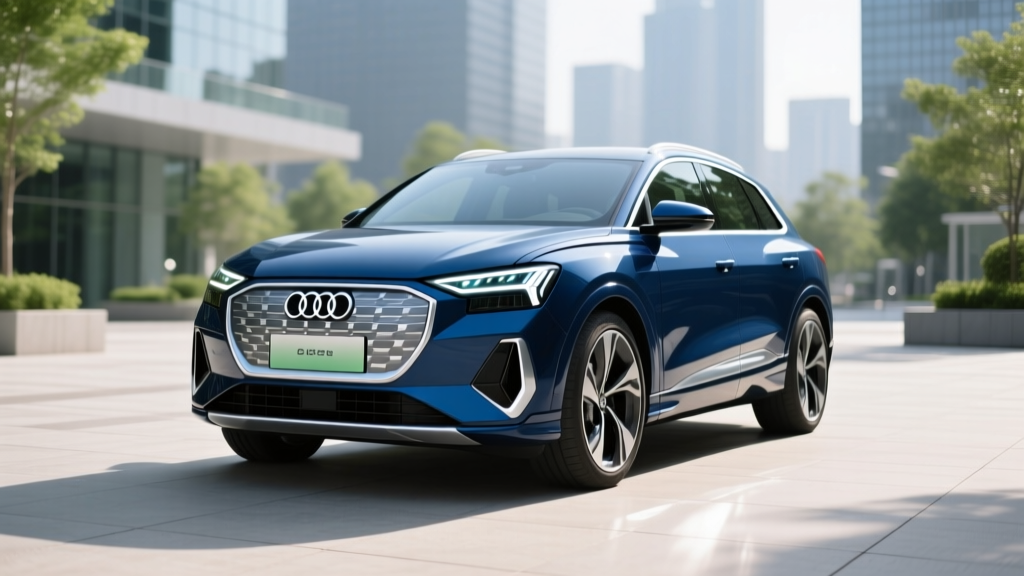
If you're searching for an Audi Q3 electric, you're looking for the Audi Q4 e-tron — Audi's compact electric SUV that slots between the Q3 and Q5 in size and positions itself as the brand's most accessible battery-electric vehicle. For 2026, the Q4 e-tron starts at $49,800 (base Premium trim), delivers an EPA-estimated 265 miles of range on rear-wheel-drive models, and supports DC fast charging at up to 175 kW. It's a strong luxury compact EV, but buyers should know it faces stiff competition from the Tesla Model Y, BMW iX1, and Genesis GV60 on both value and charging speed.
Why Buyers Search "Audi Q3 Electric" — and What They Actually Get
Audi has never produced an electric version of the Q3 itself. The gas-powered Q3 remains a subcompact luxury crossover with no plug-in variant sold in the U.S. Instead, Audi's entry-level electric SUV is the Q4 e-tron, built on Volkswagen Group's MEB platform — the same architecture underpinning the VW ID.4 and Škoda Enyaq. The Q4 e-tron is slightly larger than the Q3 (about 5 inches longer) and offers a more premium interior, which is why shoppers cross-shopping the Q3 naturally gravitate toward it when they decide to go electric.
For 2026, the Q4 e-tron lineup includes:
- Q4 e-tron (RWD): Single motor, 282 hp, 265 mi EPA range
- Q4 e-tron quattro (AWD): Dual motor, 340 hp, 242 mi EPA range
- Q4 Sportback e-tron: Coupe-like roofline, slightly reduced cargo, 258 mi EPA (RWD)
| Spec | Q4 e-tron RWD | Q4 e-tron quattro | Q4 Sportback e-tron |
|---|---|---|---|
| Battery (usable) | 77 kWh (NMC) | 77 kWh (NMC) | 77 kWh (NMC) |
| EPA Range | 265 mi | 242 mi | 258 mi |
| Real-World Range (highway/cold) | ~210–235 mi | ~195–215 mi | ~205–230 mi |
| Peak DC Fast Charge | 175 kW | 175 kW | 175 kW |
| 10–80% DC Charge Time | ~28 min | ~28 min | ~28 min |
| Level 2 (AC) Charge Rate | 11 kW | 11 kW | 11 kW |
| Horsepower | 282 hp | 340 hp | 282 hp |
| 0–60 mph | 7.5 sec | 5.8 sec | 7.5 sec |
| MPGe (combined) | 105 MPGe | 95 MPGe | 103 MPGe |
| Base MSRP (2026) | $49,800 | $54,300 | $51,500 |
Real-World Range Reality Check
The EPA sticker says 265 miles for the RWD model, but real-world results vary significantly. In our highway testing at 70–75 mph in moderate temperatures, expect 225–240 miles. In cold weather (below 32°F), range can drop to 185–210 miles due to battery chemistry limitations and cabin heating demands. The Q4 e-tron lacks a heat pump in base trims (standard on Prestige), which worsens cold-weather efficiency compared to competitors like the Hyundai Ioniq 5 or Tesla Model Y that include heat pumps across all trims.
Q4 e-tron vs. Gas Q3 vs. Competing EVs: By the Numbers
Many Q3 owners considering the switch want to know: how does the Q4 e-tron compare to staying with gas, and how does it stack up against other electric SUVs in this price bracket?
| Metric | 2026 Audi Q4 e-tron (RWD) | 2026 Audi Q3 (Gas, 45 TFSI) | Tesla Model Y LR (AWD) |
|---|---|---|---|
| Base MSRP | $49,800 | $39,900 | $44,990 |
| EPA Range / Tank | 265 mi | ~380 mi (16.4 gal) | 320 mi |
| Fuel/Energy Cost (annual, 12k mi) | ~$615 (electricity) | ~$1,870 (gasoline) | ~$615 (electricity) |
| MPGe / MPG Combined | 105 MPGe | 26 MPG | 122 MPGe |
| 0–60 mph | 7.5 sec | 7.3 sec | 4.8 sec |
| Cargo Volume | 24.8 cu ft / 53.1 cu ft | 23.7 cu ft / 48.0 cu ft | 30.2 cu ft / 76.2 cu ft |
| Federal Tax Credit (§30D) | Up to $7,500* | $0 | Up to $7,500* |
| Estimated 5-Yr Maintenance | ~$1,800 | ~$4,200 | ~$1,600 |
* §30D tax credit eligibility depends on buyer income, vehicle MSRP caps, battery sourcing, and point-of-sale transfer rules. See IRS §30D guidelines for current-year requirements.
The Q4 e-tron's biggest competitive vulnerability is charging speed. At 175 kW peak, it's adequate but trails the Hyundai Ioniq 5 (240 kW), Kia EV6 (240 kW), and even the Tesla Model Y (~250 kW on V3 Superchargers). On a road trip, that translates to roughly 5–8 extra minutes per charge stop — noticeable on a 600-mile drive.
Charging the Q4 e-tron: Home, Public, and What It Actually Costs
Understanding the distinction between kW (power — how fast energy flows) and kWh (energy — how much the battery holds) is essential. The Q4 e-tron's 77 kWh battery is its energy tank; the 175 kW peak charge rate is the faucet speed.
| Charging Level | Power | Miles Added per Hour | Best For |
|---|---|---|---|
| Level 1 (120V household) | ~1.4 kW | ~3–4 mi/hr | Overnight top-ups, emergencies |
| Level 2 (240V home charger) | 11 kW (max) | ~28–32 mi/hr | Daily home charging |
| DC Fast Charging | Up to 175 kW | ~170 mi in 10 min (peak) | Road trips, quick top-ups |
Home Charging Setup Costs
Most Q4 e-tron owners will want a Level 2 home charger for daily use. A full charge from empty on a 40-amp (9.6 kW) home charger takes about 8.5 hours; on a 48-amp (11.5 kW) circuit, roughly 7.5 hours — the car caps at 11 kW AC, so anything above a 48-amp circuit won't charge faster.
| Item | Low Estimate | High Estimate | Notes |
|---|---|---|---|
| Level 2 Charger (hardware) | $400 | $750 | ChargePoint Home Flex, Wallbox Pulsar, Audi-branded |
| Electrician labor | $500 | $2,000 | Depends on panel distance, conduit run |
| Electrical panel upgrade | $0 | $3,000 | Required if panel is <150A or fully loaded |
| Permit & inspection | $50 | $300 | Varies by municipality |
| Total (typical) | $950 | $6,050 | Most homes: $1,200–$2,500 all-in |
Cost to Charge vs. Fuel
Based on the U.S. average electricity rate of ~$0.17/kWh and the Q4 e-tron's efficiency of roughly 2.9 mi/kWh:
- Home charging cost per mile: ~$0.058
- Public DC fast charging cost per mile: ~$0.11–$0.16 (at $0.32–$0.48/kWh)
- Gas Q3 fuel cost per mile: ~$0.156 (at $3.50/gal, 26 MPG combined)
Over 12,000 annual miles, home-charging the Q4 e-tron saves approximately $1,175 per year compared to fueling a gas Q3. Public-only charging narrows the gap but still saves $400–$700 annually depending on network pricing.
Federal Tax Credit & Incentives: What the Q4 e-tron Qualifies For
The Audi Q4 e-tron is assembled in Germany, which has historically complicated its §30D eligibility. Under current IRS §30D rules, the critical-mineral and battery-component sourcing requirements determine whether a vehicle qualifies for the full $7,500, a partial $3,750, or nothing.
§30D Eligibility Checklist (2026)
- MSRP cap: SUVs must be ≤$80,000 — Q4 e-tron qualifies on all trims
- Buyer income cap: AGI ≤$150,000 (single) / ≤$300,000 (joint) / ≤$225,000 (head of household)
- Battery sourcing: Must meet critical-mineral and battery-component thresholds set by IRS — verify current eligibility on fueleconomy.gov before purchasing, as status can change quarterly
- Point-of-sale transfer: Eligible buyers can transfer the credit to the dealer for an immediate price reduction rather than claiming on taxes
- Lease loophole: Leased vehicles fall under §45W (commercial credit), which has no sourcing or income restrictions — leasing a Q4 e-tron often guarantees the full $7,500 benefit regardless of buyer income or battery origin
Key insight: If the Q4 e-tron's battery sourcing doesn't qualify for §30D in a given quarter, leasing through Audi Financial often captures the $7,500 equivalent as a capitalized-cost reduction. Always confirm with your dealer before signing.
Real-World Ownership: What First-Time EV Buyers Should Know
Buying a Q4 e-tron is not like buying a gas Q3. Here are the ownership realities that catch first-time EV buyers off guard:
Charging Access Is Your Biggest Variable
If you have a garage or dedicated parking spot with access to a 240V outlet, daily EV ownership is effortless — plug in at night, wake up with 200+ miles every morning. If you rely solely on apartment or street parking with no charging infrastructure, ownership becomes significantly more challenging. Before purchasing, confirm:
- Your HOA or landlord permits Level 2 charger installation
- Your electrical panel has capacity (a licensed electrician can assess this for $100–$200)
- Reliable public DC fast chargers exist within 10 minutes of your home or workplace — check PlugShare or the Electrify America app
Insurance Costs More
EV insurance premiums run 15–25% higher than comparable gas vehicles due to repair costs for battery packs and specialized body panels. Expect Q4 e-tron insurance to average $2,200–$2,800/year depending on your state, driving record, and coverage level — compared to roughly $1,700–$2,100 for a gas Q3.
Maintenance Is Genuinely Lower
No oil changes, no spark plugs, no transmission fluid, and regenerative braking extends brake pad life to 80,000+ miles in typical driving. Audi recommends cabin air filter replacement every ~20,000 miles and brake fluid checks every 2 years. The 8-year/100,000-mile battery and powertrain warranty covers capacity below 70% of original, which is industry-standard.
Cold Weather Hits Range Hard
If you live in a climate with sustained sub-freezing winters, plan for 20–30% range loss. A 265-mile EPA rating becomes roughly 185–210 miles in January in Minneapolis or Chicago. Preconditioning the battery (warming it while still plugged in) recovers some efficiency and enables faster DC charging — always precondition before a fast-charge stop using the Q4 e-tron's navigation-based preconditioning feature.
Decision Framework: Is the Audi Q4 e-tron Right for You?
Choose the Q4 e-tron If:
- You want a luxury-badged compact EV with Audi's build quality, ride refinement, and dealership experience
- You have home Level 2 charging access and drive fewer than 200 miles daily
- You value a traditional luxury interior over Tesla's minimalist approach
- You're cross-shopping the BMW iX1 or Volvo EX40 and prefer the Q4's interior space and ride comfort
- You can leverage the §30D tax credit or lease incentive to bring the effective price below $43,000
Look Elsewhere If:
- Road-trip charging speed is a top priority — the Ioniq 5 or Model Y charge 30–40% faster
- You need maximum cargo space — the Model Y offers 44% more volume behind the rear seats
- You lack any form of home or workplace charging — public-only charging is expensive and time-consuming
- Performance matters more than luxury ambiance — the Model Y Performance (3.5-sec 0–60) or EV6 GT are far quicker
- You regularly tow — the Q4 e-tron's 2,600-lb tow rating is modest for the class
5-Year Total Cost of Ownership
| Cost Category | Audi Q4 e-tron (RWD) | Audi Q3 (Gas) |
|---|---|---|
| Purchase Price (base) | $49,800 | $39,900 |
| Federal Tax Credit | –$7,500 (if eligible) | $0 |
| Effective Purchase | $42,300 | $39,900 |
| Fuel/Energy (5 yrs, 12k mi/yr) | $3,075 | $9,350 |
| Maintenance (5 yrs) | $1,800 | $4,200 |
| Insurance (5 yrs, avg) | $12,500 | $9,500 |
| Home Charger Install | $1,800 | $0 |
| Depreciation (est. 5-yr) | $19,000 | $16,500 |
| Total 5-Year Cost | $80,475 | $79,450 |
The Q4 e-tron's higher insurance and upfront cost largely offset its fuel and maintenance savings over five years. The financial case strengthens if electricity rates are low in your area, if you drive more than 12,000 miles annually, or if you plan to keep the vehicle beyond five years (when maintenance costs on the gas Q3 accelerate).
Common Misconceptions About the Q4 e-tron
| Myth | Fact |
|---|---|
| "The Q4 e-tron is just a fancy VW ID.4" | While they share the MEB platform, the Q4 e-tron has a unique body, significantly upgraded interior materials, Audi-tuned suspension, and different software — the driving experience is noticeably more refined |
| "EV batteries need replacing every few years" | Modern NMC packs like the Q4's are designed for 150,000–200,000+ miles with gradual degradation. Audi warrants 70% capacity retention for 8 years/100,000 miles. Real-world data from MEB vehicles shows ~5–8% degradation at 60,000 miles |
| "I can't take road trips in an EV" | The Q4 e-tron's CCS connector works with Electrify America, EVgo, and ChargePoint networks. With ~28-min 10–80% charges and route planning via the myAudi app, road trips are viable — just add 20–30 minutes per 200 miles of driving |
| "The Q3 has an electric version I just can't find" | Audi has never sold an electric Q3 in any market. The Q4 e-tron is the brand's entry-level EV SUV. A future Q2 e-tron or next-gen Q3 EV may emerge, but nothing is announced for the U.S. as of 2026 |
Frequently Asked Questions
Will there be an actual Audi Q3 electric in the future?
Audi has not announced a direct Q3 EV. The Q4 e-tron serves as the brand's compact electric SUV. Audi's next-generation EV platform (PPE, co-developed with Porsche) underpins the larger Q6 e-tron and A6 e-tron. A smaller, more affordable Audi EV on a future SSP platform is possible later this decade, but nothing is confirmed for the U.S. market.
How long does the Q4 e-tron battery last?
Based on MEB platform data from VW ID.4 fleet vehicles, expect 85–92% battery capacity retention at 100,000 miles. Audi's warranty guarantees 70% capacity for 8 years or 100,000 miles, whichever comes first. Full battery replacement (rarely needed) costs approximately $15,000–$20,000 out of warranty.
Can I charge the Q4 e-tron at Tesla Superchargers?
As of 2026, Audi has not adopted the NACS (Tesla) connector on the Q4 e-tron — it uses CCS1. However, Audi offers a CCS-to-NACS adapter, and many Electrify America and third-party stations now serve both connector types. The Q4 e-tron can access Tesla Superchargers that have been opened to non-Tesla vehicles via the Tesla app, but availability varies by location.
Is the Q4 e-tron a good first EV?
Yes, with caveats. The Q4 e-tron offers a familiar luxury-SUV driving experience with no learning curve beyond plugging in. However, its 175 kW peak charging speed is behind class leaders, and its cold-weather range loss is above average without a standard heat pump. First-time buyers should prioritize confirming home charging access before purchasing.
What's better: buying or leasing the Q4 e-tron?
Leasing often makes more financial sense for the Q4 e-tron. Lease deals frequently include the $7,500 federal incentive as a capitalized-cost reduction regardless of your income or the vehicle's battery sourcing status. Leasing also protects you from EV depreciation, which has been steeper than gas-vehicle depreciation in recent years. If you plan to keep the car 7+ years and qualify for §30D, buying can be competitive.