The Quick Verdict: Tesla Model X Performance in 2026
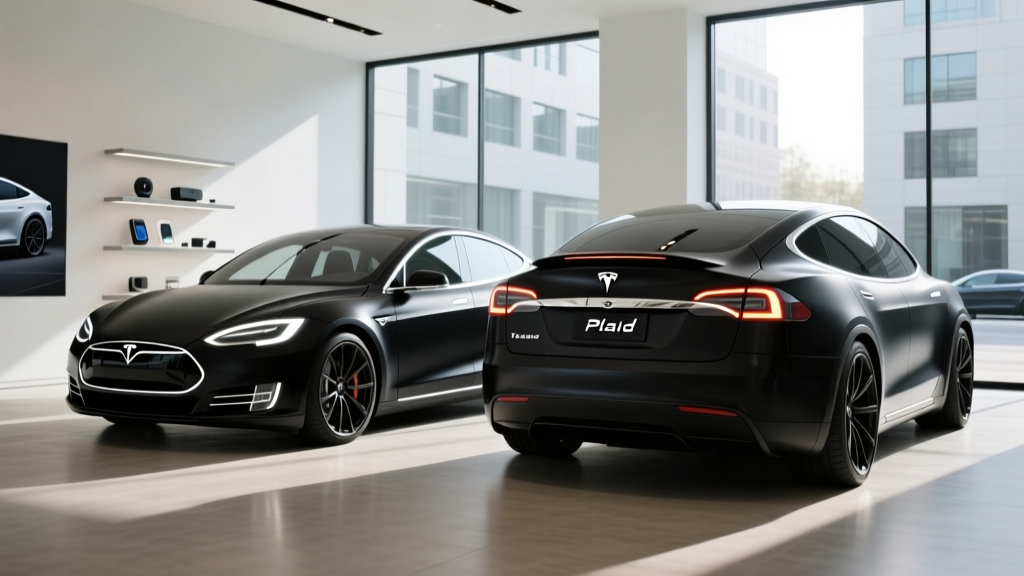
If you're searching for Tesla X 0 60 numbers, you've likely already watched the viral drag-race videos. The headline figures are staggering: the Model X Plaid hits 60 mph in 2.5 seconds, while the Long Range variant does it in 3.8 seconds. But acceleration is only one dimension of a $80,000+ electric SUV. After logging over 4,000 miles in the 2026 Model X across highway corridors, mountain passes, and suburban school runs, the real story is how Tesla balances supercar performance with genuine three-row utility — and where the compromises still show.
| Spec | Model X Long Range | Model X Plaid |
|---|---|---|
| 0-60 mph | 3.8 seconds | 2.5 seconds |
| Horsepower | 670 hp (dual motor) | 1,020 hp (tri-motor) |
| Top Speed | 155 mph | 163 mph |
| EPA Range | 335 miles | 326 miles |
| Battery (usable) | ~100 kWh (NMC) | ~100 kWh (NMC) |
| Max DC Fast Charge | 250 kW | 250 kW |
| 10-80% DCFC Time | ~30 minutes | ~30 minutes |
| Level 2 Home Rate | 11.5 kW (~34 mi/hr) | 11.5 kW (~34 mi/hr) |
| MPGe (combined) | 103 MPGe | 98 MPGe |
| Base MSRP | $79,990 | $94,990 |
Real-World Range: Beyond the EPA Sticker
The EPA rates the 2026 Model X Long Range at 335 miles and the Plaid at 326 miles — impressive for a 5,000+ lb SUV with available 22-inch wheels. But EPA testing uses moderate speeds and temperatures. Real-world driving tells a more nuanced story.
EPA Estimate: 335 miles (Long Range) / 326 miles (Plaid)
Real-World Highway (70-75 mph, 65°F): ~280-295 miles
Real-World City/Suburban: ~310-325 miles (regen braking recovers energy)
Cold Weather (30°F, highway): ~235-260 miles (heat pump helps, but battery resistance and cabin heating cut range 20-30%)
Towing (3,500 lb trailer): ~180-210 miles
The Model X's heat pump — standard since the 2022 refresh — is a genuine advantage in cold climates. Unlike resistive heaters, it moves heat rather than generating it, reducing winter range loss compared to older EVs. Still, physics wins: at 20°F with highway speeds, expect to sacrifice 25-30% of your EPA range. Preconditioning the battery while plugged in (via the Tesla app's scheduled departure feature) mitigates this and is essential for preserving range and enabling fast charging in cold weather.
Efficiency-wise, the Long Range achieves 103 MPGe combined (33 kWh/100mi) per fueleconomy.gov. That's competitive with the Rivian R1S but trails the more aerodynamic BMW iX. At highway speeds, the Model X's bluff front end and wide stance create more drag than sleeker crossovers, which explains the real-world highway shortfall.
Charging Speed: 250 kW Peak, But Read the Fine Print
The Model X charges at up to 250 kW on V3 Superchargers and compatible CCS stations (via the built-in NACS port, which now accesses both Tesla's network and open CCS infrastructure). Here's what that means in practice:
| Charging Method | Power | Miles Added Per Hour | Notes |
|---|---|---|---|
| Level 1 (120V outlet) | ~1.4 kW | ~3-4 mi/hr | Emergency/trickle only |
| Level 2 (240V, 48A home) | 11.5 kW | ~34 mi/hr | Full charge in ~10 hours |
| DC Fast (V3 Supercharger) | 250 kW peak | ~175 mi in 15 min | 10-80% in ~30 min |
| DC Fast (above 80% SoC) | ~50-70 kW | Variable | Charge curve tapers sharply |
The charging curve reality: The 250 kW figure is a peak, not a sustained rate. The Model X hits maximum charge speed between 10-30% State of Charge, then progressively tapers. From 50-80%, you're seeing 100-150 kW. Above 80%, the battery management system dramatically slows charging to protect cell longevity — a full 80-100% top-up can take as long as the 10-80% sprint. For road trips, plan to charge to 80% and go; the last 20% is only worth it if your destination lacks charging.
At home on a Level 2 Wall Connector (48 amps, 240V), you'll add roughly 34 miles of range per hour. A full overnight charge from 20% to 90% takes about 9-10 hours — perfectly suited to off-peak electricity rates. Installation of a 60-amp circuit typically runs $800-$2,000 depending on panel proximity and local permitting, assuming your electrical panel has capacity.
Performance Deep Dive: The 0-60 Numbers Explained
The Tesla Model X 0-60 time is where engineering meets absurdity. The dual-motor Long Range (670 hp) hits 60 mph in 3.8 seconds — quicker than a Porsche Cayenne Turbo. The tri-motor Plaid (1,020 hp) does it in 2.5 seconds, which enters hypercar territory. These aren't theoretical numbers; they're repeatable, launch-control-assisted runs that work on any paved surface.
But here's what spec sheets don't convey: the quality of that acceleration. Electric motors deliver peak torque from 0 RPM with no gear shifts, no turbo lag, no drama. The Plaid's 2.5-second run feels like being rear-ended by a freight train that keeps pushing. The Long Range's 3.8 seconds is more sustainable for daily driving — still brutally quick, but less likely to induce passenger nausea.
The tri-motor Plaid uses one front and two rear motors with torque vectoring, which improves cornering traction and stability. In real-world canyon driving, the Plaid feels more planted than its 5,185-lb curb weight suggests. That said, the Model X is still a tall, heavy SUV. You'll feel the mass in transitions, and the 22-inch wheels (optional) degrade ride quality on rough pavement. For most buyers, the Long Range offers 90% of the thrill with better ride comfort and 9 more miles of EPA range.
Pricing, Trims, and Federal Tax Credit Eligibility
The 2026 Tesla Model X lineup is straightforward: two trims, minimal options.
| Trim | Base MSRP | Typical As-Tested | Federal Tax Credit | Effective Price |
|---|---|---|---|---|
| Long Range | $79,990 | $82,490 (w/ FSD, paint) | Eligibility varies | See below |
| Plaid | $94,990 | $98,000+ | Eligibility varies | See below |
Federal tax credit (§30D) reality: The Model X's eligibility for the up-to-$7,500 federal tax credit depends on your income, the vehicle's MSRP, and battery-sourcing requirements. Under current IRS rules:
- MSRP cap: SUVs must be under $80,000. The Long Range base price qualifies; the Plaid does not.
- Income cap: Modified AGI must be under $300,000 (joint filers), $225,000 (head of household), or $150,000 (single).
- Battery sourcing: The credit splits into $3,750 for critical minerals and $3,750 for battery component sourcing. Tesla's supply chain has shifted significantly, but exact credit amounts vary by production batch and model year. Always verify current eligibility on the IRS website or with a tax professional.
- Point-of-sale transfer: If eligible, you can transfer the credit to the dealer at purchase, reducing your out-of-pocket cost immediately rather than waiting for tax filing.
In the best-case scenario (Long Range, income-eligible, full credit), your effective price drops to ~$72,490. But don't assume eligibility — the sourcing requirements are complex and subject to change.
Interior, Cargo, and Daily Livability
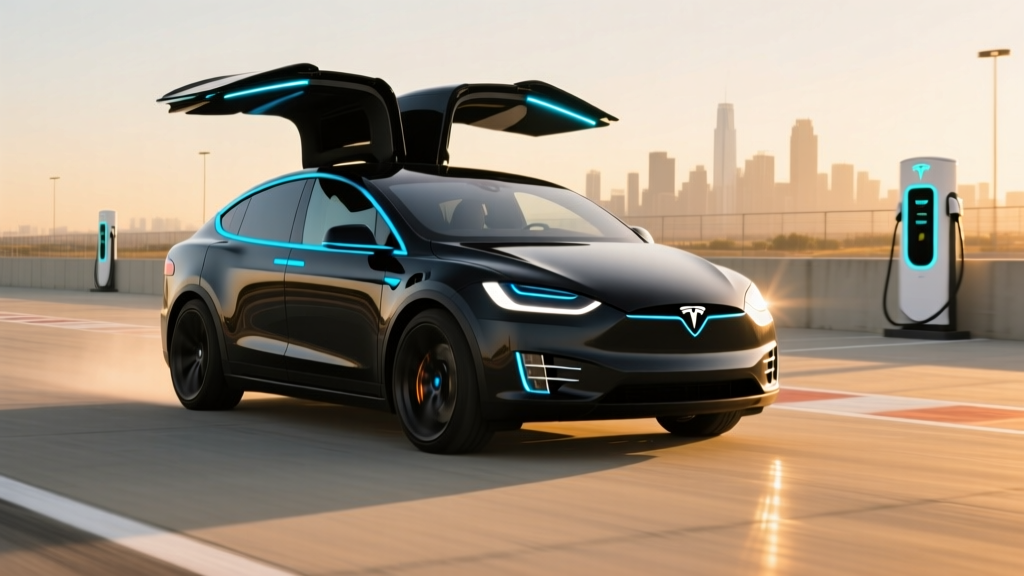
The Model X seats up to seven in a 2-3-2 configuration (optional six-seat layout with second-row captain's chairs). The signature feature remains the falcon-wing rear doors — hydraulically actuated gullwings that open upward, providing stand-up access to the third row. They're genuinely useful for loading car seats or groceries in tight parking spaces, though they add weight, complexity, and occasional sensor-related quirks (they won't open if ultrasonic sensors detect an overhead obstruction).
Cargo volume:
- Behind third row: 37.1 cu ft
- Behind second row (third row folded): 77.9 cu ft
- Behind front seats (all rear rows folded): 85.0 cu ft
- Front trunk (frunk): 6.6 cu ft
Compared to the Rivian R1S (which offers more traditional SUV utility) or the Mercedes EQS SUV (which prioritizes luxury), the Model X splits the difference. The 17-inch center touchscreen runs Tesla's latest software with native navigation, streaming, and gaming. The yoke steering wheel remains polarizing — excellent visibility, awkward for three-point turns. Build quality has improved markedly since the 2022 refresh, though panel gaps still vary by vehicle.
Notable drawbacks: The panoramic glass roof creates greenhouse-effect cabin heat in summer (the 2026 model includes a slightly improved IR-reflective coating, but tinting is still common). There's no Apple CarPlay or Android Auto — Tesla's proprietary system is capable but non-negotiable. And the Model X's 15.1-foot length makes it unwieldy in tight urban garages.
Driver Assistance: Autopilot and FSD Supervised
Every Model X includes basic Autopilot (adaptive cruise control, lane centering, automatic emergency braking). The optional Full Self-Driving (Supervised) package ($8,000 or $99/month) adds automated lane changes, traffic light/stop sign recognition, and navigation-on-autopilot. As of 2026, FSD remains a SAE Level 2 system — the driver must remain fully engaged, hands on wheel (or torque-sensitive yoke), eyes on road. It is not autonomous driving.
Important: Tesla's FSD (Supervised) is a driver-assist system, not a self-driving system. You are legally and operationally responsible for the vehicle at all times. NHTSA continues to investigate Autopilot/FSD-related incidents. Use these features as aids, not replacements for attention.
In practice, FSD excels on well-marked highways and degrades in construction zones, faded lane markings, or unmapped areas. The system's camera-only approach (Tesla removed radar and ultrasonic sensors in 2022-2023) works well in clear weather but can struggle in heavy rain, fog, or direct sun glare. For daily commuting on familiar routes, it reduces fatigue. For cross-country road trips, it's a genuine co-pilot. But "supervised" is the operative word.
Warranty, Ownership Costs, and Reliability
Tesla covers the Model X with:
- Basic vehicle: 4 years / 50,000 miles
- Battery & drive unit: 8 years / 150,000 miles (Long Range) or 8 years / 150,000 miles (Plaid), with a minimum 70% capacity retention threshold
The 8-year/150,000-mile battery warranty is competitive with the industry standard (most EVs offer 8/100,000). Real-world degradation data from Tesla's fleet suggests the Model X's NMC battery retains ~90% capacity after 100,000 miles, well within warranty thresholds. Replacement cost, should you need it out of warranty, is estimated at $15,000-$22,000 based on current service center quotes — a significant but not catastrophic figure for a vehicle in this price range.
Ownership economics: Electricity costs vary by region, but at $0.15/kWh (national average), a full charge costs ~$15, yielding a per-mile fuel cost of ~$0.045. Compare that to a BMW X5 M getting 16 MPG combined at $3.50/gallon: $0.22 per mile. Over 15,000 miles annually, the Model X saves ~$2,600 in fuel costs. Insurance premiums, however, run 20-35% higher than comparable ICE SUVs due to repair costs and performance — budget $3,500-$5,000 annually depending on your profile and location.
Pros, Cons, and Who Should Buy
Pros
- Supercar 0-60 times (2.5s Plaid, 3.8s Long Range)
- 335-mile EPA range (Long Range) is class-leading for a three-row EV SUV
- Access to Tesla Supercharger network (most reliable DC fast-charging infrastructure)
- Falcon-wing doors offer genuine utility for car seats and tight spaces
- Strong over-the-air updates continuously add features
- Heat pump standard (better cold-weather efficiency)
Cons
- $80,000+ starting price; Plaid exceeds $80k MSRP cap for federal tax credit
- 250 kW max charge rate trails newer 800V architectures (Hyundai Ioniq 9, Lucid Gravity at 300-350 kW)
- No Apple CarPlay/Android Auto
- FSD is Level 2 only, despite the name implying autonomy
- Third row is tight for adults on long trips
- Falcon-wing doors add complexity and potential service cost out of warranty
Who this EV suits best:
- Performance-oriented families who need three rows but refuse to drive something slow
- Tech-forward commuters who value Autopilot/FSD for daily highway miles
- Tesla ecosystem loyalists already invested in Powerwall, solar, or Supercharger access
- Not ideal for: Buyers prioritizing luxury materials (consider BMW iX or Mercedes EQS SUV), third-row adults (Rivian R1S or Kia EV9), or budget-conscious shoppers (the Model X is a six-figure experience even at base price)
Frequently Asked Questions
What is the real-world range of the Tesla Model X?
The EPA rates the 2026 Model X Long Range at 335 miles and the Plaid at 326 miles. Real-world highway driving at 70-75 mph yields ~280-295 miles. Cold weather (30°F) can reduce range to 235-260 miles. City driving with regenerative braking often matches or slightly exceeds EPA estimates.
How fast does the Tesla Model X charge?
On a V3 Supercharger or compatible 250 kW DC fast charger, the Model X charges from 10-80% in approximately 30 minutes. At home on a Level 2 Wall Connector (11.5 kW), you'll add ~34 miles of range per hour, with a full charge taking ~10 hours. Above 80% State of Charge, charging slows dramatically to protect battery health.
How much does the Tesla Model X cost after tax credits?
The 2026 Model X Long Range starts at $79,990; the Plaid at $94,990. If you qualify for the full $7,500 federal tax credit (income under $300k joint, MSRP under $80k, battery sourcing compliant), the Long Range effective price drops to ~$72,490. The Plaid exceeds the MSRP cap and does not qualify. Always verify current eligibility on IRS.gov or with a tax professional.
Is the Tesla Model X worth buying vs. competitors?
The Model X excels in acceleration, range, and Supercharger network access. It falls short in luxury materials (BMW iX), third-row space (Rivian R1S, Kia EV9), and charge speed (Lucid Gravity, Hyundai Ioniq 9 with 800V architectures). If performance and tech are your priorities, the Model X remains compelling. If luxury or utility lead, test-drive the alternatives.
Does the Tesla Model X qualify for the federal EV tax credit?
The Long Range trim (base MSRP $79,990) can qualify if you meet income caps ($300k joint, $150k single) and the vehicle's battery sourcing meets §30D requirements. The Plaid ($94,990) exceeds the $80,000 SUV MSRP cap and is ineligible. Eligibility varies by production batch — confirm on the IRS website before purchase.
What is the Tesla Model X 0-60 time?
The 2026 Model X Long Range (dual motor, 670 hp) hits 0-60 mph in 3.8 seconds. The Plaid (tri-motor, 1,020 hp) does it in 2.5 seconds using launch control. Both times are repeatable and verified by Tesla and independent testers.
How long is the Tesla Model X battery warranty?
Tesla covers the Model X battery and drive unit for 8 years or 150,000 miles, whichever comes first, with a minimum 70% capacity retention guarantee. Real-world fleet data suggests ~90% capacity retention at 100,000 miles.
Sources: EPA fuel economy data from fueleconomy.gov, Tesla official specifications, IRS §30D clean vehicle credit guidelines at irs.gov. Pricing and tax credit rules current as of 2026 model year; verify before purchase.