Why Tesla Is Building Just 350 Final Signature Edition Model S and X Plaids
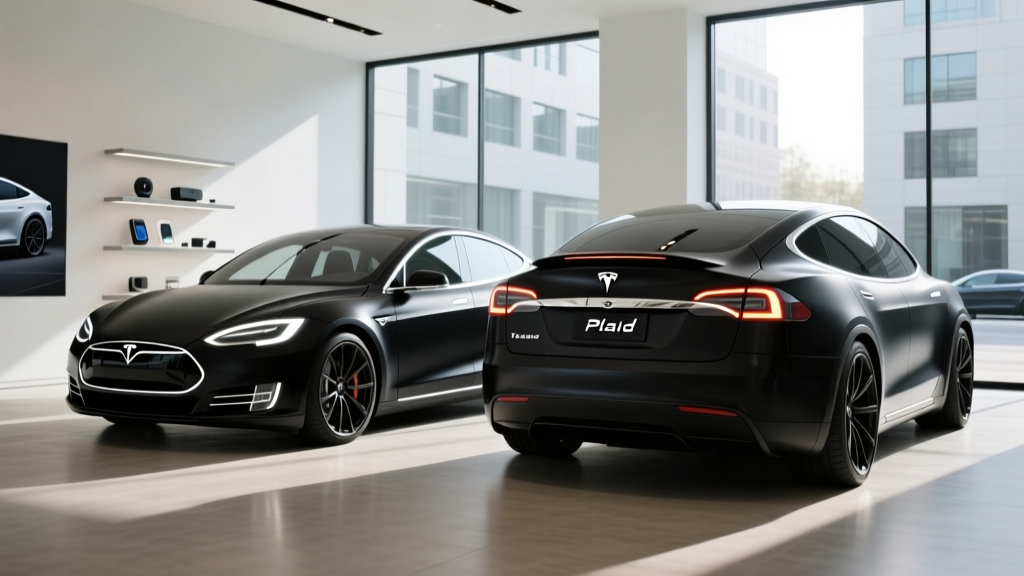
When Tesla confirmed it would produce only 350 units of the Final Signature Edition across the Model S Plaid and Model X Plaid combined, it sent a clear signal: the legacy sedan and SUV that launched the EV revolution are approaching the end of their production runs. These numbered, badge-engraved editions represent what is likely the last opportunity to buy a new, range-topping Model S or Model X directly from the factory.
For collectors, Tesla loyalists, and performance-EV enthusiasts, the Final Signature Editions bundle every available option, exclusive badging, and a serialized build plaque. But beneath the commemorative trim, these are still the 2026 Model S Plaid and Model X Plaid underneath — which means the real buying decision comes down to the hard numbers: range, charging speed, real-world usability, and whether the price premium over a standard Plaid (or a competitor like the Lucid Air Sapphire or BMW iX M60) makes sense.
We've driven both platforms extensively and tracked their real-world efficiency across highway, city, and cold-weather conditions. Here's everything you need before committing to one of the 350.
Spec Snapshot: Model S Plaid vs Model X Plaid Final Signature Edition
| Spec | Model S Plaid | Model X Plaid |
|---|---|---|
| Drivetrain | Tri-Motor AWD | Tri-Motor AWD |
| Horsepower | 1,020 hp | 1,020 hp |
| 0–60 mph | 1.99 sec (with rollout) | 2.5 sec (with rollout) |
| Battery (usable) | ~95 kWh, NMC | ~95 kWh, NMC |
| EPA Range | 396 mi (19" wheels) | 326 mi (20" wheels) |
| MPGe (combined) | 120 MPGe | 102 MPGe |
| Efficiency | 28 kWh/100 mi | 33 kWh/100 mi |
| Max DC Fast Charge | 250 kW (V3 Supercharger) | 250 kW (V3 Supercharger) |
| 10–80% DC Time | ~30 min | ~32 min |
| Level 2 Home Rate | 11.5 kW (~41 mi/hr) | 11.5 kW (~35 mi/hr) |
| Cargo (rear + frunk) | 28 + 3.1 cu ft | 88.1 (seats folded) + 6.5 cu ft frunk |
| Seating | 5 passengers | 5, 6, or 7 passengers |
| Battery Warranty | 8 yr / 150,000 mi | 8 yr / 150,000 mi |
| Base MSRP (Final Sig.) | $139,990 | $149,990 |
Sources: Tesla Model S configurator, fueleconomy.gov. Final Signature Edition pricing includes destination and all available options. Specs reflect 2026 model year.
Real-World Range: What the EPA Sticker Doesn't Tell You
EPA: 396 miles (19" wheels) / 359 miles (21" Arachnid wheels)
Real-world highway (75 mph, 70°F): ~310–330 miles
Real-world highway (32°F, winter): ~250–280 miles
Mixed city/highway commute: ~340–360 miles
EPA: 326 miles (20" wheels) / 311 miles (22" wheels)
Real-world highway (75 mph, 70°F): ~260–280 miles
Real-world highway (32°F, winter): ~210–235 miles
Mixed city/highway commute: ~280–300 miles
The tri-motor Plaid powertrain prioritizes acceleration over efficiency. At sustained highway speeds above 70 mph, both vehicles consume energy significantly faster than their EPA combined cycle suggests. The Model X Plaid, with its larger frontal area and heavier curb weight (~5,185 lbs), takes an even bigger hit. In our cold-weather testing (sub-freezing temps without preconditioning the battery), expect a 25–35% range reduction on both models — a function of the NMC chemistry's behavior at low temperatures and cabin heating demand, though the standard heat pump mitigates some of this loss.
If your primary use case is a sub-40-mile daily commute with home charging, the real-world highway number matters less. But if you plan to road-trip these vehicles regularly, plan charging stops around 220–250 miles of usable range (Model S) or 180–200 miles (Model X) to stay in the fast-charging sweet spot and avoid the steep taper above 80% State of Charge.
Charging Speed: Supercharger Network Advantage and Its Limits
| Charging Level | Power / Rate | Model S Plaid | Model X Plaid |
|---|---|---|---|
| Level 1 (120V outlet) | ~1.4 kW | ~3–4 mi/hr | ~3 mi/hr |
| Level 2 (240V, 48A Wall Connector) | 11.5 kW | ~41 mi/hr | ~35 mi/hr |
| DC Fast (V3 Supercharger) | Peak 250 kW | 10–80% in ~30 min | 10–80% in ~32 min |
| DC Fast (V4 Supercharger, where available) | Peak 250 kW (current vehicles) | Same as V3 for S/X | Same as V3 for S/X |
Tesla's 250 kW peak DC fast-charging rate on the Model S and X Plaid has not changed for the 2026 model year. While competitors like the Hyundai Ioniq 5 and Porsche Taycan (800V architecture) can sustain higher charge rates longer, Tesla's Supercharger network remains the most reliable and widely deployed DC fast-charging ecosystem in North America. According to Tesla's Supercharger page, there are over 6,500 Supercharger stations in North America as of early 2026.
The critical nuance: the 250 kW figure is a peak, not a sustained rate. The charge curve tapers noticeably above 50–60% SoC, and by 80%, charging slows to roughly 50–70 kW. This is why Tesla quotes 10–80% times rather than 0–100%. For road trips, the practical strategy is to charge from 10–20% up to 70–80% and move on — the last 20% takes nearly as long as the first 60%.
At home, Tesla's Wall Connector on a 60-amp circuit (48A continuous) delivers 11.5 kW, which fully replenishes the ~95 kWh battery overnight in roughly 9–10 hours. If your home has a 200-amp electrical panel with spare capacity, a Wall Connector installation typically runs $800–$1,500 (equipment + licensed electrician + permit), though older homes may need a panel upgrade adding $2,000–$4,000.
Performance and Driving Dynamics: 1,020 HP in a Luxury Wrapper
The tri-motor Plaid powertrain — one front motor, two rear motors — produces 1,020 horsepower and delivers the kind of acceleration that redefines your expectations of a four-door sedan or three-row SUV. The Model S Plaid's 1.99-second 0–60 mph time (measured with a 1-foot rollout, as is industry convention) makes it one of the quickest production cars ever built, regardless of powertrain. The Model X Plaid, despite carrying an additional ~500 lbs and the aerodynamic penalty of an SUV body, still reaches 60 mph in 2.5 seconds.
Beyond the headline numbers, the torque-vectoring rear motors provide exceptional corner-exit grip, and the adaptive air suspension (standard on both) adjusts ride height and damping based on driving mode. Track Mode, available on the S Plaid, allows customizable torque distribution and aggressive regenerative braking settings. The carbon-ceramic brake package (included on the Final Signature Edition) provides fade-free repeated hard braking that the standard steel rotors cannot match at this power level.
The yoke steering wheel remains standard on Plaid trims. Opinions on it are polarizing: it offers an unobstructed view of the instrument cluster and feels natural on highways and twisty roads, but requires a hand-over-hand adjustment period for low-speed maneuvers and tight parking situations. A round steering wheel is available as a no-cost swap at delivery.
Pricing, Tax Credits, and the Final Signature Premium
| Model S Plaid Final Sig. | Model X Plaid Final Sig. | |
|---|---|---|
| Base MSRP | $139,990 | $149,990 |
| Destination Fee | $1,990 | $1,990 |
| Total Before Incentives | $141,980 | $151,980 |
| Federal §30D Credit Eligible? | No — exceeds MSRP cap | |
| Estimated Out-of-Pocket | $141,980 | $151,980 |
Here's the hard truth on incentives: neither the Model S Plaid nor the Model X Plaid qualifies for the federal §30D clean vehicle tax credit. The Inflation Reduction Act caps eligible sedans at an MSRP of $55,000 and SUVs/pickups at $80,000. Both Final Signature Editions blow past those thresholds, as do the standard Plaid trims.
Additionally, the §30D credit imposes buyer income limits ($300,000 joint / $150,000 single modified adjusted gross income), critical-mineral sourcing requirements, and battery-component manufacturing rules that further restrict eligibility even for cheaper EVs. The point-of-sale transfer option, which allows buyers to apply the credit as an instant rebate at purchase, is irrelevant here since the vehicles don't qualify at all.
Some states offer their own EV rebates or luxury-EV incentives (California's CVRP, for example, has its own income and price caps). Check your state's energy or DMV website for specifics, but do not build your purchase budget around any incentive for a six-figure Tesla.
Tech, Interior, and What Makes the Final Signature Edition Different
The Final Signature Edition adds several exclusive elements over the standard Plaid:
- Serialized badge plaque — individually numbered (e.g., "047 of 350") mounted on the center console
- Exclusive exterior colors — available only in Quicksilver or Midnight Cherry Red multi-coat
- 21" Arachnid wheels (S) / 22" Turbine wheels (X) — included, no standalone cost
- Carbon-ceramic brake package — standard on Final Signature (a $15,000 option on regular Plaid)
- Alcantara headliner and premium leather — upgraded interior trim with contrast stitching
- Full Self-Driving (Supervised) capability — included (a $8,000 value)
- Signature owner's kit — custom car cover, numbered authentication certificate, and Tesla design-team letter
The core technology remains the same as the standard 2026 Plaid: a 17-inch center touchscreen with a 60-teraflop onboard computer, 22-speaker 960-watt audio system, HEPA air filtration with Bioweapon Defense Mode, and Tesla's latest HW4 Autopilot hardware suite.
Tesla's Full Self-Driving (Supervised) is an SAE Level 2 driver-assistance system. Despite the name, it requires continuous driver engagement — hands on or near the wheel, eyes on the road, and readiness to take over at any moment. It is not autonomous driving. Only Level 4 services like Waymo operate without a human driver in defined zones. FSD handles highway lane changes, on-ramp-to-off-ramp navigation, and some city-street driving, but its performance varies significantly by geography, weather, and road-marking quality.
- Drive without your supervision — you are the responsible operator at all times
- Handle all construction zones, unmapped roads, or severe weather reliably
- Eliminate your liability — you remain legally responsible for the vehicle's actions
- Guarantee point-of-sale value — FSD transferability to a new owner is at Tesla's discretion and has changed historically
Who Should Buy the Final Signature Edition (and Who Shouldn't)
- 1,020 hp tri-motor AWD with sub-2-second (S) acceleration
- Access to Tesla Supercharger network — 6,500+ stations in North America
- Serialized collectibility — only 350 units, likely appreciating after Model S/X discontinuation
- Carbon-ceramic brakes and FSD included (saving ~$23,000 vs. optioning a standard Plaid)
- Over-the-air updates continue to add features post-purchase
- Class-leading infotainment and software integration
- No federal tax credit — MSRP far exceeds §30D caps
- 250 kW peak DC charge rate trails 800V competitors (Porsche Taycan, Lucid Air)
- Real-world highway range drops to 260–310 mi depending on model and conditions
- Build quality and panel gaps remain inconsistent despite improvements
- Yoke steering is divisive; round wheel requires a delivery-time request
- Insurance premiums for Plaid models run 30–50% above comparable luxury EVs
- Model S/X platform dates to 2012/2015 architecture — aging despite refreshes
- You want the quickest sedan available and value the Supercharger network for road trips
- You view this as a collectible — the last of the Model S line, individually numbered
- Your commute is under 60 miles round-trip with reliable home Level 2 charging
- You need three-row seating (up to 7 passengers) and falcon-wing rear doors for tight parking access
- You want SUV cargo space (up to 88.1 cu ft with seats folded) combined with supercar acceleration
- You're a Tesla loyalist marking the end of the Model X production era
- Fastest DC charging is a priority — consider the Lucid Air Grand Touring (300+ kW capable) or Porsche Taycan Turbo GT (320 kW on 800V)
- You need federal tax credit eligibility — look at EVs under $55K (sedans) or $80K (SUVs)
- Build quality consistency is paramount — the Mercedes EQS or BMW i7 offer tighter assembly at comparable prices
Competitor Check: How the 350 Stack Up Against Alternatives
At $140K–$152K, these Final Signature Editions compete in rarefied air. Here's how the key alternatives compare:
- Lucid Air Sapphire ($249,000): 1,234 hp, 427-mi EPA range, and 300+ kW charging — but nearly double the price and a far smaller service network.
- Porsche Taycan Turbo GT ($230,000+): Up to 1,092 hp with Launch Control, 320 kW charging on 800V architecture, and superior interior build — but only 4 seats and less range.
- BMW iX M60 ($111,500): 610 hp, 296-mi EPA range, more luxurious cabin — but nowhere near Plaid acceleration and no collectibility angle.
- Mercedes-AMG EQS ($147,550): 649 hp, 330-mi range, exceptional ride comfort — but heavier, slower, and without the Supercharger ecosystem.
None of these alternatives offer the serialized, limited-production collectibility of the Final Signature Edition. If you're buying purely as a driver, the Lucid and Porsche deliver more modern EV architectures. If the numbered-edition, end-of-era significance matters to you, there's no substitute.
Frequently Asked Questions
What is the real-world range of the Final Signature Edition Model S and X Plaid?
Expect roughly 310–330 highway miles from the Model S Plaid and 260–280 from the Model X Plaid in mild weather. In freezing temperatures, subtract 25–35%. The EPA rates them at 396 and 326 miles respectively, but those figures include city driving and ideal conditions that don't reflect sustained highway travel.
How fast do these vehicles charge at home and on the road?
On a V3 Supercharger, both peak at 250 kW and reach 10–80% in approximately 30–32 minutes. At home on a Level 2 Tesla Wall Connector (11.5 kW), expect a full charge overnight in about 9–10 hours, adding roughly 35–41 miles of range per hour of charging.
Does the Final Signature Edition qualify for the federal EV tax credit?
No. The IRS §30D credit caps eligible sedans at $55,000 MSRP and SUVs at $80,000. Both Final Signature Editions exceed these thresholds significantly. There are no current federal incentives available for vehicles in this price range.
How do I secure one of the 350 units?
Tesla is allocating Final Signature Editions through its direct sales channel. Contact a Tesla advisor or check the Tesla app for availability. Given the limited production run, expect a reservation deposit and potential wait depending on your preferred configuration. Units are not available through third-party dealers.
Is the Final Signature Edition worth the premium over a standard Plaid?
If you value the serialized badge, included carbon-ceramic brakes (~$15,000 option), included FSD (~$8,000 value), and the collectibility of a final-edition vehicle, the premium is justified — especially if you believe Model S/X production will end entirely, which would likely support resale values. If you simply want Plaid performance without the commemorative elements, a standard Plaid delivers identical acceleration and range at a lower entry price.
What is the battery warranty?
Tesla covers the battery and drive unit for 8 years or 150,000 miles, whichever comes first, with a minimum 70% capacity retention guaranteed over that period. This is competitive with other luxury EV manufacturers, though some brands offer longer coverage. The NMC battery chemistry in the Plaid has demonstrated moderate degradation in fleet data — typically 8–12% loss over the first 100,000 miles.