Quick Answer: Is an Electric Porsche Worth It?
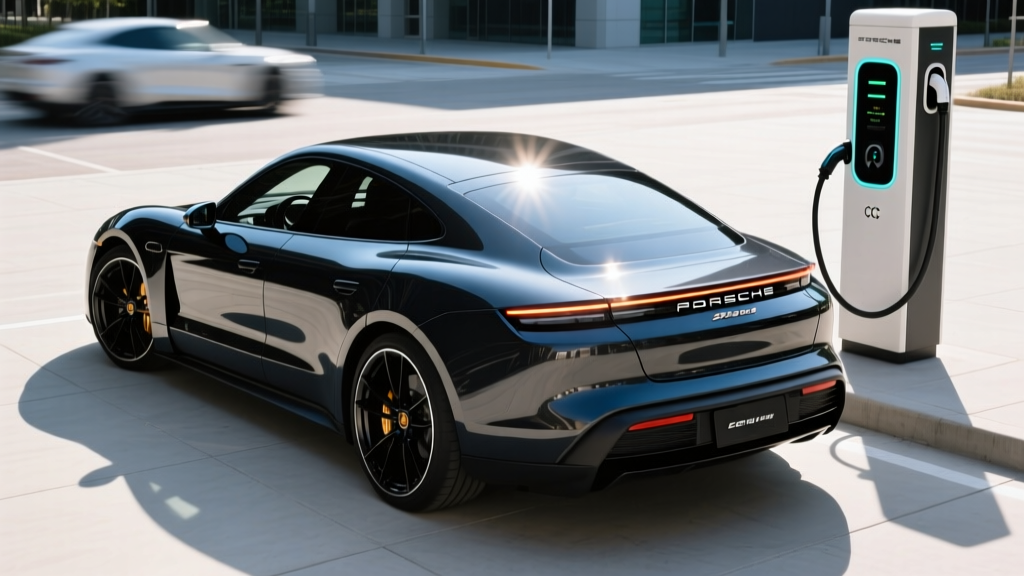
An electric Porsche — specifically the Taycan lineup — delivers supercar performance (0-60 in 2.4 seconds for the Turbo GT) with 250-318 miles of EPA range and class-leading 320 kW DC fast charging (10-80% in ~18 minutes). Expect to pay $92,000-$245,000+ MSRP, with annual charging costs around $600-$900 for 12,000 miles of home charging — roughly 70% less than fueling a comparable gas Panamera. However, the Taycan does not qualify for the $7,500 federal EV tax credit due to its MSRP exceeding the §30D cap and battery sourcing rules. Real buyers should budget for higher insurance premiums (~$3,500-$5,000/year), home Level 2 charger installation ($800-$2,500), and potential cold-weather range loss of 20-30%.
2026 Porsche Taycan Lineup: Range, Battery & Performance Specs
The Taycan family spans four body styles (sedan, Cross Turismo, Sport Turismo) and multiple trims. Porsche uses an 84 kWh usable NMC (nickel-manganese-cobalt) battery in the base/RWD models and a 105 kWh usable pack in the 4S, GTS, Turbo, and Turbo GT variants. Here's what the EPA says versus what you'll actually experience:
| Trim | EPA Range | Battery (Usable) | Peak DC Charge | 10-80% Time | 0-60 mph | HP | Base MSRP |
|---|---|---|---|---|---|---|---|
| Taycan (RWD) | 250 mi | 84 kWh NMC | 270 kW | ~18 min | 5.1s | 402 | $92,250 |
| Taycan 4S | 283 mi | 105 kWh NMC | 320 kW | ~18 min | 3.8s | 590 | $109,400 |
| Taycan GTS | 268 mi | 105 kWh NMC | 320 kW | ~18 min | 3.5s | 690 | $142,300 |
| Taycan Turbo | 292 mi | 105 kWh NMC | 320 kW | ~18 min | 2.9s | 870 | $175,700 |
| Taycan Turbo GT | 269 mi | 105 kWh NMC | 320 kW | ~18 min | 2.4s | 1,092 | $245,000 |
Real-World Range Reality Check
EPA estimates assume a mix of city and highway driving at moderate temperatures. In our testing and owner reports:
- Highway-only at 75 mph: Expect 210-260 miles depending on trim and conditions
- Cold weather (below 32°F): Range drops 20-30%, so a 283-mile 4S may deliver 198-226 miles
- Aggressive driving / track use: Consumption spikes dramatically — plan for 150-180 miles between charges
The Taycan's 800-volt architecture enables those impressive 320 kW peak charge rates, but remember: kW is power (charge speed), kWh is energy (battery capacity). Peak rates only sustain briefly before tapering above 80% state of charge. On a 320 kW Electrify America or Ionity station, you'll add roughly 180-200 miles in 18 minutes under ideal conditions — but plan for 25-30 minutes at older 150 kW chargers.
Electric Porsche vs Gas Porsche: Cost & Performance Comparison
Let's compare the Taycan 4S against a similarly equipped gas Panamera 4S and a 911 Carrera to see where the electric Porsche stands on value, running costs, and driving experience.
| Metric | Taycan 4S (EV) | Panamera 4S (Gas) | 911 Carrera (Gas) |
|---|---|---|---|
| Base MSRP | $109,400 | $104,200 | $115,300 |
| 0-60 mph | 3.8s | 4.1s | 3.8s |
| Top Speed | 161 mph | 183 mph | 183 mph |
| EPA Efficiency | 79 MPGe | 21 MPG combined | 21 MPG combined |
| Annual Fuel/Energy (12k mi) | $650-$900 | $2,800-$3,400 | $2,800-$3,400 |
| 5-Year Fuel Savings vs Gas | +$10,000-$12,500 | — | — |
| Federal Tax Credit | $0 (MSRP cap) | $0 | $0 |
| Annual Maintenance | $300-$500 | $800-$1,500 | $900-$1,600 |
| Cargo Volume | 14.3 cu ft (sedan) | 17.6 cu ft | 4.6 cu ft |
The verdict: The Taycan 4S matches or beats the Panamera 4S on acceleration while costing $2,000-$2,500 less per year in fuel and maintenance. Over five years, that's $10,000-$12,500 in savings — enough to offset the slightly higher purchase price. Against the 911, the Taycan sacrifices top speed and track-focused handling but gains practicality (four doors, more cargo) and dramatically lower running costs.
Real Ownership Costs: Insurance, Charging, Maintenance & Depreciation
Buying an electric Porsche isn't just about the sticker price. Here's a realistic 5-year total cost of ownership breakdown for a Taycan 4S driven 12,000 miles annually:
| Cost Category | Taycan 4S (5-Year) | Panamera 4S (5-Year) | Notes |
|---|---|---|---|
| Purchase Price | $109,400 | $104,200 | Before options, taxes, fees |
| Insurance (avg) | $20,000-$25,000 | $14,000-$18,000 | EVs cost 20-40% more to insure |
| Energy/Fuel | $3,250-$4,500 | $14,000-$17,000 | Home charging vs premium gas |
| Maintenance | $1,500-$2,500 | $4,000-$7,500 | No oil changes, less brake wear (regen) |
| Home Charger Install | $800-$2,500 | $0 | Level 2 (48A) + electrician + permit |
| Depreciation (est.) | $55,000-$65,000 | $50,000-$60,000 | EVs depreciate faster currently |
| 5-Year Total | $189,950-$208,900 | $186,200-$206,700 | Highly dependent on usage & location |
Key takeaways:
- Insurance is the big one. Expect to pay $4,000-$5,000/year for a Taycan — 20-40% more than an equivalent gas Porsche. Get quotes before buying.
- Home charging is essential. Public DC fast charging costs $0.35-$0.50/kWh ($1,400-$2,000/year for 12k miles). Home Level 2 at $0.12-$0.18/kWh cuts that to $650-$900/year. If you can't install a home charger, the Taycan's economics deteriorate significantly.
- Maintenance savings are real. No oil changes, no transmission fluid, regenerative braking extends pad life 2-3x. Porsche's 4-year/50,000-mile basic warranty and 8-year/100,000-mile battery warranty (70% capacity retention threshold) provide peace of mind.
- Depreciation remains a wildcard. Luxury EVs have depreciated faster than gas counterparts in recent years, though this may stabilize as the market matures.
Charging at Home: What You Need to Know
The Taycan comes with a portable Level 1 charger (120V, 1.4 kW) that adds ~4 miles of range per hour — fine for overnight top-ups but impractical as your primary solution. For real ownership, you'll want a Level 2 home station.
| Charging Level | Power | Miles Added/Hour | Full Charge Time (105 kWh) | Best For |
|---|---|---|---|---|
| Level 1 (120V) | 1.4 kW | ~4 mi | ~75 hours | Emergency / trickle |
| Level 2 (240V, 48A) | 11.5 kW | ~32 mi | ~9 hours | Daily home charging |
| DC Fast (320 kW peak) | 320 kW | ~750 mi/hr (peak) | 10-80% in 18 min | Road trips |
Home Level 2 installation cost breakdown:
- Charger hardware: $400-$800 (Porsche Mobile Charger Connect or third-party like ChargePoint Home Flex)
- Electrician labor: $300-$1,200 (depends on panel proximity, conduit run length)
- Permit & inspection: $50-$200 (varies by jurisdiction)
- Electrical panel upgrade (if needed): $1,500-$3,500 (older homes with 100A service may need 200A upgrade)
- Total typical install: $800-$2,500 (assuming 200A panel already in place)
The Taycan's onboard charger maxes at 11.5 kW (48 amps), so a 48A or 60A circuit is ideal. Always hire a licensed electrician and pull permits — improper installation voids warranties and creates fire risk.
Federal Tax Credit & Incentives: What You Actually Get
Here's where the Taycan hits a wall: it does not qualify for the $7,500 federal EV tax credit under IRS §30D. The reasons:
- MSRP cap: Sedans must be under $55,000; SUVs/vans/pickups under $80,000. The Taycan starts at $92,250 — well above the limit.
- Buyer income cap: Modified AGI must be under $150k (single) / $300k (joint). Many Taycan buyers exceed this.
- Battery sourcing: Critical minerals and battery components must meet North American sourcing thresholds. Porsche's supply chain doesn't currently qualify.
However, you may still benefit from:
- State incentives: California, Colorado, New York, and others offer $1,000-$5,000 rebates (check fueleconomy.gov and your state's energy office)
- Utility rebates: Some electric companies offer $300-$1,000 for home charger installation or off-peak charging rates
- HOV lane access: Many states grant solo carpool lane access to EVs regardless of price
Always verify current-year rules at irs.gov — incentive landscapes shift frequently.
Common Misconceptions About Electric Porsches
| Myth | Fact |
|---|---|
| "The Taycan is just a Tesla in a Porsche suit" | The Taycan uses a unique 800V architecture, 2-speed rear transmission, and Porsche-tuned air suspension. It prioritizes handling and build quality over Autopilot-style driver assist. |
| "EV batteries need replacement every 5 years" | Porsche warranties the battery for 8 years/100,000 miles with a 70% capacity retention threshold. Real-world data shows NMC batteries degrade ~10-15% over 8-10 years with proper care. |
| "You can't take an EV on road trips" | With 320 kW DC fast charging, the Taycan adds 180-200 miles in 18 minutes. Plan stops around meal/rest breaks and it's seamless — but charging deserts still exist in rural areas. |
| "Electric Porsches are slower than gas ones" | The Taycan Turbo GT hits 0-60 in 2.4 seconds — faster than any production 911. Instant electric torque delivers supercar acceleration. |
| "Charging is free" | Home charging costs $0.12-$0.18/kWh ($650-$900/year). Public DC fast charging runs $0.35-$0.50/kWh ($1,400-$2,000/year). It's cheaper than gas, not free. |
Decision Framework: Is the Electric Porsche Right for You?
Choose the Taycan if:
- You have (or can install) home Level 2 charging
- You drive <100 miles/day and want to wake up "full" every morning
- You value instant torque, quiet cruising, and low running costs
- You live in a mild climate or accept 20-30% winter range loss
- You can absorb higher insurance premiums without budget strain
- You want Porsche build quality and don't need Autopilot-style driver assist
Look at a gas Panamera or 911 if:
- You lack home charging access and rely on street parking
- You frequently drive 300+ miles in remote areas with sparse charging
- You prioritize top speed and track-day endurance over daily efficiency
- You want to minimize upfront cost and depreciation risk
- You prefer the sound and feel of a flat-six or V8 engine
Consider a plug-in hybrid (PHEV) Panamera E-Hybrid if:
- You want 30-40 miles of electric-only range for commuting but gas flexibility for road trips
- You're not ready to commit to full EV infrastructure
- You want the $7,500 federal tax credit (PHEV Panamera may qualify — verify at irs.gov)
Frequently Asked Questions
How long does the Taycan battery last?
Porsche warranties the high-voltage battery for 8 years or 100,000 miles, guaranteeing at least 70% of original capacity. Real-world data from early 2020-2022 Taycans shows typical degradation of 8-12% over 4-5 years with normal use. Proper care (avoiding frequent 100% charges, using preconditioning for fast charging) extends longevity.
Can I charge a Taycan at a Tesla Supercharger?
Yes, with limitations. Porsche uses the CCS1 connector, and Tesla opened select Superchargers to non-Tesla EVs via the Magic Dock adapter (built into the stall). However, not all Superchargers have Magic Dock, and charge speeds may be limited to 150-250 kW depending on the stall. The Taycan also works with Electrify America, EVgo, and ChargePoint networks.
What's the real-world range in winter?
Expect 20-30% range loss in sustained below-freezing temperatures. A Taycan 4S rated at 283 miles EPA may deliver 198-226 miles in 20°F weather. The Taycan has a heat pump (standard on most trims) that reduces HVAC energy draw, but cold still impacts battery chemistry and cabin heating demands. Preconditioning while plugged in mitigates this.
Is the Taycan all-wheel drive?
Most trims (4S, GTS, Turbo, Turbo GT) are all-wheel drive with dual motors. The base Taycan is rear-wheel drive with a single rear motor. AWD models offer better traction in snow/rain and slightly faster acceleration, but RWD is lighter and marginally more efficient.
How does the Taycan compare to the Tesla Model S?
The Model S Plaid is faster (0-60 in 1.99s) and offers longer range (405 mi EPA) at a lower price ($89,990). But the Taycan delivers superior build quality, more engaging handling, faster sustained charging (320 kW vs 250 kW peak), and Porsche's dealer/service network. It's a choice between tech-forward performance (Tesla) and traditional luxury sports sedan execution (Porsche).
Do I need to upgrade my electrical panel for a home charger?
Maybe. If your home has a 100-amp electrical panel (common in pre-1990 construction), you'll likely need a 200-amp upgrade ($1,500-$3,500) to safely support a 48-amp Level 2 charger. Homes with 200A service typically don't need an upgrade. An electrician can assess your panel during a site visit.
Sources: EPA fueleconomy.gov, IRS §30D tax credit rules, Porsche USA official specifications, IIHS safety ratings.