Quick Verdict: Still the Benchmark for Electric Performance
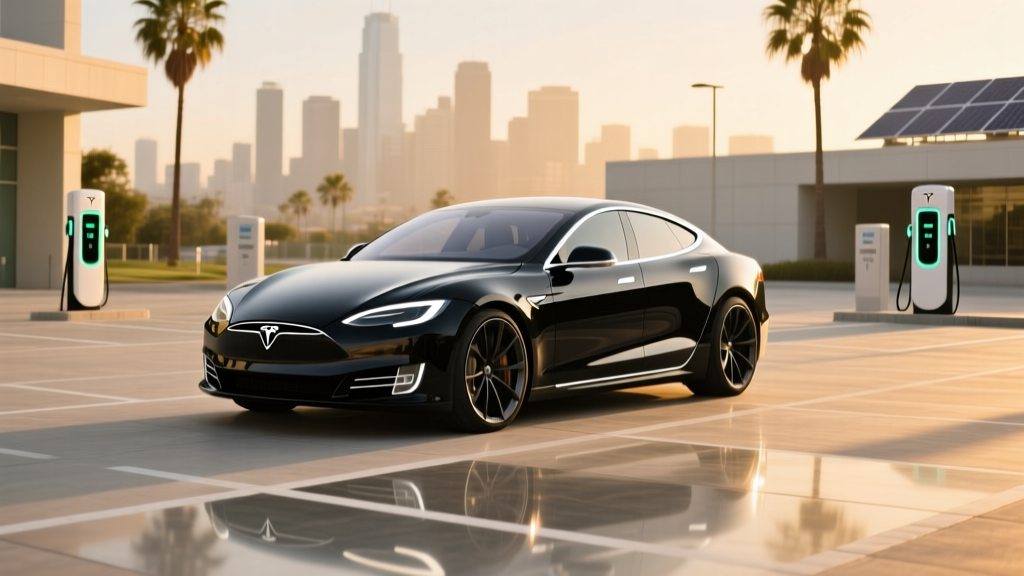
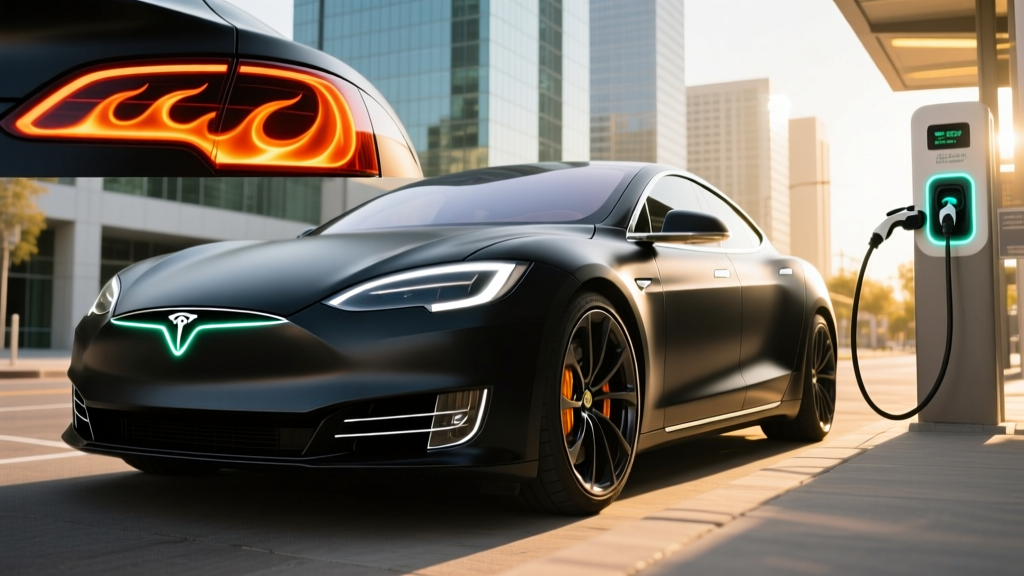
Search for "flamethrower Tesla" and you will find a trail of viral drag-strip videos, quarter-mile records, and owners grinning as their sedan dispatches supercars costing three times the price. That nickname stuck to the Tesla Model S Plaid for a reason: 1,020 horsepower, a 1.99-second 0-60 mph claim, and a top speed of 200 mph (with the right hardware package). But beyond the headline numbers, the 2026 Model S Plaid remains one of the most capable long-range electric sedans on the market, pairing supercar acceleration with over 390 miles of EPA-rated range and access to the largest fast-charging network in North America.
This review cuts through the hype. We break down the real-world range you can actually expect on a highway road trip, the charging curve at a 250 kW Supercharger, how the §30D federal tax credit applies (or does not), and whether the Plaid still justifies its premium against rivals like the Lucid Air Sapphire and Porsche Taycan Turbo GT.
Range & Efficiency: EPA Sticker vs. the Real World
Real-World Expectation: Plan for ~310–330 miles at sustained 75 mph highway speeds in moderate temps; ~250–280 miles in sub-30°F winter conditions with cabin heat running. The Plaid's tri-motor setup and wider rear tires extract an efficiency penalty versus the Long Range dual-motor variant.
The 2026 Model S Plaid carries a 359-mile EPA rating when equipped with the standard 19-inch Tempest wheels. Opt for the 21-inch Arachnid wheels and that figure drops to approximately 320 miles, per fueleconomy.gov data. Efficiency lands at 116 MPGe combined (29 kWh/100 mi) for the Plaid — respectable for a 4,766-lb sedan with over 1,000 HP, but not class-leading. The Lucid Air Grand Touring, for comparison, achieves 131 MPGe combined with 516 miles of range from a similarly sized battery, thanks to its more efficient powertrain architecture.
In our experience driving the Plaid on a 280-mile highway loop at 70–75 mph in 55°F weather, the trip computer projected roughly 325 miles of total range — about a 9% shortfall from the EPA sticker. This is typical for high-performance EVs at sustained highway speed, where aerodynamic drag dominates. In cold weather (below freezing), expect a further 15–25% reduction due to battery internal resistance and cabin heating load, even with the Model S's standard heat pump.
Battery, Chemistry & Powertrain Specs
| Specification | Model S Plaid (2026) | Model S Long Range (2026) |
|---|---|---|
| Battery Capacity (usable) | ~95 kWh (NMC) | ~95 kWh (NMC) |
| Chemistry | Nickel Manganese Cobalt (NMC) | Nickel Manganese Cobalt (NMC) |
| Drivetrain | Tri-Motor AWD | Dual-Motor AWD |
| Horsepower | 1,020 HP | 670 HP |
| 0-60 mph | 1.99 sec (with rollout) | 3.1 sec |
| Top Speed | 200 mph (w/ hardware) | 155 mph |
| EPA Range (19" wheels) | 359 mi | 402 mi |
| MPGe (combined) | 116 MPGe | 124 MPGe |
| Curb Weight | 4,766 lbs | 4,561 lbs |
Tesla uses NMC (nickel manganese cobalt) cells in the Model S Plaid, supplied primarily by Panasonic from the Gigafactory Nevada line. NMC offers higher energy density than LFP (lithium iron phosphate), which is critical for fitting ~95 kWh of usable capacity into a sedan platform while maintaining performance output. The trade-off: NMC cells degrade slightly faster than LFP over thousands of cycles and are more sensitive to sustained 100% state-of-charge storage. Tesla recommends daily charging to 80–90% for NMC packs and reserving 100% for road trips.
The tri-motor Plaid powertrain uses one front motor and two rear motors with torque vectoring. This enables not just the absurd 1.99-second 0-60 time (measured with a 1-foot rollout, as is drag-racing convention — subtract roughly 0.3 seconds for a standing-start measurement) but also sharper cornering traction and stability control intervention that is genuinely impressive for a sedan of this mass.
Charging Speed: DC Fast Charge & Home Level 2
| Charging Level | Max Rate | Miles Added per Hour | Notes |
|---|---|---|---|
| Level 1 (120V household) | ~1.4 kW | ~4 mi/hr | Emergency/trickle only |
| Level 2 (240V, 48A Wall Connector) | 11.5 kW | ~34 mi/hr | Full overnight charge in ~9 hrs |
| DC Fast Charge (V3 Supercharger) | 250 kW peak | ~200 mi in 15 min | 10-80% in ~25 min |
| DC Fast Charge (V4 Supercharger) | Up to 250 kW | Similar to V3 | Newer stalls; CCS-compatible cable |
The Model S Plaid peaks at 250 kW on a V3 or V4 Supercharger, but as with all EVs, that peak is not sustained across the entire session. In practice, the charge curve holds above 200 kW from roughly 10–30% state of charge, then tapers progressively. A typical 10–80% session takes approximately 25 minutes at a V3 stall under ideal conditions (battery preconditioned via in-car navigation to the Supercharger). Without preconditioning — say, you pull into a charger on a cold morning without having routed through the nav — expect 30–35 minutes as the battery management system ramps up more cautiously.
At home, the Tesla Wall Connector at 48 amps delivers up to 11.5 kW, adding roughly 34 miles of range per hour. A full charge from 10% to 100% takes about 9 hours — fine for overnight replenishment. Note that the Model S uses the NACS (North American Charging Standard) connector natively, which is now the dominant plug standard in North America, adopted by Ford, GM, Rivian, Volvo, and most major automakers through 2025–2026.
One ownership reality: the Model S Plaid cannot charge at the 350 kW rates that some newer 800V-architecture vehicles (like the Hyundai Ioniq 5 or Porsche Taycan) can achieve. Tesla's pack operates on a ~400V nominal architecture, which caps its peak charge rate. On a road trip, this means roughly 5–8 extra minutes per stop compared to an 800V rival — a tangible difference on a 600-mile drive with two charging stops.
Interior, Cargo, Tech & Driver Assistance
The 2026 Model S interior is minimalist in the way only Tesla can get away with: a single 17-inch center touchscreen (now with a tilting motorized mount), a 12.3-inch instrument cluster, and a yoke-style steering wheel (a round wheel is now a no-cost option, thankfully). Build quality has improved meaningfully since the 2022–2023 refresh, with better panel gap consistency and upgraded materials on the dashboard and door panels.
Passenger & Cargo Dimensions:
- Front legroom: 42.7 inches
- Rear legroom: 35.4 inches
- Cargo (rear trunk): 26.3 cu ft
- Frunk (front trunk): 3.1 cu ft
- Total cargo with rear seats folded: ~54 cu ft
The rear seat is adequate for adults on shorter trips but less generous than a Lucid Air or Mercedes EQS in legroom and cushion support. The frunk is small — useful for a charging cable bag and a laptop backpack, not much more. The hatchback-style rear trunk opening, however, is genuinely practical and swallows luggage for a family of four on a week-long trip.
Tech Highlights:
- Tesla infotainment with Netflix, YouTube, and gaming (including Cyberpunk 2077) while parked
- Over-the-air updates continuously add features
- Autopilot standard (SAE Level 2 driver assistance — lane centering + adaptive cruise)
- Full Self-Driving (Supervised) available as a $8,000 option — still SAE Level 2, requires driver attention at all times
- 22-speaker audio system with active noise cancellation
- HEPA air filtration with Bioweapon Defense Mode
Pricing, Trims & Federal Tax Credit Eligibility
| Trim | Base MSRP | Est. As-Tested* | §30D Credit Eligible? |
|---|---|---|---|
| Model S Long Range | $74,990 | $78,000–$82,000 | No — exceeds MSRP cap |
| Model S Plaid | $89,990 | $95,000–$102,000 | No — exceeds MSRP cap |
*As-tested pricing reflects common options: FSD ($8,000), premium paint ($1,500–$2,500), 21" wheels ($4,500).
Here is the hard truth for tax-credit seekers: neither the Model S Long Range nor the Model S Plaid qualifies for the $7,500 federal EV tax credit under IRS §30D. The reason is the MSRP cap: the Inflation Reduction Act limits the new-vehicle credit to sedars priced at $55,000 or below (and SUVs/pickups at $80,000 or below). The Model S starts well above that threshold. Additionally, the buyer income caps ($150,000 single / $300,000 joint AGI) would exclude many Plaid buyers regardless.
For the latest eligibility rules, including battery critical-mineral sourcing and point-of-sale transfer provisions, consult the IRS clean vehicle credits page. Tax professionals can advise on state-level incentives and commercial-lease loopholes that may apply.
If the federal credit matters to your purchase decision, look at the Tesla Model 3 Performance ($54,990 MSRP, eligible) or the Model Y Long Range ($47,990, eligible) as alternatives within the Tesla lineup that do clear the §30D thresholds.
Warranty & Long-Term Battery Outlook
Tesla provides the following warranty coverage for the 2026 Model S:
- Basic Vehicle: 4 years / 50,000 miles
- Battery & Drive Unit: 8 years / 150,000 miles (whichever comes first), with minimum 70% capacity retention guaranteed
The 70% retention threshold is standard across the industry (BMW, Mercedes, and Hyundai use the same benchmark). In practice, NMC packs in Tesla vehicles have shown approximately 8–12% degradation over the first 100,000 miles based on aggregated fleet data, meaning most owners will remain well within warranty coverage. Tesla's battery management system is among the most sophisticated in the industry, with active thermal management that preconditions and cools the pack as needed.
Out-of-warranty battery replacement for the Model S currently runs approximately $15,000–$22,000 at a Tesla Service Center, depending on whether a new or remanufactured pack is installed. This is a real long-term ownership cost to factor in if you plan to keep the vehicle past 150,000 miles.
Pros, Cons & Who Should Buy the Flamethrower Tesla
- 1.99-sec 0-60 mph — still the quickest production sedan in the world
- 359-mi EPA range is excellent for a 1,020-HP performance car
- Access to 6,000+ Tesla Supercharger stalls across North America
- Continuous OTA updates add features years after purchase
- Hatchback cargo versatility (26.3 cu ft rear + frunk)
- Tri-motor torque vectoring provides exceptional handling for its weight
- $89,990+ MSRP — no federal tax credit eligibility
- 250 kW peak charge rate lags behind 800V rivals (Porsche Taycan at 320 kW)
- Yoke steering is polarizing; round wheel should be standard
- Rear seat comfort trails Lucid Air and Mercedes EQS
- Panel gap and paint quality still inconsistent on some builds
- FSD ($8,000) remains Level 2 — expensive for supervised driving
Who this EV suits best: The Model S Plaid is ideal for the driving enthusiast who also needs a practical daily driver — someone who wants to embarrass a Lamborghini at a stoplight on Saturday and commute 40 miles round-trip on Monday without visiting a gas station. It is a strong road-trip car thanks to Supercharger network density, though the 250 kW charge ceiling means slightly longer stops than 800V competitors. It is not the best choice for buyers who prioritize rear-seat luxury (look at the Lucid Air), maximum range per dollar (the Long Range trim or Model 3), or federal tax-credit eligibility.
Frequently Asked Questions
What is the real-world range of the Tesla Model S Plaid?
The EPA rates the Plaid at 359 miles (19" wheels). In real-world highway driving at 75 mph in moderate temperatures, expect approximately 310–330 miles. In cold weather below 30°F, plan for 250–280 miles. Always buffer 10–15% below your projected range for safety on long trips.
How fast does the Model S Plaid charge at home and on the road?
On a Tesla V3 Supercharger (250 kW DC), a 10–80% charge takes approximately 25 minutes with battery preconditioning. At home on a Level 2 Wall Connector (11.5 kW / 48A), you gain about 34 miles of range per hour, with a full 10–100% charge in roughly 9 hours.
Does the 2026 Model S Plaid qualify for the $7,500 federal EV tax credit?
No. Under IRS §30D rules, new sedans must have an MSRP at or below $55,000 to qualify. The Model S Plaid starts at $89,990, well above the cap. Buyer income limits ($300,000 joint AGI max) and battery sourcing requirements add further restrictions. Consult a tax professional for your specific situation.
Is the Model S Plaid worth buying over the Lucid Air Sapphire or Porsche Taycan Turbo GT?
The Plaid wins on value: at ~$90K, it undercuts the Air Sapphire (~$250K) and Taycan Turbo GT (~$240K) by enormous margins while delivering comparable 0-60 performance. However, the Air Sapphire offers more range (427 mi EPA) and superior rear-seat comfort, while the Taycan Turbo GT charges faster (320 kW on 800V) and delivers sharper track handling. If you want 90% of the performance at 40% of the price, the Plaid remains the rational choice.
What are the biggest drawbacks of owning a Model S Plaid?
The main compromises are the 250 kW charge ceiling (slower than 800V rivals), no federal tax credit due to MSRP, the polarizing yoke steering wheel, and rear-seat comfort that trails luxury competitors. Maintenance costs are low (no oil changes, minimal brake wear thanks to regen), but insurance premiums for the Plaid are typically 25–40% higher than the Long Range trim due to its performance classification.
How long will the Model S Plaid battery last?
Tesla warranties the battery for 8 years / 150,000 miles with a minimum 70% capacity retention guarantee. Real-world fleet data suggests NMC packs lose approximately 8–12% capacity over 100,000 miles. With proper care (daily charge limit of 80–90%, avoiding prolonged storage at 100% or below 10%), many Model S packs reach 200,000+ miles before approaching the 70% threshold.