Quick Answer: Is There an Electric Audi TT?
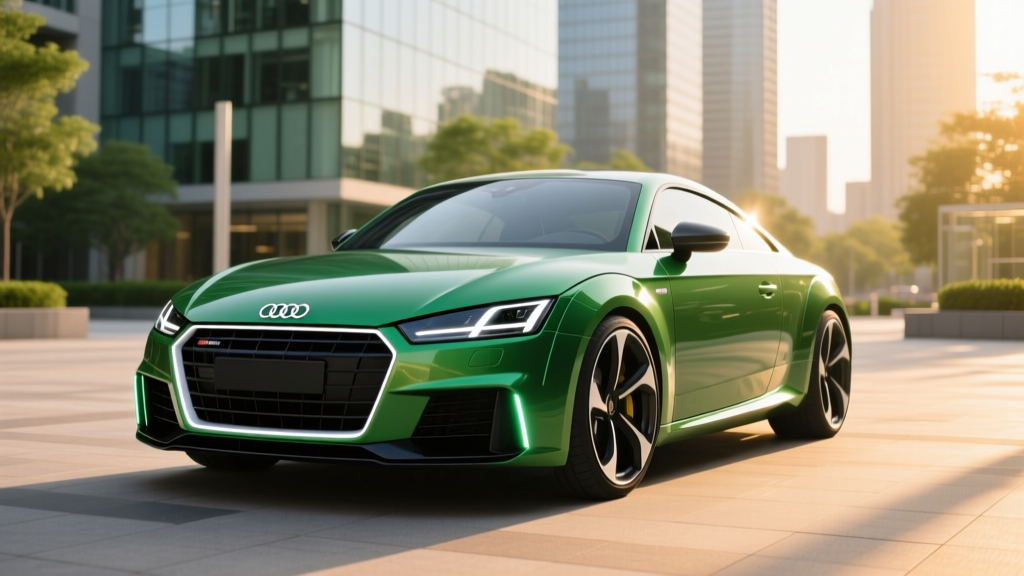
No. As of 2026, Audi has not produced or announced a battery-electric Audi TT. The TT was discontinued after the 2023 model year globally, and Audi has not confirmed a direct electric successor wearing the TT nameplate. The closest electrified Audi sports cars you can buy today are the Audi e-tron GT (a four-door electric grand tourer starting around $108,000) and the upcoming Audi Concept C, a two-door electric sports car previewed in 2024 but not yet on sale. If you want a compact, affordable electric coupe in the TT's spirit, you'll need to look at alternatives from other brands or wait for Audi's next move.
The Audi TT was an icon — a compact, stylish coupe that delivered accessible performance from 1998 through its 2023 farewell. For many enthusiasts, the natural question in 2026 is whether Audi has electrified the TT to keep it alive. The short answer is no, but the longer answer involves understanding where Audi's electric sports-car strategy actually stands, what you can buy today that fills the same role, and what the economics of those alternatives look like compared to the gas TT you remember.
Why There's No Electric Audi TT (Yet)
Audi ended TT production in November 2023 after roughly 25 years and three generations. The decision was driven by tightening emissions regulations, shifting consumer demand toward SUVs, and Volkswagen Group's broader pivot to electric platforms. However, the TT's compact dimensions, low roofline, and sports-car packaging never translated cleanly to the MEB or J1 platforms Audi has used for its EVs to date.
The Audi Concept C, unveiled in September 2024, is the closest thing to a spiritual electric TT successor. It's a low-slung, two-door coupe/roadster built on a new dedicated EV platform (reportedly the SSP Sport architecture), with a target range of over 300 miles and a focus on lightweight design. But as of early 2026, it remains a concept — Audi has confirmed a production version is planned, but no firm on-sale date, pricing, or full specs have been published. Industry estimates place a production version no earlier than the 2028 model year.
This means if you're shopping for an electric sports coupe today with TT-like character, you need to evaluate what's actually on the market.
The Closest Electrified Alternatives to the Audi TT
Since no electric Audi TT exists, here's how the nearest options stack up — including Audi's own electric offerings and competitors that capture the compact sports-coupe spirit.
| Vehicle | Powertrain | EPA Range / MPG | 0-60 mph | Starting MSRP |
|---|---|---|---|---|
| Audi e-tron GT quattro | BEV (93.4 kWh, NMC) | 238 mi (EPA) | 3.9 sec | ~$108,000 |
| Porsche Taycan (RWD) | BEV (79.2 kWh usable, NMC) | 225 mi (EPA) | 4.5 sec | ~$92,000 |
| BMW i4 M50 | BEV (81.5 kWh, NMC) | 227 mi (EPA) | 3.7 sec | ~$70,000 |
| Toyota GR86 (gas baseline) | Gas (2.4L flat-4) | 22 city / 31 hwy MPG | 6.1 sec | ~$30,000 |
| Audi Concept C | BEV (specs TBD) | 300+ mi (target, unconfirmed) | TBD | TBD (est. 2028+) |
None of these are true TT replacements in size and price. The original 2023 Audi TT 45 TFSI started around $52,000, weighed under 3,300 lbs, and measured 164 inches long. The e-tron GT, by comparison, is a 194-inch, 5,100-lb grand tourer starting at more than double the price. The BMW i4 is closer in practicality but is a four-door Gran Coupe. The Toyota GR86 captures the TT's lightweight, fun-first spirit but remains gas-only.
Cost Comparison: Electric Sports Coupe vs. Gas TT Baseline
If you're weighing whether to buy an electric sports car today or hold out for a future electric TT, the economics matter. Here's a five-year ownership comparison between the BMW i4 M50 (the closest electric coupe in spirit and performance) and a hypothetical used 2023 Audi TT 45 TFSI purchased at current market value.
| Category | BMW i4 M50 (BEV) | 2023 Audi TT 45 TFSI (Used Gas) |
|---|---|---|
| Purchase Price | $70,000 | $45,000 (est. used market) |
| Federal Tax Credit (§30D) | $0 (MSRP exceeds $55K sedan cap; BMW i4 built in Germany) | $0 (used credit limited to $4,000, income caps apply) |
| Fuel/Energy (60,000 mi) | $4,200 (home charging at $0.15/kWh, 3.5 mi/kWh avg) | $8,600 (gas at $3.50/gal, 26 MPG combined) |
| Maintenance (5 yr) | $1,800 (no oil changes, fewer brake replacements w/ regen) | $4,500 (oil, brakes, spark plugs, DSG service) |
| Insurance (5 yr est.) | $12,500 | $9,500 |
| Depreciation (est.) | $28,000 | $15,000 |
| Total 5-Year Cost | ~$88,500 | ~$67,600 |
The electric option costs roughly $21,000 more over five years, driven primarily by higher purchase price, steeper depreciation, and pricier insurance. However, the gap narrows significantly if you have access to cheap home solar charging, live in a state with additional EV incentives, or drive more than 12,000 miles per year (where the fuel savings compound). According to fueleconomy.gov, electricity costs per mile for EVs average roughly one-third to one-half of gasoline costs depending on local utility rates.
Real-World Ownership: What First-Time EV Sports Car Buyers Should Know
If you're considering stepping into an electric performance car as a TT alternative, several practical factors will shape your experience differently than the gas TT you may have owned before.
Home Charging Is Non-Negotiable for Satisfaction
Owning an EV sports car without home Level 2 charging (240V, typically 7–11 kW) means relying entirely on public DC fast charging or slow Level 1 (120V) trickle charging. A Level 2 home setup adds roughly 25–35 miles of range per hour of charging — enough to fully replenish an e-tron GT overnight. Professional installation typically costs $800–$2,500 depending on whether your electrical panel needs an upgrade to 200A service. Without home charging, the convenience advantage of an EV evaporates.
Cold Weather Cuts Range 20–30%
If you live in a northern climate, expect real-world range to drop significantly below EPA estimates in winter. A BMW i4 M50 rated at 227 miles EPA may deliver 160–180 miles in sustained sub-30°F driving, especially with cabin heating. Both the i4 and e-tron GT use heat pumps to mitigate this, but physics still wins. The gas TT suffered fuel-economy drops in cold weather too, but refueling took three minutes regardless of temperature.
Charging Speed: Peak kW vs. Sustained Reality
The e-tron GT supports up to 270 kW peak DC fast charging, which Audi quotes as a 10–80% charge in approximately 22 minutes. In practice, that peak rate is sustained only briefly between roughly 10–30% state of charge. The charge curve tapers significantly above 60%, and above 80% it slows to a trickle to protect the NMC battery. Real-world 10–80% stops on a 350 kW Electrify America station typically take 25–28 minutes. Always precondition the battery (via the car's navigation-to-charger feature) to hit peak speeds.
Federal Tax Credit Limitations
Under current IRS §30D rules, most luxury electric sports cars do not qualify for the full $7,500 federal tax credit. The BMW i4 and Audi e-tron GT both exceed the $55,000 MSRP cap for sedans (the i4 is classified as a sedan for credit purposes). Additionally, battery sourcing and critical-mineral requirements further restrict eligibility. Always verify current-year rules on the IRS website before assuming credit eligibility — and consult a tax professional for your specific situation.
Common Misconceptions About an Electric Audi TT
| Myth | Fact |
|---|---|
| "The Audi TT is available as an EV in 2026." | The TT was discontinued in 2023. No electric TT exists or is currently on sale. The Audi Concept C is the closest announced spiritual successor but is not expected before ~2028. |
| "Electric sports cars are lighter than gas equivalents." | EVs are typically heavier due to battery mass. The e-tron GT weighs ~5,100 lbs vs. the last gas TT at ~3,200 lbs. Performance comes from instant torque, not low weight. |
| "I'll save money going electric on a sports car." | Fuel and maintenance savings are real ($4,000–$5,000 over 5 years), but higher purchase price, insurance, and depreciation often negate those savings on luxury EVs. Total cost of ownership is usually higher for electric luxury sports cars. |
| "EV batteries need replacing every few years." | Modern NMC batteries in vehicles like the e-tron GT and i4 degrade slowly — typically 10–15% over 8 years/100,000 miles. Audi and BMW warranty their batteries for 8 years/100,000 miles at a minimum 70% capacity retention threshold. |
| "I can charge an EV sports car on any outlet." | Level 1 (120V) charging adds only 3–5 miles of range per hour — inadequate for a 200+ mile battery. A dedicated Level 2 (240V) home charger is practically essential for daily use. |
Decision Framework: Should You Wait for an Electric TT or Buy Now?
If-Then Guide for TT Fans Going Electric
- Choose the BMW i4 M50 if you want an electric coupe-like experience today with strong performance (3.7-sec 0–60), practical four-door packaging, and ~227 miles of EPA range — and you can absorb a ~$70K price tag without a federal tax credit.
- Choose the Audi e-tron GT if you specifically want Audi design language, quattro all-wheel drive, and grand-tourer comfort, and you're willing to pay $108K+ for a larger, heavier car that's fundamentally different from the compact TT.
- Choose the Porsche Taycan if driving dynamics are your top priority and you're open to a sedan form factor. The Taycan's 800V architecture delivers some of the best sustained DC charging speeds in the industry, and its handling is the closest EV equivalent to a sports car.
- Wait for the Audi Concept C production model if you specifically want a compact, two-door electric Audi sports car in the TT's spirit — but understand this means waiting until at least 2028 with no confirmed pricing or specs.
- Buy a used 2023 Audi TT (gas) if you want the actual TT experience, lightweight handling, and lower total cost — and you're not ready to commit to EV ownership logistics (home charging, range planning, cold-weather compromises).
What's Next for Audi's Electric Sports Cars?
Audi's EV roadmap through the late 2020s is anchored by the SSP Sport platform, a scalable architecture co-developed within Volkswagen Group that promises lighter weight, faster charging, and more flexible packaging than the current J1 platform under the e-tron GT. The Concept C is the first preview of what this platform can do for a sports car.
Industry analysts expect the production Concept C to feature a single-motor rear-drive variant (likely around 350–400 hp) and a dual-motor quattro variant (potentially 500+ hp), with battery sizes in the 70–85 kWh range targeting 300+ miles of WLTP range (expect roughly 250–280 miles EPA if brought to the US). Pricing will likely start in the $60,000–$75,000 range — still above the old TT's MSRP but substantially below the e-tron GT.
Until that car arrives, the electric Audi TT remains a wish, not a purchase option. The good news: the alternatives available today are genuinely compelling performance EVs. The question is whether they're compelling enough to replace what the TT represented — and for most buyers, the answer depends on budget, patience, and how much the TT badge itself matters.
Will Audi ever make an electric TT?
Audi has not confirmed an "electric TT" by name. The closest confirmed project is the production version of the Audi Concept C, a two-door electric sports car expected around 2028. It will be a spiritual successor rather than a direct TT continuation.
How much would an electric Audi TT cost?
Since no electric TT exists, there is no official pricing. Based on the Audi Concept C's expected market positioning, industry estimates suggest a starting MSRP of $60,000–$75,000 for the production version, placing it above the last gas TT ($52,000) but below the e-tron GT ($108,000).
Is the Audi e-tron GT a replacement for the TT?
No. The e-tron GT is a full-size, four-door grand tourer weighing over 5,000 lbs and starting at $108,000. The TT was a compact, lightweight, two-door coupe starting around $52,000. They serve different purposes and buyer profiles entirely.
Can I still buy a new Audi TT in 2026?
No. Audi ended TT production in late 2023. Only used and certified pre-owned examples remain available through dealerships and the secondary market. Expect to pay $40,000–$55,000 for a well-equipped 2022–2023 model.
What's the best electric sports car I can buy today?
For pure driving dynamics, the Porsche Taycan and BMW i4 M50 lead the segment. For Audi brand loyalty, the e-tron GT offers strong performance and design, though at a much higher price point and in a larger package than the TT ever occupied.