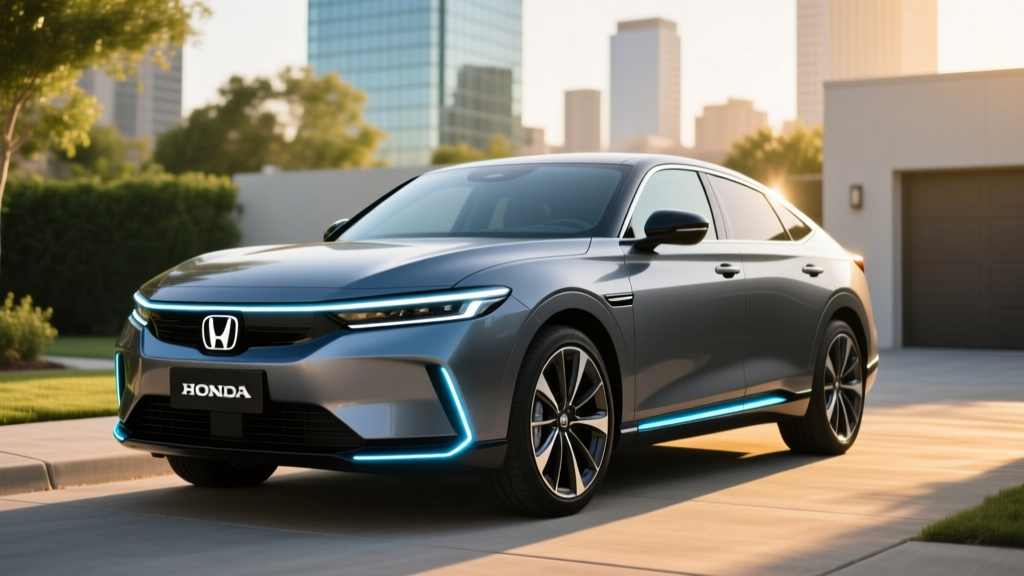
Honda's first dedicated electric SUV built on GM's Ultium platform targets buyers who want a spacious family hauler with proven battery tech and Honda's reliability reputation. The 2026 Prologue carries over the mechanicals that debuted for 2024 but benefits from a maturing charging network and refined software. Here's what real ownership looks like — range, charging speed, tax-credit math, and how it stacks up against the Hyundai Ioniq 5, Tesla Model Y, and Ford Mustang Mach-E.
Quick Verdict: Who the Prologue Is For
The Prologue is a comfortable, quiet, mid-size electric SUV that prioritizes cabin space and ride compliance over sporty dynamics. It suits families and commuters who charge at home nightly, take occasional 200- to 300-mile road trips, and want a familiar brand with a strong dealer network. It does not suit buyers who want class-leading DC fast-charge speeds, one-pedal driving aggression, or over-the-air performance upgrades. Think of it as a Honda Passport that happens to run on electrons — competent, spacious, slightly conservative.
Range, Efficiency & Real-World Expectations
The Prologue offers two drivetrains across three trims, with EPA range varying accordingly:
| Trim | Drivetrain | EPA Range | MPGe (City/Hwy/Comb) | kWh/100 mi |
|---|---|---|---|---|
| EX (FWD) | Single-motor FWD | 302 mi | 113 / 94 / 104 | 32 |
| Touring (FWD) | Single-motor FWD | 294 mi | 109 / 91 / 100 | 34 |
| Elite (AWD) | Dual-motor AWD | 283 mi | 104 / 87 / 96 | 35 |
The 85 kWh usable battery (NMC lithium-ion chemistry, GM Ultium pouch cells) provides a generous buffer. Honda quotes a gross capacity of around 102 kWh, but the large top-and-bottom buffer protects long-term health at the cost of some theoretical range. Efficiency of 32–35 kWh/100 mi is average for the segment — the Ioniq 5 RWD achieves 30 kWh/100 mi, while the heavier Model Y AWD sits near 33.
Charging Speed: DC Fast, Level 2 & Home Setup
Charging is where the Prologue's GM underpinnings show both strengths and limitations. The BEV3 architecture supports respectable but not class-leading DC speeds.
| Charging Level | Max Power | Speed / Time | Connector |
|---|---|---|---|
| Level 1 (120V household) | 1.4 kW | ~4 mi/hr added | J1772 / NACS* |
| Level 2 (240V home/public) | 11.5 kW (48A) | ~33 mi/hr; 0–100% in ~9.5 hr | J1772 / NACS* |
| DC Fast Charge | 155 kW peak | 10–80% in ~35 min; 20–80% in ~28 min | CCS1 / NACS* |
*2026 Prologues ship with NACS (Tesla-style) charge ports as standard, following Honda's transition from CCS. Adapters are available for legacy CCS stations.
Charging-curve reality check: The 155 kW peak is not sustained. In testing on Electrify America and Tesla Supercharger stalls (via NACS), the Prologue ramps to ~140–150 kW between 15–40% SoC, then tapers to ~90 kW by 60%, and drops below 50 kW past 80%. That 10–80% time of roughly 35 minutes trails the Hyundai Ioniq 5 (18 min at 350 kW chargers) and the Kia EV6 (18 min), both of which use 800V architectures. The Prologue's 400V system is the limiting factor.
For home charging, the 11.5 kW onboard charger is a strong point — it replenishes the full battery overnight on a standard 48-amp Level 2 circuit. Expect to pay $800–$1,500 for a quality Level 2 home charger installation (equipment + electrician) on a 240V/50A circuit, assuming your panel has capacity. A panel upgrade to 200A can add $1,500–$3,000 if needed.
Performance & Drivetrain
| Spec | FWD (EX / Touring) | AWD (Elite) |
|---|---|---|
| Motor Configuration | Single front motor | Dual motor (front + rear) |
| Horsepower | 212 hp | 288 hp |
| Torque | 236 lb-ft | 333 lb-ft |
| 0–60 mph | ~7.8 sec | ~5.8 sec |
| Top Speed | 115 mph (electronically limited) | 115 mph |
| Towing Capacity | 1,500 lb | 1,500 lb |
The FWD models feel adequate for commuting and merging but won't win drag races at stoplights. The AWD Elite's 5.8-second 0–60 is genuinely quick for a family SUV and makes highway passing effortless. Ride quality is a highlight — the Prologue absorbs bumps with a compliance that feels more premium than its price suggests, thanks to its long wheelbase (121.8 inches) and well-tuned dampers. Steering is light and numb, which is fine for parking but uninspiring on back roads.
Regenerative braking offers paddle-selectable levels (0–3), but even at max regen, the Prologue does not come to a complete stop — true one-pedal driving is not available. This is a notable omission versus Tesla, Hyundai, and Nissan competitors.
Interior, Cargo & Technology
The Prologue's cabin is where Honda loyalists will feel at home. The 11.3-inch infotainment touchscreen runs Google Built-In (Google Maps, Google Assistant, Play Store), which is a significant upgrade over Honda's older infotainment systems. Wireless Apple CarPlay and Android Auto are standard on all trims. A 10.2-inch digital driver display and available head-up display (Elite trim) round out the tech.
Honda Sensing ADAS is standard and includes adaptive cruise control with low-speed follow, lane-keeping assist, blind-spot monitoring, and rear cross-traffic alert. This is an SAE Level 2 driver-assist system — you must keep your hands on the wheel and eyes on the road. It is not autonomous driving.
| Measurement | Value |
|---|---|
| Seating Capacity | 5 passengers |
| Front Legroom | 41.4 in |
| Rear Legroom | 39.2 in |
| Cargo (behind 2nd row) | 25.2 cu ft |
| Cargo (2nd row folded) | 57.7 cu ft |
| Wheelbase | 121.8 in |
| Ground Clearance | 7.9 in |
The 25.2 cu ft cargo area with seats up is competitive with the Model Y (26.6 cu ft) but trails the Ioniq 5 (27.2 cu ft). There is no front trunk (frunk) — the space under the hood is occupied by power electronics. Rear-seat legroom is generous at 39.2 inches, making the Prologue a strong family hauler for rear-facing child seats.
Pricing, Trims & Federal Tax Credit
| Trim | Base MSRP | Destination | Total Before Credit | Est. After §30D Credit* |
|---|---|---|---|---|
| EX (FWD) | $47,400 | $1,395 | $48,795 | ~$41,295 |
| Touring (FWD) | $51,400 | $1,395 | $52,795 | ~$45,295 |
| Elite (AWD) | $56,900 | $1,395 | $58,295 | ~$50,795 |
*Federal tax credit (§30D) eligibility is not guaranteed. As of 2026, the Prologue's eligibility for the full $7,500 credit depends on several IRS rules that change periodically:
- MSRP cap: SUVs must be under $80,000 — all Prologue trims qualify.
- Buyer income cap: Modified AGI must not exceed $150,000 (single), $225,000 (head of household), or $300,000 (joint). Verify with your tax professional.
- Battery sourcing: Critical minerals and battery components must meet escalating domestic-content thresholds. The Prologue's GM Ultium battery is assembled in the U.S., but critical-mineral sourcing requirements may reduce the credit to $3,750 or disqualify certain build dates. Check IRS.gov clean vehicle credits and the specific VIN at fueleconomy.gov before purchasing.
- Point-of-sale transfer: You can transfer the credit to the dealer at purchase to reduce the sale price directly, rather than waiting to claim it on your tax return.
Always verify eligibility for your specific VIN and tax situation — do not assume the full $7,500 applies.
Warranty & Ownership Costs
Honda backs the Prologue with its standard warranty package, which is competitive for the segment:
- Limited vehicle warranty: 3 years / 36,000 miles
- Powertrain warranty: 5 years / 60,000 miles
- Battery warranty: 8 years / 100,000 miles (capacity retention above 70% of original)
- Corrosion: 5 years / unlimited miles
- Roadside assistance: 3 years / 36,000 miles
The 8-year/100,000-mile battery warranty is the federal minimum for EVs and matches most competitors. The 70% capacity retention threshold is standard but less generous than Hyundai's approach. Based on GM Ultium degradation data from the Cadillac Lyriq and Chevrolet Blazer EV, expect roughly 8–12% degradation over the first 100,000 miles under normal use — well within warranty coverage.
Honda includes 3 years of complimentary scheduled maintenance and offers a home-charging solution: buyers can choose between a complimentary Level 2 home charger (installation not included), a $500 Electrify America charging credit, or a $1,000 EVgo charging credit. For most homeowners, the Level 2 charger is the best value — the hardware alone retails for ~$500–$700.
Pros, Cons & Competitor Comparison
Pros
- Spacious rear seat (39.2 in legroom) — excellent for child seats
- Smooth, compliant ride quality that feels more premium than its price
- Google Built-In infotainment is responsive and well-integrated
- 11.5 kW Level 2 onboard charger fills the battery overnight
- Strong Honda dealer network for service and support
- Eligible for up to $7,500 federal credit (verify VIN sourcing)
Cons
- 155 kW DC fast charging trails 800V rivals (Ioniq 5: 350 kW)
- No heat pump — significant winter range loss without preconditioning
- No front trunk (frunk)
- No true one-pedal driving (doesn't come to a full stop on regen)
- Base price above $47K — the Ioniq 5 SE starts ~$5K lower
- AWD towing limited to 1,500 lb
Choose the Prologue If:
- You prioritize ride comfort and cabin quietness over sporty handling
- You charge at home nightly and DC fast-charge only occasionally
- You want Honda's dealer network and brand familiarity
- You need generous rear-seat space for family duty
Look Elsewhere If:
- You take frequent long road trips and need 20-minute DC charge stops (Ioniq 5, EV6)
- You live in a cold climate and want a heat pump for winter range (Model Y, Ioniq 5)
- You want the lowest possible starting price (Ioniq 5 SE, Equinox EV)
- You want one-pedal driving or advanced Autopilot-style features (Tesla, Ford BlueCruise)
Frequently Asked Questions
What is the real-world range of the Honda Prologue?
The FWD EX achieves 302 miles EPA, but expect 255–270 miles on highway road trips at 75 mph, and as low as 210–230 miles in sub-freezing weather due to the lack of a heat pump. AWD Elite owners should expect ~240 miles highway in mild conditions.
How fast does the Prologue charge at home and on the road?
At home on a 240V Level 2 charger (48A), it adds ~33 miles per hour and fills from empty in about 9.5 hours. On DC fast chargers, it peaks at 155 kW and charges 10–80% in roughly 35 minutes. This is adequate but slower than 800V competitors like the Ioniq 5 and EV6, which achieve 10–80% in ~18 minutes on 350 kW chargers.
Does the Honda Prologue qualify for the federal EV tax credit?
It can qualify for up to $7,500 under IRS §30D, but eligibility depends on your income (under $150K–$300K depending on filing status), the vehicle's MSRP (all trims under the $80K SUV cap), and battery critical-mineral sourcing requirements. The credit amount may be $3,750 or $7,500 depending on the specific VIN's battery sourcing. Always verify at fueleconomy.gov and consult a tax professional.
Is the Honda Prologue worth buying versus the Hyundai Ioniq 5 or Tesla Model Y?
It depends on your priorities. The Prologue wins on ride comfort, rear-seat space, and Honda brand trust. The Ioniq 5 wins on charging speed (800V architecture), starting price, and available heat pump. The Model Y wins on Supercharger network access, efficiency, and cargo space. If home charging is your primary routine and you rarely DC fast-charge, the Prologue's slower DC speed matters less. If you road-trip frequently, the Ioniq 5's 18-minute charge stops are a meaningful advantage.
What are the biggest drawbacks of the Prologue?
The three most significant limitations are: (1) 155 kW peak DC charging — slower than most rivals in this price range, (2) no heat pump, which causes notable range loss in cold weather, and (3) no frunk, reducing total cargo versatility. The lack of one-pedal driving also frustrates drivers accustomed to stronger regen in other EVs.
How does the Prologue's battery hold up over time?
The 85 kWh usable NMC battery is covered for 8 years / 100,000 miles against degradation below 70%. GM's Ultium platform has shown approximately 8–12% degradation at 100,000 miles in early fleet data, which is in line with industry averages. To maximize longevity, avoid routinely charging to 100% or depleting below 10%, and use DC fast charging sparingly — Level 2 home charging is gentler on the cells.
Sources: EPA fueleconomy.gov, Honda Prologue official specs, IRS §30D Clean Vehicle Credits.