The Tesla Model 3 Performance has long been the benchmark for electric sports sedans, and the refreshed "Highland" generation sharpens that formula further. But beyond the 2.9-second 0-60 time and the Nürburgring-tuned suspension, there's a cabin choice that divides buyers: the available white interior. In this review, we put the 2026 Tesla Model 3 Performance with the white interior through its paces — covering real-world range, charging speeds, ownership costs, and whether the premium cabin holds up to daily use.
Specs at a Glance: Tesla Model 3 Performance (2026)
| Specification | Value |
|---|---|
| EPA Range | 315 miles |
| Battery (usable) | ~79 kWh, NMC (Nickel Manganese Cobalt) |
| Drivetrain | Dual-Motor AWD |
| Horsepower | 510 hp (combined) |
| 0-60 mph | 2.9 seconds |
| Top Speed | 163 mph |
| Max DC Fast Charge | 250 kW peak |
| 10-80% DC Charge Time | ~18 minutes |
| Level 2 Home Charge Rate | 11.5 kW (~44 miles/hr) |
| EPA Efficiency | 125 MPGe combined / 27 kWh/100mi |
| Cargo Volume | 23 cu ft (trunk + frunk combined) |
| Rear Legroom | 35.2 inches |
| Battery Warranty | 8 years / 120,000 miles (70% retention) |
| Base MSRP | $54,990 (before incentives) |
Charging Speed: DC Fast, Level 2, and the Curve Reality
The Model 3 Performance supports up to 250 kW peak DC fast charging via the NACS (North American Charging Standard) connector — the Tesla Supercharger network native plug. However, as with all EVs, peak rate is not sustained rate.
| Charging Level | Power (kW) | Speed (miles/hr added) | Notes |
|---|---|---|---|
| Level 1 (120V household) | ~1.4 kW | ~5 mi/hr | Emergency/trickle only |
| Level 2 (240V home, 48A) | 11.5 kW | ~44 mi/hr | Full charge in ~7-8 hours |
| DC Fast (Supercharger V3) | 250 kW peak | ~175 mi/hr at peak | 10-80% in ~18 min; tapers significantly above 80% |
| DC Fast (Supercharger V4) | Up to 250 kW | Similar to V3 for this pack | Newer stalls; same vehicle-side limit |
Charging curve reality: The 250 kW peak holds roughly from 10% to 30% state of charge. By 50% SoC, rates drop to approximately 150-170 kW. Above 80%, expect under 50 kW — which is why Tesla's navigation system typically recommends charging to 80% on road trips. Preconditioning the battery (which the car does automatically when a Supercharger is set as your navigation destination) is essential to hitting peak rates, especially in cold weather.
For home charging, a Wall Connector on a 60-amp circuit delivers the full 11.5 kW, adding roughly 44 miles of range per hour. Most owners who plug in nightly never need public charging for daily use. Tesla's home charging guide provides installation specifics, though final electrical work should be scoped by a licensed electrician.
Performance: 510 HP, Track Mode, and Daily Drivability
The dual-motor AWD powertrain produces 510 horsepower and launches the Model 3 Performance to 60 mph in 2.9 seconds — numbers that embarrass most internal-combustion sports sedans at any price. The new generation's adaptive dampers, track-tuned bushings, and lower ride height give it genuine cornering composure that the previous Performance lacked.
Track Mode (accessible via the touchscreen) lets you adjust front/rear torque distribution, stability control intervention, and regen intensity. It's a real performance tool, not a gimmick — and the upgraded cooling system sustains repeated hard laps without thermal throttling more effectively than the pre-refresh model.
For daily driving, the ride is firm but controlled. Road noise is noticeably improved over the previous generation thanks to acoustic glass and better sealing, though the low-profile performance tires still transmit some texture on rough surfaces. The steering is precise but light in Comfort mode — exactly what you want for commuting.
The White Interior: Premium Feel, Practical Trade-offs
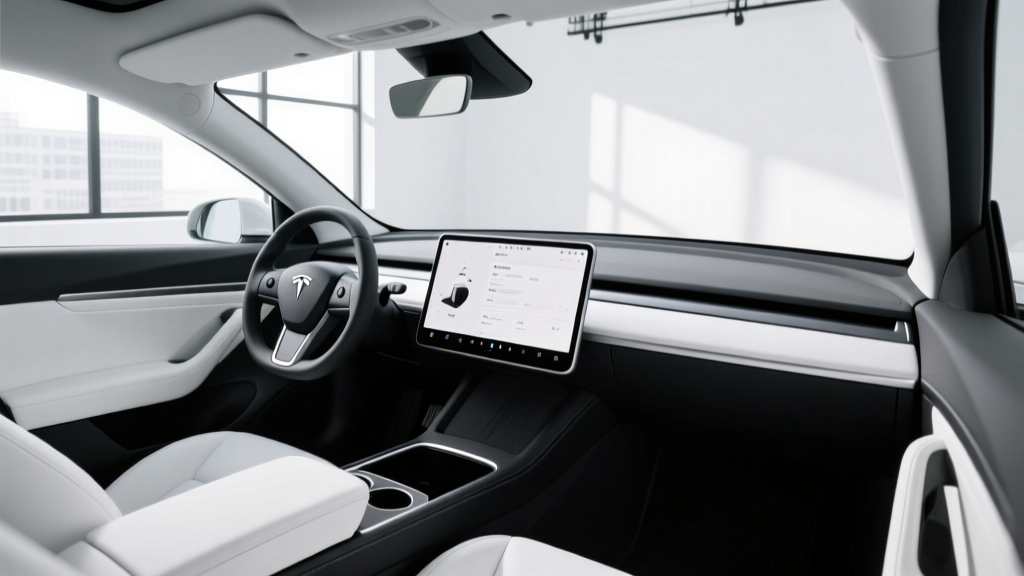
The white interior (officially "White Premium Interior") is a $1,000 option that replaces the standard black vegan leather with a bright, airy white alternative on seats, door panels, and the dashboard. It dramatically transforms the cabin's atmosphere, making the minimalist interior feel more spacious and luxurious.
Material quality: Tesla's vegan leather has improved in texture and durability over earlier generations. The white seats resist staining better than you'd expect — denim dye transfer is minimal with normal use, and most marks wipe clean with a damp microfiber cloth. However, they are not immune to scuffing from dark clothing or dirt from outdoor activities. If you regularly haul kids, pets, or work gear, the black interior is the pragmatic choice.
Cabin dimensions: Front headroom is generous at 39.7 inches. Rear legroom at 35.2 inches is adequate for adults on shorter trips but tight for taller passengers on long hauls. The rear seat is best described as a two-seater with a small middle position. Cargo space totals 23 cubic feet between the rear trunk (21 cu ft) and the front trunk/frunk (2 cu ft) — enough for a week's groceries or two carry-on bags, but not class-leading versus the Hyundai Ioniq 6 or BMW i4.
Pricing, Tax Credits, and Total Cost
| Item | Amount |
|---|---|
| Base MSRP (Model 3 Performance) | $54,990 |
| White Interior Option | +$1,000 |
| Destination Fee | +$1,390 |
| FSD (Supervised) Option | +$8,000 |
| As-Tested Price (with white interior, no FSD) | $57,380 |
| Federal §30D Tax Credit (if eligible) | Up to $7,500 |
| Estimated Price After Max Credit | ~$49,880 |
Federal tax credit eligibility (§30D): The Tesla Model 3 Performance qualifies for up to $7,500 in federal tax credits — but only if you meet all IRS requirements. As of 2026, the key rules per IRS §30D guidelines include:
- MSRP cap: Sedans must be under $55,000 MSRP. The Model 3 Performance base ($54,990) is just under the cap, but adding FSD or certain packages can push it over, disqualifying you.
- Buyer income cap: Adjusted gross income must not exceed $150,000 (single), $225,000 (head of household), or $300,000 (joint).
- Battery sourcing: A percentage of critical minerals and battery components must be sourced from the U.S. or free-trade-agreement countries. These thresholds increase annually. Tesla's supply chain has generally met these requirements for the Model 3, but always verify the VIN-specific eligibility on the IRS portal at the time of purchase.
- Point-of-sale transfer: You can transfer the credit to the dealer at purchase, reducing your out-of-pocket cost directly rather than waiting for a tax refund.
Consult a tax professional before relying on credit eligibility — rules change, and individual circumstances vary.
Tech, Driver Assistance, and Infotainment
The 15.4-inch center touchscreen remains the command center for virtually every vehicle function — climate, mirrors, glovebox, and driving displays. The Highland refresh moved rear-seat controls to a dedicated 8-inch rear screen, a welcome improvement for passengers.
Autopilot and FSD (Supervised): Every Model 3 includes basic Autopilot (traffic-aware cruise control and lane centering). Full Self-Driving (Supervised) is an $8,000 option that adds automated lane changes, traffic light/stop sign recognition, and city-street navigation. However, FSD is an SAE Level 2 system — you must remain fully engaged, hands on the wheel, eyes on the road. It is not autonomous driving. For a detailed breakdown of what FSD can and cannot do, see our NHTSA safety overview reference.
The infotainment system is fast, responsive, and includes Netflix, YouTube, and gaming while parked. However, Apple CarPlay and Android Auto remain unavailable — a dealbreaker for some buyers who prefer phone-mirrored interfaces.
Pros and Cons
Pros
- 2.9-second 0-60 with genuine track capability via adaptive dampers and Track Mode
- 315-mile EPA range is ample for most road trips with Supercharger network access
- 250 kW DC fast charging with reliable 10-80% in ~18 minutes
- Superior Supercharger network reliability vs. CCS-based competitors
- White interior elevates cabin feel significantly
- Over-the-air updates continue to add features post-purchase
- Strong resale value relative to EV segment average
Cons
- White interior requires more maintenance; shows scuffs and dirt faster
- No Apple CarPlay or Android Auto support
- Rear seat space is tight for tall adults on long trips
- Firm ride on performance tires can be fatiguing on poor roads
- Touchscreen-only controls for mirrors, climate, and glovebox frustrate some drivers
- $55,000 MSRP cap for tax credit leaves no room for FSD option
- Insurance costs run 15-25% higher than comparable ICE sedans
Who Should Buy the Model 3 Performance (and Who Shouldn't)?
Best for: Driving enthusiasts who want a daily-drivable sports sedan with zero emissions, access to the most reliable fast-charging network, and a tech-forward cabin. The white interior suits buyers who prioritize aesthetics and don't mind wiping down seats periodically. Commuters with home charging access will benefit most from the low per-mile energy cost (approximately $0.04-$0.06/mile on residential electricity vs. $0.12-$0.18/mile for a gas equivalent).
Consider alternatives if: You need spacious rear seating (look at the Hyundai Ioniq 5 or Tesla Model Y), you want Apple CarPlay (BMW i4, Hyundai Ioniq 6), you frequently drive in extreme cold without garage parking (consider a larger battery like the Lucid Air Pure or an LFP-equipped model for daily flexibility), or you need towing capability (the Model 3 is not rated for towing).
Frequently Asked Questions
What is the real-world range of the Tesla Model 3 Performance?
The EPA rates it at 315 miles. Real-world highway driving at 70-75 mph yields 265-285 miles in moderate weather. Cold weather (below freezing) can reduce this to 220-245 miles without preconditioning. City driving with regenerative braking can match or slightly exceed the EPA estimate.
How fast does the Model 3 Performance charge at home and on the road?
On a Level 2 home charger (11.5 kW / 48A), it adds about 44 miles of range per hour, fully recharging in 7-8 hours. On a Tesla V3 or V4 Supercharger, it peaks at 250 kW and charges from 10-80% in approximately 18 minutes, though the rate tapers significantly above 80% SoC.
Does the Tesla Model 3 Performance qualify for the federal EV tax credit?
It can qualify for up to $7,500 under IRS §30D, but only if: the MSRP stays under the $55,000 sedan cap (adding FSD pushes it over), the buyer's AGI is within limits ($150K single / $300K joint), and battery-sourcing requirements are met for the specific VIN. Always verify eligibility at the point of sale and consult a tax professional.
Is the white interior worth the $1,000 option cost?
Aesthetically, yes — it transforms the cabin from austere to premium. Practically, it requires more care than black. If you don't regularly transport kids, pets, or dirty gear, the white interior is a worthwhile upgrade that also improves perceived spaciousness. Most owners report the vegan leather cleans well with basic care.
Is the Model 3 Performance worth buying vs. the BMW i4 M50 or Hyundai Ioniq 6?
The Model 3 Performance wins on raw acceleration (2.9s vs. 3.7s for the i4 M50), Supercharger network access, and software integration. The BMW i4 M50 offers a more traditional luxury cabin, Apple CarPlay, and a slightly more compliant ride. The Ioniq 6 provides more rear-seat room and a competitive 361-mile EPA range but charges at a slower peak rate and lacks the Supercharger network. For driving dynamics and charging infrastructure, the Model 3 Performance remains the segment benchmark.
What is the battery warranty on the Model 3 Performance?
Tesla covers the battery and drive units for 8 years or 120,000 miles, whichever comes first, with a minimum 70% capacity retention guarantee. If the battery degrades below 70% of its original capacity within that period, Tesla will repair or replace it. NMC chemistry in the Performance variant typically shows 5-10% degradation in the first 50,000 miles before stabilizing.