Quick Verdict: The Benchmark Sedan Gets Measured
The Tesla Model 3 remains the default compact electric sedan against which every rival is measured. For 2026, the refreshed "Highland" platform continues with meaningful improvements in cabin quietness, suspension tuning, and efficiency. But buyers researching the Tesla Model 3 dimensiones — its exterior footprint, interior space, battery capacity, and performance envelope — need hard numbers, not marketing copy. This profile delivers exactly that: every dimension, every spec, every real-world caveat you need before signing a purchase agreement.
The Model 3 lineup currently spans three trims: the base Rear-Wheel Drive, the dual-motor Long Range AWD, and the performance-oriented Model 3 Performance. Each shares the same basic body structure but differs substantially in battery chemistry, range, and power output.
Exterior & Interior Dimensiones: The Full Tape Measure
Understanding the Tesla Model 3 dimensiones starts with the exterior. This is a mid-size sedan that parks easily in urban garages yet provides legitimate trunk space for road trips.
| Measurement | Value |
|---|---|
| Overall Length | 184.8 in (4,694 mm) |
| Overall Width (mirrors folded) | 73.4 in (1,864 mm) |
| Overall Width (mirrors out) | 82.2 in (2,088 mm) |
| Overall Height | 56.8 in (1,443 mm) |
| Wheelbase | 113.2 in (2,875 mm) |
| Ground Clearance | 5.5 in (139 mm) |
| Curb Weight (RWD) | 3,862 lbs (1,752 kg) |
| Curb Weight (Long Range AWD) | 4,034 lbs (1,830 kg) |
| Front Headroom | 40.3 in |
| Rear Headroom | 37.8 in |
| Front Legroom | 42.7 in |
| Rear Legroom | 35.2 in |
| Trunk Volume (rear) | 21.0 cu ft |
| Frunk Volume | 3.1 cu ft |
| Total Cargo Volume | 24.1 cu ft |
The 35.2 inches of rear legroom is the Model 3's most debated dimension. Adults under 5'10" will be comfortable on longer drives; taller passengers may find the rear seat less accommodating than in a Hyundai Ioniq 6 or BMW i4. The sloping roofline cuts into rear headroom, and the absence of rear air vents (on some trims) is a frequent owner complaint in hot climates.
The 21.0 cu ft trunk is generous for the segment and includes a deep under-floor storage well. The 3.1 cu ft frunk is useful for charging cables and small bags but won't swallow a full carry-on.
Battery, Range & Efficiency: Chemistry Matters
Tesla uses two distinct battery chemistries across the Model 3 lineup, and the choice affects range, charging behavior, longevity, and daily-use recommendations.
| Trim | Battery (usable kWh) | Chemistry | EPA Range | MPGe (combined) | kWh/100 mi |
|---|---|---|---|---|---|
| Rear-Wheel Drive | ~57.5 kWh | LFP (cathode) | 272 mi | 132 MPGe | 25 |
| Long Range AWD | ~75 kWh | NMC | 341 mi | 132 MPGe | 25 |
| Performance AWD | ~75 kWh | NMC | 315 mi | 119 MPGe | 28 |
The EPA numbers above assume mixed driving at moderate temperatures. In practice:
- Highway-only at 75 mph: Expect 10–15% less than EPA. The Long Range AWD delivers roughly 290–305 mi on a flat interstate in fair weather.
- Cold weather (below 32°F): Range drops 20–30% without preconditioning. The RWD may deliver as little as 190–200 mi in freezing conditions on the highway. The Model 3's heat pump helps, but physics wins in deep cold.
- City/regenerative driving: You can match or slightly exceed EPA range thanks to aggressive regen recapturing energy in stop-and-go traffic.
Source: EPA Fuel Economy
LFP vs NMC — what it means for you: The RWD trim's lithium iron phosphate (LFP) battery is heavier and holds less energy per kilogram, hence the lower range. However, LFP tolerates repeated 100% charging without accelerated degradation — Tesla recommends charging the RWD to 100% at least weekly. The NMC packs in the Long Range and Performance trims last longer when kept between 20–80% for daily use and charged to 100% only before long trips. If your commute is short and you want the simplest ownership experience, LFP is the pragmatic choice.
Charging Speed: DC Fast, Level 2, and Level 1
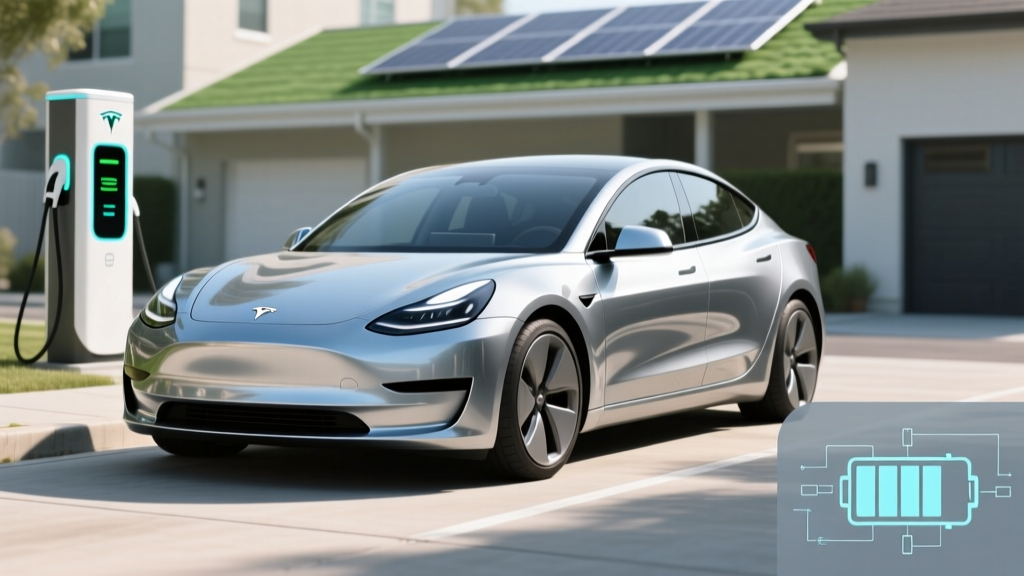
Charging speed is often the deciding factor for apartment dwellers and road-trippers alike. Here's what the 2026 Model 3 actually delivers at each level.
| Charging Level | Power / Rate | Speed (mi/hr) | Notes |
|---|---|---|---|
| Level 1 (120V household) | ~1.4 kW | ~3–4 mi/hr | Emergency/trickle only |
| Level 2 (240V home, 48A) | 11.5 kW | ~44 mi/hr | Full charge in ~6–8 hrs |
| DC Fast Charge (RWD) | Peak 170 kW | 10–80% in ~25 min | LFP charge curve is relatively flat |
| DC Fast Charge (Long Range / Perf) | Peak 250 kW | 10–80% in ~18 min | Tapers significantly above 80% |
Charge-curve reality: The 250 kW peak on Long Range and Performance trims is sustained only between roughly 10–30% state of charge. From 50–80%, the rate drops to approximately 80–110 kW. That 10–80% time of 18 minutes is achievable at a V3 Supercharger (or equivalent CCS/NACS station at 250+ kW) with the battery preconditioned. Skip preconditioning and you'll add 5–8 minutes to that session, especially in cold weather.
The Model 3 now ships with the native NACS (North American Charging Standard) port, granting direct access to Tesla's Supercharger network — over 25,000 stalls in North America — without an adapter. This remains a significant practical advantage over CCS-equipped rivals that require adapters for Supercharger access.
Performance, Drivetrain & Efficiency
| Trim | Drivetrain | Horsepower | 0–60 mph | Top Speed |
|---|---|---|---|---|
| Rear-Wheel Drive | RWD (single motor) | 271 hp | 5.8 sec | 125 mph |
| Long Range AWD | AWD (dual motor) | 346 hp | 4.2 sec | 125 mph |
| Performance AWD | AWD (dual motor) | 510 hp | 2.9 sec | 163 mph |
Even the base RWD Model 3 is genuinely quick by any sedan standard. The single rear motor delivers instant torque with zero lag, making highway merging and urban gap-taking effortless. The Long Range adds a front induction motor for all-wheel-drive traction and a meaningful power bump. The Performance trim's 2.9-second 0–60 time puts it in supercar territory — and at roughly $53,000 before incentives, it's the least expensive vehicle on the market that can make that claim.
Efficiency is where the Model 3 excels versus heavier crossovers. At 25 kWh per 100 miles (Long Range), it costs roughly $3.50–$4.50 to drive 100 miles on residential electricity at $0.14–$0.18/kWh — compared to approximately $11–$13 for a 30 MPG gas sedan at $3.40/gallon.
Pricing, Trims & Federal Tax Credit Eligibility
| Trim | Base MSRP | §30D Credit Eligibility | Effective Price (est.) |
|---|---|---|---|
| Rear-Wheel Drive | $38,990 | Up to $7,500 (if sourcing rules met) | ~$31,490 |
| Long Range AWD | $45,990 | Up to $7,500 (if sourcing rules met) | ~$38,490 |
| Performance AWD | $52,990 | Up to $7,500 (if sourcing rules met) | ~$45,490 |
Federal tax credit caveats (§30D): The up-to-$7,500 credit is not automatic. For 2026, eligibility depends on three factors per IRS rules:
- MSRP cap: Sedans must have an MSRP at or below $55,000. All Model 3 trims currently qualify.
- Buyer income cap: Modified AGI must not exceed $150,000 (single), $225,000 (head of household), or $300,000 (joint).
- Battery sourcing: The credit splits into two halves — $3,750 for critical-mineral sourcing and $3,750 for battery-component manufacturing. Sourcing requirements tighten annually. Verify Tesla's current compliance status on the IRS eligible-vehicles list before purchase.
Since January 2024, buyers can transfer the credit to the dealer at point of sale, reducing the purchase price directly rather than waiting for a tax refund. This applies to Tesla's direct-sales model as well. Consult a tax professional for your specific situation.
Tech, Driver Assistance & Notable Drawbacks
The Model 3's 15.4-inch center touchscreen handles virtually every vehicle function — climate, mirrors, glovebox, navigation, media. There is no instrument cluster; speed and navigation appear in the upper-left corner of the main display. The 2026 Highland refresh added ambient lighting, ventilated front seats, a rear 8-inch touchscreen for passengers, and significantly improved sound insulation.
Driver assistance: Every Model 3 includes Tesla's Basic Autopilot (adaptive cruise + lane centering). Enhanced Autopilot ($6,000) adds auto lane-change, autosteer on navigation routes, and Smart Summon. Full Self-Driving (Supervised) adds traffic-light recognition and city-street autosteer for $8,000 (or $99/month).
All Tesla driver-assistance features, including FSD (Supervised), are SAE Level 2 systems. This means the driver must remain fully attentive, keep hands on the wheel, and be prepared to take over instantly. Tesla's camera-based monitoring enforces attention with escalating warnings. True self-driving (Level 4) is available only through robotaxi services like Waymo in select cities. Do not treat FSD as a substitute for an engaged driver.
Pros
- Class-leading efficiency (25 kWh/100 mi)
- Native NACS port + Supercharger network access
- Over-the-air updates continuously add features
- Strong resale value vs. most EV competitors
- Performance trim: supercar acceleration at sedan price
- Minimal maintenance (no oil, no spark plugs, brake pad life extended by regen)
Cons
- Rear seat space is tight for tall adults
- No physical buttons — all controls via touchscreen
- No Apple CarPlay or Android Auto
- RWD model's DC fast-charging capped at 170 kW
- FSD (Supervised) costs extra and requires constant supervision
- Insurance premiums run 15–30% higher than comparable gas sedans
Warranty & Long-Term Ownership
| Component | Coverage |
|---|---|
| Basic Vehicle | 4 years / 50,000 miles |
| Battery & Drive Unit (RWD) | 8 years / 100,000 miles |
| Battery & Drive Unit (Long Range / Perf) | 8 years / 120,000 miles |
| Battery Capacity Retention | ≥70% during warranty period |
Tesla's battery warranty guarantees that the pack will retain at least 70% of its original capacity during the coverage period. If degradation drops below that threshold, Tesla will repair or replace the battery at no cost. Real-world data from fleet aggregators shows most Model 3 batteries retain approximately 88–92% capacity at 100,000 miles, with LFP packs showing particularly strong longevity when charged to 100% regularly as recommended.
Long-term ownership costs are favorable: electricity is cheaper than gasoline per mile, regenerative braking extends pad life to 100,000+ miles in many cases, and there are no fluid changes beyond windshield washer fluid and cabin air filters every 2–3 years. The main cost surprise is insurance — get quotes before ordering, as Tesla-specific premiums can be $1,500–$2,200/year depending on your state and driving record.
Who Should Buy the Tesla Model 3?
Choose the Model 3 RWD if:
- Your daily commute is under 60 miles round-trip
- You can charge at home (Level 2) and want the lowest purchase price
- You prefer charging to 100% without worrying about battery care
Choose the Model 3 Long Range AWD if:
- You take road trips of 250+ miles regularly
- You live in a region with snow/ice and need AWD traction
- You want the fastest DC charging (250 kW peak) for highway travel
Choose the Model 3 Performance if:
- Acceleration matters to you — 2.9 seconds is visceral
- You want track-capable handling with daily-drivable comfort
- You're cross-shopping sports sedans (BMW M3, Audi RS5) and want EV economics
The Model 3 is not ideal for families needing three-across car seats (rear width is tight), buyers who prefer physical controls and Apple CarPlay, or those without any home-charging option who rely solely on public infrastructure in areas with sparse Supercharger coverage.
Frequently Asked Questions
What is the real-world range of the Tesla Model 3?
The EPA rates the Long Range AWD at 341 miles, but expect roughly 290–305 miles on highway-only trips at 75 mph in mild weather. In freezing temperatures, highway range can drop to 230–250 miles. The RWD's 272-mile EPA rating translates to approximately 220–240 miles in real-world highway driving and as low as 190 miles in deep cold.
How fast does the Model 3 charge at home and on the road?
At home on a 240V Level 2 charger (48 amps), the Model 3 adds approximately 44 miles of range per hour — a full charge takes 6–8 hours. On DC fast chargers, the Long Range and Performance trims peak at 250 kW and reach 10–80% in about 18 minutes with battery preconditioning. The RWD peaks at 170 kW, taking roughly 25 minutes for the same session.
How much does the Model 3 cost after tax credits?
The RWD starts at $38,990 and could drop to approximately $31,490 with the full $7,500 federal credit — but eligibility depends on your income, the vehicle's battery-sourcing compliance, and MSRP caps per IRS §30D rules. Always verify current eligibility on irs.gov before purchasing.
Is the Model 3 worth buying vs. competitors?
Against the Hyundai Ioniq 6 (EPA 361 mi, slower charging), BMW i4 (more luxurious, pricier), and Polestar 2 (less range, smaller network), the Model 3's combination of Supercharger access, efficiency, and OTA updates gives it an edge for most buyers. Its main weakness is rear-seat space and the absence of CarPlay. If rear comfort or physical controls are priorities, test-drive the Ioniq 6 and i4 before committing.
Does the Tesla Model 3 qualify for the federal EV tax credit?
All three trims fall under the $55,000 sedan MSRP cap, making them potentially eligible for up to $7,500 under §30D. However, you must meet income thresholds ($150K single / $300K joint) and the vehicle's battery must satisfy critical-mineral and component-sourcing requirements that tighten each year. Check the DOE/IRS eligible vehicle list for the current status.
What are the Tesla Model 3's exact dimensiones?
The 2026 Model 3 measures 184.8 inches long, 73.4 inches wide (mirrors folded), and 56.8 inches tall, riding on a 113.2-inch wheelbase. Interior highlights include 42.7 inches of front legroom, 35.2 inches of rear legroom, and 24.1 cu ft of total cargo space (21.0 cu ft trunk + 3.1 cu ft frunk).