Quick Answer: What Is the China EV Feature Ban?
The "China EV feature ban" refers to a combination of Chinese government regulations and US import restrictions that limit which advanced EV features can be sold in China and which Chinese-built EVs and components can reach US consumers. As of 2026, China restricts certain high-level autonomous driving features (SAE Level 4+) to approved zones and licensed operators, while the US blocks most Chinese-built EVs through 100%+ tariffs and bans connected-vehicle hardware from Chinese suppliers under the Department of Commerce's connected-vehicle rule. For US buyers, the practical effect is straightforward: you will not see Chinese-market EVs with their full feature sets sold stateside, and any Chinese-built EV that does arrive will have had its connected and autonomous hardware replaced or removed.
The Two Sides of the Ban: Chinese Domestic Rules and US Import Blocks
Understanding the China EV feature ban requires separating two distinct regulatory actions that buyers often conflate.
China's Domestic Feature Restrictions
China's Ministry of Industry and Information Technology (MIIT) has progressively tightened rules on what EVs can do on public roads. As of 2026:
- Level 4 autonomous driving is restricted to geofenced zones in cities like Shenzhen, Beijing, and Shanghai — and only for licensed robotaxi operators (Baidu Apollo, Pony.ai, AutoX).
- Over-the-air (OTA) feature unlocks for autonomous capabilities require pre-approval from MIIT, meaning a car sold in China cannot have Level 3+ features remotely activated without regulatory clearance.
- Data export restrictions under China's Personal Information Protection Law (PIPL) prevent vehicles from transmitting road-mapping data, camera feeds, or LiDAR point clouds outside China's borders.
- Vehicle-to-everything (V2X) communication features are limited to China's domestic C-V2X standard and cannot interface with foreign infrastructure protocols.
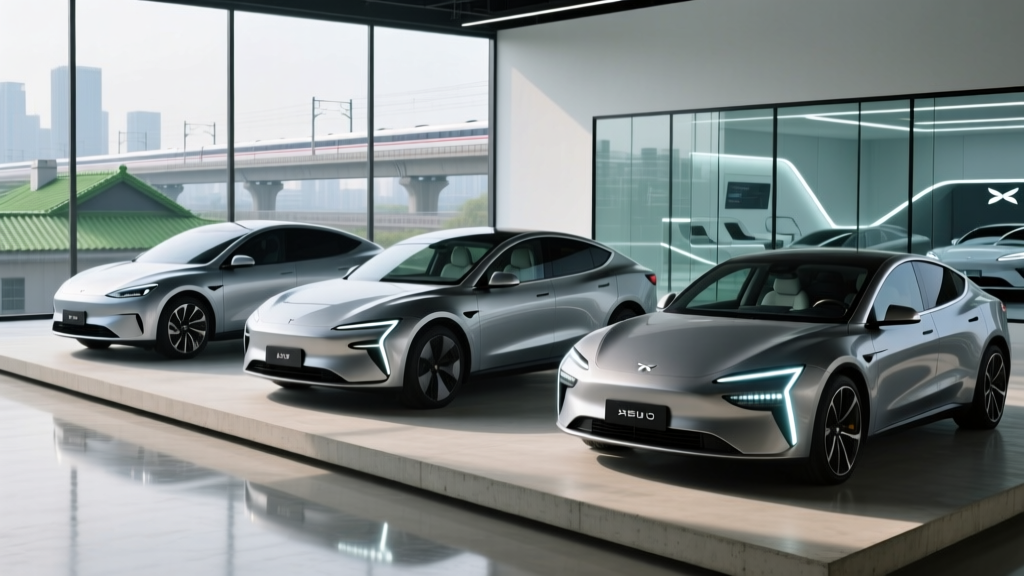
The result: a BYD Seal or NIO ET7 sold in Shanghai may physically contain hardware for advanced autonomy, but the software stack enabling it is geofenced, licensed, and data-locked.
US Import and Hardware Restrictions
On the American side, two overlapping policies create an effective feature ban on Chinese EV technology:
- Section 301 tariffs on Chinese-built EVs reached 100% in 2024 and remain in effect for 2026, making direct import economically unviable for any mass-market model.
- The Commerce Department's connected-vehicle rule (effective for model year 2027 vehicles, with hardware restrictions phasing in from 2026) bans Chinese- and Russian-made connected vehicle hardware and software — covering telematics, ADAS sensors, infotainment modules, and V2X systems.
This means even if a Chinese automaker established US assembly, the vehicle's electronic architecture would need to be redesigned with non-Chinese suppliers for every connected and driver-assistance component.
How This Affects US EV Buyers: Cost, Availability, and Feature Gaps
The China EV feature ban has three concrete effects on the US market that buyers should weigh against domestic and Korean/Japanese alternatives.
| Factor | US-Built EV (e.g., Tesla Model Y) | Chinese-Built EV (e.g., BYD Seal, if imported) | Gas Car Baseline (e.g., Toyota RAV4) |
|---|---|---|---|
| Base MSRP (2026) | $44,990 | ~$36,000 (China domestic) / $72,000+ (with 100% tariff) | $31,500 |
| ADAS Level | Level 2 (Autopilot); FSD Supervised | Level 2 in export trim; Level 3+ geofenced in China | Level 2 (Toyota Safety Sense 3.0) |
| Connected Features | Full OTA, app control, Supercharger network | Hardware ban prevents Chinese modules in US | Toyota Connected Services (limited) |
| EPA Range | 310 mi (Long Range AWD) | ~335 mi (CLTC); ~270 mi EPA-estimated | N/A (30 MPG combined) |
| Federal Tax Credit (§30D) | Up to $7,500 (eligibility varies by battery sourcing) | $0 (Chinese-manufactured battery disqualified) | $0 |
Key takeaway: Chinese EVs are priced 25-35% lower in their domestic market, but tariffs and the connected-vehicle hardware ban eliminate that price advantage entirely for US buyers — and strip the very features (advanced ADAS, smart cabin tech) that make them competitive.
Cost Breakdown: What You Actually Pay in 2026
For US buyers evaluating whether to wait for Chinese EVs to enter the market or buy domestic/Korean/Japanese alternatives now, here is a realistic 5-year ownership cost comparison.
| Cost Category | Tesla Model Y LR AWD | Hyundai Ioniq 5 SEL | Toyota RAV4 LE (Gas) |
|---|---|---|---|
| MSRP | $44,990 | $43,500 | $31,500 |
| §30D Tax Credit (est.) | −$3,750 to −$7,500 | −$7,500 (point-of-sale) | $0 |
| Effective Purchase Price | $37,490–$41,240 | $36,000 | $31,500 |
| 5-Year Fuel/Energy Cost | $3,200 (home L2 @ $0.14/kWh) | $3,400 (home L2 @ $0.14/kWh) | $9,100 (gas @ $3.40/gal, 30 MPG) |
| 5-Year Maintenance | $1,800 | $1,900 | $4,200 |
| 5-Year Insurance (avg.) | $9,500 | $8,200 | $6,800 |
| 5-Year Total Cost | $51,990–$55,740 | $49,500 | $51,600 |
Sources: EPA fueleconomy.gov for efficiency data; IRS §30D guidelines for tax credit eligibility. Insurance figures are national averages — your rate will vary by state, driving record, and zip code.
The Chinese EV price advantage evaporates under current US policy. A BYD Seal that sells for roughly $26,000 in China would cost $52,000+ after tariffs, receive no §30D credit (Chinese battery sourcing), and arrive with its connected-vehicle hardware replaced — making it uncompetitive against a $36,000 Ioniq 5 with full credit.
Common Misconceptions About the China EV Feature Ban
| Myth | Fact |
|---|---|
| "Chinese EVs are banned in the US entirely" | No blanket ban exists. They face 100% tariffs and connected-vehicle hardware restrictions, making import economically and technically impractical — but not illegal. |
| "China bans all autonomous driving" | China licenses Level 4 robotaxis in specific zones (Shenzhen, Beijing Yizhuang). Consumer vehicles are limited to Level 2+ with approved Level 3 pilots in designated areas. |
| "Chinese EVs have better tech that Americans can't get" | Chinese EVs excel in infotainment integration and cabin tech, but their ADAS hardware (LiDAR, cameras) is calibrated for Chinese road infrastructure and mapping data that cannot be exported under PIPL. |
| "Once the ban lifts, cheap Chinese EVs will flood the US" | Even without tariffs, the connected-vehicle hardware ban requires a complete electronic-architecture redesign. Automakers would need 3-4 years and billions in re-engineering to build US-compliant variants. |
| "The ban only affects Chinese brands" | The Commerce rule applies to any vehicle sold in the US containing Chinese-made connected-vehicle components — including vehicles assembled in Mexico, Korea, or Europe that source Chinese telematics or ADAS modules. |
Real-World Ownership Considerations: What This Means for Your Purchase
The China EV feature ban doesn't just affect hypothetical imports — it shapes the entire US EV market you're shopping in today.
Home Charging Access
Regardless of which EV you choose, home Level 2 charging (240V, 7-11 kW) remains the backbone of practical ownership. Budget $800-$2,500 for a Level 2 home charger installation depending on your electrical panel. If you need a panel upgrade from 100A to 200A, add $1,500-$3,000. Without home charging, public DC fast charging costs $0.30-$0.50/kWh — roughly 3x the cost of home charging and comparable to gasoline on a per-mile basis.
Climate and Range Reality
EPA range estimates assume moderate temperatures and mixed driving. In real-world conditions:
- Highway driving at 75 mph: expect 85-90% of EPA range
- Cold weather (below 32°F): expect 60-75% of EPA range without a heat pump; 75-85% with one
- DC fast charging taper: peak charge rates (e.g., 250 kW) are sustained only from ~10-50% SoC; above 80%, speeds drop to 50 kW or less
Driving Pattern Fit
The China EV feature ban keeps US buyers focused on vehicles optimized for American driving patterns — longer commutes, highway-heavy trips, and suburban charging. Chinese-market EVs are optimized for dense urban driving with shorter daily distances and heavy regenerative-braking profiles, which is why their CLTC range ratings (China's test cycle) are typically 15-20% more optimistic than EPA estimates for the same vehicle.
Decision Framework: Should You Wait or Buy Now?
Choose a US/Korean/Japanese EV Now If:
- You need a vehicle within 6 months and want §30D tax credit eligibility
- You drive 200+ miles weekly on highways and need proven DC fast-charging reliability
- You want Level 2 ADAS (Autopilot, BlueCruise, Super Cruise) that works on US roads without geofencing
- You value OTA updates that add features over time — Chinese-architecture vehicles sold in the US would have limited update capability under the hardware ban
- Your budget is $35,000-$55,000 and you want the best price after federal incentives
Watch the Chinese EV Market (But Don't Wait) If:
- You're interested in sub-$25,000 EVs and are willing to wait 4-6 years for potential market shifts
- You follow global battery technology — Chinese LFP innovations (CATL Shenxing, BYD Blade Gen 3) will eventually reach US-market vehicles through licensed manufacturing
- You live in an area with no current EV charging infrastructure and are waiting for the broader market to mature regardless of origin
How Chinese EV Technology Will Still Reach You (Indirectly)
Even with the feature ban, Chinese EV innovation influences the vehicles you can buy today:
- LFP battery chemistry: Pioneered at scale by BYD and CATL, LFP batteries now power the Tesla Model 3 Standard Range, Ford Mustang Mach-E Select, and several 2026 models. LFP offers longer cycle life (3,000+ cycles vs. ~1,500 for NMC) and lower cost, though with ~15% lower energy density.
- Cell-to-pack (CTP) and cell-to-chassis (CTC) designs: BYD's Blade Battery architecture has been adopted in concept by multiple global automakers, improving volumetric efficiency by 30-50%.
- 800V architectures: Chinese EVs from XPeng and NIO popularized 800V platforms enabling 350+ kW peak charging. This standard is now available in the Hyundai Ioniq 5, Kia EV6, Porsche Taycan, and Lotus Eletre.
The feature ban restricts finished Chinese vehicles and connected hardware — not the underlying battery and powertrain innovations, which flow through licensing agreements and joint ventures.
Frequently Asked Questions
Can I personally import a Chinese EV to the US?
Technically yes, but the 100% Section 301 tariff applies, the vehicle must pass FMVSS safety certification (which no Chinese-market EV currently holds), and the connected-vehicle hardware ban requires replacing telematics and ADAS modules before registration. The total cost typically exceeds 2.5x the Chinese MSRP, making it impractical.
Does the China EV feature ban affect Tesla vehicles made in Shanghai?
Tesla's Giga Shanghai vehicles exported to the US already use non-Chinese connected-vehicle hardware and comply with the Commerce Department rule. However, Tesla ceased exporting Shanghai-built vehicles to the US in late 2024 as Giga Texas ramped up Model Y production. Your US-market Tesla is Austin-built with a US/EU supply chain.
Will Chinese EVs ever be sold affordably in the US?
Not under current policy. Even if tariffs were reduced, the connected-vehicle hardware ban (phased in from 2026, full enforcement by model year 2029) requires a complete electronic-architecture redesign. Chinese automakers like BYD and NIO are instead targeting Europe, Southeast Asia, and Latin America where regulatory barriers are lower.
How does the §30D tax credit interact with Chinese-made batteries?
Under current IRS §30D rules, vehicles with battery components manufactured by a "foreign entity of concern" (FEOC) — which includes Chinese companies like CATL and BYD — are disqualified from the $3,750 battery component credit. The critical minerals portion ($3,750) has separate sourcing requirements. Check the IRS qualified vehicle list before purchasing, as eligibility changes monthly.
What features are Chinese EVs missing in export markets?
Chinese EVs sold in Europe and other export markets typically ship without: China-specific V2X communication, Baidu/Tencent ecosystem integration, Level 3+ autonomous driving capability (geofenced to Chinese cities), and real-time traffic data services that rely on Chinese mapping infrastructure. The vehicles retain core driving, charging, and infotainment functions.