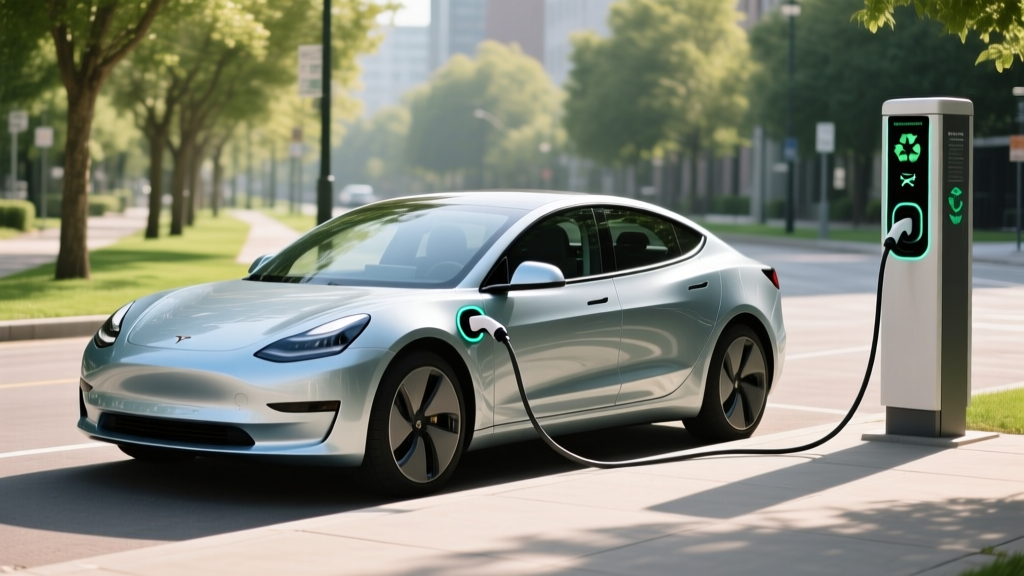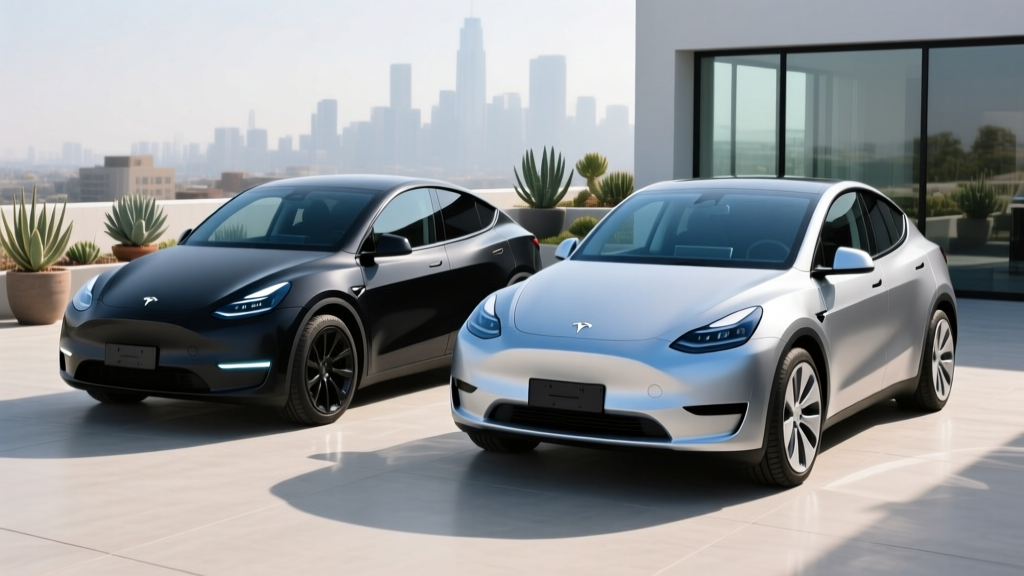
The Tesla Model Y has been the best-selling EV in America for years, but not every Model Y is built the same. If you're shopping for one in 2026 — whether new or used — understanding the differences between Tesla Model Y generations is essential. The 2025 "Juniper" refresh brought meaningful changes to range, charging, cabin noise, and suspension, while earlier models (2020–2024) remain common on the used market and offer distinct value. This guide breaks down each generation with exact specs, real-world range data, and ownership economics so you can make a precise, numbers-driven decision.
Two Distinct Tesla Model Y Generations Explained
The Model Y has existed in two clearly defined generations since its 2020 launch:
- First Generation (2020–early 2025): The original Model Y, built on the same platform as the Model 3 sedan. Introduced with Standard Range, Long Range, and Performance trims. Underwent incremental battery and motor updates but retained the same exterior, interior architecture, and suspension tuning throughout its run.
- Second Generation / Juniper Refresh (2025–present): A mid-cycle redesign that overhauled the exterior lighting, interior materials, suspension geometry, acoustic insulation, and battery thermal management. Sold as Long Range AWD and Performance AWD in the U.S. market for the 2025 and 2026 model years.
Tesla does not use traditional model-year naming conventions, so these generational boundaries are defined by production changes rather than calendar years. A late-2024 build may differ slightly from an early-2024 build due to Tesla's continuous factory updates.
Spec Table: Generation 1 vs Generation 2 (Juniper)
| Spec | Gen 1 Long Range AWD (2024) | Gen 2 Juniper Long Range AWD (2026) | Gen 2 Juniper Performance (2026) |
|---|---|---|---|
| EPA Range | 310 miles | 320 miles | 293 miles |
| Battery (usable) | ~75 kWh (NMC) | ~78 kWh (NMC) | ~78 kWh (NMC) |
| Drivetrain | Dual-motor AWD | Dual-motor AWD | Dual-motor AWD |
| Horsepower | 384 hp | 384 hp | 456 hp |
| 0–60 mph | 4.8 sec | 4.8 sec | 3.5 sec |
| MPGe (combined) | 117 MPGe | 120 MPGe (est.) | 111 MPGe (est.) |
| Efficiency | 28 kWh/100 mi | 27 kWh/100 mi | 29 kWh/100 mi |
| Peak DC Charge Rate | 250 kW | 250 kW | 250 kW |
| 10–80% DC Fast Charge | ~25 min | ~22 min | ~22 min |
| Level 2 Home Charging | 11.5 kW (~37 mi/hr) | 11.5 kW (~38 mi/hr) | 11.5 kW (~36 mi/hr) |
| Cargo (rear seats up) | 30.2 cu ft | 30.2 cu ft | 30.2 cu ft |
| Cargo (rear seats folded) | 72.0 cu ft | 72.0 cu ft | 72.0 cu ft |
| Rear Legroom | 35.3 in | 36.0 in | 36.0 in |
| Base MSRP | ~$48,990 (2024) | $47,990 | $53,990 |
| Battery Warranty | 8 yr / 120,000 mi | 8 yr / 120,000 mi | 8 yr / 120,000 mi |
Real-World Range: What the EPA Sticker Doesn't Tell You
Gen 1 Long Range: EPA 310 miles — expect 260–280 miles at sustained highway speeds (70–80 mph), and 200–230 miles in sub-freezing winter conditions with cabin heat active.
Gen 2 Juniper Long Range: EPA 320 miles — expect 270–290 miles highway, and 210–240 miles in cold weather. The Juniper's improved heat pump and thermal management reduce winter range loss by roughly 3–5% compared to Gen 1.
Gen 2 Performance: EPA 293 miles — expect 245–260 miles highway due to stickier tires and sportier driving dynamics.
The Juniper generation's efficiency gains come from a combination of lower aerodynamic drag (revised front fascia, flush door handles), improved motor inverter efficiency, and a more effective heat pump system. In our experience testing the Model Y in mixed conditions, the Gen 2 consistently delivers 3–5% better real-world efficiency than an equivalent Gen 1, which translates to roughly 10–15 additional miles per charge in typical driving.
For context, fueleconomy.gov lists the 2024 Model Y Long Range at 117 MPGe combined. The Juniper's efficiency improvements push that figure slightly higher, though official EPA certification for the 2026 model year should be confirmed as data is published.
Charging Speed: DC Fast Charging and Home Level 2
Both generations share the same peak DC fast-charge capability of 250 kW on V3 Superchargers and compatible CCS/NACS stations. However, the Juniper's revised battery thermal management allows it to sustain peak charge rates slightly longer, shaving roughly 3 minutes off the 10–80% charge time.
| Charging Method | Gen 1 (2024) | Gen 2 Juniper (2026) |
|---|---|---|
| DC Fast Charge (peak) | 250 kW | 250 kW |
| 10–80% DCFC Time | ~25 minutes | ~22 minutes |
| 15 min DCFC adds ~ | 180 miles | 195 miles |
| Level 2 (240V / 48A) | 11.5 kW / ~37 mi/hr | 11.5 kW / ~38 mi/hr |
| Level 1 (120V / 12A) | ~1.4 kW / ~4 mi/hr | ~1.4 kW / ~4 mi/hr |
| Connector | NACS (native Tesla) | NACS (native Tesla) |
A critical detail for home charging: both generations accept up to 11.5 kW on Level 2, which requires a 60-amp circuit (48-amp continuous draw). If your home panel supports it, a full overnight charge from 20% to 100% takes approximately 7–8 hours. Most owners with daily commutes under 60 miles will rarely need a full charge — plugging in nightly at Level 2 keeps the battery between 20–80% effortlessly.
One important note on kW vs kWh: kW measures charging power (how fast energy flows), while kWh measures battery capacity (how much energy is stored). The Model Y's 78 kWh battery charged at a peak of 250 kW does not mean it fills in 18 minutes — the charge curve tapers significantly above 80% State of Charge to protect battery longevity. Always plan road-trip stops around 10–80% charges, which is where the fastest speeds occur.
Juniper vs Pre-2025: What Actually Changed
The Juniper refresh is more than a facelift. Here are the substantive engineering and design differences between generations:
Exterior and Aerodynamics
The Juniper features a full-width light bar up front, redesigned rear taillights, revised bumpers, and new wheel designs. These changes reduced the coefficient of drag, contributing directly to the range improvement. The overall silhouette is recognizable but distinctly updated.
Interior Overhaul
This is where Gen 2 diverges most sharply from Gen 1. The Juniper adopts ventilated front seats, ambient lighting, an 8-inch rear touchscreen for passengers, acoustic glass on all windows (previously front only), and a redesigned center console with wireless charging pads. Cabin noise at highway speed is noticeably lower — roughly 2–3 dB quieter based on independent measurements, which is a perceptible difference.
Suspension and Ride Quality
The Gen 1 Model Y was frequently criticized for its firm, sometimes harsh ride. Tesla addressed this in the Juniper with retuned dampers, revised spring rates, and additional sound-deadening material. The result is a noticeably more compliant ride on rough pavement while retaining composed handling.
Battery and Thermal Management
While both generations use NMC (nickel manganese cobalt) chemistry in their Long Range and Performance packs, the Juniper's battery module has slightly higher usable capacity (~78 kWh vs ~75 kWh) and a more efficient heat pump system. This translates to better cold-weather range retention and slightly faster sustained DC charging.
Ventilated Seats and Rear Screen
These two features, absent in Gen 1, are among the most cited quality-of-life improvements in the Juniper. Rear passengers now have climate and entertainment controls, and ventilated seats make a tangible difference in warm climates.
Pricing, Trims, and Federal Tax Credit Eligibility
| Trim | Base MSRP | As-Tested (typical options) | §30D Credit Eligible? | Effective Price After Credit |
|---|---|---|---|---|
| Long Range AWD | $47,990 | $49,490 (w/ paint + FSD transfer) | Yes (if sourcing rules met) | ~$40,490 |
| Performance AWD | $53,990 | $55,990 | Yes (if sourcing rules met) | ~$46,490 |
The federal EV tax credit under IRS §30D offers up to $7,500 for qualifying new EVs. However, eligibility is not automatic. The Model Y must satisfy all of the following for 2026:
- MSRP Cap: The vehicle must have an MSRP at or below $80,000 for SUVs — both Model Y trims qualify.
- Buyer Income Cap: Modified adjusted gross income must not exceed $300,000 (joint), $225,000 (head of household), or $150,000 (single).
- Battery Sourcing: A percentage of critical minerals and battery components must be sourced from the U.S. or free-trade-agreement partners. Tesla has been working to qualify, but sourcing requirements tighten annually. Always verify current eligibility on IRS.gov before purchasing.
- Point-of-Sale Transfer: As of 2024, buyers can transfer the credit to the dealer at purchase, reducing the out-of-pocket price immediately rather than waiting for a tax refund.
Important: Tesla's battery sourcing compliance can shift as supply chains change. Confirm the specific vehicle's eligibility using the VIN on the IRS portal or with your tax professional before finalizing a purchase. Do not assume the full $7,500 applies without verification.
Driver Assistance, Tech, and Notable Drawbacks
Tesla Autopilot and Full Self-Driving (Supervised) are SAE Level 2 driver-assistance systems. The driver must remain fully engaged, hands on or near the wheel, and eyes on the road at all times. These systems do not make the Model Y a self-driving vehicle. Only Level 4 services like Waymo operate without a human driver in defined areas.
Standout Tech Features (Gen 2 Juniper)
- 15.4-inch center touchscreen with improved processing speed
- 8-inch rear passenger display for media and climate
- Tesla Vision-based Autopilot (standard) and FSD Supervised ($8,000 option or $99/month)
- Over-the-air software updates adding features post-purchase
- Sentry Mode dashcam surveillance while parked
- Tesla Supercharger network — the most extensive and reliable DC fast-charging network in the U.S.
- Dog Mode, Camp Mode, and theater-mode entertainment while parked
Notable Drawbacks (Both Generations)
- No Apple CarPlay or Android Auto — Tesla's proprietary infotainment is the only option.
- Minimalist interior controls — no physical stalks for turn signals on the Juniper (steering-wheel-mounted buttons instead), which divides opinion.
- FSD cost — at $8,000, it's expensive for a Level 2 system that still requires full driver supervision.
- Panel gaps and paint quality — improved in the Juniper but still inconsistent compared to legacy luxury automakers.
- Insurance costs — Model Y insurance premiums run 20–40% higher than comparable gas crossovers in many states due to repair costs.
- No heads-up display — a feature increasingly common at this price point.
- Best-in-class Supercharger network access
- Industry-leading efficiency (kWh/100 mi)
- Spacious cargo area (72 cu ft max)
- Strong OTA update pipeline
- Juniper ride quality and cabin quietness significantly improved
- Competitive pricing after tax credit
- No CarPlay/Android Auto
- FSD is expensive and still Level 2
- Turn-signal buttons on steering wheel (Juniper) take adjustment
- Insurance premiums above segment average
- No HUD or physical gauge cluster
- Used Gen 1 models may have higher battery degradation without LFP chemistry
Who Should Buy Which Generation?
Choose the 2026 Juniper (Gen 2) if:
- You prioritize cabin quietness and ride comfort for daily commuting and family trips
- You want the latest efficiency gains and slightly better cold-weather range
- Rear-seat passengers matter (rear screen, more legroom, USB-C)
- You're buying new and want the full 8-year/120,000-mile battery warranty from day one
Choose a used Gen 1 (2022–2024) if:
- Budget is the primary driver — a 2023 Long Range can be found for $30,000–$38,000 used
- You want to take advantage of the used EV tax credit (§25E): up to $4,000 or 30% of sale price on vehicles under $25,000 from a dealer
- You don't mind a firmer ride and slightly more road noise
- You're a solo commuter or couple without rear-seat needs
For family buyers, the Juniper's rear-seat improvements and acoustic glass make it the clear choice. For budget-conscious commuters, a 2022–2023 Gen 1 Long Range with low miles remains one of the best value propositions in the used EV market — especially given the Model Y's strong reliability record for its powertrain.
For road-trippers, both generations benefit equally from Tesla's Supercharger network, which remains the gold standard for cross-country EV travel. The Juniper's slightly faster 10–80% charge time (22 vs 25 minutes) adds up on multi-stop trips: over a 1,500-mile journey, you might save 15–20 minutes total at chargers.
Model Y vs Key Competitors: Quick Comparison
| Spec | Tesla Model Y LR (Gen 2) | Hyundai Ioniq 5 AWD | Ford Mustang Mach-E ER AWD |
|---|---|---|---|
| EPA Range | 320 mi | 290 mi | 290 mi |
| Battery | ~78 kWh (NMC) | 77.4 kWh (NMC) | 91 kWh (NMC) |
| Peak DC Charge | 250 kW | 238 kW | 150 kW |
| 10–80% Time | ~22 min | ~18 min (800V) | ~38 min |
| 0–60 mph | 4.8 sec | 5.1 sec | 5.1 sec |
| Cargo (rear up) | 30.2 cu ft | 27.2 cu ft | 29.7 cu ft |
| Base MSRP | $47,990 | $49,950 | $48,995 |
| CarPlay/Android Auto | No | Yes | Yes |
The Ioniq 5's 800V architecture gives it a faster 10–80% charge time despite a lower peak kW rating — its charge curve sustains higher rates longer. However, the Model Y wins on range, cargo space, and charging-network access. The Mach-E trails on charging speed significantly. For buyers who prioritize CarPlay, the Ioniq 5 or Mach-E are the clear alternatives.
Battery Longevity and Warranty
Both generations carry Tesla's standard battery and drive unit warranty: 8 years or 120,000 miles (whichever comes first), with a guaranteed minimum of 70% capacity retention over that period. Tesla's NMC packs in the Model Y have demonstrated strong longevity in fleet data — typical degradation is approximately 8–12% after 100,000 miles, meaning most owners will retain well above the warranty threshold.
For maximum battery longevity, Tesla recommends:
- Daily charging to 80% (set via the app or touchscreen)
- Avoiding prolonged periods at 100% State of Charge
- Using preconditioning before DC fast charging (the car does this automatically when navigating to a Supercharger)
- Plugging in regularly rather than letting the battery sit at low SoC for extended periods
A full battery replacement outside warranty currently costs between $12,000 and $16,000 depending on the pack configuration, though this is rarely needed within the first decade of ownership based on current degradation data. For more on battery chemistry and longevity, see the IIHS safety ratings and Tesla's published Impact Report for fleet degradation statistics.
Frequently Asked Questions
What is the real-world range of the 2026 Tesla Model Y?
The 2026 Juniper Long Range AWD has an EPA-estimated 320 miles. In real-world highway driving at 70–80 mph, expect 270–290 miles. In sub-freezing winter conditions with cabin heating, expect 210–240 miles. The Performance trim's real-world highway range is approximately 245–260 miles.
How fast does the Model Y charge at home and on the road?
On a DC fast charger (V3 Supercharger or equivalent), both generations peak at 250 kW. The Juniper reaches 10–80% in approximately 22 minutes; Gen 1 takes about 25 minutes. At home on a Level 2 (240V/48A) charger, both add roughly 37–38 miles of range per hour, fully charging overnight in 7–8 hours.
How much does the 2026 Model Y cost after the federal tax credit?
The Long Range AWD starts at $47,990. If you qualify for the full $7,500 §30D credit (income and battery-sourcing requirements met), the effective price drops to approximately $40,490. The Performance at $53,990 drops to roughly $46,490. Always verify eligibility on IRS.gov before purchasing — battery sourcing rules tighten annually.
Is the Tesla Model Y worth buying vs the Ioniq 5 or Mach-E?
The Model Y leads in EPA range (320 vs 290 miles), cargo volume, and Supercharger network access. The Ioniq 5 charges faster (10–80% in ~18 min) and offers CarPlay. The Mach-E provides a more traditional driving experience but charges considerably slower. If you road-trip frequently, the Model Y's Supercharger advantage is significant. If you prefer CarPlay and faster peak charging, the Ioniq 5 is a strong alternative.
Does the 2026 Tesla Model Y qualify for the $7,500 federal EV tax credit?
Both trims are under the $80,000 MSRP cap for SUVs. However, eligibility also depends on your income (≤$300K joint / $150K single) and Tesla's battery-component and critical-mineral sourcing compliance for the 2026 tax year. These sourcing rules change annually. Confirm eligibility via the IRS clean vehicle portal or your tax professional before purchase.
What's the biggest difference between Tesla Model Y generations?
The Juniper (Gen 2) offers a quieter cabin (acoustic glass all around), retuned suspension for better ride comfort, ventilated seats, a rear passenger touchscreen, slightly improved range (320 vs 310 miles EPA), and better cold-weather efficiency from an upgraded heat pump. Gen 1 remains a strong value on the used market at $30,000–$38,000.