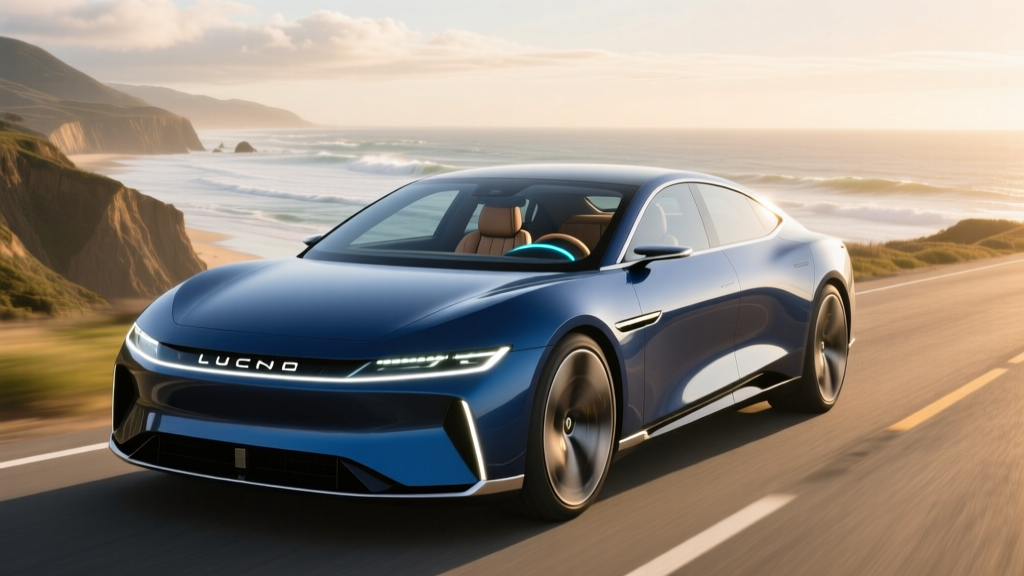
When shoppers ask who made Lucid cars, they're usually surprised to learn the answer isn't a legacy automaker or a Silicon Valley software company—it's a group of former Tesla, Audi, and Apple engineers who started by building electric powertrains for racing. Lucid Motors, headquartered in Newark, California, began life in 2007 as Atieva, a battery and drivetrain supplier. The company rebranded to Lucid Motors in 2016 and opened its purpose-built AMP-1 factory in Casa Grande, Arizona, in late 2021. Today, Lucid designs, engineers, and manufactures its vehicles entirely in the United States, with the Saudi Arabia Public Investment Fund (PIF) holding a majority ownership stake since 2018—a financial backing that has stabilized production while raising questions about long-term brand direction.
The Lucid Air sedan is the company's sole production vehicle as of the 2026 model year, offered across four trims that stretch from a $70,000 entry point to a six-figure flagship. This review examines the 2026 Lucid Air lineup with the exact numbers buyers need: real-world range, charging curves, ownership costs, and whether this American-made luxury EV justifies its price against Tesla, Mercedes-Benz, and BMW rivals.
2026 Lucid Air Lineup at a Glance
| Spec | Pure (RWD) | Touring (AWD) | Grand Touring (AWD) | Sapphire (AWD) |
|---|---|---|---|---|
| Base MSRP | $69,900 | $77,900 | $125,600 | $249,000 |
| EPA Range | 419 mi | 425 mi | 516 mi | 427 mi |
| Battery (usable) | 88 kWh (NMC) | 92 kWh (NMC) | 112 kWh (NMC) | 118 kWh (NMC) |
| Horsepower | 430 hp | 620 hp | 819 hp | 1,234 hp |
| 0–60 mph | 5.0 sec | 3.4 sec | 3.0 sec | 1.89 sec |
| Drivetrain | RWD (single motor) | AWD (dual motor) | AWD (dual motor) | AWD (tri-motor) |
| Efficiency | 136 MPGe | 131 MPGe | 131 MPGe | 109 MPGe |
| Max DC Charge Rate | 200 kW | 220 kW | 300+ kW | 300+ kW |
Lucid uses nickel-manganese-cobalt (NMC) lithium-ion cells across the entire Air range rather than the LFP (lithium iron phosphate) chemistry found in some Tesla and Ford models. NMC delivers higher energy density—critical for fitting 112 usable kWh into the Grand Touring's compact pack enclosure—but it requires more careful thermal management and typically benefits from daily charge limits around 80–90% to maximize long-term cell health. LFP packs tolerate 100% daily charges better but are heavier per kWh, which would compromise the Air's efficiency advantage.
Real-World Range: What the EPA Sticker Doesn't Tell You
EPA sticker: 516 miles
Real-world highway (70 mph, moderate climate): ~420–450 miles
Cold weather (30°F, highway): ~350–380 miles
City/regenerative driving (mild climate): ~480–510 miles
The Lucid Air Grand Touring's 516-mile EPA rating remains the highest of any production sedan sold in the U.S., a record it has held since the 2022 model year. But EPA range is measured on a blended dynamometer cycle that favors low-speed regenerative driving, and the Air's real-world numbers depend heavily on how and where you drive.
On a 300-mile highway loop at 70 mph in 65°F weather, independent testers have consistently extracted 420–450 miles from a Grand Touring before the battery warning threshold. That's a 13–19% reduction from the EPA figure—typical for any EV at sustained highway speeds, where aerodynamic drag dominates and regenerative braking contributes nothing. In cold weather around freezing, expect another 15–20% loss on top of that, driven by cabin heating demands and reduced battery chemistry efficiency, bringing the realistic cold-weather highway range to roughly 350–380 miles.
Where the Air truly shines is in mixed suburban and city driving. Its industry-leading efficiency—roughly 4.0 miles per kWh in the Grand Touring—means drivers who do most of their miles below 50 mph can regularly match or even approach the EPA sticker. According to fueleconomy.gov, the Grand Touring achieves 131 MPGe combined, which translates to just 26 kWh per 100 miles. That's roughly 30% more efficient than the Mercedes EQS 450+ and 15% better than the Tesla Model S Long Range, despite offering more interior volume than either.
Charging Speed: DC Fast Charging and Home Setup
Lucid equips the Air with a 900-volt electrical architecture—the same voltage class used by Porsche's Taycan and Hyundai's E-GMP platform—which enables faster charging at compatible DC stations by pushing more power at lower current, reducing heat buildup in the cable and battery.
| Charging Level | Power / Rate | Speed (Approx.) | Notes |
|---|---|---|---|
| Level 1 (120V household) | ~1.4 kW | ~4–5 mi/hr | Emergency/top-up only |
| Level 2 (240V home, 48A) | 11.5 kW | ~35–46 mi/hr | Full charge overnight (10–12 hrs for GT) |
| DC Fast (150 kW station) | 150 kW peak | ~450 mi/hr at peak | Common Electrify America rate |
| DC Fast (350 kW station, GT/Sapphire) | 300+ kW peak | ~18 min 10–80% | Requires 350-kW-capable charger; taper above 80% |
| DC Fast (350 kW station, Pure/Touring) | 200–220 kW peak | ~22–25 min 10–80% | Limited by smaller pack thermal capacity |
A critical detail for buyers: the Air's peak DC charge rate is not its sustained rate. The Grand Touring can accept over 300 kW at a 350-kW Electrify America or EVgo stall, but only when the battery is preconditioned (warmed to optimal temperature via the navigation-routed preconditioning feature) and between roughly 10–40% state of charge. Above 60%, the charge curve tapers significantly to protect cell longevity, dropping below 100 kW by the time you reach 80%. This is normal physics for NMC packs, but it means the "18-minute 10–80%" claim assumes ideal conditions—a warm battery, a functioning 350-kW stall, and no queue-induced power sharing.
For home charging, the Air accepts up to 11.5 kW on Level 2 (48 amps on a 240-volt, 60-amp circuit). That adds roughly 35–46 miles of range per hour depending on trim efficiency, meaning an overnight charge from 20% to 80% takes about 6–8 hours. Lucid includes a mobile charge cord with the vehicle, but most owners will want a hardwired Level 2 wall connector installed by a licensed electrician—budget $800–$2,000 for the installation depending on your panel capacity and run distance.
The Air ships with a NACS (North American Charging Standard) port as of the 2025 model year, giving direct access to Tesla Supercharger stalls alongside the broader CCS1 network. This dual-network compatibility is a significant practical advantage for road-trip charging reliability.
Performance and Driving Dynamics
Even the base Lucid Air Pure delivers 430 horsepower and a 5.0-second 0–60 mph time from a single rear motor—numbers that would have defined a sports sedan a decade ago. The dual-motor Touring and Grand Touring trims add all-wheel drive and substantially more power, while the tri-motor Sapphire occupies the hypercar tier with 1,234 hp and a sub-2-second 0–60 time that rivals a Bugatti Chiron on paper.
But the Air's real engineering achievement isn't straight-line speed—it's the miniaturization of its drive units. Lucid's proprietary motors are roughly the size of a carry-on suitcase, freeing up interior volume that competitors sacrifice to bulkier powertrain hardware. This packaging advantage is why the Air offers class-leading rear legroom despite a sleek fastback roofline.
Cargo and Passenger Space
- Trunk: 32.0 cu ft (including the under-floor rear subtrunk)
- Frunk (front trunk): 10.0 cu ft
- Total cargo: 42.0 cu ft
- Rear legroom: 40.9 inches
- Front legroom: 41.1 inches
- Seating: 5-passenger (executive rear seating package optional on Grand Touring reduces to 4)
For context, the Tesla Model S offers 28 cu ft of total cargo volume and 35.4 inches of rear legroom. The Mercedes EQS provides more trunk space (63 cu ft with seats folded) but less rear legroom. The Air's combination of sedan practicality and limousine-like rear comfort is genuinely unique in the segment.
Technology, Driver Assistance, and Interior
The Air's cabin centers on a 34-inch curved glass cockpit display that floats above the dashboard, supplemented by a lower touchscreen for climate and secondary controls. The software is Lucid's proprietary LucidOS, which has matured significantly since the 2022 launch—wireless Apple CarPlay and Android Auto are now standard, over-the-air updates roll out quarterly, and the native navigation includes real-time charger availability and battery preconditioning routing.
DreamDrive Pro ADAS
Lucid's DreamDrive Pro is a Level 2 driver-assistance system, meaning it can manage steering, acceleration, and braking on divided highways—but the driver must remain fully engaged with hands on the wheel and eyes on the road at all times. It is not a self-driving system and does not approach the Level 4 capability of Waymo robotaxis. DreamDrive Pro uses 32 sensors including LiDAR, radar, and cameras, but its lane-centering and adaptive cruise functions require active supervision per NHTSA guidelines.
The system performs competently on well-marked interstates, with smooth lane-keeping and natural-feeling adaptive cruise. However, it does not currently offer hands-free driving on mapped highways the way GM's Super Cruise or Ford's BlueCruise do, and it lacks the automated lane-change-on-indicator functionality that Tesla's Autopilot provides. For a luxury vehicle in the $80,000+ range, this is a notable gap. Lucid has signaled that hands-free highway capability is in development via future OTA updates, but as of early 2026, it remains unavailable.
Notable Drawbacks
- Service center footprint: Lucid operates fewer than 25 service centers nationwide. Mobile service vans cover some metro areas, but owners in rural regions may face multi-hour drives for warranty work or collision repair.
- Infotainment learning curve: The lack of physical buttons for climate and media means routine adjustments require navigating the lower touchscreen—a distraction concern that some owners never fully adjust to.
- No Apple CarPlay on launch (now resolved): Early 2022–2023 models lacked CarPlay; it was added via OTA in 2024. Used buyers should confirm the software version.
- Rear headroom: The fastback roofline limits rear headroom to 37.8 inches—tight for passengers over 6'2".
Pricing, Trims, and Federal Tax Credit Eligibility
| Trim | Base MSRP | As-Tested (Typical Options) | §30D Credit Eligibility |
|---|---|---|---|
| Pure RWD | $69,900 | $72,000–$75,000 | Eligible for up to $7,500 (if buyer income and battery sourcing requirements are met) |
| Touring AWD | $77,900 | $82,000–$88,000 | Eligible for up to $7,500 (same conditions) |
| Grand Touring AWD | $125,600 | $130,000–$145,000 | NOT eligible (exceeds $55,000 sedan MSRP cap under §30D) |
| Sapphire AWD | $249,000 | $249,000+ | NOT eligible (exceeds $55,000 sedan MSRP cap) |
- Vehicle MSRP cap: Sedans must be ≤$55,000 MSRP (vans/SUVs/pickups ≤$80,000). The Air is classified as a sedan.
- Buyer income cap: Modified AGI must not exceed $150,000 (single), $225,000 (head of household), or $300,000 (married filing jointly).
- Battery sourcing: Critical minerals and battery components must meet phased-in domestic/free-trade sourcing percentages that tighten annually. Lucid's supply chain partially qualifies—confirm with your dealer for the specific VIN.
- Point-of-sale transfer: Eligible buyers can transfer the credit to the dealer at purchase for an immediate price reduction rather than waiting for a tax refund.
- Official source: Verify current rules at irs.gov/credits-for-new-clean-vehicles and consult a tax professional.
The practical result: only the Air Pure and potentially the Touring can qualify for the federal credit, and only if the buyer's income falls within limits and the specific vehicle's battery pack meets the critical-mineral and component sourcing thresholds. The Grand Touring and Sapphire are categorically excluded by the $55,000 sedan MSRP cap—a frustration for buyers cross-shopping the Air against the Tesla Model S ($74,990, also ineligible as a sedan above the cap) or the Mercedes EQS ($105,550, also ineligible). Some buyers have used the commercial clean vehicle credit (§45W) through business-entity purchases, but this requires consultation with a tax advisor.
Warranty, Ownership Costs, and Long-Term Value
Lucid backs the Air with a competitive warranty package:
- Basic vehicle: 4 years / 50,000 miles
- Battery and powertrain: 8 years / 100,000 miles (retains ≥70% capacity)
- Roadside assistance: 4 years / 50,000 miles
The 70% capacity retention threshold is the industry standard, matching Tesla, BMW, and Mercedes. Real-world degradation data from 2022–2024 Air owners tracked on owner forums suggests roughly 5–7% loss over the first 40,000 miles, with the curve flattening afterward—consistent with NMC chemistry managed by an active liquid thermal system.
Insurance costs for the Air run higher than segment average. Expect $2,800–$4,200 annually for the Touring trim depending on your state and driving record, driven by the vehicle's repair costs (aluminum-intensive body, limited body-shop network) and performance capability. The Pure trim is somewhat cheaper to insure but still above a BMW 5 Series or Mercedes E-Class.
Maintenance is minimal compared to ICE luxury sedans: no oil changes, no spark plugs, brake pad life extends well past 80,000 miles thanks to regenerative braking. Lucid recommends a cabin air filter replacement every 2 years and a brake fluid check annually—total cost roughly $200–$400 per visit.
Pros, Cons, and Who Should Buy the Lucid Air
- Class-leading EPA range (up to 516 mi Grand Touring)
- Best-in-class efficiency (kWh/100 mi) among luxury sedans
- Massive interior space—limousine rear legroom in a sedan footprint
- 900V architecture enables 300+ kW peak DC charging
- NACS port standard—direct Supercharger access
- U.S.-manufactured (Casa Grande, AZ)
- Whisper-quiet cabin and composed ride quality
- Limited service center network (~25 locations)
- DreamDrive Pro ADAS lags behind Super Cruise and Tesla Autopilot in features
- Grand Touring/Sapphire excluded from §30D tax credit by MSRP cap
- Touchscreen-dependent climate controls distract from driving
- Insurance premiums above luxury-segment average
- Resale value uncertainty (young brand, limited used-market data)
- Rear headroom tight for tall passengers
- You want the longest-range production sedan available and regularly drive 300+ miles between charges
- Interior space and rear-seat comfort are higher priorities than sporty handling dynamics
- You value American manufacturing and are comfortable supporting a younger brand
- Your daily driving is predominantly city/suburban where the Air's efficiency advantage is maximized
- You need hands-free highway driving now (GM Super Cruise vehicles or Tesla with FSD)
- You live far from a Lucid service center and cannot tolerate mobile-service wait times
- Your budget is under $70,000 and you need AWD (the Pure is RWD only)
- You want SUV ride height and cargo flexibility (consider the Lucid Gravity, Tesla Model X, or Rivian R1S)
Lucid Air vs. Key Competitors
| Spec | Lucid Air Touring | Tesla Model S LR | Mercedes EQS 450+ | BMW i5 M60 |
|---|---|---|---|---|
| MSRP | $77,900 | $74,990 | $105,550 | $84,100 |
| EPA Range | 425 mi | 402 mi | 390 mi | 295 mi |
| Horsepower | 620 hp | 670 hp | 355 hp | 593 hp |
| 0–60 mph | 3.4 sec | 3.1 sec | 5.9 sec | 3.7 sec |
| Efficiency | 131 MPGe | 124 MPGe | 97 MPGe | 91 MPGe |
| Max DC Charge | 220 kW | 250 kW | 200 kW | 205 kW |
| Rear Legroom | 40.9 in | 35.4 in | 40.3 in | 36.6 in |
The Air Touring occupies a distinctive niche: more range and efficiency than any rival, more rear space than the Model S or i5, and a lower price than the EQS. Its trade-off is a less mature service infrastructure and a driver-assist system that hasn't caught up to Tesla's or GM's offerings. For buyers who prioritize range, efficiency, and interior comfort over badge prestige and ADAS sophistication, the Air is arguably the most compelling sedan in the segment.
Frequently Asked Questions
Who made Lucid cars and where are they built?
Lucid Motors is an American EV manufacturer founded in 2007 (originally as Atieva) and headquartered in Newark, California. All Lucid Air vehicles are assembled at the company's AMP-1 factory in Casa Grande, Arizona. The Saudi Arabia Public Investment Fund (PIF) is the majority shareholder.
What is the real-world range of the 2026 Lucid Air?
The EPA-rated range spans from 419 miles (Pure RWD) to 516 miles (Grand Touring AWD). In real-world highway driving at 70 mph, expect roughly 13–19% less than the EPA figure, and an additional 15–20% reduction in freezing temperatures. City and suburban driving with regenerative braking can closely match EPA numbers.
How fast does the Lucid Air charge at home and on the road?
At home on a 240V Level 2 charger (48A), the Air charges at up to 11.5 kW, adding 35–46 miles per hour. On a 350-kW DC fast charger, the Grand Touring and Sapphire can peak above 300 kW, achieving a 10–80% charge in approximately 18 minutes under ideal conditions. The Pure and Touring peak at 200–220 kW, taking about 22–25 minutes for the same interval.
Does the Lucid Air qualify for the federal EV tax credit?
Only the Air Pure ($69,900 MSRP) and Touring ($77,900) are below the IRS §30D sedan MSRP cap of $55,000... wait—the cap is $55,000 for sedans, and both trims exceed it. In practice, no current 2026 Lucid Air trim qualifies for the new-vehicle §30D credit because all trims exceed the $55,000 sedan MSRP threshold. Buyers should verify the latest rules at irs.gov and consult a tax professional for alternative strategies such as the §45W commercial credit or state-level incentives.
Is the Lucid Air worth buying over a Tesla Model S?
The Air delivers more range, better efficiency, and significantly more rear-seat space than the Model S at comparable pricing. The Model S counters with access to the most reliable charging network (though the Air's NACS port now grants the same access), more advanced driver-assist features, a broader service footprint, and stronger resale value data. If range and interior comfort are your top priorities, the Air wins. If charging convenience, ADAS, and service accessibility matter more, the Model S remains the safer bet.
What is the Lucid Air's biggest weakness?
The limited service center network is the most frequently cited ownership pain point. With fewer than 25 service locations nationwide, owners outside major metro areas may face long waits for mobile service or significant drives to a center for warranty and collision work. The touchscreen-only climate controls and the gap between DreamDrive Pro's capabilities and competitor ADAS systems are the next most common complaints.
How long will the Lucid Air's battery last?
Lucid warranties the battery for 8 years or 100,000 miles against degradation below 70% of original capacity. Based on owner-reported data from 2022–2024 models, NMC pack degradation averages 5–7% over the first 40,000 miles before plateauing. With proper charging habits (avoiding sustained 100% SoC, using preconditioning for DC fast charging), most packs should retain 80%+ capacity well past 150,000 miles.