If you have been searching for a Tesla electric van, you are not alone. Since Tesla CEO Elon Musk first teased a passenger van concept during the 2024 "We, Robot" event, interest in a Tesla-badged people-mover has surged. The vehicle, internally referred to as the Robovan, was shown in render form carrying up to 20 passengers. But as of early 2026, Tesla has not opened reservations, published an EPA range estimate, or confirmed a production timeline for any van or minibus product.
This guide cuts through the speculation. We will cover exactly what Tesla has confirmed about the Robovan, what remains preliminary, and — critically — which electric vans and multi-passenger EVs you can actually order, charge, and drive today.
What We Know About the Tesla Robovan (Announced, Not Available)
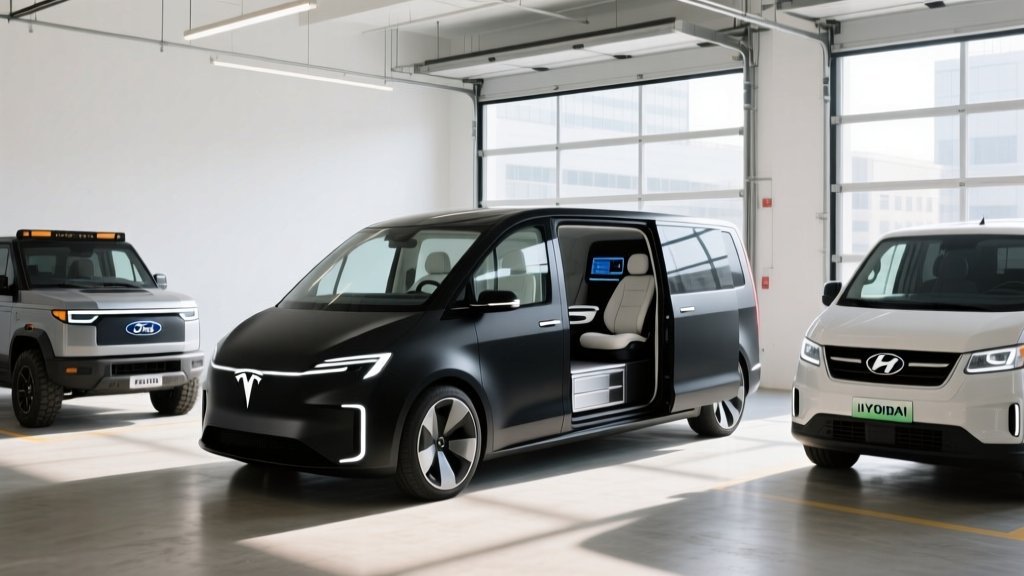
At the October 2024 "We, Robot" event held on the Warner Bros. studio lot, Tesla unveiled a sleek, art-deco-inspired vehicle it called the Robovan. Musk stated it could accommodate up to 20 passengers and hinted at both autonomous (robotaxi-style) and human-driven configurations. A brief video showed the vehicle gliding through a stylized cityscape.
Here is what Tesla has not disclosed as of Q1 2026:
- No battery capacity (kWh) or chemistry (LFP vs. NMC) confirmed
- No EPA range estimate — the vehicle has not undergone EPA testing
- No MSRP, trim structure, or reservation opening date
- No charging speed (kW) or connector type confirmed
- No production start date or factory assignment (Fremont, Giga Texas, or Giga Shanghai)
- No interior dimensions, cargo volume, or seating configuration details
Estimated Tesla Robovan Specs (Preliminary — Based on Platform Analysis)
While no official specifications exist, we can make informed projections based on Tesla's current battery and powertrain technology. The Robovan would likely share architecture with the Cybertruck or a stretched Model X/Model Y platform. Below are analyst estimates — not manufacturer-confirmed figures.
| Attribute | Estimated Figure | Basis for Estimate |
|---|---|---|
| Battery Capacity | 120–150 kWh (estimated) | Scaled from Cybertruck's 123 kWh pack for heavier, larger vehicle |
| EPA Range | 250–350 miles (estimated) | Based on Tesla efficiency targets; highly dependent on weight/aero |
| Chemistry | Likely NMC (high energy density needed) | LFP too heavy for large passenger vehicle targeting 300+ mi range |
| DC Fast Charge | 250–350 kW peak (estimated) | Tesla Supercharger V4 capability; Cybertruck peaks at ~350 kW |
| Seating | Up to 20 (per Musk statement) | Concept reveal statement, October 2024 |
| Drivetrain | Dual- or tri-motor AWD (likely) | Weight and passenger load demand high torque output |
| MSRP | Unknown — likely $60,000–$100,000+ | Speculative; fleet/autonomous versions could differ significantly |
Key takeaway: None of these numbers should factor into a purchase decision. Tesla has not submitted the Robovan to the EPA for range certification, nor has it published a spec sheet on tesla.com.
Electric Vans You Can Actually Buy in 2026
If you need an electric van or multi-passenger EV now, several proven alternatives exist. These vehicles have published EPA range figures, confirmed pricing, known battery chemistry, and are available for order or delivery in the United States.
1. Mercedes-Benz eSprinter (2026 Model Year)
The eSprinter is the most direct electric van available for commercial and passenger use in the U.S. Mercedes-Benz offers it in cargo, crew, and passenger configurations.
- Battery: 113 kWh usable (NMC chemistry)
- EPA Range: ~200 miles (cargo variant); passenger variants slightly lower due to weight
- DC Fast Charge: Up to 115 kW; 10–80% in approximately 42 minutes
- Level 2 Charging: 11 kW onboard charger (~37 miles per hour of charging)
- Base MSRP: ~$74,000 (cargo); passenger configurations higher
- Tax Credit: May qualify under the commercial clean vehicle credit (§45W) rather than §30D, given its GVWR; consult a tax professional
- Best for: Fleet operators, shuttle services, commercial cargo
2. Ford E-Transit (2026 Model Year)
Ford's electric commercial van has been in production since 2022 and remains a staple for fleet buyers. A passenger wagon variant is available.
- Battery: 68 kWh usable (NMC)
- EPA Range: 126 miles (low-roof cargo van, per fueleconomy.gov)
- DC Fast Charge: Up to 115 kW; 10–80% in ~45 minutes
- Level 2 Charging: 10.5 kW onboard (~34 miles per hour)
- Base MSRP: ~$52,000 (cargo); wagon variant ~$57,000
- Best for: Urban delivery routes, short-range fleet duty
3. Chrysler Pacifica Plug-In Hybrid (Minivan Alternative)
Not a full BEV, but the Pacifica PHEV offers 32 miles of electric-only range before the gas engine engages — making it practical for school runs and short commutes on battery power alone.
- Battery: 16 kWh (NMC)
- Electric-Only Range: 32 miles (EPA)
- Combined MPG (gas): 30 MPG; 82 MPGe (electric + gas)
- Seating: 7 passengers
- Base MSRP: ~$51,000
- Tax Credit: Eligible for up to $7,500 under §30D, subject to income and MSRP caps
- Best for: Families needing minivan space without full EV commitment
4. Kia EV9 (Three-Row Electric SUV — Van Alternative)
If your need is passenger capacity rather than cargo, the three-row EV9 offers seating for up to 7 with genuine long-range electric capability.
- Battery: 100 kWh (NMC, Long Range AWD)
- EPA Range: 270 miles (AWD Land trim)
- DC Fast Charge: Up to 236 kW; 10–80% in ~24 minutes
- Level 2: 10.9 kW onboard
- Base MSRP: $54,900 (Light RWD); $63,900 (Land AWD)
- Tax Credit: Currently eligible for up to $7,500 under §30D (verify current sourcing requirements on irs.gov)
- Best for: Families wanting three rows and 250+ mile range
Side-by-Side Comparison: Available Electric Vans & Multi-Passenger EVs
| Spec | Mercedes eSprinter | Ford E-Transit | Chrysler Pacifica PHEV | Kia EV9 AWD |
|---|---|---|---|---|
| EPA Range | ~200 mi | 126 mi | 32 mi (EV) + gas | 270 mi |
| Battery (kWh) | 113 | 68 | 16 | 100 |
| DC Charge (kW) | 115 | 115 | N/A (PHEV) | 236 |
| 10–80% Time | ~42 min | ~45 min | ~2 hr (L2) | ~24 min |
| Seating | Up to 15 (passenger) | Up to 7 (wagon) | 7 | 6–7 |
| Base MSRP | ~$74,000 | ~$52,000 | ~$51,000 | $54,900 |
| Fed. Credit | §45W (commercial) | §45W (commercial) | Up to $7,500 (§30D) | Up to $7,500 (§30D) |
Federal Tax Credit Rules for Electric Vans in 2026
Tax credit eligibility for electric vans is more complex than for passenger cars, because many vans exceed the weight and classification thresholds of the standard §30D consumer credit.
- §30D Clean Vehicle Credit (Consumer): Up to $7,500 for new EVs. Requires MSRP under $80,000 for vans/SUVs/pickups ($55,000 for sedans). Buyer AGI must not exceed $150,000 (single) or $300,000 (joint). Battery must meet critical-mineral and component sourcing requirements. Available as a point-of-sale transfer to the dealer.
- §45W Commercial Clean Vehicle Credit: Up to $7,500 for vehicles under 14,000 lbs GVWR, or up to $40,000 for heavier vehicles. Available to businesses and tax-exempt organizations. No income cap, but the vehicle must be used primarily for business. The eSprinter and E-Transit typically fall under this credit when purchased by fleets.
- Used EV Credit (§25E): Up to $4,000 (30% of sale price, capped) for qualifying pre-owned EVs priced under $25,000. Buyer income caps apply ($75,000 single / $150,000 joint).
Always verify current eligibility on irs.gov before purchasing, as battery-sourcing requirements have tightened annually since 2023 and specific model eligibility can change mid-year.
Why Tesla Hasn't Built a Van Yet — and When It Might
Tesla's product strategy has consistently prioritized high-volume, high-margin segments: sedans (Model 3), crossovers (Model Y), trucks (Cybertruck), and sports cars (Roadster). The commercial van market, while growing, presents unique challenges:
- Fleet sales cycles: Commercial buyers require extensive validation, service networks, and total-cost-of-ownership guarantees before committing to large orders. Mercedes-Benz and Ford have decades of fleet relationships.
- Low-margin, high-complexity: Vans require multiple body configurations (low/medium/high roof, short/long wheelbase, cargo/passenger/chassis-cab), which complicates production compared to a single-body sedan.
- Autonomous-first approach: Tesla's Robovan concept appears tied to its robotaxi ambitions. The vehicle may launch as a Level 4 autonomous shuttle service before (or instead of) a consumer-driven product.
Based on Tesla's production timeline patterns, even an optimistic scenario puts Robovan production no earlier than late 2027 or 2028. Tesla has not assigned it to any known factory production schedule.
Decision Framework: Should You Wait for Tesla's Van or Buy Now?
✅ Buy Now If:
- You need an electric van for business or family use within the next 12 months
- Your daily routes are under 150 miles and you can charge at a depot or home
- You want to take advantage of current §45W or §30D tax credits before potential rule changes
- You need established dealer service networks and parts availability
⏳ Wait for Tesla If:
- Your van purchase timeline extends beyond 2028
- You specifically want Tesla's Supercharger network integration and Autopilot/FSD tech
- You are planning an autonomous shuttle service and want Tesla's robotaxi platform
- You have no immediate operational need and can absorb timeline uncertainty
Pros and Cons: The Tesla Electric Van Landscape
👍 Pros (Potential Robovan)
- Tesla Supercharger network — the most reliable DC fast-charging network in North America
- Over-the-air software updates and potential FSD integration
- Likely class-leading efficiency (kWh/100mi) based on Tesla's powertrain track record
- High resale value typical of Tesla products
- 20-passenger capacity would be segment-leading
👎 Cons (Current Reality)
- Does not exist as a purchasable product — no reservations, no timeline
- Tesla's history of multi-year delays between concept and production
- No confirmed consumer version — may launch as autonomous-only fleet product
- No service infrastructure validated for commercial van operations
- Competitors (eSprinter, E-Transit) are shipping now with proven reliability data
Frequently Asked Questions
Can I order a Tesla electric van right now?
No. As of early 2026, Tesla has not opened reservations or published a production timeline for the Robovan. The vehicle was shown as a concept at the October 2024 "We, Robot" event but is not available for purchase, lease, or pre-order.
How much will the Tesla Robovan cost?
Tesla has not announced pricing. Based on the vehicle's projected size, battery capacity, and Tesla's pricing strategy for large vehicles (Cybertruck starts at ~$80,000), analysts estimate a consumer Robovan would likely start between $60,000 and $100,000, with autonomous fleet configurations potentially priced differently. These figures are speculative.
What electric van has the longest range in 2026?
Among currently available electric vans, the Mercedes-Benz eSprinter leads with approximately 200 miles of EPA-estimated range (cargo variant). The Ford E-Transit offers 126 miles. If you include three-row electric SUVs as van alternatives, the Kia EV9 AWD provides 270 miles of EPA range with seating for up to 7.
Does a Tesla van qualify for the $7,500 tax credit?
Since the Robovan is not yet available, its tax credit eligibility cannot be determined. When it does launch, eligibility will depend on its MSRP (must be under $80,000 for the §30D consumer credit), battery sourcing compliance with critical-mineral requirements, and buyer income limits. Commercial fleet purchases may qualify under §45W instead.
What is the best electric van for a family in 2026?
For families needing 7 seats and electric range, the Kia EV9 is the strongest current option with 270 miles of EPA range, DC fast charging at 236 kW, and eligibility for the $7,500 federal tax credit. If you need minivan-style sliding doors and can accept a plug-in hybrid, the Chrysler Pacifica PHEV offers 32 miles of electric-only range plus a gas engine for longer trips.
Will Tesla's van have Autopilot and Full Self-Driving?
Based on Tesla's current product lineup, it is highly likely the Robovan would offer Autopilot (SAE Level 2 driver assistance) and the option for FSD (Supervised), which also remains Level 2 — meaning the driver must remain attentive and hands-on at all times. If the Robovan launches as a robotaxi shuttle, certain geofenced routes could potentially operate at Level 4 autonomy, but this has not been confirmed.
Sources: fueleconomy.gov (EPA range/efficiency data), irs.gov (tax credit rules), tesla.com (product announcements), manufacturer specification pages for Mercedes-Benz, Ford, Kia, and Stellantis.