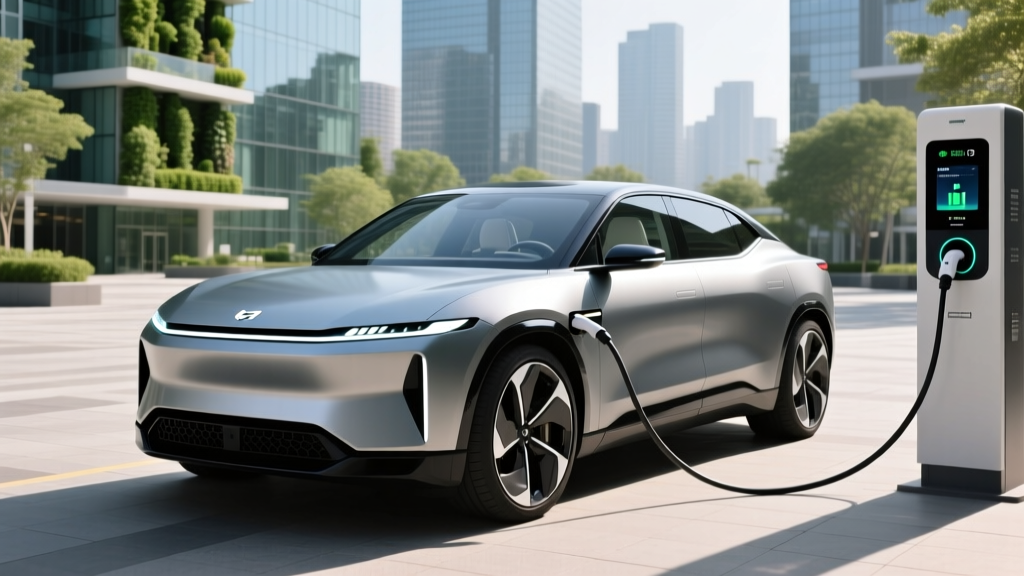
Rivian built its reputation on the R1T pickup and R1S SUV — capable, adventure-focused electric vehicles that proved the startup could engineer serious hardware. But the brand's long-term viability hinges on a lower-cost sedan built on the R2 platform. If you've been searching for how does rivian sedan work, the answer lies in a ground-up architecture designed around a structural battery pack, dual- and tri-motor powertrains, and a targeted sub-$50,000 starting price.
As of early 2026, the Rivian sedan (officially part of the R2 lineup) has been formally unveiled with preliminary specifications, and production is expected to begin at Rivian's Normal, Illinois facility. Below, we break down the engineering, projected specs, and ownership economics so you know exactly what you're evaluating.
Platform & Powertrain: How the Rivian Sedan Actually Works
The Rivian sedan rides on the R2 platform — a smaller, cost-optimized evolution of the skateboard architecture underpinning the R1T and R1S. Unlike the R1 vehicles, which use a quad-motor setup in top trims, the R2 sedan is engineered around two primary configurations:
- Dual-Motor AWD: One permanent-magnet synchronous motor per axle, delivering all-wheel drive with torque vectoring via brake-based and motor-based torque management. This is the volume configuration.
- Performance (Tri-Motor): A third motor on the rear axle adds power and enables torque-vectoring across the rear wheels, targeting sub-3.5-second 0–60 mph times.
The structural battery pack serves as a stressed member of the chassis, reducing weight and increasing torsional rigidity. Rivian has confirmed the R2 platform will use a mix of NMC (nickel-manganese-cobalt) chemistry for the larger battery pack to maximize energy density and range. A lower-cost LFP (lithium iron phosphate) variant for a Standard Range trim has been discussed but is not yet confirmed for the sedan body style at launch.
| Spec | Dual-Motor AWD | Performance Tri-Motor |
|---|---|---|
| Battery (usable, est.) | ~85 kWh (NMC) | ~100 kWh (NMC) |
| EPA Range (target) | ~330 miles | ~300 miles |
| Horsepower | ~450 hp | ~650 hp |
| 0–60 mph | ~4.5 sec | ~3.2 sec |
| Drivetrain | AWD (dual-motor) | AWD (tri-motor) |
| Efficiency (target) | ~120 MPGe / 28 kWh/100mi | ~108 MPGe / 31 kWh/100mi |
| Base MSRP (est.) | ~$45,000 | ~$55,000 |
Note: All specs above are preliminary targets published by Rivian and industry analysis. Final EPA-certified figures will be available closer to the on-sale date. Source: Rivian R2 announcement.
Battery, Charging Speed & Real-World Replenishment
Understanding how the Rivian sedan charges is as important as its range. The R2 platform supports DC fast charging at rates significantly higher than the first-generation R1 vehicles, which peaked around 200 kW.
| Charging Level | Max Power (kW) | Speed / Notes |
|---|---|---|
| Level 1 (120V household) | ~1.4 kW | ~4–5 mi/hr — emergency/top-up only |
| Level 2 (240V home, 48A) | ~11.5 kW | ~35–40 mi/hr — full overnight charge in ~8–9 hrs |
| DC Fast Charge (peak) | ~250 kW (est.) | 10–80% in ~22–25 min; tapers significantly above 80% |
Charging-curve reality: The peak 250 kW rate is a maximum, not a sustained average. Expect the sedan to hold peak rate between roughly 10–40% state of charge, then taper progressively. The 10–80% time of ~22–25 minutes assumes a capable 350 kW CCS or NACS station and proper battery preconditioning. Rivian's navigation system will precondition the pack when a fast charger is set as your destination — this is critical in cold weather, where an unpreconditioned battery may accept less than half the peak rate.
Connector note: Rivian has transitioned to the NACS (North American Charging Standard) connector for the R2 platform, giving the sedan native access to Tesla's Supercharger network — the most reliable DC fast-charging infrastructure in the U.S. as measured by uptime and station density. This eliminates the need for a CCS-to-NACS adapter that R1 owners currently carry.
Interior, Cargo & Daily Practicality
The R2 sedan is positioned as a compact-to-midsize sport sedan, competing in the footprint of the Tesla Model 3 and BMW i4. Rivian has emphasized interior volume efficiency — the skateboard platform's flat floor enables generous rear legroom without the transmission tunnel compromise of converted ICE platforms.
- Passenger space (est.): ~105 cu ft total passenger volume; rear legroom targeting ~38 inches
- Cargo (trunk + frunk, est.): ~22 cu ft trunk + ~4 cu ft front trunk (frunk) for a combined ~26 cu ft
- Roof: Available glass roof panel; Rivian's signature gear tunnel from the R1T will not carry over to the sedan body style
The infotainment system runs Rivian's proprietary software on a large central touchscreen (~15.6 inches expected, carried forward from R1 design language). Over-the-air updates are standard. Driver-assistance features will include Rivian's latest Driver+ system — a Level 2 SAE highway assist combining adaptive cruise, lane-centering, and automatic lane changes. The driver must remain engaged at all times; this is not a self-driving system.
Pricing, Tax Credits & What You'll Actually Pay
Rivian has targeted a starting MSRP of approximately $45,000 for the base Dual-Motor AWD sedan, making it one of the more affordable long-range AWD EVs when it reaches production. However, tax-credit eligibility is the variable that will define the real cost for most buyers.
| Trim | Est. MSRP | §30D Credit (max) | Effective Price |
|---|---|---|---|
| Dual-Motor AWD (base) | ~$45,000 | Up to $7,500* | ~$37,500* |
| Dual-Motor AWD (Adventure) | ~$50,000 | Up to $7,500* | ~$42,500* |
| Performance Tri-Motor | ~$55,000 | Up to $7,500* | ~$47,500* |
*Critical §30D eligibility caveats (2026 tax year): The federal EV tax credit under IRS Section 30D is subject to multiple requirements:
- MSRP cap: Sedans are capped at $55,000 MSRP (vans/SUVs/pickups are $80,000). The base and Adventure trims should qualify; the Performance Tri-Motor may exceed the cap depending on final pricing.
- Buyer income cap: Modified AGI must not exceed $150,000 (single), $225,000 (head of household), or $300,000 (joint).
- Battery sourcing: A percentage of critical minerals and battery components must be sourced from the U.S. or FTA partners — thresholds increase annually. Rivian's Illinois production helps, but specific cell-sourcing will determine whether the full $7,500 or a partial $3,750 applies.
- Point-of-sale transfer: Eligible buyers can transfer the credit to the dealer at purchase, reducing the purchase price upfront rather than waiting for a tax refund.
Always verify eligibility with a tax professional and the latest IRS guidance before relying on the credit in your purchase decision.
Efficiency & Ownership Costs
Rivian's R1T and R1S achieved roughly 2.0–2.2 kWh/mile in real-world mixed driving — respectable for their size and weight. The R2 sedan, being lighter and more aerodynamic, should improve significantly on this. The target of ~28 kWh/100 miles (120 MPGe combined) for the Dual-Motor would place it competitively against the Tesla Model 3 Long Range AWD (~130 MPGe) and the Hyundai Ioniq 6 (~140 MPGe).
Charging cost estimate: At the U.S. average residential electricity rate of ~$0.17/kWh, a full 85 kWh home charge costs roughly $14.45 — yielding a per-mile fuel cost of about $0.04–0.05. Compare this to a 30 MPG gas sedan at $3.40/gallon: ~$0.11/mile. Over 15,000 miles/year, that's roughly $1,000 in annual fuel savings with home charging.
Warranty & Long-Term Battery Durability
Rivian's existing R1 vehicles carry an 8-year/175,000-mile battery and drive unit warranty — one of the most generous in the industry, exceeding the federal minimum of 8 years/100,000 miles. The R2 sedan is expected to carry similar coverage:
- Battery pack: 8 years / 175,000 miles (capacity retention threshold: ~70%)
- Drive unit(s): 8 years / 175,000 miles
- Bumper-to-bumper: 5 years / 60,000 miles (expected)
The NMC chemistry in the larger pack will experience typical lithium-ion degradation — expect roughly 8–12% capacity loss over the first 100,000 miles based on industry data for similar chemistries with active thermal management. Rivian's liquid-cooled thermal system should keep degradation toward the lower end of that range for buyers who avoid chronic DC fast charging and routinely charging to 100%.
How It Compares: Rivian Sedan vs. Key Rivals
The R2 sedan enters a segment already defined by strong competitors. Here's how it stacks up on paper against the most relevant alternatives:
| Spec | Rivian R2 Sedan (Dual-Motor) | Tesla Model 3 LR AWD | Hyundai Ioniq 6 LR AWD |
|---|---|---|---|
| EPA Range | ~330 mi (target) | 341 mi | 316 mi |
| Battery | ~85 kWh (NMC) | ~79 kWh (NMC) | 77.4 kWh (NMC) |
| DC Fast Charge (peak) | ~250 kW | 250 kW | 235 kW |
| 0–60 mph | ~4.5 sec | 4.2 sec | 5.1 sec |
| Base MSRP | ~$45,000 | $47,740 | $46,850 |
| NACS Native | Yes | Yes | No (CCS, adapter avail.) |
| Battery Warranty | 8 yr / 175,000 mi | 8 yr / 120,000 mi | 10 yr / 100,000 mi |
Sources: fueleconomy.gov (EPA data for Model 3 and Ioniq 6); Rivian preliminary specs.
- AWD standard across all trims at a competitive price point
- Native NACS connector — seamless Supercharger access
- Strong battery warranty (8 yr / 175,000 mi)
- Rivian's adventure-oriented design DNA in a sedan form factor
- OTA software updates and growing service network
- Not yet in production — cannot test-drive or purchase today
- Unproven at high-volume sedan manufacturing scale
- Real-world range and charging specs unconfirmed by EPA
- Service center density still limited outside major metros
- Performance trim may exceed §30D MSRP cap
Who Should Wait for the Rivian Sedan?
- You want AWD with 300+ miles of range under $50K and can wait for production
- Native Supercharger access without adapters is a priority
- You value Rivian's software, design language, and brand ethos
- You drive in variable weather and want dual-motor traction without paying luxury premiums
- You need to buy today — the Model 3, Ioniq 6, and BMW i4 are all available
- Maximum EPA-certified range data is required for your purchase decision
- You need an established service network in a rural or low-density market
- You prefer proven high-volume manufacturing track records
Frequently Asked Questions
What is the real-world range of the Rivian sedan?
Rivian targets 330+ miles EPA for the Dual-Motor. Real-world highway driving at 70–75 mph should yield roughly 270–295 miles; cold weather (below 32°F) with cabin heating may reduce this to 230–260 miles. Final EPA numbers will be published before deliveries begin.
How fast does the Rivian sedan charge?
DC fast charging is expected to peak at ~250 kW, delivering a 10–80% charge in approximately 22–25 minutes at a capable station with battery preconditioning. Home Level 2 charging at 11.5 kW adds roughly 35–40 miles per hour, fully replenishing the pack overnight.
Does the Rivian sedan qualify for the federal EV tax credit?
The base Dual-Motor at ~$45,000 MSRP should fall under the §30D sedan cap of $55,000. However, eligibility depends on buyer income limits ($150K single / $300K joint), battery critical-mineral and component sourcing thresholds, and final assembly in the U.S. (Rivian's Normal, IL plant qualifies). Verify at irs.gov before purchasing.
Is the Rivian sedan available to buy right now?
No. As of early 2026, the R2 sedan has been unveiled with preliminary specifications, and production is expected to begin at Rivian's Illinois facility. Reservations may be available, but the vehicle is not yet on sale or EPA-certified.
Is it worth waiting for vs. buying a Tesla Model 3 or Hyundai Ioniq 6?
If you need a car now, the Model 3 Long Range AWD (341 mi EPA, $47,740) and Ioniq 6 (316 mi, ~$46,850) are proven, available, and competitive. Wait for the Rivian if AWD standard pricing, Rivian's software ecosystem, and the brand's warranty terms align with your priorities — and you're comfortable with startup-production risk.
What connector does the Rivian sedan use?
The R2 platform uses the NACS (North American Charging Standard) connector natively, providing direct access to Tesla Superchargers without an adapter. This is a shift from the R1 generation, which used CCS1 (J1772 Combo) and later gained Supercharger access via adapter.