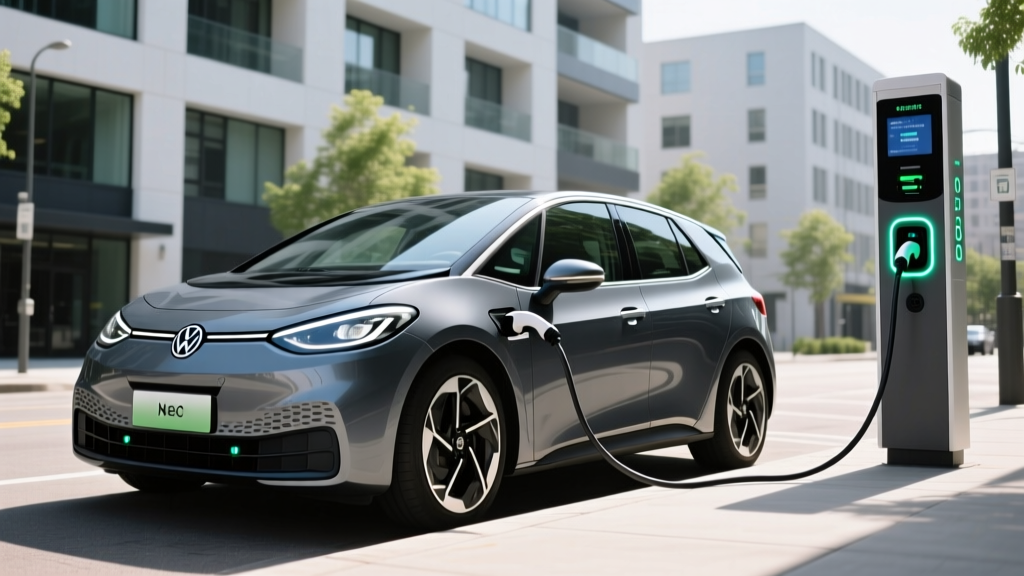
The Volkswagen ID.3 has been one of Europe's best-selling electric hatchbacks since its 2020 launch, and the heavily refreshed ID.3 Neo variant arriving for the 2026 model year represents VW's most significant mid-cycle update to the platform. With a revised MEB+ underpinning, an upgraded infotainment system addressing years of owner complaints, and a larger battery option pushing toward 350 miles of WLTP range, the ID.3 Neo is a substantially more competitive compact EV than its predecessor. But for US-based shoppers searching for the ID.3 Neo, the critical question remains: will Volkswagen actually sell it stateside?
This review covers everything confirmed about the 2026 ID.3 Neo — specs, range, charging performance, pricing, and where it fits in the global compact EV landscape — while being upfront about its US market status.
US Availability: The Elephant in the Room
As of early 2026, Volkswagen has not confirmed US sales for the ID.3 Neo. The original ID.3 was never imported to North America, with VW directing American buyers to the larger ID.4 crossover instead. The ID.3 Neo continues this pattern for now, remaining a Europe-first product positioned against the BYD Dolphin, MG4, and Renault Megane E-Tech.
VW's US EV lineup currently centers on the ID.4, ID.5, and the incoming ID.7 sedan and ID. Buzz minivan. The compact hatchback segment in America remains thin — occupied primarily by the Chevrolet Bolt (returning for 2026 on Ultium), the MINI Cooper SE, and the Nissan LEAF. If VW does bring the ID.3 Neo to the US, it would likely slot in around $35,000–$40,000, undercutting the ID.4 while competing directly with the Bolt and the base Tesla Model 3.
For this review, we reference confirmed European specs and WLTP figures, with EPA estimates where reasonable projections can be made based on the MEB+ platform's known efficiency characteristics.
Range, Battery, and Efficiency
The 2026 ID.3 Neo is offered with two battery configurations on the updated MEB+ architecture:
| Specification | Standard Range | Long Range |
|---|---|---|
| Battery Chemistry | NMC (Nickel Manganese Cobalt) | NMC (Nickel Manganese Cobalt) |
| Gross Capacity | 63 kWh | 84 kWh |
| Usable Capacity | ~59 kWh | ~79 kWh |
| WLTP Range | ~265 mi (425 km) | ~348 mi (560 km) |
| Estimated EPA Range | ~230 mi | ~300 mi |
| Efficiency (WLTP) | ~15.2 kWh/100 km | ~14.8 kWh/100 km |
| Estimated MPGe | ~120 MPGe combined | ~124 MPGe combined |
The MEB+ platform's improved thermal management system — featuring a more efficient liquid cooling circuit and updated battery preconditioning logic — helps sustain performance in both extreme heat and cold compared to the first-generation ID.3. The preconditioning system, when navigation is set to a DC fast charger, will warm or cool the battery pack to its optimal charging temperature, reducing the frustrating low-power charging sessions that plagued early MEB vehicles in winter conditions.
Charging Performance: DC Fast and Level 2
Charging speed was a major criticism of the original ID.3, which peaked at just 100–125 kW on DC fast chargers. The ID.3 Neo's MEB+ platform delivers a meaningful upgrade:
| Charging Level | Standard Range | Long Range | Notes |
|---|---|---|---|
| Level 1 (120V, 12A) | ~1.4 kW | ~1.4 kW | ~3–4 mi/hr recovery |
| Level 2 (240V, 48A) | 11 kW | 11 kW | ~30–38 mi/hr; full charge in 6–8 hrs |
| DC Fast Charge (Peak) | 145 kW | 175 kW | CCS2 in Europe; NACS adapter TBD for US |
| DC 10–80% Time | ~26 minutes | ~24 minutes | Under optimal thermal conditions |
| DC 10–80% (Cold, ~32°F) | ~38 minutes | ~35 minutes | Without preconditioning |
The 175 kW peak on the Long Range model is a 40% improvement over the outgoing ID.3 Pro S. However, as with all EVs, peak charge rate is not sustained across the entire session. The ID.3 Neo's charge curve holds above 150 kW from roughly 10–40% State of Charge (SoC), then tapers to approximately 100 kW through 60%, and drops further to 50 kW and below past 80%. This means the advertised 10–80% time of ~24 minutes is achievable only under ideal conditions — a warm battery, a non-congested 350 kW charger, and a battery preconditioned via navigation routing.
For home Level 2 charging, the onboard 11 kW AC charger is standard across all trims. On a 48-amp Level 2 circuit (the most common home installation for EV owners), the Long Range model's 79 kWh usable battery will charge from empty to full in roughly 7.5 hours — easily manageable with overnight charging on a standard 240V/50A circuit. Owners with 200-amp electrical panels should budget for a dedicated 60-amp breaker installation, which typically costs $500–$1,500 depending on panel proximity and local permitting, based on typical electrician rates.
Performance and Driving Dynamics
| Specification | Standard Range (Pro) | Long Range (Pro S) |
|---|---|---|
| Drivetrain | Rear-Wheel Drive (RWD) | Rear-Wheel Drive (RWD) |
| Motor Type | Permanent Magnet Synchronous | Permanent Magnet Synchronous |
| Horsepower | 201 hp (150 kW) | 228 hp (170 kW) |
| Torque | 229 lb-ft | 229 lb-ft |
| 0–62 mph (0–100 km/h) | ~7.3 seconds | ~6.7 seconds |
| Estimated 0–60 mph | ~7.0 seconds | ~6.4 seconds |
| Top Speed | 99 mph (electronically limited) | 99 mph (electronically limited) |
The ID.3 Neo remains a rear-wheel-drive-only platform — VW has not introduced a dual-motor AWD variant for this model, reserving the GTX performance badge for the ID.4 and ID.7. The 228 hp in the Long Range model is adequate for highway merging and passing, though it won't thrill anyone coming from a Tesla Model 3 Performance or a Hyundai Ioniq 6. The RWD layout and relatively low center of gravity (thanks to the floor-mounted battery pack) give the ID.3 Neo genuinely good handling for a compact hatchback — the steering is well-weighted, body roll is controlled, and the turning circle of approximately 33.5 feet makes it exceptionally maneuverable in urban environments.
Regenerative braking in the ID.3 Neo offers three selectable levels plus an adaptive "B" mode that uses radar and camera data to automatically adjust regen intensity based on traffic ahead. It does not offer true one-pedal driving to a complete stop like the Nissan LEAF or Chevrolet Bolt — the car will creep at low speeds unless the brake pedal is applied. This is a deliberate VW engineering choice, though it frustrates EV veterans accustomed to full regen-stop behavior.
Interior, Cargo, and Technology
The ID.3 Neo's cabin represents VW's most significant interior overhaul since the ID.4's 2024 refresh. The much-criticized capacitive touch sliders and laggy ID.Software 3.x have been replaced with:
- ID.Software 5.0 — faster processor, responsive 12.9-inch central touchscreen, improved voice recognition, and a dedicated climate control bar that persists at the bottom of the display
- Illuminated touch sliders — the volume and temperature sliders are now backlit, addressing one of the most persistent owner complaints about the original ID.3
- Augmented-reality head-up display (available on Pro S and above) — projects navigation arrows and ADAS alerts into the driver's sightline at apparent distance
- Physical button return — steering wheel controls revert to tactile buttons rather than the haptic-capacitive pads that drew widespread criticism
Cargo and passenger space remain strong for the segment:
- Rear cargo volume: 13.6 cu ft (385 liters) behind rear seats; ~44.7 cu ft (1,267 liters) with rear seats folded
- Front trunk (frunk): Not available — the MEB+ platform in the ID.3 Neo does not include a front cargo compartment, as the space is occupied by power electronics and the HVAC system
- Rear legroom: ~37.6 inches — competitive with the Honda Civic and significantly more than the MINI Cooper SE
- Front headroom: ~40.9 inches, aided by the flat floor and tall roofline
The lack of a frunk is a notable omission, especially compared to the Hyundai Kona Electric and the Tesla Model 3, both of which offer front cargo space. For a hatchback positioned as a practical daily driver, the missing frunk means owners lose roughly 2–3 cu ft of potential storage for charging cables and small items.
Driver Assistance Systems
The ID.3 Neo comes equipped with VW's Travel Assist suite, which includes adaptive cruise control with stop-and-go, lane centering, and traffic sign recognition. This is an SAE Level 2 driver-assistance system — it requires continuous driver supervision and does not permit hands-off or eyes-off operation. VW has not enabled its semi-autonomous Travel Assist High Speed mode (which allows hands-off driving up to 56 mph on divided highways in Europe) for any market outside the EU due to regulatory differences.
Pricing, Trims, and Tax Credit Eligibility
European pricing for the 2026 ID.3 Neo starts at approximately €36,990 (~$40,200 USD at current exchange rates) for the Standard Range Pro trim, rising to roughly €44,500 (~$48,400 USD) for the Long Range Pro S with the full technology package.
| Trim | Est. US MSRP | Federal §30D Credit Eligibility | Effective Price (If Eligible) |
|---|---|---|---|
| Pro (Standard Range) | ~$36,500 | Uncertain — depends on battery sourcing | ~$29,000–$36,500 |
| Pro S (Long Range) | ~$43,500 | Uncertain — depends on battery sourcing | ~$36,000–$43,500 |
| Pro S w/ AR HUD + Tech Pkg | ~$47,000 | Uncertain | ~$39,500–$47,000 |
Federal Tax Credit Analysis (§30D): Should the ID.3 Neo be sold in the US, its eligibility for the $7,500 federal tax credit under IRS §30D would depend on several factors that remain unconfirmed for this specific model:
- MSRP cap: The ID.3 Neo would qualify as a "other vehicle" (non-SUV, non-pickup), subject to the $55,000 MSRP cap. All trims would fall under this limit.
- Buyer income cap: Modified adjusted gross income must not exceed $150,000 (single), $225,000 (head of household), or $300,000 (joint filing).
- Battery component sourcing: The critical minerals and battery component requirements under §30D phase in progressively through 2029. VW's NMC cells are currently sourced from SK On and LG Energy Solution, with increasing North American content — but specific 2026 compliance for the MEB+ pack has not been publicly confirmed.
- Point-of-sale transfer: If eligible, the credit can be transferred to the dealer at purchase, reducing the out-of-pocket price immediately rather than waiting for tax filing.
- Final assembly: The ID.3 Neo is assembled in Zwickau, Germany. Unless VW shifts production to its Chattanooga, Tennessee plant (where the ID.4 is built), the vehicle would not meet the North American final assembly requirement and would be ineligible for §30D regardless of battery sourcing.
This final assembly requirement is the most significant barrier. Unless Volkswagen commits to US production of the ID.3 Neo, the federal tax credit is effectively off the table — making the effective price significantly higher than credit-eligible competitors like the Chevrolet Bolt or Tesla Model 3 (which, depending on trim and year, may still qualify for partial credit).
Warranty and Long-Term Ownership
| Coverage Area | Term |
|---|---|
| Basic Vehicle Warranty | 4 years / 50,000 miles (est. US) |
| Battery & Powertrain | 8 years / 100,000 miles |
| Battery Capacity Guarantee | ≥70% State of Health (SoH) over 8 yr / 100,000 mi |
| Corrosion Perforation | 12 years / unlimited miles |
| Roadside Assistance | 4 years / 50,000 miles |
The 8-year/100,000-mile battery warranty with a 70% capacity retention guarantee aligns with industry standards set by Hyundai, Kia, and Tesla. Based on data from first-generation ID.3 fleets in Europe (many of which have accumulated 80,000+ miles as taxis and share vehicles), NMC degradation on the MEB platform appears to follow a predictable curve: approximately 5–7% loss in the first year, followed by roughly 1–2% annual loss thereafter. Owners who follow best practices — avoiding sustained 100% SoC, minimizing DC fast charging to 2–3 times per week, and using scheduled departure preconditioning — typically see slower degradation.
A full battery replacement for the 84 kWh Long Range pack, should it be needed out of warranty, would likely cost between $12,000–$18,000 including labor, based on current VW EV service pricing and comparable NMC pack replacement costs across the industry. This is a significant potential expense, though the likelihood of needing it within 10–12 years of typical ownership is low based on current degradation data.
How the ID.3 Neo Compares to Key Competitors
Choose the ID.3 Neo If:
- You want a practical, well-built European hatchback with 300+ miles of range
- Urban maneuverability and tight turning radius matter for your daily driving
- You value VW's build quality and dealer service network
- You primarily drive in cities and suburbs, not long highway corridors
Look at Competitors If:
- You need guaranteed US availability and federal tax credit eligibility (Tesla Model 3, Chevrolet Bolt)
- You want AWD or performance-oriented acceleration (Tesla Model 3, Hyundai Ioniq 5)
- DC fast charging above 200 kW is a priority (Hyundai Ioniq 5/6, Kia EV6)
- You need a frunk or maximum cargo versatility (Hyundai Kona Electric, Tesla Model 3)
The ID.3 Neo's most direct global competitors include:
- BYD Dolphin: Cheaper (~€30,000 in Europe), LFP battery (longer cycle life but lower energy density), shorter range (~265 mi WLTP)
- MG4 XPOWER: Performance-oriented variant with AWD and 435 hp, similar price, less refined interior
- Renault Megane E-Tech: Similar size, 60 kWh battery, ~280 mi WLTP, more distinctive design
- Tesla Model 3 (US): Larger sedan, superior Supercharger network access, 341–363 mi EPA range, eligible for partial tax credit
Who Should Buy the VW ID.3 Neo?
The ID.3 Neo is best suited for European urban and suburban commuters who want a practical, efficient hatchback with strong real-world range and a refined driving experience. Its combination of a tight turning circle, comfortable ride quality, and 300+ mile Long Range battery makes it an excellent daily driver for those with access to home Level 2 charging.
For US-based buyers, the ID.3 Neo remains a frustrating "what if" — a compelling compact EV that VW has chosen not to sell in North America. American shoppers seeking a similar profile should look at the returning Chevrolet Bolt (2026, Ultium platform, expected ~$28,000–$35,000, tax credit eligible), the Hyundai Kona Electric (258 mi EPA, $34,000 base), or the Tesla Model 3 (starting ~$38,990, Supercharger access, strong efficiency).
Frequently Asked Questions
What is the real-world range of the VW ID.3 Neo?
The Long Range ID.3 Neo achieves approximately 348 miles under WLTP testing, which translates to an estimated 295–305 miles under the more stringent EPA cycle. In real-world highway driving at sustained speeds of 70+ mph, expect 250–270 miles. Cold weather (below 30°F) can reduce range by 20–30%, yielding roughly 200–220 miles in winter conditions.
How fast does the ID.3 Neo charge?
The Long Range model peaks at 175 kW on DC fast chargers, achieving a 10–80% charge in approximately 24 minutes under ideal conditions (warm battery, high-power charger). Without battery preconditioning in cold weather, 10–80% can take 35+ minutes. Home Level 2 charging at 11 kW adds roughly 30–38 miles of range per hour.
Will the VW ID.3 Neo be sold in the United States?
Volkswagen has not confirmed US availability for the ID.3 Neo as of early 2026. The model is currently sold only in European and select international markets. VW's US EV strategy focuses on the ID.4, ID.5, ID.7, and ID. Buzz. If US sales are announced, final assembly location will be the determining factor for federal tax credit eligibility.
Does the ID.3 Neo qualify for the US federal EV tax credit?
Almost certainly not, even if sold in the US. The §30D credit requires North American final assembly, and the ID.3 Neo is built in Zwickau, Germany. Unless VW relocates production to its Chattanooga, TN facility, the vehicle would be ineligible regardless of battery sourcing compliance or MSRP. Always verify current rules at IRS.gov.
What is the biggest drawback of the ID.3 Neo?
The most significant limitations are the lack of a front trunk (frunk), the continued absence of true one-pedal driving to a stop, and — for US buyers — the unavailability of the vehicle and likely ineligibility for the federal tax credit. The 175 kW peak DC charge rate, while improved, also lags behind the 240–350 kW capabilities of Hyundai/Kia's E-GMP platform.
Is the ID.3 Neo self-driving?
No. The ID.3 Neo's Travel Assist is an SAE Level 2 driver-assistance system. It provides adaptive cruise control and lane centering but requires the driver to remain fully engaged and ready to take over at any moment. It is not autonomous and should not be confused with Level 4 driverless services like Waymo.