Quick Verdict: The Model Y Still Sets the Bar for Electric SUV Performance
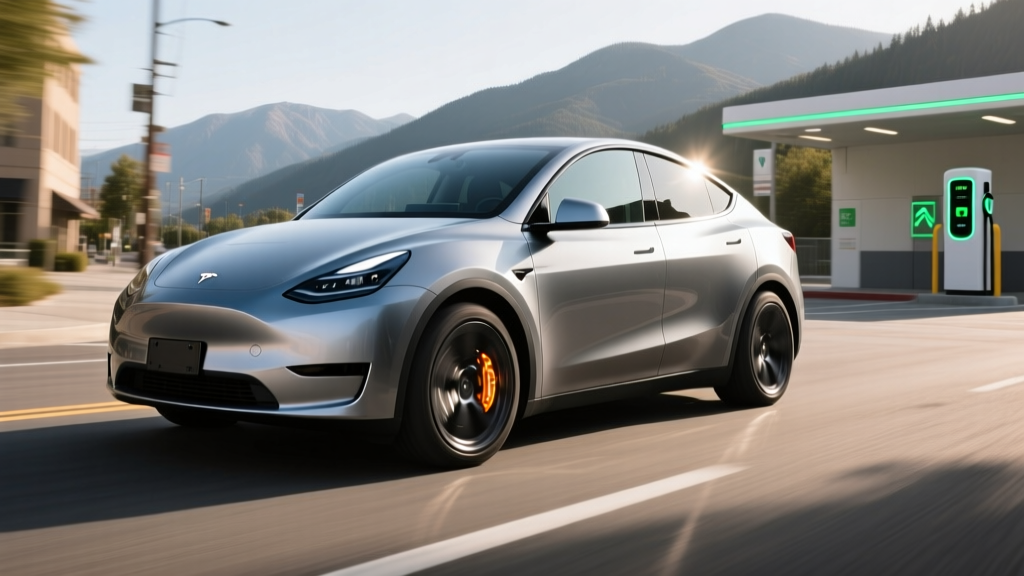
The Tesla Model Y remains the benchmark against which every compact electric crossover is measured. For buyers researching the Tesla Model Y 0-60 time, the answer depends on which trim you choose — and the spread is wider than most shoppers realize. The Performance variant rockets to 60 mph in 3.5 seconds, while the base Rear-Wheel Drive model takes a still-respectable 6.6 seconds. Across the lineup, you get class-leading efficiency, access to the Supercharger network, and a cargo hold that embarrasses SUVs costing twice as much.
But the Model Y is not without compromises. The ride is firm, the minimalist interior polarizes, and real-world highway range falls short of the EPA sticker — particularly in cold weather. This review breaks down every trim's acceleration, range, charging behavior, and total cost so you can decide which version (if any) earns your money.
Tesla Model Y 0-60 Times and Performance Specs by Trim
Tesla offers the Model Y in three configurations for the 2025 model year. Here is the full performance breakdown:
| Spec | Rear-Wheel Drive | Long Range AWD | Performance |
|---|---|---|---|
| 0-60 mph | 6.6 sec | 4.8 sec | 3.5 sec |
| Top Speed | 135 mph | 125 mph | 155 mph |
| Horsepower | ~315 hp | ~384 hp | ~456 hp |
| Drivetrain | RWD (single motor) | Dual Motor AWD | Dual Motor AWD |
| Battery (usable) | ~60 kWh (LFP) | ~75 kWh (NMC) | ~75 kWh (NMC) |
| EPA Range | 260 mi | 320 mi | 285 mi |
| MPGe (combined) | 122 MPGe | 117 MPGe | 111 MPGe |
| kWh/100 mi | 27 | 29 | 30 |
| Curb Weight | 4,298 lbs | 4,398 lbs | 4,398 lbs |
| Base MSRP | $44,990 | $49,990 | $52,490 |
Sources: Tesla Model Y specs, fueleconomy.gov
The Performance model's 3.5-second 0-60 time places it in sports-car territory — faster than a Porsche Cayenne S and rivaling the BMW X3 M in straight-line acceleration, while running on electricity alone. The Long Range AWD's 4.8-second sprint is more than adequate for highway merging and passing. Even the base RWD at 6.6 seconds out-accelerates most gas-powered compact SUVs in its price bracket.
One nuance buyers should understand: Tesla's published 0-60 times typically reflect a "rollout" adjustment (subtracting the first foot of acceleration, as drag racing timing does). Independent testing by outlets like Motor Trend and Car and Driver often records times 0.1–0.3 seconds slower. The Performance trim consistently tests at 3.5–3.7 seconds in real-world conditions.
Real-World Range: What the EPA Sticker Doesn't Tell You
EPA Range vs. Reality
- Long Range AWD — EPA: 320 miles. Expect ~270–290 miles on mixed highway driving at 70 mph. In freezing temperatures (below 32°F), plan for 220–250 miles due to cabin heating demand and battery chemistry limitations.
- Performance — EPA: 285 miles. Expect ~240–260 miles highway; ~200–225 miles in cold weather. The larger 21-inch wheels and stickier tires extract a noticeable efficiency penalty.
- RWD — EPA: 260 miles. Expect ~225–240 miles highway; ~185–210 miles in cold weather. The smaller LFP battery means less buffer for adverse conditions.
The Long Range AWD's 320-mile EPA figure is genuinely useful for road trips, but sustained 75–80 mph interstate driving typically yields 2.5–3.0 miles per kWh, translating to roughly 270–280 real miles from the ~75 kWh usable pack. This is still excellent — the Model Y remains one of the most efficient electric SUVs on sale — but buyers planning frequent 300+ mile trips should budget for one charging stop.
The RWD model uses a lithium iron phosphate (LFP) battery, which offers superior cycle life and can be charged to 100% daily without degradation concerns. However, LFP chemistry suffers greater range loss in cold weather compared to the nickel-manganese-cobalt (NMC) packs in the Long Range and Performance trims. If you live in the northern U.S. and commute more than 50 miles round-trip in winter, the Long Range AWD is the safer choice.
Charging Speeds: DC Fast Charging and Home Level 2
Charging speed is where the Model Y's engineering maturity shows. Tesla's thermal management system preconditions the battery when you navigate to a Supercharger, enabling fast charge rates even in cold weather — a feature many competitors still lack.
| Charging Level | RWD (LFP) | Long Range / Performance (NMC) |
|---|---|---|
| Level 1 (120V household) | ~3 mi/hr (1.3 kW) | ~3 mi/hr (1.3 kW) |
| Level 2 (240V home, 48A) | ~33 mi/hr (11.5 kW) | ~44 mi/hr (11.5 kW) |
| DC Fast Charge (peak) | 170 kW peak | 250 kW peak |
| DC 10–80% time | ~30 min | ~22 min |
| Supercharger network | Native NACS connector — no adapter needed | |
The Long Range and Performance models peak at 250 kW on V3 Superchargers, but — as with all EVs — that peak rate is not sustained. The charge curve tapers significantly above 50% state of charge (SoC), dropping to roughly 100 kW by 70% and below 50 kW past 85%. The 10–80% time of approximately 22 minutes is what matters for road trips, and it is among the fastest in the segment.
The RWD's LFP battery accepts a lower peak charge rate of around 170 kW, resulting in a longer 10–80% session of roughly 30 minutes. This is the trade-off for LFP's longevity and lower cost.
For home charging, a Wall Connector on a 60-amp circuit (48 amps continuous) adds roughly 33–44 miles of range per hour of charging — enough to fully replenish any Model Y overnight. Installation costs typically run $500–$2,000 depending on whether your electrical panel needs an upgrade. Always have a licensed electrician assess your panel capacity before purchasing equipment.
Pricing, Trim Levels, and Federal Tax Credit Eligibility
The Model Y lineup is straightforward, with three trims and minimal options beyond paint color, wheels, and interior. Here is the current pricing structure:
| Trim | Base MSRP | Destination | Total Before Incentives | Est. Federal Credit (§30D) | Effective Price |
|---|---|---|---|---|---|
| Rear-Wheel Drive | $44,990 | $1,390 | $46,380 | Up to $7,500* | ~$38,880 |
| Long Range AWD | $49,990 | $1,390 | $51,380 | Up to $7,500* | ~$43,880 |
| Performance | $52,490 | $1,390 | $53,880 | Up to $7,500* | ~$46,380 |
*Federal tax credit eligibility depends on multiple factors. See checklist below.
IRS §30D Federal EV Tax Credit — Eligibility Checklist (2025 rules)
- MSRP cap: SUVs must be priced at or below $80,000. All Model Y trims qualify.
- Buyer income cap: Modified adjusted gross income (MAGI) must not exceed $150,000 (single), $225,000 (head of household), or $300,000 (married filing jointly).
- Battery sourcing: Increasing percentages of critical minerals and battery components must be sourced from the U.S. or free-trade-agreement countries. Tesla's U.S.-built battery cells have largely met these thresholds, but verify current-year compliance on IRS.gov's qualified vehicles list.
- Point-of-sale transfer: As of 2024, you can transfer the credit to the dealer at purchase, reducing your out-of-pocket cost immediately rather than waiting for tax filing. Tesla supports this at delivery.
- One credit per VIN, one vehicle per year per taxpayer.
The point-of-sale transfer is a meaningful improvement: instead of needing sufficient tax liability to claim the credit, qualifying buyers see $7,500 deducted from the purchase price at delivery. However, if your income exceeds the caps or you have already claimed a credit this year, you will pay full MSRP. Consult a tax professional to confirm eligibility before ordering.
Interior, Cargo Space, and Technology
The Model Y's cabin is defined by Tesla's signature minimalism: a single 15.4-inch touchscreen handles navigation, media, climate controls, and vehicle settings. There is no instrument cluster — all driving information appears on the left third of the center screen. Love it or not, the interface is responsive and logically organized.
Cargo and passenger dimensions:
- Cargo (rear seats up): 30.2 cu ft
- Cargo (rear seats folded): 72.1 cu ft
- Front trunk (frunk): 4.1 cu ft
- Rear legroom: 41.6 inches
- Front headroom: 41.0 inches
- Seating: 5 passengers (optional 7-seat available on Long Range, third row is best for small children)
The 72.1 cu ft maximum cargo volume beats the Ford Mustang Mach-E (59.7 cu ft) and Hyundai Ioniq 5 (56.2 cu ft) handily. The low, flat load floor and wide hatch opening make it practical for furniture, strollers, and camping gear.
Standout tech features:
- Autopilot (standard): Adaptive cruise control, lane centering, automatic emergency braking, blind-spot monitoring. This is an SAE Level 2 driver-assistance system — you must remain attentive and keep hands on the wheel at all times.
- Full Self-Driving (Supervised) — $8,000 option or $99/mo: Adds automatic lane changes, intersection recognition, and parking assist. Despite the name, FSD is still Level 2 and requires active driver supervision. It is not autonomous driving.
- Over-the-air updates: Tesla regularly pushes software improvements that add features and refine existing ones.
- Sentry Mode: Uses external cameras to record activity around the parked vehicle, with alerts sent to your phone.
- Tesla app integration: Remote preconditioning, location tracking, charging status, and Summon (low-speed remote parking).
Notable drawbacks:
- No Apple CarPlay or Android Auto — Tesla's native system is the only option.
- Rear visibility is compromised by the sloping roofline; the backup camera is essential.
- Ride quality on the Performance trim's 21-inch wheels is noticeably harsh over broken pavement.
- No physical buttons for climate or volume — everything routes through the touchscreen.
Warranty Coverage and Battery Longevity
Tesla's warranty structure is competitive with the broader EV market:
- New vehicle limited warranty: 4 years / 50,000 miles
- Battery and drive unit warranty: 8 years / 120,000 miles (Long Range, Performance) or 8 years / 100,000 miles (RWD)
- Capacity retention threshold: Tesla guarantees a minimum of 70% battery capacity retention during the warranty period.
The 70% retention guarantee is standard for the industry. In practice, Tesla's NMC batteries in the Long Range and Performance trims have shown strong longevity — fleet data aggregated by sources like Tesla's Impact Report indicates average degradation of roughly 12–15% after 150,000 miles. The LFP battery in the RWD model is expected to degrade even more slowly, as LFP chemistry offers 3,000+ charge cycles versus roughly 1,500–2,000 for NMC, though long-term fleet data for Tesla's LFP packs is still accumulating.
One ownership note: Tesla does not publish a flat battery replacement cost. Out-of-warranty replacements have historically ranged from $12,000 to $16,000 depending on the pack, though prices have trended downward as cell costs fall. The likelihood of needing a full pack replacement within typical ownership periods (5–10 years) is low based on current degradation data.
How the Model Y Compares to Key Competitors
The compact electric SUV segment has matured significantly. Here is how the Model Y stacks up against its most direct rivals:
| Spec | Tesla Model Y LR AWD | Ford Mustang Mach-E ER AWD | Hyundai Ioniq 5 Long Range AWD | Kia EV6 GT-Line AWD |
|---|---|---|---|---|
| 0-60 mph | 4.8 sec | 5.1 sec | 5.1 sec | 4.5 sec |
| EPA Range | 320 mi | 312 mi | 290 mi | 282 mi |
| Peak DC Charge | 250 kW | 150 kW | 240 kW | 240 kW |
| 10-80% DCFC | ~22 min | ~38 min | ~18 min | ~18 min |
| Cargo (max) | 72.1 cu ft | 59.7 cu ft | 56.2 cu ft | 50.2 cu ft |
| Starting MSRP | $49,990 | $48,995 | $49,850 | $51,900 |
| Native Connector | NACS | NACS (2025+) | NACS (2025+) | NACS (2025+) |
The Model Y Long Range AWD wins on range and cargo space. The Ioniq 5 and EV6 charge faster to 80% thanks to their 800-volt architectures. The Mach-E offers a more conventional interior with physical controls and Apple CarPlay. Your priorities determine the winner.
Choose the Tesla Model Y if:
- You want the longest EPA range in the segment (320 miles on Long Range)
- Maximum cargo versatility matters (72.1 cu ft with seats folded)
- You value the Supercharger network's reliability and coverage
- You prefer over-the-air software updates and Tesla's app ecosystem
Consider a competitor if:
- You want Apple CarPlay/Android Auto (Mach-E, Ioniq 5, EV6 all support it)
- Fastest possible DC charging is your top priority (Ioniq 5/EV6 at ~18 min)
- You prefer a more traditional interior layout with physical buttons
- Softer ride quality is non-negotiable (the Mach-E and Ioniq 5 ride more comfortably)
Pros, Cons, and Who Should Buy the Model Y
Pros
- Class-leading EPA range (320 mi Long Range)
- Best-in-class cargo volume (72.1 cu ft)
- Performance trim: 3.5-sec 0-60 rivals sports cars
- Access to 50,000+ Superchargers globally with native NACS
- Excellent efficiency (27–30 kWh/100 mi depending on trim)
- Over-the-air updates continuously add features
- LFP battery option (RWD) offers superior cycle life
- Strong safety ratings: NHTSA 5-Star overall, IIHS Top Safety Pick+
Cons
- Firm ride, especially on Performance 21-inch wheels
- No Apple CarPlay or Android Auto
- All controls routed through touchscreen — no physical buttons
- Real-world highway and cold-weather range falls 10–20% below EPA
- RWD trim's LFP battery charges slower and loses more range in cold
- FSD (Supervised) is expensive ($8,000) and still requires driver attention
- Rear visibility is limited by the coupe-like roofline
- Insurance premiums tend to run higher than segment average
Who the Model Y suits best:
- Commuters and families who need versatile cargo space, good range, and low running costs. The Long Range AWD is the sweet spot.
- Performance-oriented buyers who want sports-car acceleration in an SUV body. The Performance trim delivers at a fraction of a Porsche Macan's price.
- Road trippers who value the Supercharger network's reliability for long-distance travel.
- Budget-conscious EV buyers in the RWD trim, especially those with home charging and moderate daily commutes under 80 miles.
Who should look elsewhere: Buyers who prioritize ride comfort over acceleration, those who refuse to live without Apple CarPlay, and drivers in extremely cold climates who need maximum winter range (consider the Rivian R1S or a larger-battery option).
Frequently Asked Questions
What is the fastest Tesla Model Y 0-60 time?
The Model Y Performance achieves a 3.5-second 0-60 mph time (with rollout adjustment). Independent testing typically records 3.5–3.7 seconds. This makes it one of the quickest compact SUVs on the market, gas or electric.
What is the real-world range of the Tesla Model Y?
The Long Range AWD is EPA-rated at 320 miles, but expect roughly 270–290 miles in real-world highway driving and 220–250 miles in freezing temperatures. The RWD model's 260-mile EPA rating translates to approximately 225–240 miles on the highway.
How fast does the Model Y charge at home and on the road?
At home on a Level 2 (240V, 48A) Wall Connector, the Model Y adds roughly 33–44 miles of range per hour, fully charging overnight. On DC fast charging, the Long Range and Performance peak at 250 kW and charge from 10–80% in about 22 minutes. The RWD peaks at 170 kW with a 10–80% time of roughly 30 minutes.
Does the Tesla Model Y qualify for the federal EV tax credit?
All Model Y trims fall under the $80,000 SUV MSRP cap for the §30D credit. However, buyer income must not exceed $150,000 (single) / $300,000 (married filing jointly), and battery sourcing requirements must be met for the model year. Check the IRS qualified vehicles list for current eligibility. The credit can be transferred at point of sale to reduce your purchase price immediately.
How much does the Tesla Model Y cost after tax credits?
If you qualify for the full $7,500 federal credit, the RWD model drops to approximately $38,880, the Long Range AWD to ~$43,880, and the Performance to ~$46,380. State and utility incentives may reduce the price further — check your local programs.
Is the Model Y worth buying over the Ford Mach-E or Hyundai Ioniq 5?
The Model Y wins on range (320 mi vs. 290–312 mi), cargo space (72.1 cu ft vs. 56–60 cu ft), and Supercharger network access. The Ioniq 5 charges faster (18 vs. 22 min 10–80%), and both the Mach-E and Ioniq 5 offer Apple CarPlay and more traditional interiors. If range and cargo are your priorities, the Model Y is the stronger pick. If charging speed and infotainment flexibility matter more, test-drive the Hyundai or Ford.
Is Tesla's Autopilot or FSD actually self-driving?
No. Both Autopilot and Full Self-Driving (Supervised) are SAE Level 2 driver-assistance systems. They require you to remain attentive, keep your hands on the wheel, and be prepared to take over at any moment. True autonomous driving (Level 4) is currently limited to geofenced robotaxi services like Waymo in select cities. Do not treat any Tesla driver-assist feature as a substitute for an engaged human driver.