The Nissan Leaf in 2026: Still Selling, But Should You Buy One?
The Nissan Leaf holds a unique place in EV history. Launched in 2010 as the world's first mass-market battery electric vehicle, it introduced millions of drivers to plug-in motoring. But as we move through the 2026 model year, the Leaf is showing its age — and a growing list of known issues is shaping the purchase decision for budget-conscious EV shoppers. With a starting MSRP of $28,140, it remains one of the cheapest new EVs you can buy. But cheap comes with caveats.
This review breaks down the real-world data on Nissan Leaf issues — from its passive battery cooling system and CHAdeMO charging connector to range limitations and long-term battery degradation — so you can decide whether the Leaf's low price outweighs its compromises in an increasingly competitive market.
Nissan Leaf Specifications at a Glance
| Specification | Leaf S (40 kWh) | Leaf SV Plus (60 kWh) |
|---|---|---|
| EPA Range | 149 miles | 212 miles |
| Battery Capacity (usable) | 40 kWh | 60 kWh |
| Battery Chemistry | NMC (lithium-ion) | NMC (lithium-ion) |
| Motor Output | 110 kW (147 hp) | 160 kW (214 hp) |
| 0–60 mph | ~7.9 seconds | ~6.5 seconds |
| Drivetrain | FWD | FWD |
| Max DC Fast Charge | 50 kW (CHAdeMO) | 100 kW (CHAdeMO) |
| Level 2 Charge Rate | 6.6 kW | 6.6 kW |
| EPA Efficiency (Combined) | 111 MPGe | 109 MPGe |
| Cargo Volume (rear seats up) | 23.6 cu ft | 23.6 cu ft |
| Cargo Volume (rear seats folded) | 30.0 cu ft | 30.0 cu ft |
| Base MSRP | $28,140 | $36,140 |
| Battery Warranty | 8 yr / 100,000 mi | 8 yr / 100,000 mi |
Real-World Range: What the EPA Sticker Doesn't Tell You
EPA Estimate: 149 mi (S) / 212 mi (SV Plus)
Real-World Expectation: 120–135 mi highway (S) / 175–195 mi highway (SV Plus). In cold weather (below 32°F), expect a 25–35% reduction — dropping the SV Plus to roughly 140–160 miles on a full charge.
The Leaf's EPA range figures are modest by 2026 standards, where competitors like the Chevrolet Equinox EV and Hyundai Kona Electric routinely clear 250–300+ miles. But the gap between sticker and reality is where the first major Nissan Leaf issue emerges.
The Leaf uses a passive air-cooling system for its battery pack, rather than the active liquid thermal management found in nearly every competing EV. This design choice has cascading effects:
- Highway efficiency drops significantly at sustained speeds above 70 mph, as the battery heats up and the car limits power output to protect the cells.
- Cold-weather range loss is more pronounced than in liquid-cooled packs, because the passive system cannot actively warm the battery to its optimal operating temperature.
- Repeated DC fast charging on the same day causes charge-rate throttling (often called "Rapidgate" in the Leaf community), where the car drastically slows charging to prevent overheating.
For a commuter who drives 30–40 miles round trip and charges at home overnight, the 40 kWh Leaf S is perfectly adequate. But if your routine includes regular highway stretches or you live in a climate with hot summers or cold winters, the SV Plus with its 60 kWh pack is the only sensible choice — and even then, plan conservatively.
Charging Speed and the CHAdeMO Problem
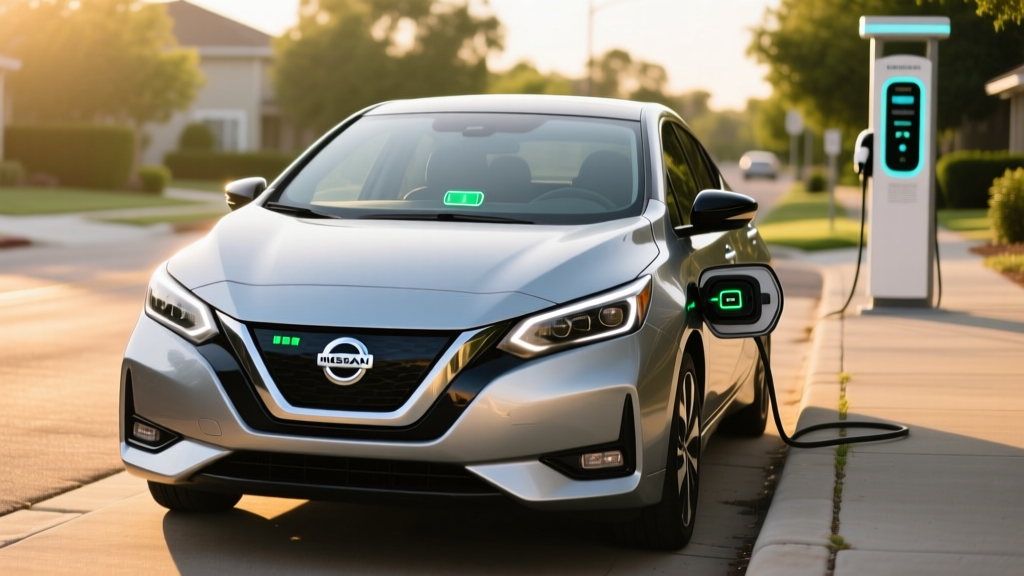
Perhaps the most consequential Nissan Leaf issue in 2026 isn't a defect — it's an ecosystem problem. The Leaf remains the last major EV sold in the U.S. using the CHAdeMO DC fast-charging connector, while virtually the entire industry has standardized on the North American Charging Standard (NACS), with legacy CCS1 vehicles supported via adapters.
| Charging Level | Leaf S (40 kWh) | Leaf SV Plus (60 kWh) |
|---|---|---|
| Level 1 (120V, 1.4 kW) | ~3–4 mi/hr | ~3–4 mi/hr |
| Level 2 (240V, 6.6 kW) | ~22 mi/hr (~7 hr full charge) | ~22 mi/hr (~9.5 hr full charge) |
| DC Fast (CHAdeMO, peak) | 50 kW (~40 min 10–80%) | 100 kW (~45 min 10–80%) |
The numbers above reveal two issues. First, the Leaf's peak DC charge rates are well below 2026 norms — the Hyundai Kona Electric peaks at 100+ kW on CCS, while the Tesla Model 3 pulls up to 250 kW on NACS. Second, the 10–80% charge times of 40–45 minutes are sluggish compared to the 15–20 minute benchmarks set by modern 800V architectures.
But the bigger concern is CHAdeMO infrastructure attrition. Electrify America, EVgo, and other major networks have been phasing out CHAdeMO stalls in favor of NACS and CCS. According to data tracked by the Alternative Fuels Data Center, the number of CHAdeMO-equipped public charging stations has been declining since 2023. Leaf owners in rural areas or on road trips may find themselves with fewer and fewer compatible fast-charging options each year.
For home charging, the 6.6 kW onboard charger is acceptable — a full overnight replenishment is realistic for most daily driving needs. But if you're installing a Level 2 home charger, know that the Leaf won't take advantage of 48-amp or 80-amp circuits that higher-powered EVs can use.
Battery Degradation: The Long-Term Ownership Question
Battery longevity is the single most searched topic among prospective Leaf buyers, and it's where historical Nissan Leaf issues have the most weight. Early 2011–2017 Leaf models with 24 kWh and 30 kWh packs experienced significant degradation — some owners reported 20–30% capacity loss within five years, particularly in hot climates like Arizona and Texas.
The current-generation Leaf (2018 onward, refreshed for 2025) uses improved NMC cell chemistry and better manufacturing, but the fundamental passive-cooling limitation remains. Here's what the data indicates for 2026 buyers:
- Expected degradation: Modern Leafs typically lose 5–10% capacity over the first 5 years under normal use. Hot-climate owners who frequently DC fast-charge may see 10–15%.
- Battery warranty: Nissan covers the battery for 8 years / 100,000 miles against defects and excessive capacity loss (defined as dropping below 9 bars out of 12 on the battery health indicator — roughly 70% state of health).
- Replacement cost: Out-of-warranty battery replacement runs $6,500–$9,000 for the 40 kWh pack and $8,000–$12,000 for the 60 kWh pack, including labor.
The warranty threshold of ~70% capacity is less generous than some competitors. Hyundai and Kia, for example, warrant their EV batteries to retain 70% capacity but use liquid cooling that typically results in slower real-world degradation. If you're buying a Leaf and plan to keep it beyond the warranty period, budget for the possibility of a battery replacement — or plan to sell before year eight.
You can monitor your Leaf's battery State of Health (SoH) through the dashboard's 12-bar capacity indicator, and third-party apps like LeafSpy provide granular cell-level data. Checking SoH regularly is strongly recommended, especially if purchasing a used Leaf.
Pricing, Trims, and Federal Tax Credit Eligibility
The Leaf's pricing remains its strongest competitive argument. Here's the 2026 lineup:
| Trim | MSRP | Est. Federal Credit | Effective Price |
|---|---|---|---|
| Leaf S (40 kWh) | $28,140 | Up to $7,500* | ~$20,640* |
| Leaf SV Plus (60 kWh) | $36,140 | Up to $7,500* | ~$28,640* |
*Federal tax credit eligibility under IRS §30D depends on multiple requirements that change periodically:
- MSRP cap: The Leaf qualifies (under the $55,000 sedan cap).
- Buyer income cap: AGI must not exceed $150,000 (single) / $300,000 (joint).
- Battery sourcing: Critical mineral and battery component requirements phase in annually. Nissan's supply chain has historically met partial thresholds — verify current-year eligibility on the IRS clean vehicle credit page before purchasing.
- Point-of-sale transfer: Eligible buyers can transfer the credit to the dealer at purchase, reducing the upfront price rather than waiting for a tax refund.
Always confirm eligibility with your tax professional and the fueleconomy.gov tax credit estimator before finalizing a purchase, as sourcing rules tighten each model year.
Driving Experience, Tech, and Daily Practicality
The Leaf drives like a comfortable, soft-tuned commuter hatchback — which is exactly what it is. The SV Plus's 214 hp and 250 lb-ft of torque deliver respectable acceleration (0–60 in about 6.5 seconds), and the instant electric torque makes it feel quicker in city driving than the numbers suggest. The S trim's 147 hp is adequate for urban use but feels strained during highway merging.
Notable tech features:
- 8-inch touchscreen with wireless Apple CarPlay and Android Auto
- Nissan ProPILOT Assist (Level 2 driver assistance) — adaptive cruise control with lane centering, available on SV Plus
- Regenerative braking with e-Pedal mode for one-pedal driving
- Around View Monitor (360° camera) on higher trims
- V2L (vehicle-to-load) capability is NOT available — a notable omission vs. competitors like the Hyundai Ioniq 5
Notable drawbacks:
- No active battery thermal management (passive air cooling only)
- CHAdeMO connector — shrinking public charging compatibility
- No frunk (front trunk) — the space houses power electronics
- Rear legroom is tight at 33.5 inches; tall passengers will notice
- ProPILOT Assist is competent but a generation behind GM's Super Cruise and Ford's BlueCruise in hands-free highway capability
- Cargo space (23.6 cu ft behind rear seats) trails the Kona Electric and Equinox EV
Is the Nissan Leaf Worth Buying vs. the Competition?
Pros
- Lowest starting MSRP of any new EV (~$28,140)
- Proven powertrain with over a decade of real-world data
- Comfortable ride quality for city and suburban commuting
- Eligible for up to $7,500 federal credit (verify sourcing rules)
- Simple, intuitive controls — minimal learning curve for new EV owners
- Standard CHAdeMO fast charging included (no adapter needed for existing stations)
Cons
- Passive battery cooling limits performance, range, and charging speed
- CHAdeMO connector is a dying standard — fewer public chargers every year
- Range (149–212 mi EPA) is below 2026 class average of 250+ mi
- DC fast charging is slow (40–45 min 10–80%) and throttles with heat
- No V2L capability, no frunk, limited rear-seat legroom
- Battery degradation risk higher in hot climates without liquid cooling
The Leaf's competition in 2026 is formidable. The Chevrolet Equinox EV starts around $33,000, offers 315+ miles of range, uses NACS, and has liquid-cooled battery management. The Hyundai Kona Electric delivers 261 miles EPA on CCS/NACS with active thermal management and faster charging. Even the Tesla Model 3, at a higher price point, offers vastly superior range, charging speed, and Supercharger network access.
The Leaf wins on one metric: lowest out-of-pocket cost after the federal credit. If your budget is firm at $20,000–$25,000 after incentives, and your use case is a predictable sub-50-mile daily commute with reliable home charging, the Leaf S is a rational choice. For anything beyond that — road trips, hot climates, high-mileage commutes, or long-term ownership beyond the warranty — the extra $5,000–$10,000 for a Kona Electric or Equinox EV pays dividends in range, charging flexibility, and battery longevity.
Who Should (and Shouldn't) Buy the Nissan Leaf
Buy the Leaf if:
- Your daily commute is under 50 miles round trip
- You can charge at home every night (Level 1 or Level 2)
- You live in a temperate climate (not extreme heat or cold)
- You plan to own the car within the 8-year warranty period
- Your budget is strictly under $30,000 after incentives
- You rarely take road trips over 150 miles
Look elsewhere if:
- You regularly drive highway distances or take road trips
- You live in a hot climate (AZ, TX, NV, FL) where passive cooling accelerates degradation
- You rely on public DC fast charging for daily needs
- You want NACS/Supercharger access for long-distance travel
- You plan to keep the vehicle 10+ years and want minimal battery replacement risk
Frequently Asked Questions
What is the real-world range of the Nissan Leaf?
The 40 kWh Leaf S delivers roughly 120–135 miles in real-world highway driving and up to 149 miles in mixed city use. The 60 kWh SV Plus achieves 175–195 miles highway, 212 miles mixed. Cold weather (below 32°F) reduces range by 25–35% in both models due to the passive battery thermal management system.
How fast does the Nissan Leaf charge at home and on DC fast chargers?
On a Level 2 home charger (240V, 6.6 kW), the Leaf adds about 22 miles of range per hour — a full charge takes roughly 7 hours (S) or 9.5 hours (SV Plus). DC fast charging peaks at 50 kW (S) or 100 kW (SV Plus), with 10–80% taking 40–45 minutes. However, repeated fast charging on the same trip triggers thermal throttling, significantly slowing subsequent sessions.
Does the 2026 Nissan Leaf qualify for the $7,500 federal EV tax credit?
The Leaf's MSRP falls well under the $55,000 sedan cap, and buyer income limits apply ($150K single / $300K joint AGI). However, the credit also depends on battery critical-mineral and component sourcing requirements that tighten each year under IRS §30D. Check the IRS clean vehicle credit page and consult a tax professional before purchasing to confirm current eligibility. Point-of-sale transfer is available if eligible.
What are the biggest Nissan Leaf issues owners report?
The most commonly reported issues are: (1) battery capacity degradation accelerated by the passive air-cooling system, especially in hot climates; (2) "Rapidgate" — DC fast-charge throttling on repeated same-day charging; (3) shrinking CHAdeMO charging infrastructure limiting road-trip viability; and (4) reduced range in cold weather compared to liquid-cooled competitors.
Is the Nissan Leaf worth buying over the Chevrolet Equinox EV or Hyundai Kona Electric?
The Leaf is worth considering only if your budget is strictly under $25,000 after incentives and your use case is a short, predictable commute with home charging. The Equinox EV ($33K, 315+ mi range, NACS, liquid cooling) and Kona Electric ($33K, 261 mi, active thermal management) are objectively better EVs in range, charging speed, infrastructure compatibility, and long-term battery durability — for roughly $5,000–$10,000 more before incentives.
How long will the Nissan Leaf battery last?
Based on data from 2018+ generation Leafs, expect 5–10% capacity loss over the first five years under normal use, with hot-climate and frequent-DC-charging owners seeing 10–15%. Nissan warrants the battery for 8 years / 100,000 miles against dropping below approximately 70% state of health. Out-of-warranty replacement costs $6,500–$12,000 depending on pack size.