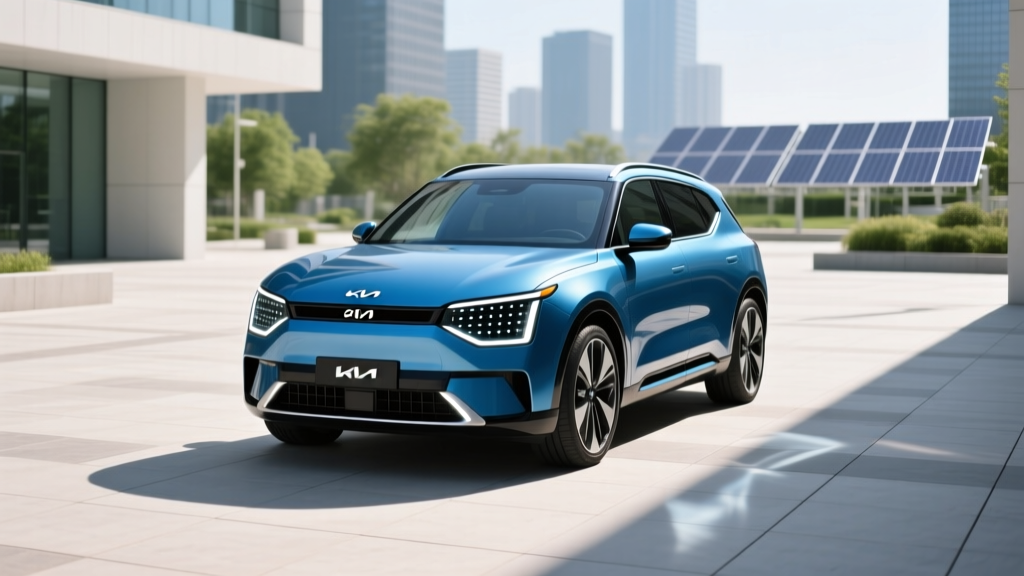
The three-row electric SUV segment has never been more competitive, and the 2026 Kia EV9 returns for its third model year with updated pricing, refined software, and a new GT-Line AWD variant. With official MSRPs now confirmed, the EV9 continues to undercut rivals like the Rivian R1S and Tesla Model X by tens of thousands of dollars while offering genuine seven-passenger seating, over 300 miles of EPA-estimated range, and some of the fastest DC charging in its class.
This review breaks down every confirmed 2026 Kia EV9 trim, its real-world range expectations, charging behavior across the curve, federal tax credit eligibility under current IRS §30D rules, and whether it remains the best value in the large electric SUV category.
2026 Kia EV9 Official MSRP and Trim Breakdown
Kia has confirmed the following MSRP structure for the 2026 EV9 across all five trims. All prices include the mandatory $1,395 destination charge. The EV9 qualifies as an SUV under IRS §30D rules, meaning the MSRP cap for federal tax credit eligibility is $80,000.
| Trim | Drivetrain | Seats | MSRP (incl. destination) |
|---|---|---|---|
| Light Long Range (RWD) | Rear-Wheel Drive | 7 | $54,900 |
| Wind (RWD) | Rear-Wheel Drive | 7 | $59,900 |
| Land (AWD) | Dual-Motor AWD | 7 | $64,900 |
| GT-Line (AWD) | Dual-Motor AWD | 6 (captain's chairs) | $69,900 |
| GT-Line Prestige (AWD) | Dual-Motor AWD | 6 (captain's chairs) | $73,900 |
The entry-level Light Short Range trim with the smaller 76.1 kWh battery has been discontinued for 2026, streamlining the lineup around the 100.0 kWh pack. All trims now come standard with the larger battery, which explains the slight price increase on the base model compared to 2025.
Range, Battery, and Real-World Efficiency
The 2026 EV9 uses a 100.0 kWh usable lithium-ion battery pack (NMC chemistry — nickel manganese cobalt) across all trims. Kia continues to source cells from SK On, with pack assembly at the Hyundai Motor Group Metaplant America in Georgia.
| Trim | Drivetrain | EPA Range | Combined MPGe | kWh/100 mi |
|---|---|---|---|---|
| Light Long Range (RWD) | RWD | 304 mi | 88 MPGe | 38 |
| Wind (RWD) | RWD | 300 mi | 87 MPGe | 39 |
| Land (AWD) | AWD | 280 mi | 83 MPGe | 41 |
| GT-Line (AWD) | AWD | 278 mi | 82 MPGe | 41 |
| GT-Line Prestige (AWD) | AWD | 270 mi | 80 MPGe | 42 |
Efficiency of 38–42 kWh/100 mi is typical for a 5,000+ lb three-row SUV. For comparison, the Rivian R1S (Dual-Motor) achieves roughly 37 kWh/100 mi, while the Tesla Model X Long Range sits around 35 kWh/100 mi — both slightly more efficient but at significantly higher price points.
Charging Speed: DC Fast Charge and Home Level 2
Charging speed remains one of the EV9's strongest attributes. The 800-volt architecture (shared with the Hyundai Ioniq 5 and Genesis Electrified GV70) enables peak DC fast-charging rates that outperform most competitors in the segment.
| Charging Level | Connector | Max Rate | Speed / Time |
|---|---|---|---|
| Level 1 (120V household) | NACS (native) | ~1.4 kW | ~3–4 mi/hr |
| Level 2 (240V home/public) | NACS (native) | 10.9 kW | ~28–32 mi/hr (full charge in ~10 hr) |
| DC Fast Charge | NACS (native) | 236 kW peak | 10–80% in ~24 min (optimal conditions) |
For 2026, the EV9 comes equipped with the NACS (North American Charging Standard) port natively — no adapter needed for Tesla Supercharger access. This is a major practical advantage over CCS-only vehicles, as the Supercharger network remains the most reliable DC fast-charging infrastructure in the U.S.
Charging curve reality check: The 236 kW peak rate applies roughly between 10–55% state of charge. From 55–80%, the rate tapers to approximately 150–100 kW as the battery management system protects cell longevity. This is normal behavior for NMC chemistry — sustained peak-rate claims from any automaker should always be viewed skeptically. In practice, a 10–80% session takes about 24 minutes at a 350 kW-capable charger (Electrify America, EVgo, or Supercharger V4), and roughly 35–40 minutes at a 150 kW station.
Preconditioning matters: The EV9's battery preconditioning feature (activated via the navigation system when a DC fast charger is set as your destination) warms the pack to optimal temperature before arrival. In cold weather, skipping preconditioning can add 10–15 minutes to your charging session and reduce peak kW significantly. Always use nav-routed preconditioning for fastest results.
Performance, Drivetrain, and Driving Dynamics
The RWD models use a single rear-mounted motor producing 201 horsepower and 258 lb-ft of torque. The AWD variants add a front motor for a combined 379 horsepower and 516 lb-ft (440 lb-ft on the Land trim).
| Trim | Motor Config | Horsepower | Torque (lb-ft) | 0–60 mph | Towing Capacity |
|---|---|---|---|---|---|
| Light LR / Wind (RWD) | Single rear motor | 201 hp | 258 | 7.7 sec | 2,000 lb |
| Land / GT-Line / Prestige (AWD) | Dual motor | 379 hp | 440–516 | 4.5 sec | 4,500 lb |
The AWD model's 4.5-second 0–60 time is genuinely quick for a 5,100-pound three-row SUV. More importantly for daily driving, the instant torque delivery makes highway merging effortless. The RWD's 7.7 seconds is adequate but noticeably relaxed by comparison — it's the efficiency-focused choice, not the performance one.
Regenerative braking offers four levels (0–3) selectable via steering-wheel paddles, with Level 3 providing near one-pedal driving capability in city traffic. The i-Pedal mode (full one-pedal) is available but requires a long-press of the left paddle to activate.
Interior Space, Cargo, and Technology
The EV9's interior dimensions remain a key selling point. This is one of the few electric SUVs that can genuinely accommodate seven adults, though the third row is best suited for children or shorter adults on longer trips.
| Measurement | Specification |
|---|---|
| Cargo (behind 3rd row) | 20.2 cu ft |
| Cargo (3rd row folded) | 43.5 cu ft |
| Cargo (all rows folded) | 81.7 cu ft |
| Front legroom | 41.4 in |
| 2nd-row legroom | 42.8 in |
| 3rd-row legroom | 29.9 in |
| Frunk (front trunk) | 3.2 cu ft (AWD) / 5.0 cu ft (RWD) |
The 2026 EV9 features a dual 12.3-inch panoramic display (instrument cluster + infotainment), wireless Apple CarPlay and Android Auto, and Kia's latest ccNC (Connected Car Navigation Cockpit) software with over-the-air update capability. Higher trims add a head-up display, a 14-speaker Meridian audio system, and digital side mirrors (where legally permitted).
On the driver-assistance front, the EV9 comes standard with Highway Driving Assist 2 (HDA2) — a Level 2 system that combines adaptive cruise control with lane centering and automatic lane changes. This is not autonomous driving; the driver must keep hands on the wheel and eyes on the road at all times. It's comparable to Hyundai's HDA2 and competitive with Ford BlueCruise in capability, though it lacks the hands-free zones that BlueCruise and GM Super Cruise offer on pre-mapped highways.
Warranty Coverage and Ownership Costs
Kia's warranty package remains among the best in the industry:
- Basic warranty: 5 years / 60,000 miles
- Powertrain warranty: 10 years / 100,000 miles
- EV battery warranty: 10 years / 100,000 miles (capacity retention above 70%)
- Roadside assistance: 5 years / 60,000 miles
- Complimentary maintenance: None (unlike Hyundai's 3-year/36,000-mi program)
The 10-year/100,000-mile battery warranty guarantees the pack will retain at least 70% of its original capacity. Based on degradation data from 2024–2025 EV9 owners and similar SK On NMC packs in the Hyundai Ioniq 5, most owners can expect 5–8% degradation over the first 100,000 miles — well within warranty limits. Full battery replacement costs (out of warranty) are estimated at $15,000–$20,000 including labor, though prices continue to decline as cell costs drop.
Insurance costs for the EV9 average $2,200–$2,800 annually depending on trim, location, and driver profile — roughly 15–20% higher than a comparably priced gas SUV like the Kia Telluride, which is typical for EVs in this price range.
2026 Kia EV9 vs. Key Competitors
| Attribute | Kia EV9 Land AWD | Rivian R1S Dual-Motor | Tesla Model X LR |
|---|---|---|---|
| Starting MSRP (AWD) | $64,900 | $79,900 | $84,990 |
| EPA Range | 280 mi | 321 mi (Max Pack) | 335 mi |
| Peak DC Charge | 236 kW | 220 kW | 250 kW |
| 0–60 mph | 4.5 sec | 4.5 sec | 3.8 sec |
| Seating | 7 | 7 | 5–7 |
| Max Towing | 4,500 lb | 7,700 lb | 3,500 lb |
| NACS Native | Yes | Yes (2026) | Yes |
The EV9's value proposition is clear: it undercuts the R1S and Model X by $15,000–$20,000 while sacrificing relatively little in daily usability. The Rivian wins on range (with the Max Pack), towing, and off-road capability. The Tesla wins on range and Supercharger ecosystem maturity. But for families prioritizing budget, seating space, and warranty, the EV9 is the pragmatic choice.
Pros, Cons, and Who Should Buy the 2026 EV9
- Best value in the three-row EV segment by a wide margin
- NACS native — full Supercharger access without adapter
- 800V architecture enables 236 kW peak DC charging
- Genuine 7-passenger seating with 42.8" second-row legroom
- 10-year/100,000-mile battery and powertrain warranty
- Strong IIHS safety ratings (Top Safety Pick+ for 2025 carryover)
- Third-row legroom (29.9") is tight for adults on long trips
- AWD range drops to 270–280 mi — below 300-mi threshold many buyers want
- No hands-free driving mode (HDA2 requires hands on wheel)
- RWD base model is slow (7.7 sec 0–60) for a $55K vehicle
- Frunk is small (3.2 cu ft AWD) compared to Rivian R1S (11 cu ft)
- Insurance premiums run 15–20% above gas SUV equivalents
- Family commuters who need three rows but don't want to spend $80K+
- Home chargers with Level 2 access who can wake up to a full battery daily
- Budget-conscious EV buyers who want maximum warranty coverage
- Road trippers who value Supercharger access via native NACS
- Heavy tow rigs — the 4,500-lb limit trails Rivian's 7,700 lb significantly
- Off-road enthusiasts — the EV9 has no meaningful off-road capability
- Maximum range seekers — the Model X LR (335 mi) or R1S Max Pack (410 mi) go farther
Frequently Asked Questions
What is the real-world range of the 2026 Kia EV9?
The EPA rates the RWD EV9 at 304 miles and AWD models at 270–280 miles. In real-world highway driving at 70–75 mph, expect 250–270 miles (RWD) or 230–250 miles (AWD). Cold weather below freezing can reduce range by 15–25%, bringing AWD models down to roughly 200–220 miles in winter conditions.
How fast does the 2026 EV9 charge at home and on the road?
At home on a 240V Level 2 charger, the EV9 charges at up to 10.9 kW, adding roughly 28–32 miles per hour and reaching a full charge in about 10 hours. On DC fast chargers, it peaks at 236 kW and can charge from 10–80% in approximately 24 minutes at a 350 kW-capable station.
Does the 2026 Kia EV9 qualify for the federal EV tax credit?
The EV9 qualifies as an SUV under IRS §30D rules, with an $80,000 MSRP cap — all trims fall under this. However, the full $7,500 credit depends on battery-component sourcing and critical-mineral requirements that tighten each year, plus buyer income caps ($150K single / $300K joint). The point-of-sale transfer allows eligible buyers to apply the credit at purchase. Always verify current-year eligibility on the IRS website or with a tax professional.
Is the 2026 EV9 worth buying over the Rivian R1S or Tesla Model X?
If your priorities are value, seating space, and warranty coverage, yes — the EV9 saves $15,000–$20,000 versus those rivals. If you need maximum range (Model X: 335 mi), heavy towing (R1S: 7,700 lb), or off-road capability (R1S), those alternatives justify their premiums. For most family commuters and road-trippers, the EV9 Land AWD at $64,900 offers the best balance.
What are the biggest drawbacks of the 2026 Kia EV9?
The third row is tight for adults (29.9" legroom), AWD models fall below 300 miles of EPA range, the RWD base model is slow for the price, and the frunk is small. Insurance also runs 15–20% higher than equivalent gas SUVs, and HDA2 requires hands on the steering wheel at all times — no hands-free zones like BlueCruise or Super Cruise.
How long will the EV9 battery last?
Kia warranties the battery for 10 years/100,000 miles at 70% capacity retention. Based on data from similar SK On NMC packs, most owners see 5–8% degradation over 100,000 miles. With proper care (avoiding frequent 100% charges, using preconditioning for DC fast charging, limiting deep discharges), the battery should provide 150,000–200,000+ miles of usable service before approaching the warranty threshold.
Sources: EPA fuel economy data via fueleconomy.gov, Kia Motors America official specifications, IRS §30D Clean Vehicle Credit guidelines.