Searches for a new Tesla van have surged as the company teases a dedicated electric passenger and cargo van. After years of hints from Elon Musk and a brief cameo at the 2024 "We, Robot" event, Tesla has confirmed it is developing a van platform — but as of early 2026, no production model is available for purchase. This guide consolidates every confirmed detail, credible projection, and tax-credit implication so you can plan accordingly.
What Tesla Has Confirmed About Its Van Platform
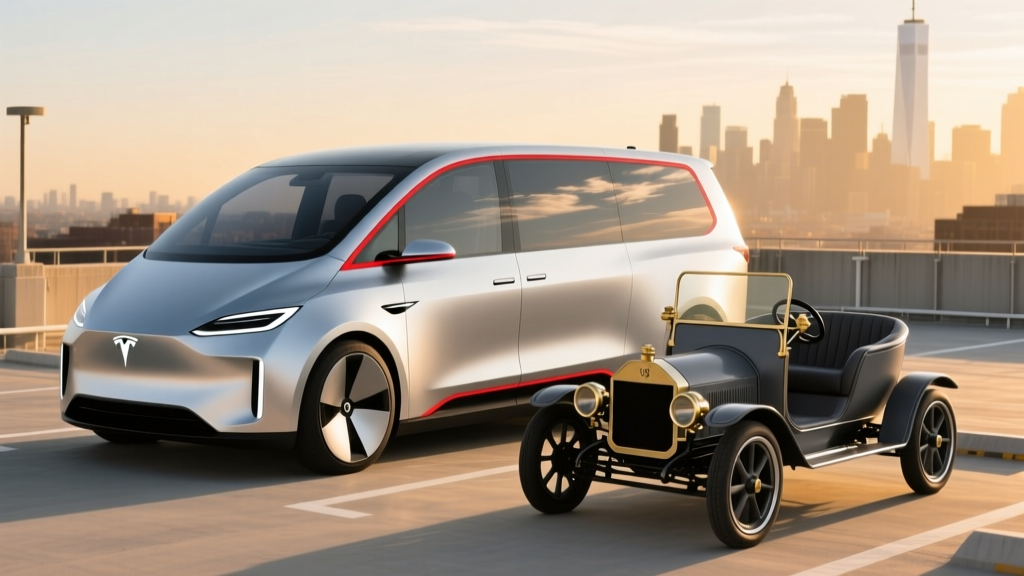
At the October 2024 "We, Robot" event, Musk showed a concept vehicle dubbed the Robovan — a streamlined, art-deco-inspired people mover designed to carry up to 20 passengers autonomously. Tesla executives confirmed the platform would also spawn a consumer-oriented van for families and commercial fleets, though the company has not released a formal model name, trim structure, or order page.
What we do know from Tesla's official communications and SEC filings:
- A dedicated van platform is in active development at Tesla's engineering centers.
- The vehicle will use a next-generation unboxed manufacturing process first previewed for the compact "Model 2/Redwood" platform.
- Both an autonomous fleet variant (Level 4 targeted) and a driver-supervised consumer variant (Level 2, using an evolution of FSD Supervised) are planned.
- Production is expected to begin no earlier than late 2026 or 2027, likely at Giga Texas.
Projected Range, Battery, and Efficiency
Because no official EPA certification exists yet, the figures below are projections based on Tesla's current powertrain architecture (Model Y Juniper, Cybertruck) and the van's estimated curb weight and aerodynamic profile.
| Spec | Consumer Van (Est.) | Robovan Fleet (Est.) |
|---|---|---|
| Battery Capacity (usable) | ~100 kWh (NMC) | ~120 kWh (NMC) |
| EPA Range (projected) | 280–330 miles | 200–250 miles |
| Efficiency | ~34–38 kWh/100 mi | ~48–60 kWh/100 mi |
| Drivetrain | Dual-motor AWD | Dual-motor AWD |
| 0-60 mph | ~5.5–6.5 sec | N/A (speed-limited) |
| Peak DC Fast Charge | ~250 kW (V4 Supercharger) | ~250 kW |
| 10-80% Charge Time (est.) | ~25–30 min | ~30–35 min |
| Level 2 Home Charge | 11.5 kW (~34 mi/hr) | Depot charging TBD |
| Seating | 7–8 passengers | Up to 20 passengers |
| Cargo Volume | ~80–120 cu ft (behind 1st row) | Minimal (passenger config) |
Battery Chemistry: NMC Over LFP
Given the van's projected weight (5,500–6,500 lbs curb) and range targets, Tesla is almost certain to use NMC (nickel manganese cobalt) cells rather than LFP. NMC offers higher energy density (~250 Wh/kg at the cell level vs. LFP's ~170 Wh/kg), which is critical for a large vehicle where battery mass directly erodes payload capacity. The trade-off: NMC degrades slightly faster than LFP over thousands of cycles and carries higher raw-material costs. Tesla's battery warranty for large-pack vehicles has historically been 8 years / 120,000 miles with a 70% capacity retention threshold — a reasonable benchmark for the van.
Charging Speed and Infrastructure
A van this size needs fast electrons. Here's what Tesla's current Supercharger network supports and what the van will likely leverage:
| Level | Power | Miles Added per Hour | Use Case |
|---|---|---|---|
| Level 1 (120V) | 1.4 kW | ~4 mi/hr | Emergency trickle only |
| Level 2 (240V, 48A) | 11.5 kW | ~34 mi/hr | Overnight home charging |
| DC Fast (V4 Supercharger) | Up to 250 kW peak | ~750+ mi/hr (peak) | Road trips, fleet depots |
Charge-curve reality: Like all Teslas, the van will not sustain peak kW for the entire session. Expect the charge rate to taper meaningfully above 55-60% SoC, and to drop to under 50 kW above 85%. The 10-80% time of ~25-30 minutes assumes battery preconditioning is active (triggered automatically when navigating to a Supercharger). Without preconditioning — say, at a non-Tesla DC fast charger using a NACS adapter — that 10-80% time could stretch to 40+ minutes in cool weather.
The consumer van will use the NACS (North American Charging Standard) connector natively, giving it access to Tesla's Supercharger network (over 25,000 stalls in North America as of 2026) and, via adapters, to Electrify America, EVgo, and other CCS networks that have deployed NACS cables.
Pricing, Trims, and Federal Tax Credit Eligibility
Tesla has not published pricing. However, based on the company's positioning and competitive pressure from the Ford E-Transit (starting ~$58,000) and the upcoming Rivian EDV, analysts project the following MSRP ranges for the consumer van:
| Trim (Projected) | Est. MSRP | §30D Credit Eligible? | Est. Net Price |
|---|---|---|---|
| Base RWD (if offered) | $55,000–$60,000 | Yes (under $80K van cap) | $47,500–$52,500 |
| Long Range AWD | $65,000–$72,000 | Yes (under $80K van cap) | $57,500–$64,500 |
| Robovan (fleet) | TBD (likely fleet-only) | Commercial credit §45W may apply | TBD |
Federal Tax Credit Rules (§30D) — What Applies to a Van
If Tesla's consumer van is classified as a van under IRS guidelines, the MSRP cap for credit eligibility is $80,000 (vs. $55,000 for sedans). This gives Tesla significant pricing headroom. However, eligibility is not automatic. Per current IRS §30D rules, all of the following must be met:
- MSRP cap: Van must be under $80,000.
- Buyer income cap: Modified AGI ≤ $300,000 (joint), $225,000 (head of household), $150,000 (single).
- Battery sourcing: Increasing percentages of critical minerals and battery components must be sourced from the US or FTA partners — thresholds tighten annually.
- Final assembly: Must occur in North America (likely satisfied at Giga Texas).
- Point-of-sale transfer: The credit can be transferred to the dealer at purchase, reducing the purchase price directly.
Note: Tax credit rules are subject to legislative change. Always verify eligibility with a tax professional and the IRS's official clean vehicle credit pages before purchasing.
Tech, Driver Assistance, and Interior
Based on Tesla's current vehicle lineup and patent filings, the consumer van is expected to include:
- Infotainment: 15.4-inch center touchscreen running Tesla's latest software, with streaming, gaming, and a potential rear-seat entertainment screen for passengers.
- Driver Assistance: Tesla Autopilot standard (SAE Level 2 — adaptive cruise + lane centering), with FSD (Supervised) available as a paid upgrade. FSD remains Level 2: the driver must remain attentive with hands on or near the wheel at all times.
- Robovan variant: Tesla has stated the autonomous fleet version targets SAE Level 4 (no driver required in geofenced areas), similar to Waymo's current operational model. This variant is not expected to be sold to individual consumers initially.
- Seating: Consumer van likely offers 7–8 seats in a 2-3-2 or 2-3-3 configuration. The flat floor (enabled by the skateboard battery pack) should enable generous legroom in all rows.
- Cargo: With rear seats folded, expect 100+ cu ft of cargo volume — competitive with the Ford E-Transit's 246.7 cu ft max but oriented more toward passenger comfort than pure cargo hauling.
How It Compares: Tesla Van vs. Rivals
Until Tesla's van reaches production, here's how it projects against existing and announced competitors in the electric van space:
| Vehicle | EPA Range | Battery (kWh) | DC Fast Charge | Starting MSRP |
|---|---|---|---|---|
| Tesla Consumer Van (proj.) | 280–330 mi | ~100 kWh | 250 kW | $55,000–$65,000 |
| Ford E-Transit (cargo) | 126 mi (148 mi ext.) | 68 kWh (usable) | 115 kW | ~$58,000 |
| Rivian EDV (Amazon fleet) | ~150 mi | ~90 kWh | ~150 kW | Fleet only (not retail) |
| Mercedes eSprinter | ~200 mi (est.) | 113 kWh | 115 kW | ~$72,000 |
The Tesla van's projected advantage lies in range and charging speed — areas where Tesla's powertrain efficiency and Supercharger network dominate. The Ford E-Transit is a proven cargo workhorse but its 126-mile range makes it strictly a last-mile delivery vehicle. The Mercedes eSprinter offers more cargo volume but at a steep price and slower charging. Rivian's EDV remains fleet-exclusive.
Who Should Wait for the Tesla Van (and Who Shouldn't)
✅ Wait for It If...
- You need a 7-8 seat family EV with 300+ miles of range and don't need a vehicle in the next 12 months.
- You're a fleet operator wanting Tesla's Supercharger network and over-the-air updates.
- You want the most advanced driver-assist system (Level 2) in a van segment currently stuck on basic cruise control.
- You qualify for the §30D credit and want to maximize savings on a vehicle under the $80K van cap.
❌ Look Elsewhere If...
- You need a van now — Tesla's van is 12-24 months from likely delivery at best.
- Your priority is maximum cargo volume (the E-Transit or eSprinter offer far more cubic feet in dedicated cargo configs).
- You want a proven track record — Tesla's Cybertruck launch showed that early-production vehicles can have build-quality issues.
- You need commercial upfitting (shelving, ladder racks) — Tesla's ecosystem rarely supports third-party upfitter integration.
Warranty and Ownership Considerations
Based on Tesla's current warranty structure for large-battery vehicles:
- Basic Vehicle Warranty: 4 years / 50,000 miles
- Battery & Drive Unit: 8 years / 120,000 miles (70% capacity retention threshold)
- Expected battery replacement cost (out of warranty): $15,000–$22,000 for a ~100 kWh pack, based on current Model S/X replacement pricing
Tesla's insurance premiums have historically run 15-30% higher than comparable non-Tesla EVs, according to industry data. Factor this into your total cost of ownership calculation.
Frequently Asked Questions
What is the real-world range of the new Tesla van?
Projected EPA range is 280–330 miles for the consumer variant. In real-world highway driving at 75 mph, expect approximately 250–270 miles. In cold weather (below 30°F), that drops to roughly 220–240 miles. These are estimates based on Tesla's current powertrain efficiency and the van's expected weight and aerodynamics — final EPA certification will provide exact numbers.
How fast does the Tesla van charge?
Projected peak DC fast-charge rate is 250 kW on Tesla's V4 Superchargers, with a 10-80% session taking approximately 25-30 minutes with battery preconditioning active. At home on a Level 2 (240V, 48A) charger, expect about 34 miles of range added per hour, meaning a full overnight charge from 20% to 100% takes roughly 8-9 hours.
How much does the Tesla van cost after tax credits?
Projected base MSRP is $55,000–$65,000. If the van qualifies for the full $7,500 §30D federal tax credit (subject to income, MSRP, and battery-sourcing requirements), the effective price could be as low as $47,500–$57,500. Always verify eligibility with the IRS and a tax professional before purchase.
Is the Tesla van worth buying vs. the Ford E-Transit or Mercedes eSprinter?
If you need a passenger-oriented family van with long range, Tesla's projected 300+ mile range and Supercharger access crush the competition. If you need a pure cargo van with maximum volume and commercial upfitting, the Ford E-Transit or Mercedes eSprinter are proven options available today — though with significantly less range.
Does the Tesla van qualify for the federal EV tax credit?
It is projected to qualify, as vans have an $80,000 MSRP cap under §30D (vs. $55,000 for sedans). However, eligibility also depends on buyer income limits, battery critical-mineral sourcing requirements, and North American final assembly. Rules are subject to legislative change — consult IRS §30D guidelines for the latest requirements.
When can I actually buy the Tesla van?
Tesla has not opened orders or announced a delivery date. Based on the company's typical timeline from announcement to production, the earliest realistic delivery window for a consumer variant is late 2027 or 2028. The autonomous Robovan for fleet operators may launch in a limited capacity sooner, but availability will be restricted to approved fleet partners.