For years, the default answer to "which electric vehicle should I buy?" was Tesla. That era is ending. By 2026, the non Tesla EV market has matured into a genuinely competitive landscape — Hyundai, Ford, Chevrolet, Rivian, BMW, and others now offer compelling alternatives with NACS charging access, competitive range, and pricing that undercuts Tesla on several fronts.
This guide breaks down the strongest non Tesla EVs you can actually buy right now, with real-world range data, exact charging speeds, federal tax credit eligibility under current IRS §30D rules, and honest assessments of where each model excels — and where it falls short.
Why 2026 Is the Year of the Non Tesla EV
Tesla's Supercharger network advantage — once the primary reason buyers defaulted to the brand — has largely evaporated. Nearly every major automaker has adopted the NACS (North American Charging Standard) connector for 2025-2026 models, and legacy CCS vehicles can access Tesla Superchargers via adapter. That means non Tesla EVs now charge on the same reliable network that Tesla owners use.
Meanwhile, competition has driven prices down and specs up. Several non Tesla EVs now exceed 300 miles of EPA range, offer 200+ kW DC fast charging, and qualify for the full $7,500 federal tax credit — something Tesla's own lineup has struggled with due to battery-sourcing requirements under the Inflation Reduction Act.
Top Non Tesla EVs at a Glance
| Model | EPA Range | Battery (kWh) | DC Fast Charge (kW) | 10-80% Time | 0-60 mph | Base MSRP |
|---|---|---|---|---|---|---|
| 2026 Hyundai Ioniq 6 SE | 361 mi | 77.4 kWh (NMC) | 240 kW | ~18 min | 5.1s | $38,650 |
| 2026 Chevrolet Equinox EV LT | 319 mi | 85 kWh (NMC) | 150 kW | ~30 min | 7.9s | $34,900 |
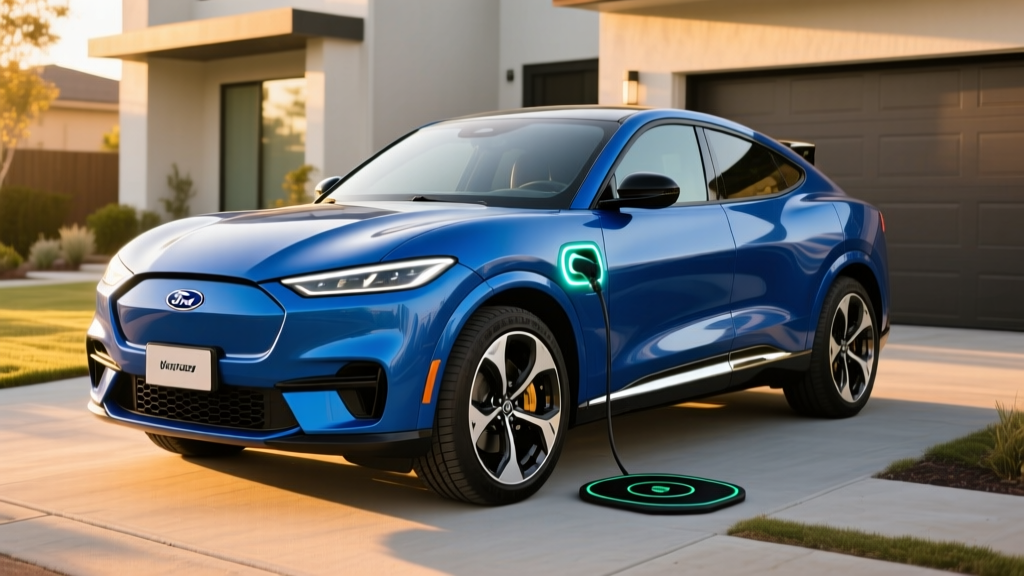
| 2026 Ford Mustang Mach-E Premium | 320 mi | 91 kWh (NMC) | 150 kW | ~33 min | 5.6s | $44,495 |
| 2026 Hyundai Ioniq 5 SE | 303 mi | 77.4 kWh (NMC) | 240 kW | ~18 min | 5.2s | $43,350 |
| 2026 Rivian R1S Dual-Motor | 352 mi | 149 kWh (NMC) | 200 kW | ~40 min | 4.5s | $79,900 |
| 2026 BMW i4 eDrive40 | 307 mi | 83.9 kWh (NMC) | 205 kW | ~28 min | 5.5s | $57,900 |
Sources: EPA fueleconomy.gov, manufacturer specification pages. Real-world range and charging times may vary based on conditions.
2026 Hyundai Ioniq 6: The Range and Charging Champion
The Ioniq 6 remains the efficiency king among non Tesla EVs. Its teardrop-shaped body achieves a drag coefficient of just 0.21 — among the lowest of any production car — translating directly into superior highway efficiency. The SE Long Range trim posts an EPA-estimated 361 miles on a single charge, with an efficiency rating of 140 MPGe combined (24 kWh/100 mi).
The 800V architecture enables 240 kW peak DC fast charging, sustaining high power through much of the charge curve. In testing, the Ioniq 6 reaches 10-80% State of Charge (SoC) in approximately 18 minutes at a compatible 350 kW charger — among the fastest in the segment. Charging tapers noticeably above 80%, as with all lithium-ion batteries, so plan your stops to 80% on road trips.
Home Level 2 charging on a 240V/48A circuit delivers approximately 10.5 kW, adding roughly 35-38 miles of range per hour. A full charge from near-empty takes about 7.5 hours overnight.
Interior space is the Ioniq 6's trade-off for that slippery shape. Rear headroom is tight at 37.1 inches, and the trunk offers 11.2 cubic feet — less than many compact sedans. There's no frunk on AWD trims. The 12.3-inch dual-screen infotainment system runs Hyundai's latest software with wireless Apple CarPlay and Android Auto, and Hyundai's Highway Driving Assist 2 (a Level 2 SAE driver-assist system) is standard on all trims.
| Trim | MSRP | Est. After $7,500 Credit* |
|---|---|---|
| SE Standard Range | $38,650 | $31,150 |
| SE Long Range | $42,100 | $34,600 |
| SEL | $46,300 | $38,800 |
| Limited | $52,350 | $44,850 |
*Federal §30D credit eligibility depends on buyer income (AGI caps: $150K single / $300K joint), MSRP under $55K for sedans, and battery critical-mineral/component sourcing. The Ioniq 6 currently qualifies. Verify at irs.gov before purchase. Credit can be transferred to the dealer at point of sale.
2026 Chevrolet Equinox EV: The Affordable Family Crossover
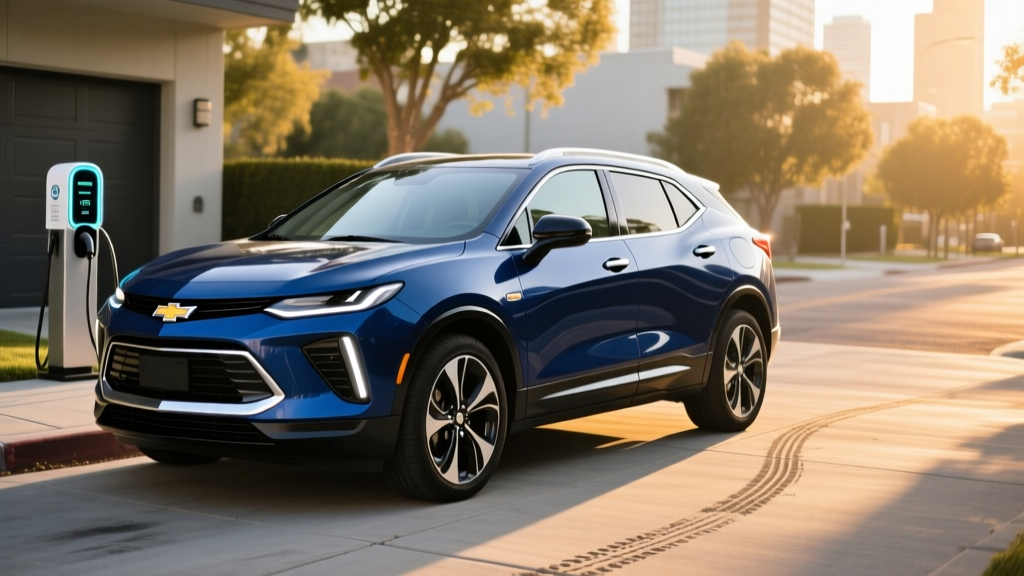
Chevrolet's Equinox EV fills a gap that Tesla never properly addressed: an affordable, practical electric crossover for families who don't want to spend $45,000+. The LT trim starts at $34,900 and delivers an EPA-estimated 319 miles of range — a remarkable value proposition.
The 85 kWh (usable) Ultium battery pack uses NMC (nickel manganese cobalt) chemistry. Efficiency is solid at 113 MPGe combined (30 kWh/100 mi). The 17.7-inch diagonal infotainment screen is the largest in the segment, running Google Built-In with native Google Maps navigation — useful for route planning with charging stops.
Where the Equinox EV shows its price point is charging speed. At 150 kW peak DC fast charging, a 10-80% session takes approximately 30 minutes. That's adequate for road trips but noticeably slower than the Hyundai/Kia 800V platforms. Home Level 2 charging at 11.5 kW adds roughly 30 miles per hour.
Cargo space is a strong point: 26.4 cubic feet behind the rear seats and 57.2 cubic feet with them folded. Rear legroom measures 37.8 inches — generous for the class. The Equinox EV qualifies for the full $7,500 federal credit, bringing the effective price of the LT to approximately $27,400 — making it one of the most affordable long-range EVs on the market.
2026 Ford Mustang Mach-E: The Driver's Crossover
The Mach-E continues to offer the best driving dynamics among mainstream non Tesla EV crossovers. The Premium trim with the Extended Range battery and rear-wheel drive delivers 320 miles of EPA range, while the GT variant sacrifices range (280 mi) for a 3.5-second 0-60 time and 480 horsepower.
Ford has updated the Mach-E with NACS as the native charge port for 2026, eliminating the need for an adapter at Tesla Superchargers. The 91 kWh usable battery charges at up to 150 kW on DC fast chargers, reaching 10-80% in approximately 33 minutes. Level 2 home charging at 10.5 kW adds about 28 miles per hour.
BlueCruise, Ford's Level 2 hands-free driving system, is available on mapped divided highways (over 130,000 miles of compatible roads as of 2026). It's important to understand this is SAE Level 2 — the driver must remain attentive and ready to take over at all times. The system monitors driver engagement via an infrared camera.
| Mach-E Spec | Premium RWD | GT AWD |
|---|---|---|
| EPA Range | 320 mi | 280 mi |
| Horsepower | 290 hp | 480 hp |
| 0-60 mph | 5.6s | 3.5s |
| Drivetrain | RWD | AWD (Dual Motor) |
| Base MSRP | $44,495 | $55,995 |
The Mach-E's MSRP places the Premium just under the $55,000 SUV cap for §30D credit eligibility, and it currently qualifies. The GT, at $55,995, exceeds the cap and does not qualify for the federal credit — a significant cost consideration.
Charging Speed Comparison: The Non Tesla EV Charging Hierarchy
Charging speed is where non Tesla EVs diverge sharply. Hyundai/Kia's E-GMP platform operates at 800 volts, enabling sustained high-power charging that 400V architectures simply can't match. Here's how the top contenders stack up:
| Model | Architecture | Peak DC kW | 10-80% Time | Level 2 Home Rate | Miles/Hr (L2) |
|---|---|---|---|---|---|
| Hyundai Ioniq 6 | 800V | 240 kW | ~18 min | 10.5 kW | ~37 mi/hr |
| Hyundai Ioniq 5 | 800V | 240 kW | ~18 min | 10.5 kW | ~34 mi/hr |
| BMW i4 | 400V | 205 kW | ~28 min | 11 kW | ~33 mi/hr |
| Rivian R1S | 400V | 200 kW | ~40 min | 11.5 kW | ~25 mi/hr |
| Ford Mach-E | 400V | 150 kW | ~33 min | 10.5 kW | ~28 mi/hr |
| Chevy Equinox EV | 400V | 150 kW | ~30 min | 11.5 kW | ~30 mi/hr |
Key insight: Peak kW is not sustained kW. A 240 kW peak doesn't mean the entire charge happens at that rate. The charge curve tapers significantly above 80% SoC to protect battery health. The Ioniq 6's advantage is that its 800V system sustains higher power deeper into the curve — it's still pulling over 150 kW at 60% SoC, where 400V vehicles are already tapering to under 100 kW.
For home charging, the practical reality is that most EV owners charge overnight on Level 2. A 10-11 kW home charger replenishes any of these vehicles fully in 7-10 hours — more than adequate for daily use. The home charging installation typically costs $800-$2,500 depending on your electrical panel's capacity and the run distance to your garage or parking spot.
Federal Tax Credit Eligibility for Non Tesla EVs
The §30D Clean Vehicle Credit remains one of the most powerful purchase incentives for EV buyers, but eligibility is complex. Here's the current framework for 2026:
- MSRP Caps: Sedans/wagons must be under $55,000; SUVs, vans, and trucks under $80,000
- Buyer Income Caps (AGI): $150,000 single filers / $225,000 head of household / $300,000 joint filers
- Battery Sourcing: Increasing percentages of critical minerals and battery components must be sourced from the U.S. or free-trade-agreement countries — this requirement tightens annually
- Final Assembly: Vehicle must be assembled in North America
- Point-of-Sale Transfer: You can transfer the credit to the dealer for an immediate price reduction at purchase, rather than waiting to claim it on your tax return
Among the models reviewed here, the Hyundai Ioniq 6 (all trims under $55K), Chevrolet Equinox EV (all trims), and Ford Mustang Mach-E Premium currently qualify for the full $7,500 credit. The Mach-E GT exceeds the MSRP cap. The Rivian R1S and BMW i4 both exceed their respective MSRP caps and do not qualify for the federal credit, though state incentives may partially offset the cost.
Always verify eligibility at irs.gov and consult a tax professional — battery-sourcing requirements change, and the IRS updates its eligible vehicle list periodically.
Pros and Cons: Non Tesla EVs vs. Tesla
Pros of Going Non Tesla
- Broader model selection: Sedans, crossovers, SUVs, trucks — Tesla offers only four consumer models
- Build quality consistency: Hyundai, BMW, and Ford have decades of manufacturing refinement; panel gaps and paint issues are less common
- Dealer service network: Physical service centers with loaner vehicles, vs. Tesla's mobile-ranger-and-limited-center model
- Tax credit eligibility: Several non Tesla models qualify where Teslas currently do not due to sourcing rules
- Physical controls: Most non Tesla EVs retain climate knobs, volume buttons, and stalks — no screen-diving for basic functions
- Now with Supercharger access: NACS adoption means you get Tesla's charging network without buying a Tesla
Cons to Consider
- OTA updates: Tesla's over-the-air update cadence and feature additions remain industry-leading
- Supercharger simplicity: Native Tesla plug-and-charge is still slightly more seamless than non Tesla vehicles on the same network
- Software integration: Tesla's app, navigation, and charging ecosystem are tightly integrated; third-party EVs rely on multiple apps
- Resale value: Tesla's brand recognition still supports stronger resale in some segments, though this gap is narrowing
- Performance-per-dollar: Tesla's Model 3 Performance and Model Y Performance still offer extraordinary acceleration for the price
Who Should Buy Which Non Tesla EV?
Best for efficiency and road trips: Hyundai Ioniq 6. The 361-mile EPA range, 240 kW charging, and exceptional highway efficiency make it the best non Tesla EV for high-mileage drivers and frequent road trippers. The trade-off is rear-seat and cargo space.
Best for budget-conscious families: Chevrolet Equinox EV. At roughly $27,400 after the federal credit, with 319 miles of range and genuine SUV cargo space, it's the value play. Slower charging is the main compromise.
Best for driving enthusiasts: Ford Mustang Mach-E GT. 480 hp, 3.5-second 0-60, and sharp handling — the EV that most convincingly replaces a sports sedan. No federal credit, however.
Best for three-row family hauling: Rivian R1S. Three rows, 352 miles of range, genuine off-road capability, and 7,700-lb towing capacity. Premium pricing ($79,900+) and no federal credit place it in luxury territory.
Best for luxury sedan buyers: BMW i4. The driving refinement, cabin materials, and build quality of a BMW, electrified. 307 miles of range and 205 kW charging are competitive, though the $57,900 starting price and no federal credit make it a premium proposition.
Frequently Asked Questions
What is the real-world range of non Tesla EVs compared to their EPA estimates?
Most non Tesla EVs deliver 85-92% of their EPA range in mixed real-world driving. Highway-heavy trips at 75+ mph typically yield 85-90% of sticker range. Cold weather (below 32°F) without battery preconditioning can drop range by 20-35%. Models with heat pumps (standard on Hyundai, BMW, and Rivian) mitigate cold-weather losses compared to resistive heating systems.
Can non Tesla EVs use Tesla Superchargers in 2026?
Yes. Nearly all major automakers now ship vehicles with the NACS charge port natively for 2026 models. Vehicles with CCS ports from prior model years can access Tesla Superchargers using a manufacturer-provided or aftermarket adapter. Access requires the Tesla app or the vehicle's native navigation system to initiate charging at participating stations.
How fast do non Tesla EVs charge at home?
On a typical Level 2 home charger (240V, 48A), expect 10-11.5 kW of power delivery, adding 25-38 miles of range per hour depending on the vehicle's efficiency. A full overnight charge (8-10 hours) is sufficient for virtually any daily driving need. Installation costs typically range from $800 to $2,500, depending on electrical panel capacity and wiring distance.
Do non Tesla EVs qualify for the $7,500 federal tax credit?
Several do, but eligibility depends on the vehicle's MSRP (under $55K for sedans, $80K for SUVs/trucks), your adjusted gross income, the vehicle's battery component and critical-mineral sourcing, and North American final assembly. Check the current eligible vehicle list at fueleconomy.gov and verify with your tax advisor.
Is it worth buying a non Tesla EV over a Tesla Model 3 or Model Y?
It depends on your priorities. If you value build quality, physical controls, dealer service, and tax credit eligibility, non Tesla alternatives often provide a better ownership experience. If you prioritize OTA software updates, the tightest ecosystem integration, and maximum performance per dollar, Tesla still has advantages. The charging network gap that once decided this question has largely closed with NACS adoption.
What battery warranty do non Tesla EVs carry?
Federal law mandates a minimum 8-year/100,000-mile battery warranty for EVs. Hyundai exceeds this with a 10-year/100,000-mile powertrain warranty. Chevrolet, Ford, BMW, and Rivian all meet or exceed the 8-year/100,000-mile baseline. These warranties typically guarantee the battery will retain at least 70% of its original capacity — if degradation exceeds that threshold, the manufacturer must repair or replace the pack.