Quick Answer: Should You Buy a Land Rover Electric Vehicle?
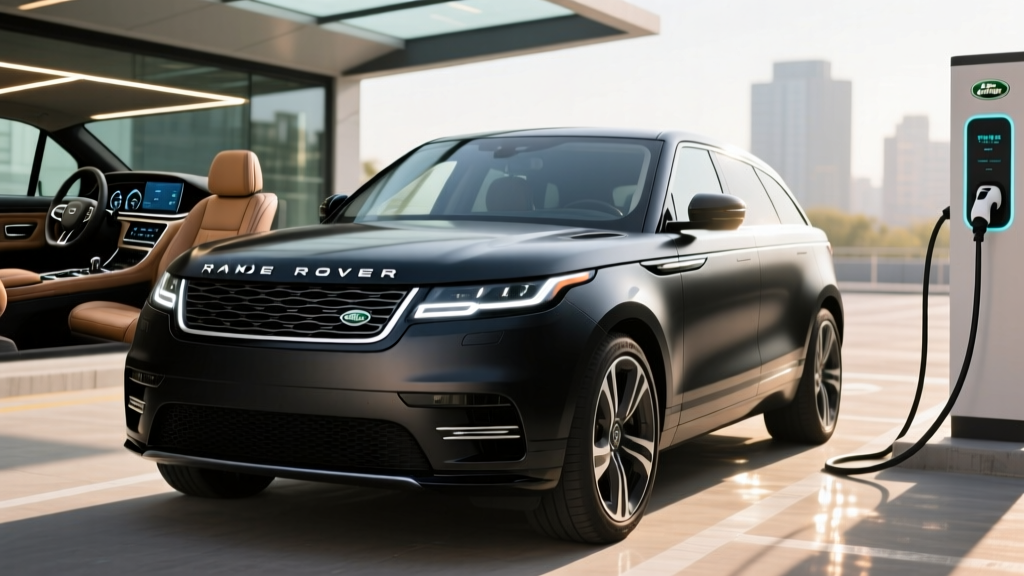
Land Rover's first fully electric model — the Range Rover Electric — is currently in its launch phase for the 2026 model year, built on JLR's new Modular Longitudinal Architecture (MLA) with an 800-volt electrical system. Expect an EPA-estimated range near 300 miles from a ~110 kWh (usable) battery, DC fast charging up to 250 kW (10–80% in roughly 25 minutes), and a starting MSRP around $120,000. At this price, the Range Rover Electric does not qualify for the federal §30D new-EV tax credit (SUV MSRP cap: $80,000). It's a luxury flagship for buyers who want zero-tailpipe-emissions off-road capability without sacrificing the Range Rover's ride quality — but it demands home Level 2 charging and a willingness to absorb luxury-EV insurance and depreciation costs.
What Is the Land Rover Electric Vehicle Lineup?
For years, Land Rover offered only mild-hybrid (MHEV) and plug-in hybrid (PHEV) variants of the Range Rover, Defender, and Discovery. The brand's first true battery-electric vehicle (BEV) is the Range Rover Electric, announced in 2024 and entering customer deliveries through the 2026 model year. JLR has confirmed that additional electric models — including an electric Defender and electric Discovery — are in development, but as of early 2026, the Range Rover Electric is the sole Land Rover EV available for purchase.
The Range Rover Electric sits alongside the existing Range Rover PHEV (plug-in hybrid), which offers roughly 48 miles of electric-only range before its inline-six gasoline engine engages. Buyers weighing a Land Rover electric vehicle are essentially choosing between the full BEV and the PHEV — or cross-shopping against rivals like the BMW iX, Mercedes EQS SUV, and Tesla Model X.
| Spec | Value |
|---|---|
| EPA Range (est.) | ~300 miles |
| Battery Capacity (usable) | ~110 kWh, NMC chemistry |
| Electrical Architecture | 800V |
| Peak DC Fast Charge Rate | 250 kW |
| 10–80% DC Charge Time (est.) | ~25 minutes |
| Level 2 AC Charge Rate | 11 kW (~30 mi/hr) |
| Horsepower | ~550 hp (dual motor AWD) |
| 0–60 mph | ~4.5 seconds |
| Towing Capacity | ~5,500 lbs (est.) |
| Wading Depth | ~33.5 inches |
| Battery/Powertrain Warranty | 8 years / 100,000 miles |
| Base MSRP (est.) | ~$120,000 |
Real-World Range Expectations
The EPA sticker may read ~300 miles, but real-world results will vary significantly. On highway road trips at 75 mph, expect 240–270 miles before needing a charge. In cold weather (below 30°F), range can drop by 20–30%, meaning a winter highway drive could yield as little as 200–220 miles. The Range Rover Electric's boxy aerodynamic profile — a design necessity for the brand's identity — works against efficiency at speed. Preconditioning the battery while plugged in is essential for both range preservation and achieving peak DC charge rates.
Range Rover Electric vs. Gas Range Rover: Cost & Efficiency
The most common cross-shop is between the Range Rover Electric and the conventional Range Rover with the P400 mild-hybrid inline-six or the P530 V8. Here's how the numbers stack up over five years of ownership, assuming 12,000 miles per year.
| Category | Range Rover Electric | Range Rover P400 (Gas MHEV) |
|---|---|---|
| Base MSRP | ~$120,000 | ~$107,000 |
| Fuel/Energy (5 yr / 60k mi) | ~$5,400 (at $0.15/kWh home) | ~$12,600 (at $3.50/gal, 19 MPG combined) |
| Maintenance (5 yr) | ~$2,500 | ~$5,500 |
| Federal Tax Credit (§30D) | $0 (MSRP exceeds $80k cap) | $0 |
| Insurance (5 yr est.) | ~$22,000 | ~$18,000 |
| Estimated 5-Yr Depreciation | ~$54,000 (45%) | ~$48,000 (45%) |
| Total 5-Yr Cost of Ownership | ~$95,900 | ~$95,100 |
Key takeaway: The Range Rover Electric saves roughly $10,000 in fuel and maintenance over five years, but those savings are largely offset by a higher purchase price and steeper insurance premiums. At this luxury tier, the EV doesn't deliver the dramatic cost savings seen in mainstream models like the Tesla Model Y or Hyundai Ioniq 5. The purchase decision is driven more by driving refinement, environmental preference, and technology than by economics.
Charging the Range Rover Electric: Home, Public, and Costs
The 800-volt architecture is the Range Rover Electric's most important technical feature for daily ownership. It enables faster DC charging and more efficient power delivery, but it also means you'll want a proper home charging setup.
| Level | Power | Miles Added per Hour | Use Case |
|---|---|---|---|
| Level 1 (120V outlet) | ~1.4 kW | ~3–4 mi/hr | Emergency/trickle only |
| Level 2 (240V, home wallbox) | 11 kW | ~30 mi/hr | Daily overnight charging |
| DC Fast Charge | Up to 250 kW | ~600+ mi/hr (peak) | Road trips; 10–80% in ~25 min |
Home charging is essentially mandatory. A full Level 1 charge from empty would take over 78 hours — completely impractical for a 110 kWh battery. With an 11 kW Level 2 wallbox, a full overnight charge takes roughly 10–11 hours, which is ideal for daily use.
For DC fast charging, the 250 kW peak rate is competitive, but remember that peak rate is only sustained at low states of charge. Expect the charge curve to taper significantly above 80% SoC — that last 20% can take as long as the first 70%. For road-trip efficiency, charge from 10% to 80% and go.
| Item | Cost Range |
|---|---|
| Level 2 Wallbox (48A, hardwired) | $500–$800 |
| Electrician labor (standard install) | $800–$2,000 |
| Electrical panel upgrade (if needed, 200A service) | $1,500–$4,000 |
| Permits | $100–$300 |
| Total (no panel upgrade) | $1,400–$3,100 |
| Total (with panel upgrade) | $2,900–$7,100 |
Land Rover is expected to include access to major public charging networks. Verify whether the vehicle ships with a NACS or CCS1 connector, as JLR has been transitioning toward NACS compatibility for North American models to enable Tesla Supercharger access.
Federal Tax Credits and Incentives: What You Actually Qualify For
This is where luxury EV buyers often face disappointment. Under current IRS §30D rules, the federal clean vehicle credit has strict limitations:
- MSRP cap for SUVs: $80,000 — the Range Rover Electric at ~$120,000 exceeds this, making it ineligible for the $7,500 new-EV credit.
- Buyer income cap: AGI must not exceed $300,000 (joint), $225,000 (head of household), or $150,000 (individual).
- Battery sourcing: Critical minerals and battery components must meet phased-in domestic/free-trade-partner sourcing requirements.
- Point-of-sale transfer: Eligible credits can be transferred to the dealer at purchase — but only if the vehicle qualifies.
Some state and local incentives may still apply regardless of MSRP. Check your state's EV rebate program and consult a tax professional for your specific situation. If you're considering a used Range Rover Electric in the future, the §25E used-EV credit (up to $4,000) has a $25,000 sale-price cap, which will not apply to this vehicle for many years.
Range Rover Electric vs. PHEV vs. Competitors
If you're committed to the Land Rover badge but uncertain about full electric, the Range Rover P440e/P460e plug-in hybrid offers a middle path: roughly 48 miles of electric-only range for daily commuting, with a gasoline engine for longer trips. You'll still visit gas stations, but the PHEV eliminates range anxiety entirely.
| Spec | Range Rover Electric | Range Rover P440e PHEV | BMW iX xDrive50 |
|---|---|---|---|
| Powertrain | Dual-motor BEV | I-6 turbo + electric (PHEV) | Dual-motor BEV |
| EPA Electric Range | ~300 mi | ~48 mi (electric only) | 324 mi |
| Battery (usable) | ~110 kWh (NMC) | ~31.8 kWh | 105.2 kWh (NMC) |
| Peak DC Charge | 250 kW | ~50 kW DC | 200 kW |
| 0–60 mph | ~4.5 sec | ~5.8 sec | 4.4 sec |
| Base MSRP | ~$120,000 | ~$110,000 | ~$92,000 |
| Federal Tax Credit | $0 (MSRP cap) | $0 (MSRP cap) | $0 (MSRP cap) |
| Off-Road Capability | Excellent | Excellent | Limited |
The BMW iX undercuts on price and offers slightly more EPA range with proven efficiency, but it can't match the Range Rover's off-road credentials, wading depth, or brand cachet. The PHEV is the pragmatic choice for buyers without reliable home charging or those who frequently tow or drive in remote areas.
Common Misconceptions About the Land Rover Electric Vehicle
| Myth | Fact |
|---|---|
| "It can't handle real off-roading." | The Range Rover Electric retains the brand's Terrain Response system, low-range gearing simulation via motor torque vectoring, and a wading depth near 33.5 inches. Electric motors deliver instant torque at zero RPM — an advantage in rock crawling. |
| "The battery will need replacing in 5 years." | JLR warranties the battery for 8 years/100,000 miles with a capacity retention threshold (typically 70%). NMC batteries in liquid-cooled packs with 800V thermal management typically degrade 10–15% over 150,000+ miles based on industry data. |
| "I'll save a fortune on fuel." | At ~$0.15/kWh home charging, you'll spend about $5,400 over 5 years vs. $12,600 on gas. That's ~$7,200 in savings — real, but modest relative to the $120k purchase price. Public DC charging at $0.40–$0.60/kWh narrows the gap considerably. |
| "It qualifies for the $7,500 tax credit." | The §30D credit has an $80,000 MSRP cap for SUVs. At ~$120,000, the Range Rover Electric does not qualify. Always verify current IRS rules before purchasing. |
| "Electric means less luxury and refinement." | The electric powertrain actually enhances the Range Rover's hallmark: silence. Without an inline-six or V8, cabin noise at highway speed drops measurably, and the air suspension compensates for the ~500 lbs of added battery weight. |
Decision Framework: Is the Land Rover Electric Vehicle Right for You?
Choose the Range Rover Electric if:
- You have (or can install) a 240V Level 2 home charger — this is non-negotiable for a 110 kWh battery.
- Your daily driving is under 80 miles round-trip, meaning you'll rarely need public charging.
- You value silent, torque-rich refinement and want the quietest Range Rover ever built.
- You live in a region with moderate winters or have a garage to mitigate cold-weather range loss.
- Off-road capability matters, and you want to do it without tailpipe emissions.
- The $120,000+ price and ~$4,000+ annual insurance premiums fit your budget without relying on tax credits.
Choose the Range Rover PHEV instead if:
- You lack reliable home charging access or live in an apartment without EV infrastructure.
- You regularly tow heavy loads (5,000+ lbs) in remote areas with sparse DC charging.
- You frequently drive 400+ mile road trips in regions with charging deserts (rural West, parts of the Midwest).
- You want a lower entry price (~$110,000) and the flexibility of gasoline for long hauls.
Look at the BMW iX or Mercedes EQS SUV if:
- On-road efficiency and range-per-dollar matter more than off-road prowess.
- You want a proven BEV platform with established service networks and more competitive pricing.
Frequently Asked Questions
When can I actually buy the Range Rover Electric?
JLR began accepting reservations in 2024, with customer deliveries ramping through the 2026 model year. Availability varies by market and dealer allocation. Contact your local Land Rover dealer for current delivery timelines — early production slots may involve extended wait times.
What connector does the Range Rover Electric use — NACS or CCS?
JLR has been aligning its North American EVs with the NACS (Tesla) standard for Supercharger network access. Confirm the specific connector with your dealer, as early 2026 models may ship with CCS1 and an adapter, while later production may feature native NACS. This matters for road-trip charging access.
How much does it cost to charge at home per month?
Assuming 1,000 miles/month at ~3.0 miles per kWh (est. efficiency for a large luxury SUV), you'd consume roughly 333 kWh monthly. At the national average of $0.15/kWh, that's about $50/month for home charging — compared to roughly $185/month for gasoline in the Range Rover P400 at 19 MPG combined.
Will the battery last the life of the vehicle?
Modern liquid-cooled NMC packs in premium EVs typically retain 85–90% of original capacity after 100,000 miles. JLR's 8-year/100,000-mile battery warranty guarantees a minimum capacity threshold. Full battery replacement, if ever needed outside warranty, could cost $15,000–$25,000+ — but this is rare within the first decade of ownership.
Is the Range Rover Electric good in snow and cold weather?
The dual-motor AWD system provides excellent traction, and Land Rover's Terrain Response includes snow/ice modes. However, expect 20–30% range loss in sustained sub-freezing temperatures. If you live in Minnesota or Montana, plan for ~200–220 miles of real winter range and always precondition the battery while plugged in before driving.
Does it qualify for any incentives at all?
Not the federal §30D credit, due to the MSRP cap. Some states — like California, Colorado, and Massachusetts — offer additional rebates or HOV lane access that may apply regardless of vehicle price. Always check your state's energy office and consult a tax professional for current incentive availability.