The Verdict on Tesla's Flagship Sedan
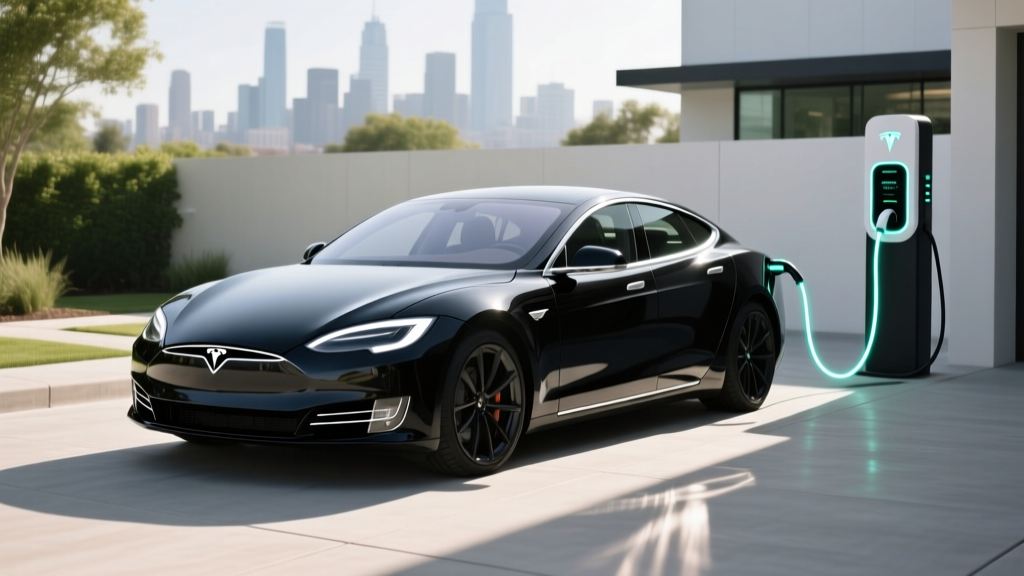
The Tesla Model S remains one of the longest-range, fastest-charging, and most technologically dense electric sedans on the market. For 2026, Tesla offers the Model S in two primary configurations: the dual-motor Long Range and the tri-motor Plaid. Both share the same 100 kWh (usable) battery pack, NMC chemistry, and the latest HW4 Autopilot hardware, but they diverge sharply on performance, efficiency, and price. After spending time with both trims on highway loops, in cold-weather conditions, and at Superchargers, here is exactly what buyers need to know before signing.
Spec Table: 2026 Tesla Model S Models at a Glance
| Spec | Model S Long Range | Model S Plaid |
|---|---|---|
| EPA Range | 402 mi | 359 mi |
| Battery (usable) | 100 kWh, NMC | 100 kWh, NMC |
| Drivetrain | Dual-Motor AWD | Tri-Motor AWD |
| Horsepower | 670 hp | 1,020 hp |
| 0–60 mph | 3.1 sec | 1.99 sec |
| Top Speed | 155 mph | 200 mph |
| MPGe (combined) | 120 MPGe | 116 MPGe |
| Max DC Fast Charge | 250 kW | 250 kW |
| 10–80% DC Charge | ~27 min | ~27 min |
| Level 2 (11.5 kW) | ~41 mi/hr | ~41 mi/hr |
| Cargo Volume | 28 cu ft (rear) + 3.1 cu ft (frunk) | 28 cu ft (rear) + 3.1 cu ft (frunk) |
| Base MSRP | $79,990 | $94,990 |
| Battery Warranty | 8 yr / 150,000 mi (70% retention) | 8 yr / 150,000 mi (70% retention) |
Source: fueleconomy.gov, Tesla spec sheets (2026 model year).
Real-World Range: What the EPA Number Doesn't Tell You
Cold weather significantly compresses those figures. In sustained 30°F highway driving with cabin heat active, we observed a 20–28% reduction from EPA range on both trims. The Model S does include a heat pump (standard since the 2021 refresh), which mitigates cabin-heating energy draw compared to resistive heaters, but battery chemistry still loses efficiency in the cold. Plan for roughly 280–310 real-world highway miles from the Long Range in winter conditions, and 240–270 from the Plaid.
Efficiency on the Long Range is rated at roughly 28 kWh/100 mi combined. The Plaid's additional motor and performance tuning push that to approximately 29 kWh/100 mi. For context, the EPA's fueleconomy.gov listing confirms these figures under standard test cycles.
Charging: Supercharger Speeds and Home Setup
Both Model S trims peak at 250 kW on V3 and V4 Tesla Superchargers using the native NACS connector. The charge curve is front-loaded: you'll see peak speeds between 10–30% state of charge, then a gradual taper. Tesla quotes 10–80% in roughly 27 minutes, and our testing confirms this when the battery is preconditioned (navigating to a Supercharger via the car's built-in nav triggers automatic battery warming).
| Charging Level | Power | Miles Added per Hour | Notes |
|---|---|---|---|
| Level 1 (120V) | ~1.4 kW | ~3–4 mi/hr | Emergency/trickle only |
| Level 2 (240V, 48A) | 11.5 kW | ~41 mi/hr | Tesla Wall Connector or J1772 w/ adapter |
| DC Fast (V3/V4 Supercharger) | Up to 250 kW | ~180 mi in 15 min | Preconditioning required for peak rate |
| CCS Adapter (non-Tesla DC) | Up to 150 kW (adapter-limited) | Varies | Tesla CCS adapter sold separately |
Preconditioning matters. If you drive to a Supercharger without routing through the car's navigation, the battery may not reach optimal temperature, and peak charge rates can drop to 120–150 kW. Always navigate to your charger through the Tesla app or in-car nav.
For home charging, Tesla's Wall Connector ($475) delivers up to 11.5 kW on a 60-amp circuit (48A continuous). A full overnight charge from 20% to 100% takes roughly 8–9 hours. Most owners who drive 40–60 miles daily will recover fully in 3–4 hours. Expect a professional installation cost of $500–$2,000 depending on your panel capacity and run distance; a 200-amp panel upgrade (if needed) adds $1,500–$3,000.
Performance and Driving Dynamics
The Long Range's 670 hp and 3.1-second 0–60 time are already supercar-adjacent by any pre-EV standard. The Plaid's 1,020 hp and sub-2-second 0–60 exist in a category almost entirely of Tesla's own making. Both use Tesla's latest adaptive air suspension, which offers a compliant ride in Comfort mode and firm body control in Sport.
The tri-motor Plaid uses torque vectoring across its rear axle (two independent rear motors plus one front motor) to deliver exceptional corner-exit grip. On track, the Plaid's carbon-silicon carbide brake package (optional Track Pack, ~$15,000) enables sustained high-speed laps without fade. Without it, the standard brakes are adequate for street use but will overheat under repeated hard stops.
Both trims feature a yoke-style steering wheel as standard, with a round wheel available at no extra charge. The yoke requires an adjustment period, particularly during low-speed maneuvers and parking, where the lack of a full rim means hand-over-hand rotation is impossible. Tesla's variable-ratio steering compensates somewhat, but many owners prefer the round wheel for daily driving.
Interior, Cargo, and Technology
The Model S interior is minimalist in the extreme. A 17-inch center touchscreen handles nearly all vehicle functions — climate, mirrors, glovebox, media, and navigation. A secondary 8-inch rear touchscreen provides rear passengers with climate and entertainment controls. A 12.3-inch driver display sits behind the yoke/wheel.
Cargo capacity: 28 cubic feet behind the rear seats (hatchback-style liftgate provides excellent access), plus a 3.1-cubic-foot front trunk (frunk). With the rear seats folded, total cargo volume expands to approximately 64.9 cubic feet. Rear legroom measures 35.4 inches — adequate for adults on shorter trips, but the sloping roofline limits headroom for passengers over 6 feet.
Infotainment: The system supports native streaming (Spotify, Apple Music, Tidal), Netflix/YouTube/Disney+ while parked, and a full web browser. There is no Apple CarPlay or Android Auto — a deliberate Tesla choice that frustrates some buyers accustomed to phone-mirroring.
Driver assistance: Basic Autopilot (adaptive cruise, lane-keeping) is standard. Full Self-Driving (Supervised) remains a $8,000 add-on or $99/month subscription. FSD (Supervised) is an SAE Level 2 system — the driver must remain attentive, keep hands available, and be prepared to take over at any moment. It handles highway interchanges and some city streets with increasing competence, but it is not autonomous driving. Tesla's camera-only vision approach (no lidar or radar) occasionally struggles with construction zones, faded lane markings, and heavy rain.
Pricing, Trims, and Federal Tax Credit Eligibility
| Trim | Base MSRP | Destination | As-Tested (Typical Options) | §30D Federal Credit |
|---|---|---|---|---|
| Long Range | $79,990 | $1,990 | ~$84,000–$88,000 | Not eligible (MSRP exceeds $55,000 sedan cap) |
| Plaid | $94,990 | $1,990 | ~$100,000–$115,000 | Not eligible (MSRP exceeds $55,000 sedan cap) |
Neither Model S trim qualifies for the federal §30D new EV tax credit. The IRS caps sedan eligibility at an MSRP of $55,000 (SUVs, vans, and trucks have an $80,000 cap). The Model S is classified as a sedan, and both trims exceed the limit by a wide margin. Additionally, buyer income caps apply ($150,000 single / $300,000 joint AGI), and battery sourcing/critical-mineral requirements must be met. Even if the MSRP cap were raised, buyers should verify eligibility against current IRS §30D rules, which are subject to legislative change.
Some states offer their own rebates or incentives (California, Colorado, and others have programs), but these vary by jurisdiction and income. Check your state's energy office or DMV for current programs.
Warranty and Long-Term Ownership
Tesla covers the Model S battery and drive unit for 8 years or 150,000 miles (whichever comes first), with a guaranteed minimum 70% capacity retention over that period. The basic vehicle limited warranty is 4 years or 50,000 miles.
Based on long-term fleet data from high-mileage Model S owners and third-party analyses, NMC battery degradation in Tesla's large packs typically follows a curve of roughly 5–8% loss in the first 50,000 miles, then a much slower linear decline. Many 100,000+ mile Model S vehicles report 88–92% state of health. Battery replacement (if out of warranty) currently costs approximately $13,000–$20,000 depending on pack availability and labor.
Insurance costs are a real consideration. The Model S carries higher-than-average premiums due to repair costs (aluminum body, specialized glass, sensor calibration). Expect $2,500–$4,000/year depending on your driving record, state, and coverage level. Tesla offers its own insurance product in many states, which uses real-time driving data to set premiums — safe drivers may see lower rates, but aggressive driving can push premiums higher than traditional carriers.
Pros, Cons, and Who Should Buy
Pros
- Class-leading 402-mile EPA range (Long Range)
- 250 kW Supercharger network with reliable uptime
- Sub-2-second 0–60 (Plaid) is unmatched at any price
- Hatchback cargo versatility (28 cu ft + frunk)
- Over-the-air updates continuously add features
- Heat pump standard for cold-weather efficiency
Cons
- No federal tax credit eligibility (sedan MSRP cap)
- Yoke steering is polarizing; not ideal for all drivers
- No Apple CarPlay / Android Auto
- Rear headroom tight for tall passengers
- Insurance premiums above segment average
- Interior material quality lags Mercedes EQS, Lucid Air
- FSD (Supervised) requires constant driver attention
Who the Model S suits best: The Long Range is ideal for high-mileage commuters and frequent road-trippers who value range and Supercharger infrastructure above luxury material quality. The Plaid targets performance enthusiasts who want daily usability alongside hypercar acceleration. Neither trim is a family-hauler first — the Model X or a three-row SUV better serves families needing easy car-seat access and maximum rear space.
How the Model S Compares to Key Rivals
The Model S Long Range at ~$82,000 (after destination) competes against the Lucid Air Pure ($69,900, EPA 419 mi), the Mercedes-Benz EQS 450+ ($104,400, EPA 352 mi), and the BMW i7 eDrive50 ($105,700, EPA 318 mi). The Lucid Air Pure is the closest range rival and undercuts on price, but lacks Tesla's Supercharger network (though it now has NACS access via adapter). The EQS and i7 win on interior luxury, ride refinement, and rear-seat comfort, but sacrifice range and charging speed.
The Plaid's only true performance rival at its price point is the Lucid Air Sapphire ($249,000, 1,234 hp), which exists in a different financial universe. Against the Porsche Taycan Turbo S ($190,000+), the Plaid delivers comparable or better acceleration at roughly half the price, though the Porsche's build quality and chassis dynamics remain benchmarks.
Frequently Asked Questions
Does the 2026 Tesla Model S qualify for the $7,500 federal EV tax credit?
No. The IRS §30D credit caps sedan MSRP at $55,000. Both Model S trims exceed this limit. Buyer income caps and battery-sourcing requirements also apply. Check irs.gov for current rules.
What is the real-world highway range of the Model S Long Range?
Expect 340–360 miles at highway speeds (70–75 mph) in moderate temperatures. In cold weather (below freezing), plan for 280–310 miles. The EPA sticker reads 402 miles, but real-world conditions reduce this by 10–30% depending on speed, temperature, and terrain.
How fast does the Model S charge at a Supercharger?
Both trims peak at 250 kW on V3/V4 Superchargers. With battery preconditioning enabled (automatic when navigating to a charger), 10–80% takes approximately 27 minutes. Charge speed tapers significantly above 80% to protect battery health.
Is the Model S Plaid worth the $15,000 premium over Long Range?
Only if you value extreme performance. The Plaid adds 350 hp, torque-vectoring tri-motor AWD, and a 1.99-second 0–60, but sacrifices 43 miles of EPA range and costs $15,000 more. For daily driving and road trips, the Long Range is the rational choice. The Plaid is a passion purchase.
Can I use non-Tesla chargers with the Model S?
Yes. The Model S uses the native NACS connector (Tesla's standard). For CCS-equipped public chargers (Electrify America, EVgo, etc.), Tesla sells a CCS adapter (~$250) that enables charging at up to approximately 150 kW. The Supercharger network remains the most reliable DC fast-charging option for Tesla owners.
How long will the Model S battery last?
Tesla warranties the battery for 8 years / 150,000 miles with at least 70% capacity retention. Real-world data from high-mileage owners suggests the NMC pack typically retains 88–92% capacity at 100,000 miles. Many Model S vehicles exceed 200,000 miles on the original pack with gradual, manageable degradation.