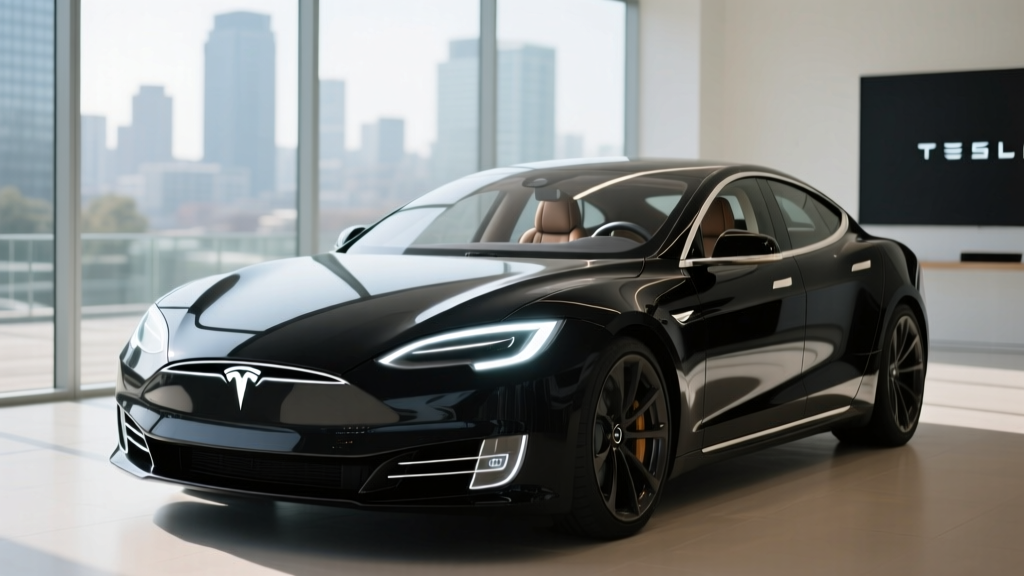
The Murdoch-Tesla Legacy Meets the 2026 Model S Plaid
James Murdoch's tenure on Tesla's board of directors (2012–2020) coincided with the automaker's transformation from a niche Roadster producer into the most valuable car company on Earth. His departure in 2020 — citing disagreements with CEO Elon Musk over corporate governance and public statements — marked the end of an era. But the product legacy of that boardroom period endures: the Tesla Model S, continuously refined since its 2012 debut, remains Tesla's flagship sedan and a benchmark against which every luxury EV is measured.
This review examines the 2026 Tesla Model S Plaid — the performance pinnacle of the lineup — through the lens of real-world ownership: EPA range versus highway reality, DC fast-charging curves, federal tax credit eligibility under current IRS §30D rules, and whether a $90,000+ luxury sedan still makes sense against newer competitors.
Range, Battery, and Efficiency: Real Numbers, Not Marketing
The 2026 Model S Long Range carries a 100 kWh battery pack (approximately 95 kWh usable) using NMC (nickel-manganese-cobalt) chemistry. The Plaid variant uses the same pack architecture. NMC offers higher energy density than LFP (lithium iron phosphate), which is why Tesla reserves it for its long-range and performance vehicles — LFP is reserved for the standard-range Model 3 and Model Y where cost matters more than maximum range.
- EPA Estimated Range: 396 miles (Long Range AWD: 402 miles)
- Real-World Highway (70-75 mph): ~320–340 miles in moderate temperatures
- Cold Weather (below 32°F): Expect 260–290 miles; NMC packs lose ~25–30% range in sustained freezing temps
- EPA Efficiency: 116 MPGe combined / 30 kWh per 100 miles
The Model S Plaid's tri-motor powertrain and 1,020 hp work against efficiency at sustained high speeds. If your commute is mostly city and suburban driving under 55 mph, you'll approach or exceed the EPA sticker. Sustained Interstate driving at 80 mph will pull that number down significantly.
| Spec | Long Range AWD | Plaid (Tri-Motor AWD) |
|---|---|---|
| EPA Range | 402 miles | 396 miles |
| Battery (Usable) | ~95 kWh (NMC) | ~95 kWh (NMC) |
| Drivetrain | Dual-Motor AWD | Tri-Motor AWD |
| Horsepower | 670 hp | 1,020 hp |
| 0–60 mph | 3.1 seconds | 1.99 seconds |
| Top Speed | 155 mph | 200 mph (with track package) |
| EPA Efficiency | 120 MPGe / 28 kWh/100mi | 116 MPGe / 30 kWh/100mi |
| Cargo (rear + frunk) | 28.0 cu ft (rear) + 2.8 cu ft (frunk) | 28.0 cu ft (rear) + 2.8 cu ft (frunk) |
| Rear Legroom | 35.4 inches | 35.4 inches |
| Curb Weight | 4,561 lbs | 4,766 lbs |
Charging Speed: DC Fast, Level 2, and the Curve Reality
The 2026 Model S supports the NACS (North American Charging Standard) connector natively — no adapter needed at Tesla Superchargers. The Long Range and Plaid models feature an 800-volt-capable architecture that enables peak DC fast-charging rates up to 250 kW at V3 Superchargers.
| Charging Level | Power / Rate | Speed (Miles Added) | Notes |
|---|---|---|---|
| Level 1 (120V) | ~1.4 kW | ~3–4 miles/hour | Emergency only; not practical for daily use |
| Level 2 (240V, 48A) | 11.5 kW | ~34 miles/hour | Full charge in ~9 hours; ideal for home overnight |
| DC Fast (V3 Supercharger) | Peak 250 kW | ~200 miles in 15 min | 10–80% in ~27 minutes; tapers sharply above 80% |
| DC Fast (CCS adapter) | Up to 250 kW | Varies by station | Tesla CCS adapter included; works on Electrify America, EVgo |
Charging curve reality: The 250 kW peak is sustained only between roughly 10% and 35% State of Charge (SoC). From 35–60%, expect ~180–200 kW. From 60–80%, the rate drops to ~100–130 kW. Above 80%, charging slows dramatically to protect battery longevity — plan your road-trip stops to charge to 80% and move on rather than waiting for a full top-off.
For home charging, Tesla's Wall Connector at 48 amps on a 240V/60A circuit delivers the full 11.5 kW. If your home has a standard 240V/50A dryer outlet, a Mobile Connector with the appropriate adapter will deliver ~9.6 kW (~28 miles/hour). A licensed electrician should evaluate your panel capacity before installation — a 200-amp service panel is typically required for a dedicated 60A circuit.
Performance: What 1,020 Horsepower Actually Feels Like
The Model S Plaid's tri-motor setup — one front motor and two rear motors — produces 1,020 horsepower and achieves a manufacturer-claimed 0–60 mph time of 1.99 seconds (with rollout subtracted, on a prepped surface). Independent testing by outlets like Motor Trend has verified sub-2.1-second runs on standard drag-strip surfaces.
Beyond straight-line speed, the Plaid's torque-vectoring rear axle provides exceptional corner-exit grip. The carbon-sleeve rotor motors can rev to 20,000 RPM, enabling the 200 mph top speed (requires the optional Track Package). The adaptive air suspension adjusts ride height and damping based on speed and road conditions.
For context: the Long Range AWD model's 670 hp and 3.1-second 0–60 is already supercar territory from just a few years ago. Unless you plan to visit drag strips or track days, the Long Range delivers 90% of the thrill at a significantly lower price.
Pricing, Trims, and Federal Tax Credit Eligibility
The 2026 Model S is offered in two trims. Pricing reflects Tesla's current MSRP before destination fees and any applicable incentives.
| Trim | Base MSRP | As-Tested (typical options) | Federal §30D Credit Eligible? |
|---|---|---|---|
| Long Range AWD | $74,990 | $79,000–$83,000 | No — exceeds $55,000 sedan MSRP cap |
| Plaid (Tri-Motor AWD) | $89,990 | $95,000–$105,000 | No — exceeds $55,000 sedan MSRP cap |
Critical tax credit note: Under IRS §30D rules, sedans must have an MSRP at or below $55,000 to qualify for the up-to-$7,500 federal EV tax credit. Both Model S trims far exceed this threshold. Additionally, buyer income caps apply ($150,000 single / $300,000 joint filers for modified AGI), and the vehicle must meet critical-mineral and battery-component sourcing requirements. The Model S does not qualify regardless of buyer income because of its MSRP.
For buyers seeking Tesla vehicles that may qualify for partial or full credits, the Model 3 and Model Y (which is classified as an SUV with an $80,000 MSRP cap) are the relevant options. Always verify current eligibility on the IRS clean vehicle credits page, as battery-sourcing rules shift annually.
Interior, Tech, and Daily Livability
The Model S interior has been substantially updated since the 2021 refresh. The cabin features a 17-inch center touchscreen, a 12.3-inch driver instrument cluster, and a rear-seat 8-inch display. The yoke steering wheel remains standard (a conventional round wheel is available at no extra charge).
Standout tech features:
- Tesla's infotainment system includes native navigation with real-time Supercharger routing, Netflix/YouTube streaming (while parked), and a built-in gaming platform
- Autopilot (Level 2 driver assistance) is standard; Full Self-Driving (Supervised) is an $8,000 option — note that FSD remains a Level 2 system requiring constant driver supervision and is not autonomous driving
- HEPA air filtration with Bioweapon Defense Mode
- Over-the-air (OTA) software updates continue to add features years after purchase
- Ventilated front seats, heated rear seats, and a panoramic glass roof are standard
Notable drawbacks:
- No Apple CarPlay or Android Auto — Tesla's proprietary system is the only option
- The yoke steering wheel requires an adjustment period and frustrates some drivers in low-speed maneuvering
- Panel-gap consistency has improved but still draws criticism versus German luxury competitors
- Rear-seat headroom is compromised by the sloping roofline for passengers over 6'2"
- No physical buttons for climate or audio — all controls are touchscreen-based
Cargo Space and Practicality
The Model S offers 28.0 cubic feet of rear cargo space (with seats up) and a 2.8-cubic-foot front trunk (frunk). With the rear seats folded, cargo capacity expands to approximately 64 cubic feet. For comparison, the Mercedes EQS sedan offers 22 cu ft of trunk space, making the Model S notably more practical for cargo.
Rear legroom measures 35.4 inches — adequate for adults but tighter than the Mercedes EQS (39.0 in) or BMW i7 (40.0 in). If rear-seat passenger comfort is a priority, the German competitors have an edge. The Model S prioritizes driving dynamics and performance over limousine-style rear accommodation.
Warranty and Long-Term Ownership
Tesla provides the following warranty coverage for the 2026 Model S:
- Basic Vehicle: 4 years / 50,000 miles
- Battery & Drive Unit: 8 years / 150,000 miles (whichever comes first), with a minimum 70% capacity retention guarantee
The 70% retention threshold is the warranty trigger — if your battery degrades below 70% of original capacity within the warranty period, Tesla will replace or refurbish it. Real-world data from high-mileage Tesla owners suggests NMC packs in the Model S typically retain 85–90% capacity after 100,000 miles, with degradation curves flattening significantly after the initial 20,000-mile break-in period.
According to NHTSA, the Model S has earned a 5-star overall safety rating. The IIHS has not recently tested the current-generation Model S, so buyers should rely primarily on NHTSA data and real-world crash reports.
Pros
- 402-mile EPA range (Long Range) remains class-leading for luxury sedans
- Supercharger network access — still the most reliable DC fast-charging ecosystem in the US
- Sub-2-second 0–60 in the Plaid is unmatched at any price point
- OTA updates keep the vehicle current years after purchase
- Generous cargo space for a sedan (28 cu ft + frunk)
- Strong resale value relative to German luxury EV competitors
Cons
- No federal tax credit eligibility due to MSRP cap
- No Apple CarPlay/Android Auto support
- Rear-seat space trails Mercedes EQS and BMW i7
- Touchscreen-only controls frustrate some drivers
- FSD (Supervised) is expensive ($8,000) and remains Level 2 — not autonomous
- Insurance costs are 30–50% higher than comparable gas sedans
Who Should Buy the 2026 Model S (and Who Shouldn't)
Buy the Model S Long Range if: You want a daily-drivable luxury sedan with genuine 350+ mile real-world range, access to the Supercharger network for road trips, and blistering performance without stepping into the Plaid's six-figure territory. It's ideal for tech-forward professionals who prioritize performance and charging infrastructure over traditional luxury cachet.
Buy the Model S Plaid if: You want the fastest production sedan on Earth and budget is not a primary constraint. Track-day enthusiasts and those who value exclusivity will find the tri-motor setup and carbon-ceramic braking options compelling.
Look elsewhere if: You need maximum rear-seat comfort (BMW i7, Mercedes EQS), want federal tax credit eligibility (Tesla Model Y, Hyundai Ioniq 5), prefer traditional luxury build quality and physical controls (Mercedes EQS, Porsche Taycan), or need a three-row family hauler (Tesla Model X, Kia EV9).
Frequently Asked Questions
What was James Murdoch's role at Tesla, and why did he leave?
James Murdoch served on Tesla's board of directors from 2012 to 2020. He resigned in 2020, citing concerns about the company's governance and CEO Elon Musk's public statements. His tenure overlapped with Tesla's growth from the original Model S launch through the Model 3 ramp-up — arguably the most consequential period in the company's history.
What is the real-world range of the 2026 Model S Plaid?
The EPA rates the Plaid at 396 miles. In real-world highway driving at 70–75 mph in moderate temperatures, expect 320–340 miles. In cold weather (below freezing), range drops to approximately 260–290 miles due to NMC chemistry sensitivity and increased cabin heating demands.
How fast does the Model S charge at home and on the road?
At home on a 240V/48A Level 2 charger, the Model S adds ~34 miles per hour (11.5 kW), fully charging overnight in about 9 hours. On a V3 Supercharger (DC fast), it peaks at 250 kW and charges from 10–80% in approximately 27 minutes, though the charge curve tapers significantly above 60% SoC.
Does the 2026 Model S qualify for the federal EV tax credit?
No. Under IRS §30D rules, sedans must have an MSRP at or below $55,000 to qualify. The Model S Long Range starts at $74,990 and the Plaid at $89,990 — both well above the cap. Buyer income limits and battery-sourcing requirements also apply, but the MSRP alone disqualifies both trims.
Is the Model S worth buying versus the Mercedes EQS or Porsche Taycan?
The Model S wins on range (402 mi vs. EQS's 350 mi), charging infrastructure (Supercharger access), and straight-line performance (Plaid's 1.99s 0–60). The Mercedes EQS and Porsche Taycan win on interior luxury, build quality, rear-seat comfort, and physical control interfaces. If driving dynamics and tech are your priorities, the Model S leads. If traditional luxury execution matters more, test-drive the German alternatives.
How long will the Model S battery last?
Tesla warranties the battery for 8 years / 150,000 miles with a 70% capacity retention guarantee. Real-world data from high-mileage owners suggests NMC packs retain 85–90% capacity at 100,000 miles. With proper care (avoiding frequent 100% charges, using Level 2 charging for daily use), the battery should outlast 200,000 miles with acceptable degradation.