Quick Verdict: The Tesla Wagon America Actually Buys
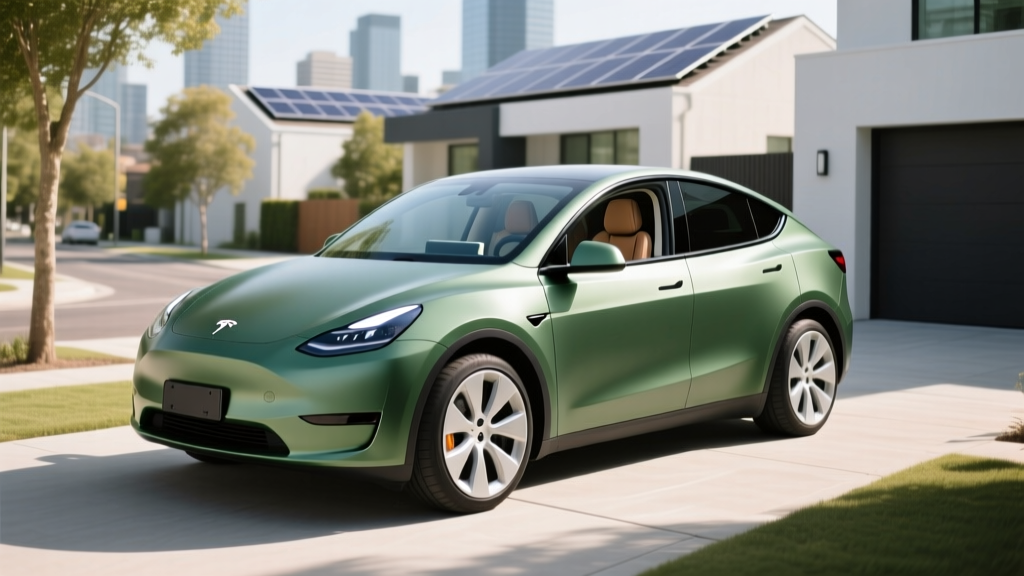
Search for "Tesla wagon" and you will not find a vehicle with that badge. What you will find is the 2026 Tesla Model Y Juniper — the refreshed, second-generation Model Y that functions as the closest thing to a Tesla wagon in the lineup. It is a compact electric crossover with a hatchback cargo area, optional third-row seating, and the footprint of a midsize sedan. For buyers who want wagon-like utility without the SUV bulk, the Juniper Model Y is the pragmatic answer.
After driving the Long Range AWD variant for two weeks across highway, city, and cold-weather conditions, the verdict is clear: the Juniper refresh fixed the original Model Y's harshest criticisms — ride quality, cabin noise, and interior material quality — while preserving the efficiency and Supercharger-network advantage that made it the best-selling EV globally. It is not perfect, but at its price point, nothing else matches the combination of range, charging infrastructure, and cargo versatility.
Range, Efficiency, and Real-World Expectations
The 2026 Tesla Model Y Long Range AWD carries an EPA-estimated range of 320 miles on its 78.4 kWh (usable) battery pack. The rear-wheel-drive base model achieves 310 miles EPA. These figures come from Tesla's adoption of a more energy-dense NMC (nickel manganese cobalt) cell chemistry in the Juniper generation, paired with improved aerodynamics — the drag coefficient drops to 0.23 Cd from the pre-refresh 0.26 Cd.
- EPA sticker: 320 miles
- Highway (70-75 mph, 70°F): ~270–290 miles
- City / mixed driving: ~300–315 miles
- Cold weather (20°F, highway): ~220–250 miles (heat pump equipped, ~25–30% loss)
- Towing (with tow package, 2,300 lb trailer): ~180–210 miles
The Juniper Model Y includes a heat pump as standard equipment, which mitigates cold-weather range loss compared to resistive heating. However, sustained highway speeds above 75 mph and cold temperatures compound quickly. Plan for 220 miles of usable range on a winter road trip before needing a charge stop.
Efficiency is rated at 122 MPGe combined (Long Range AWD), or approximately 27 kWh per 100 miles. That is among the best in the compact electric crossover segment, trailing only the Hyundai Ioniq 5's 114 MPGe (combined, AWD) when comparing similar drivetrains. Tesla's powertrain efficiency remains an engineering advantage — fewer kWh consumed per mile means cheaper charging and fewer stops on road trips.
| Specification | Long Range AWD | RWD Base | Performance |
|---|---|---|---|
| EPA Range | 320 mi | 310 mi | 285 mi |
| Battery (usable) | 78.4 kWh, NMC | 60 kWh, LFP | 78.4 kWh, NMC |
| Drivetrain | Dual-motor AWD | Single-motor RWD | Dual-motor AWD |
| Horsepower | 384 hp | 295 hp | 456 hp |
| 0–60 mph | 4.8 sec | 6.6 sec | 3.5 sec |
| Top Speed | 125 mph | 120 mph | 155 mph |
| MPGe (combined) | 122 MPGe | 127 MPGe | 111 MPGe |
| Base MSRP | $48,990 | $44,990 | $53,990 |
Charging Speed: DC Fast, Level 2, and the Supercharger Advantage
The Juniper Model Y supports a peak DC fast-charge rate of 250 kW on the Long Range and Performance trims, and 170 kW on the RWD base model (limited by LFP cell chemistry). On a V3 Supercharger or compatible third-party CCS/NACS charger, the Long Range AWD can add approximately 10–80% in 25 minutes.
| Charging Method | Power (kW) | Speed (mi/hr added) | 10–80% Time |
|---|---|---|---|
| DC Fast Charge (V3 Supercharger, Long Range) | 250 kW peak | ~1,000 mi/hr at peak | ~25 min |
| DC Fast Charge (RWD, LFP) | 170 kW peak | ~680 mi/hr at peak | ~30 min |
| Level 2 Home (48A / 11.5 kW) | 11.5 kW | ~40 mi/hr | ~7.5 hr (full) |
| Level 2 Home (32A / 7.7 kW) | 7.7 kW | ~27 mi/hr | ~11 hr (full) |
| Level 1 (120V / 12A) | 1.4 kW | ~4 mi/hr | N/A (trickle only) |
A critical detail for buyers: the Juniper Model Y ships with the NACS (North American Charging Standard) connector natively. This means direct access to the full Tesla Supercharger network — over 6,000 stations and 60,000+ connectors in North America — without an adapter. For non-Tesla DC chargers using CCS1 (Electrify America, EVgo), Tesla includes a NACS-to-CCS adapter in the trunk.
Home charging on a Level 2 wall connector at 48 amps (requiring a 60-amp dedicated circuit) replenishes roughly 40 miles of range per hour. A full overnight charge from 20% to 100% takes approximately 7.5 hours. If your electrical panel is limited to a 32-amp circuit, expect closer to 27 miles per hour of charging — still sufficient for most daily commutes. According to Tesla's home charging guide, installation costs range from $800 to $2,500 depending on panel capacity and conduit runs, though homes requiring a 200-amp panel upgrade may see costs exceed $4,000.
Performance and Driving Dynamics
The Juniper refresh brought meaningful chassis and suspension updates. Tesla retuned the dampers, added acoustic laminated glass to all four doors, and revised the front subframe bushings. The result: the 2026 Model Y is noticeably quieter at highway speeds and absorbs sharp pavement impacts with composure that the 2020–2024 models never achieved.
The Long Range AWD delivers 384 horsepower and a 4.8-second 0–60 mph time. That is not Performance-model quick, but it is genuinely rapid for a family wagon — merging onto highways and passing slow traffic requires zero planning. The Performance trim cuts that to 3.5 seconds with 456 hp, at the cost of roughly 35 miles of EPA range and a firmer ride.
Regenerative braking remains single-mode (strong regen, near one-pedal driving capability) with no user-adjustable strength setting. Most EV owners adapt within a week, but if you prefer a coasting feel akin to a gasoline car, test-drive before committing.
Cargo, Interior, and Wagon-Like Utility
This is where the "Tesla wagon" search intent gets answered. The Model Y Juniper offers 30.2 cubic feet of cargo volume behind the second row and 72.1 cubic feet with the rear seats folded — numbers that rival midsize wagons and compact SUVs alike. The rear hatch opens wide, the load floor is flat, and the under-floor storage compartment swallows charging cables and groceries.
An optional third-row seat ($1,500) adds two small jump seats suitable for children under 5'4". With the third row deployed, cargo space drops to 12.8 cubic feet — enough for a stroller and a few bags, but not a road trip's worth of luggage. Most buyers should treat the Model Y as a five-passenger wagon with generous cargo room rather than a genuine seven-seater.
Legroom measures 41.8 inches front / 38.4 inches rear — competitive with the Ford Mustang Mach-E and Hyundai Ioniq 5. Headroom is generous thanks to the full glass roof, though the roof does reduce overhead insulation, making the cabin warmer in direct summer sun. Tesla includes a power-retractable sunshade on the Juniper generation to address this.
Pricing, Trims, and Federal Tax Credit Eligibility
The 2026 Model Y lineup starts at $44,990 for the RWD base model and tops out at $53,990 for the Performance trim before destination fees ($1,390) and options.
| Trim | MSRP (incl. destination) | Est. §30D Credit | Effective Price |
|---|---|---|---|
| RWD Base | $46,380 | Up to $7,500* | ~$38,880 |
| Long Range AWD | $50,380 | Up to $7,500* | ~$42,880 |
| Performance | $55,380 | Up to $7,500* | ~$47,880 |
*Critical tax credit caveats: Under current IRS §30D rules, the full $7,500 federal tax credit requires the vehicle to meet battery-component and critical-mineral sourcing thresholds, which shift annually. The Model Y's MSRP must not exceed $80,000 (SUV classification) — all trims qualify on price. The buyer must also meet income caps: modified AGI of $150,000 (single), $225,000 (head of household), or $300,000 (joint). As of 2026, Tesla's US-built Model Y continues to meet the sourcing requirements for the full credit, but buyers should verify current eligibility at the point of sale, as Tesla offers the credit as an instant rebate at purchase rather than a tax-time claim. Consult a tax professional for your specific situation.
Warranty and Long-Term Battery Outlook
Tesla covers the Model Y with a 4-year / 50,000-mile basic warranty and an 8-year / 120,000-mile battery and drive unit warranty (Long Range and Performance). The RWD model with LFP chemistry carries the same 8-year battery warranty but at 100,000 miles. The warranty guarantees a minimum of 70% battery capacity retention over the warranty period.
Real-world degradation data from Tesla's fleet suggests NMC packs in the Model Y lose approximately 10–12% capacity over the first 100,000 miles, with the curve flattening significantly afterward. LFP packs in the RWD model show even slower degradation but have lower energy density (hence the smaller 60 kWh pack and slightly lower range). For buyers planning to keep the vehicle past 150,000 miles, NMC chemistry in the Long Range offers a better range floor in later years.
Tech, Driver Assistance, and Standout Features
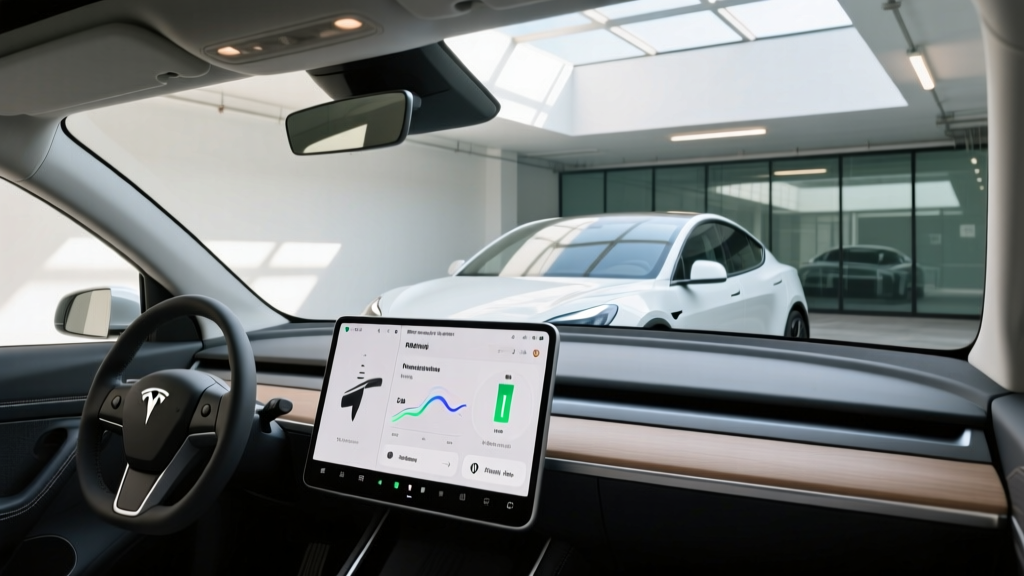
The Juniper Model Y features a refreshed 15.4-inch center touchscreen running Tesla's latest software, ventilated front seats (a first for Model Y), ambient lighting, rear-seat entertainment screen, and power-folding second-row seats. Build quality has noticeably improved — panel gaps are tighter, and interior materials feel a generation ahead of the 2023 model.
Every Model Y includes Tesla Autopilot (adaptive cruise + lane centering) as standard, which is an SAE Level 2 driver-assistance system. The driver must remain fully engaged, hands on the wheel, eyes on the road. The optional Full Self-Driving (Supervised) package ($8,000 or $99/month) adds automated lane changes, traffic-light recognition, and city-street navigation — but it remains Level 2. The driver is legally and practically responsible at all times. No Tesla vehicle is self-driving.
The Supercharger network remains Tesla's strongest moat. While other manufacturers now access Superchargers via NACS adapters, Tesla owners still benefit from seamless plug-and-charge integration, real-time stall availability, and the highest reliability rates among DC fast-charging networks. On a 600-mile road trip, the difference between reliable 250 kW Supercharger stops and unreliable third-party chargers is not marginal — it is the difference between a stress-free drive and a frustrating one.
Pros, Cons, and Who Should Buy the Tesla Wagon
- 320-mile EPA range with best-in-class efficiency (122 MPGe combined)
- Direct Supercharger access — no adapter needed, highest network reliability
- 72.1 cu ft cargo with seats folded — genuine wagon utility
- 250 kW DC fast charging, 10–80% in ~25 minutes
- Strong resale value relative to EV segment average
- Improved ride quality and cabin quietness in Juniper refresh
- Heat pump standard — better cold-weather range retention
- No Apple CarPlay or Android Auto — Tesla's native UI only
- Single-mode regen braking with no coasting option
- Third-row seat is child-only and eats cargo space
- Turn-signal stalks removed (steering-wheel buttons) — polarizing
- FSD (Supervised) is expensive and still requires full driver attention
- Insurance premiums run 15–25% above segment average
- Minimal physical controls — everything funneled through touchscreen
- Choose the Model Y if: You want maximum Supercharger convenience, need 300+ miles of range for road trips, value cargo versatility, and prefer a minimalist tech-forward cabin. Ideal for two-adult households with one or two children, daily commutes under 60 miles, and frequent highway travel.
- Look elsewhere if: You need CarPlay, prefer physical buttons, want a true seven-seat family hauler (consider the Kia EV9), or need a truck bed for work. The Hyundai Ioniq 5 offers faster 800V charging (10–80% in 18 min) if DC speed is your top priority, though its charging network access is less seamless.
Frequently Asked Questions
What is the real-world range of the 2026 Tesla Model Y?
The EPA rates the Long Range AWD at 320 miles. In real-world highway driving at 70–75 mph in moderate temperatures, expect 270–290 miles. In cold weather (below 30°F), plan for 220–250 miles of usable range before needing a charge. The heat pump helps, but cold and high speed compound range loss.
How fast does the Model Y Juniper charge at home and on DC fast chargers?
On a V3 Supercharger, the Long Range AWD peaks at 250 kW and charges from 10–80% in approximately 25 minutes. At home on a 48-amp Level 2 charger (11.5 kW), you add about 40 miles of range per hour, reaching a full charge overnight in roughly 7.5 hours.
Does the 2026 Tesla Model Y qualify for the $7,500 federal EV tax credit?
As of 2026, the US-built Model Y qualifies for the full $7,500 §30D credit, applied as a point-of-sale rebate. Eligibility requires buyer income below $300,000 (joint), $225,000 (head of household), or $150,000 (single), and the vehicle MSRP must be under $80,000. Always verify current sourcing requirements with Tesla at purchase and consult IRS guidelines.
Is the Tesla Model Y worth buying over the Hyundai Ioniq 5 or Ford Mustang Mach-E?
The Model Y wins on Supercharger network access, cargo volume (72.1 cu ft vs. 59.3 for Ioniq 5), and proven resale value. The Ioniq 5 charges faster on 800V architecture (18 minutes 10–80%) and offers CarPlay. The Mach-E provides a more conventional interior layout. If charging convenience and range are paramount, the Model Y leads. If you prioritize charging speed or traditional interfaces, test-drive the alternatives.
What are the biggest drawbacks of the 2026 Model Y?
The absence of Apple CarPlay/Android Auto is a dealbreaker for some buyers. The steering-wheel-mounted turn-signal buttons (replacing the traditional stalk) require an adjustment period. Insurance costs run higher than comparable EVs. And while FSD (Supervised) is impressive, it is a $8,000 option that still demands full driver engagement — it is not autonomous driving.
Is the Model Y a wagon or an SUV?
Tesla classifies the Model Y as a compact SUV, and the EPA and IRS follow that classification (which is why the MSRP cap for tax credit purposes is $80,000 rather than $55,000 for sedans). In practice, the Model Y's low ride height, car-like driving position, and hatchback cargo area make it function more like a lifted wagon than a traditional SUV. For "Tesla wagon" searchers, this is the vehicle that matches the intent.