What the 2027 Chevy Bolt Taillight Redesign Signals About GM's EV Strategy
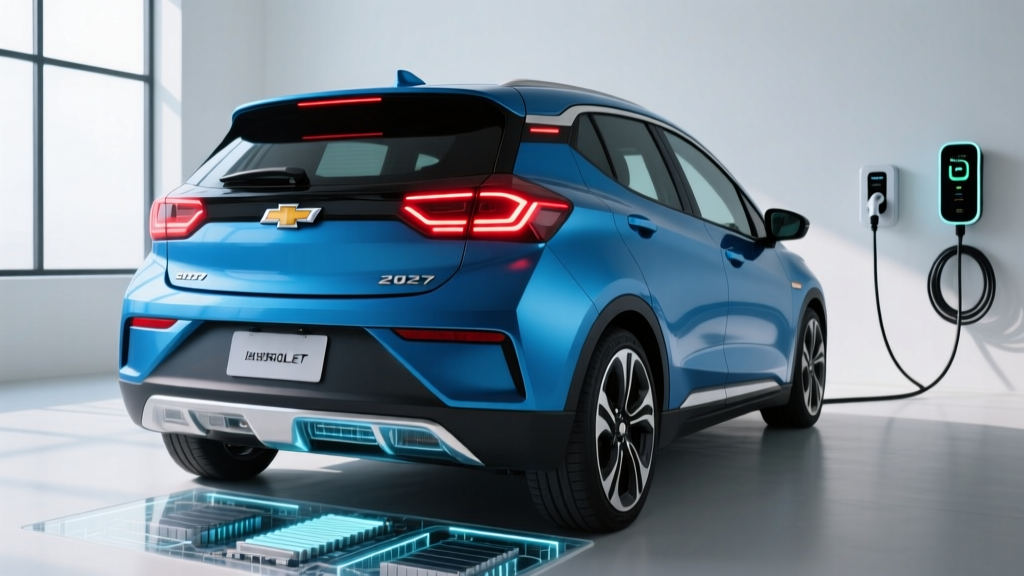
General Motors confirmed the Chevrolet Bolt's return on the Ultium platform, and spy shots of prototype mules reveal a comprehensive exterior overhaul — including a chevy bolt taillight redesign for 2027 that trades the outgoing model's vertical LED strips for a full-width light bar integrated into a reshaped liftgate. The new lighting signature aligns the Bolt with GM's evolving design language seen on the Equinox EV and Blazer EV, while aerodynamic refinements around the rear fascia aim to squeeze out additional highway range.
But the taillight redesign is surface-level compared to what's underneath. The next-generation Bolt moves from the aging BEV2 architecture to GM's Ultium platform, which promises a structural battery pack, faster DC charging, and an updated propulsion system. This preview covers everything confirmed and projected about the 2027 Bolt — range, charging, pricing, tax credit eligibility, and how it stacks up against the growing sub-$35,000 EV segment.
Projected Range, Battery Chemistry, and Efficiency
The outgoing Bolt EV (discontinued after 2023) delivered an EPA-estimated 259 miles from a 65 kWh NMC (nickel manganese cobalt) lithium-ion battery. The 2027 Bolt on Ultium is expected to offer a meaningful step up.
Real-World Expectation: Expect ~220–250 miles on sustained highway driving at 70+ mph; approximately 185–210 miles in cold weather (below 32°F) without aggressive preconditioning. City driving with regenerative braking will push closer to or slightly above the EPA sticker.
GM has not confirmed the exact battery capacity for the 2027 Bolt, but Ultium-based compact vehicles like the Equinox EV use packs in the 85 kWh (usable) range. Industry analysts project the Bolt will use a smaller Ultium-derived pack — likely in the 65–72 kWh usable range — to keep weight and cost down. The chemistry is expected to remain NMC, as GM reserves LFP (lithium iron phosphate) for future lower-cost applications and has not announced an LFP Bolt variant.
| Metric | Projected Value |
|---|---|
| Battery Capacity (Usable) | ~65–72 kWh (NMC) |
| EPA Range (Est.) | 265–290 mi |
| MPGe (Combined, Est.) | ~115–125 MPGe |
| Efficiency (kWh/100 mi) | ~27–30 kWh/100 mi |
| Drivetrain | FWD (single motor); AWD possible on RS trim |
Charging Speed: DC Fast Charge and Home Level 2
The outgoing Bolt's most criticized flaw was its sluggish DC fast-charging speed — capped at roughly 55 kW, making road-trip stops painfully long. The 2027 Ultium-based Bolt is expected to resolve this with a dramatically improved charge curve.
| Charging Level | Rate | Speed / Time |
|---|---|---|
| Level 1 (120V household) | ~1.4 kW | ~4–5 mi/hr |
| Level 2 (240V home/public) | ~11.5 kW (projected) | ~35–40 mi/hr |
| DC Fast Charge (peak) | ~150 kW (projected) | 10–80% in ~25–30 min |
The projected 150 kW peak DC rate represents a nearly 3× improvement over the previous generation. On the Ultium platform, GM has demonstrated sustained charge rates that hold well through the 20–60% state-of-charge window before tapering above 80%. With the Chevrolet EV ecosystem, Bolt owners will also have access to Tesla Supercharger stations via the included NACS adapter (or native NACS port, depending on production timing), vastly expanding the fast-charging network.
Home charging note: At 11.5 kW Level 2, a full 0–100% charge takes roughly 6.5–7 hours — easily achievable overnight on a dedicated 48-amp Level 2 circuit. Installation typically requires a 60-amp breaker and 240V outlet (NEMA 14-50 or hardwired). Budget $800–$2,500 for professional installation depending on panel proximity and local permit costs.
Performance and Powertrain
The outgoing Bolt made 200 horsepower and 266 lb-ft of torque from a single front-mounted motor — adequate for commuting but uninspiring. GM has hinted the Ultium Bolt will offer a more potent setup.
| Spec | FWD (Est.) | AWD/RS (Est.) |
|---|---|---|
| Horsepower | ~210–225 hp | ~280–300 hp |
| Torque | ~280 lb-ft | ~340 lb-ft |
| 0–60 mph | ~6.5 sec | ~5.5 sec |
| Drivetrain | Single-motor FWD | Dual-motor AWD |
Even the base FWD configuration should feel quicker than the outgoing car thanks to Ultium's lower center of gravity and revised suspension geometry. An AWD variant — potentially wearing the RS badge — would position the Bolt as a legitimate alternative to the Hyundai Kona Electric AWD and could steal buyers cross-shopping the base Tesla Model Y.
Exterior Design: The Taillight Redesign and Aerodynamic Gains
Prototype sightings confirm the chevy bolt taillight redesign for 2027 is more than cosmetic. The outgoing Bolt's tall, narrow LED taillights — a design holdover from the original 2017 model — are replaced by a slim, full-width LED bar that stretches across the liftgate. This design choice serves two purposes:
- Brand alignment: The light-bar motif matches the Equinox EV, Blazer EV, and Silverado EV, creating visual cohesion across Chevrolet's EV lineup.
- Aerodynamic efficiency: The reshaped rear fascia with an integrated spoiler lip reduces the turbulent wake zone behind the hatchback. Even a 2–3% reduction in drag coefficient (Cd) translates directly to 5–8 additional highway miles at 70 mph.
Up front, expect a sealed grille panel with a thin LED light signature, flush door handles, and underbody paneling — all contributing to a target Cd in the 0.28–0.30 range, a meaningful improvement over the previous generation's 0.308.
Interior, Cargo Space, and Technology
The 2027 Bolt is expected to grow slightly in overall length and wheelbase compared to the outgoing model, which measured 163.2 inches long with a 102.4-inch wheelbase. This should yield measurable interior gains.
| Dimension | Outgoing Bolt (2023) | 2027 Bolt (Projected) |
|---|---|---|
| Cargo (behind rear seats) | 16.6 cu ft | ~18–20 cu ft |
| Cargo (seats folded) | 56.2 cu ft | ~58–62 cu ft |
| Rear Legroom | 36.5 in | ~37–38 in |
| Front Headroom | 39.7 in | ~39–40 in |
Infotainment: Expect a 17.7-inch diagonal infotainment screen (matching the Equinox EV and Blazer EV) running Google Built-In with native Google Maps navigation, Google Assistant, and access to the Google Play Store. Wireless Apple CarPlay and Android Auto should be standard.
Driver Assistance: The 2027 Bolt will likely feature Chevy's Super Cruise or a more accessible version of GM's hands-free driving system on higher trims, along with a comprehensive suite of Level 2 ADAS features: adaptive cruise control, lane-keeping assist, automatic emergency braking, blind-spot monitoring, and rear cross-traffic alert.
Pricing, Trims, and Federal Tax Credit Eligibility
GM has stated the next-generation Bolt will be one of the most affordable Ultium-based EVs. Based on the outgoing Bolt's final pricing ($26,500–$39,700 across EV and EUV trims) and GM's stated commitment to affordability, here's a projected pricing breakdown:
| Trim | Est. MSRP | After §30D Credit (if eligible) |
|---|---|---|
| LT (FWD) | ~$28,000–$30,000 | ~$20,500–$22,500 |
| Premier (FWD) | ~$33,000–$35,000 | ~$25,500–$27,500 |
| RS (AWD, if offered) | ~$37,000–$40,000 | ~$29,500–$32,500 |
The federal EV tax credit under IRS §30D can provide up to $7,500 — but eligibility is not automatic. Key requirements for 2026–2027 purchases include:
- MSRP cap: The vehicle's MSRP must not exceed $55,000 for sedans/hatchbacks (the Bolt clears this easily).
- Buyer income cap: Modified adjusted gross income must be ≤ $150,000 (single), $225,000 (head of household), or $300,000 (joint).
- Battery sourcing: A percentage of critical minerals and battery components must be sourced from the U.S. or free-trade-agreement partners. These thresholds increase annually, and GM's Ultium supply chain has been actively reshoring — but final eligibility depends on the specific model year's compliance.
- Point-of-sale transfer: Buyers can elect to transfer the credit to the dealer at purchase, reducing the out-of-pocket price immediately rather than waiting for a tax refund.
Warranty and Long-Term Ownership
GM is expected to carry forward its competitive EV warranty coverage for the 2027 Bolt:
- Battery & propulsion warranty: 8 years / 100,000 miles (whichever comes first), covering defects and capacity loss below a specified threshold (typically 60–70% of original capacity).
- Bumper-to-bumper: 3 years / 36,000 miles.
- Powertrain (non-battery): 5 years / 60,000 miles.
Ultium packs have shown promising degradation data in early Equinox EV and Lyriq testing — averaging roughly 5–7% capacity loss over the first 50,000 miles in EPA testing cycles. The structural pack design also means individual module replacement may be more cost-effective than a full pack swap if a cell group fails out of warranty.
✅ Pros
- Projected sub-$30K base price — one of the cheapest new EVs in the U.S.
- Dramatically faster DC charging vs. the outgoing Bolt (~150 kW vs. 55 kW)
- NACS access opens the Tesla Supercharger network
- Full-width taillight redesign modernizes the exterior significantly
- Google Built-In infotainment with native navigation
- Strong federal tax credit eligibility (likely full $7,500)
- Competitive real-world range for the segment
❌ Cons
- Still not available — expected late 2026 or early 2027 production
- FWD base model may feel underwhelming vs. dual-motor competitors
- No confirmed LFP battery option (which would reduce cost and improve longevity)
- Super Cruise availability and pricing not yet confirmed
- Cargo space, while improved, still trails the Equinox EV and ID.4
- NMC chemistry degrades slightly faster than LFP over 10+ years
Who Should Wait for the 2027 Chevy Bolt?
Choose the 2027 Bolt if:
- You want the most affordable new long-range EV and can wait for production.
- Your daily commute is under 60 miles round-trip and you charge at home.
- You qualify for the full §30D tax credit and want a sub-$23K effective price.
- You value hatchback practicality over SUV styling.
Look elsewhere if:
- You need an EV today — the Equinox EV, Hyundai Kona Electric, and Tesla Model 3 are available now.
- You regularly tow — the Bolt is not rated for meaningful towing capacity.
- You need three rows or maximum cargo volume — consider the ID.4 or Equinox EV.
- You prefer LFP chemistry for maximum long-term battery longevity.
Frequently Asked Questions
What is the real-world range of the 2027 Chevy Bolt?
While the EPA estimate is projected at 265–290 miles, real-world highway driving at sustained speeds will likely yield 220–250 miles. Cold weather (below freezing) can reduce range by 20–30%, bringing effective range to roughly 185–210 miles without preconditioning. City driving with regenerative braking will be closer to the EPA sticker or slightly above.
How fast does the 2027 Bolt charge at home and on DC fast chargers?
At home on a Level 2 (240V) charger, the Bolt is projected to accept ~11.5 kW, adding roughly 35–40 miles of range per hour — a full charge overnight in about 6.5–7 hours. On DC fast chargers, the projected peak rate is ~150 kW, with a 10–80% charge in approximately 25–30 minutes. This is a massive improvement over the previous generation's 55 kW cap.
How much does the 2027 Chevy Bolt cost after tax credits?
The base LT trim is projected at $28,000–$30,000 MSRP. If you qualify for the full $7,500 federal tax credit under IRS §30D (income, MSRP, and battery-sourcing requirements met), the effective price drops to approximately $20,500–$22,500 — making it one of the least expensive new EVs on the U.S. market.
Is the 2027 Bolt worth waiting for vs. buying an EV now?
If you can wait until late 2026 or early 2027 and the projected specs hold, the Bolt offers exceptional value — especially at the tax-credit-adjusted price. However, if you need a vehicle immediately, the Hyundai Kona Electric ($32,975), Chevrolet Equinox EV (~$33,000), and Tesla Model 3 ($38,990) are all available now with competitive range and charging.
Does the 2027 Bolt qualify for the federal EV tax credit?
Based on projected MSRP (well under the $55,000 hatchback cap) and GM's ongoing supply-chain localization for Ultium batteries, the 2027 Bolt is a strong candidate for the full $7,500 credit. However, final eligibility depends on the buyer's income, the specific model year's battery-sourcing compliance, and any legislative changes. Always verify with the IRS and a qualified tax professional before purchasing.
What is the Chevy Bolt taillight redesign for 2027?
The 2027 Bolt replaces the outgoing model's vertical LED taillight strips with a full-width LED light bar integrated into a reshaped liftgate. This redesign aligns the Bolt with Chevrolet's current EV design language (Equinox EV, Blazer EV, Silverado EV) and incorporates aerodynamic refinements — including a subtle spoiler lip — to reduce drag and improve highway efficiency.