If you're researching Tesla ownership, one question dominates the decision: how long do Teslas take to charge? The answer depends entirely on which model you buy, what charger you're plugged into, and whether you're topping off at home or road-tripping on DC fast chargers. In this 2026 guide, we break down every current Tesla model's charging profile — from peak DC fast-charge kilowatt rates to home Level 2 speeds — alongside the real-world range, efficiency, and pricing data you need to make an informed purchase.
We'll cover the 2026 Tesla Model 3, Model Y (including the refreshed Juniper generation), Model S, Model X, and Cybertruck. For each, you'll find exact EPA range figures, battery chemistry details, 10–80% fast-charge times, and how federal tax credits under IRS §30D affect the bottom line.
Current Tesla Lineup at a Glance: Range, Battery & Efficiency
Before we dig into charging times, here's the foundational data. Battery capacity (measured in kilowatt-hours, or kWh) determines how much energy the car stores. Charging power (measured in kilowatts, or kW) determines how fast energy flows in. Confusing these two is the single most common mistake new EV buyers make — think of kWh as the size of your gas tank and kW as the flow rate of the pump.
| Model / Trim | Battery (kWh usable) | Chemistry | EPA Range (mi) | Efficiency (MPGe) | 0–60 mph | Drivetrain |
|---|---|---|---|---|---|---|
| Model 3 RWD | ~57.5 | LFP | 341 | 132 combined | 5.8 s | RWD |
| Model 3 Long Range AWD | ~75 | NMC | 363 | 134 combined | 4.2 s | Dual-motor AWD |
| Model 3 Performance | ~75 | NMC | 330 | 121 combined | 2.9 s | Dual-motor AWD |
| Model Y Long Range AWD | ~75 | NMC | 320 | 122 combined | 4.8 s | Dual-motor AWD |
| Model Y Performance | ~75 | NMC | 298 | 111 combined | 3.5 s | Dual-motor AWD |
| Model S Long Range | ~95 | NMC | 402 | 124 combined | 3.1 s | Dual-motor AWD |
| Model X Long Range | ~95 | NMC | 335 | 109 combined | 3.8 s | Dual-motor AWD |
| Cybertruck AWD | ~123 | NMC | 340 | 79 combined | 4.1 s | Tri-motor AWD |
Sources: fueleconomy.gov, Tesla spec sheets. Figures reflect 2025–2026 model year EPA data.
EPA range estimates assume a mix of city and highway driving at moderate temperatures. In real-world use, expect 10–15% range loss at sustained highway speeds (75+ mph) and 20–30% loss in freezing temperatures (below 32°F), especially for LFP-equipped RWD trims which lack a heat pump in some markets. A Model 3 Long Range rated at 363 miles EPA may deliver closer to 290–310 miles on a 70°F highway road trip, and 250–270 miles in 20°F winter conditions. Plan your charging stops around the real-world number, not the sticker.
Tesla Charging Times: DC Fast Charging Explained
This is the core of your question — how long do Teslas take to charge on the road? Tesla's Supercharger network remains the gold standard for DC fast charging reliability in the U.S., with V4 cabinets now delivering up to 325 kW to capable vehicles. But peak kW tells only part of the story. What matters more is the charge curve — how long the vehicle sustains high power before tapering off as the battery approaches full.
All Teslas taper charging speed significantly above 80% state of charge (SoC). This is why the industry standard metric is 10–80% charge time. Charging from 80–100% can take as long as the 10–80% session itself due to cell-balancing and thermal management. For road trips, charge to 80% and move on.
| Model / Trim | Peak DC Rate (kW) | 10–80% Time (min) | Miles Added in 15 min |
|---|---|---|---|
| Model 3 RWD (LFP) | 170 | ~25 | ~135 |
| Model 3 Long Range / Performance | 250 | ~18 | ~175 |
| Model Y Long Range / Performance | 250 | ~20 | ~162 |
| Model S Long Range | 250 | ~22 | ~200 |
| Model X Long Range | 250 | ~24 | ~175 |
| Cybertruck AWD | 250 (350 w/ V4) | ~18 | ~136 |
Key insight on the charge curve: A Model 3 Long Range may peak at 250 kW, but it only sustains that rate for roughly 40–50% of the session before tapering. The average power delivered across the full 10–80% session is closer to 150–170 kW. This is normal lithium-ion behavior — all EVs do it. Tesla's thermal preconditioning (which you activate by navigating to a Supercharger in the nav system) warms the battery to optimal temperature before you arrive, maximizing the time spent at peak rate.
Non-Tesla DC chargers (Electrify America, EVgo, ChargePoint): With the NACS (North American Charging Standard) connector now adopted industry-wide, Teslas charge at full speed on Superchargers. At third-party CCS chargers using an adapter, expect slightly reduced peak rates (typically 150–200 kW) depending on the station's cabinet capacity and cable cooling.
Home Charging: Level 2 Speeds for Every Tesla
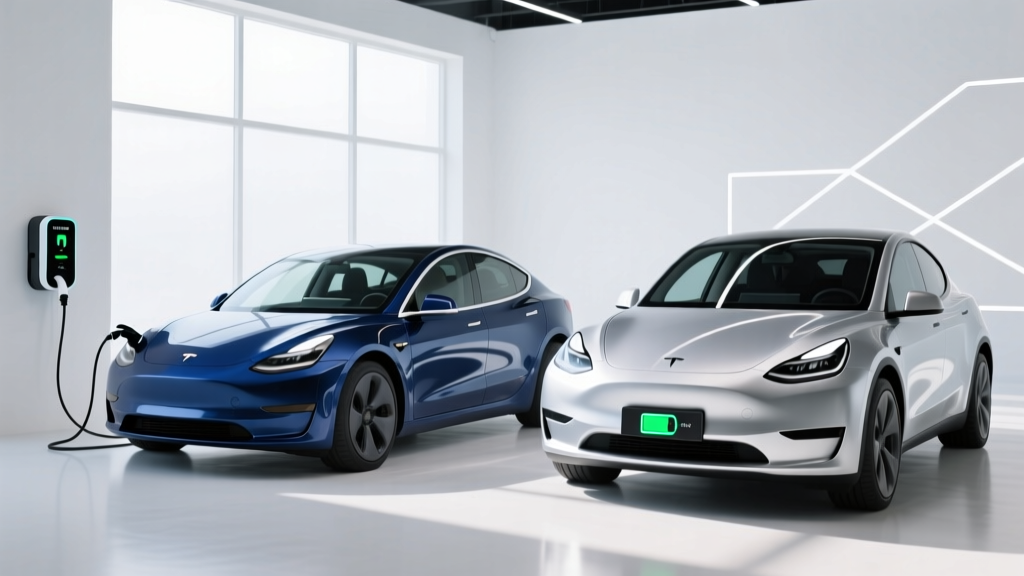
Most Tesla owners do 80–90% of their charging at home. The onboard charger converts AC power from your wall to DC power for the battery. Here's what each model accepts on Level 2:
| Model | Max AC Rate (kW) | Miles of Range per Hour | Full Charge Time (0–100%) |
|---|---|---|---|
| Model 3 (all trims) | 11.5 (48A) | ~44 | ~7–9 hours |
| Model Y (all trims) | 11.5 (48A) | ~37–42 | ~8–10 hours |
| Model S / Model X | 11.5 (48A) | ~34–41 | ~10–12 hours |
| Cybertruck | 11.5 (48A) | ~30–34 | ~12–14 hours |
What you need at home: To hit these maximum rates, you need a Tesla Wall Connector (or equivalent NACS Level 2 EVSE) on a 60-amp dedicated circuit, delivering 48 amps continuous. This requires a NEMA 14-60 outlet or hardwired installation by a licensed electrician. Most homes with a 200-amp electrical panel can accommodate this, but older homes with 100-amp panels may need a panel upgrade ($1,500–$3,000).
Level 1 (standard 120V outlet): Every Tesla includes a Mobile Connector. On a standard household outlet, expect roughly 3–5 miles of range per hour of charging. This is sufficient only for plug-in hybrids or very low-mileage commuters (under 30 miles/day). For real Tesla ownership, Level 2 is effectively mandatory.
Cost to charge at home: At the U.S. average residential electricity rate of ~$0.17/kWh (EIA, 2025), fully charging a Model 3 Long Range (75 kWh) costs approximately $12.75 — delivering 363 miles of range. That's roughly 3.5 cents per mile, compared to 12–15 cents per mile for a 28-MPG gas car at $3.50/gallon.
Tesla Pricing, Trims & Federal Tax Credit Eligibility
Tesla's pricing shifts frequently — sometimes multiple times per quarter. Below are base MSRPs as of early 2026, along with current federal tax credit status under IRS §30D.
| Model / Trim | Base MSRP | §30D Credit Eligible? | Effective Price (w/ credit) |
|---|---|---|---|
| Model 3 RWD | $44,130 | Up to $7,500 (point-of-sale) | ~$36,630 |
| Model 3 Long Range AWD | $50,630 | Up to $7,500 | ~$43,130 |
| Model 3 Performance | $54,630 | Up to $7,500 | ~$47,130 |
| Model Y Long Range AWD | $46,630 | Up to $7,500 | ~$39,130 |
| Model Y Performance | $51,630 | Up to $7,500 | ~$44,130 |
| Model S Long Range | $79,990 | No (exceeds MSRP cap) | $79,990 |
| Model X Long Range | $84,990 | No (exceeds MSRP cap) | $84,990 |
| Cybertruck AWD | $84,130 | No (exceeds truck MSRP cap) | $84,130 |
- MSRP caps: $55,000 for sedans (Model 3); $80,000 for SUVs, vans, and trucks (Model Y qualifies as SUV). Model S, X, and Cybertruck exceed their respective caps.
- Income caps: AGI must not exceed $150,000 (single), $225,000 (head of household), or $300,000 (joint filers).
- Battery sourcing: A percentage of critical minerals and battery components must be sourced from the U.S. or FTA partners — Tesla's U.S.-built batteries generally satisfy this, but verify at irs.gov before purchasing.
- Point-of-sale transfer: Eligible buyers can transfer the credit to the dealer at purchase, reducing the purchase price immediately rather than waiting for a tax refund.
Consult a tax professional for your specific situation. Rules subject to change per IRS guidance.
Performance, Cargo Space & Everyday Usability
Charging speed matters most when it's paired with a vehicle you actually enjoy living with. Here's how the current lineup stacks up on performance and practicality:
Model 3 (Highland refresh): The redesigned Model 3 delivers improved ride quality, ventilated seats, a rear touchscreen for passengers, and ambient lighting. Cargo space is 23 cu ft (trunk) plus a small frunk. Rear legroom is 35.3 inches — adequate for adults on shorter trips but tighter than the Model Y. The Performance trim adds adaptive dampers, a sport interior, and Track Mode.
Model Y (Juniper refresh): The 2025–2026 Model Y refresh brought a smoother ride, updated interior materials, a front light bar, and improved noise isolation. Cargo volume is a generous 72 cu ft with rear seats folded — among the best in its class. Rear legroom stretches to 40.5 inches. This is the default Tesla for families.
Model S / Model X: The legacy flagships still offer the most range (402 mi for Model S), the most power (up to 1,020 hp in Plaid trims), and the largest screens (17-inch center). Model X provides up to 88 cu ft of cargo with its distinctive falcon-wing doors. Both ride on air suspension and include a yoke steering option.
Cybertruck: The stainless-steel truck offers 340 miles of range (AWD), a 6.5-foot bed, 11,000-lb towing capacity, and a 48-volt electrical architecture. Rear legroom is 38.2 inches. The 123-kWh battery is the largest in Tesla's lineup, which is why its home charging takes the longest despite the same 11.5-kW onboard charger.
Driver Assistance: Autopilot, FSD & Safety
Tesla's Autopilot and Full Self-Driving (Supervised) are SAE Level 2 driver-assistance systems, not autonomous driving. The driver must remain fully engaged — hands on or near the wheel, eyes on the road — at all times. Tesla's camera-only "Tesla Vision" system provides adaptive cruise, lane centering, automatic lane changes, and traffic-light recognition, but it does not replace the driver. Only Level 4 services like Waymo operate without human supervision in geofenced areas.
All 2026 Teslas ship with Basic Autopilot (adaptive cruise + lane centering) standard. Enhanced Autopilot ($6,000) adds auto lane change, Navigate on Autopilot, and Smart Summon. Full Self-Driving (Supervised) remains available as a one-time purchase or subscription. Active safety features — automatic emergency braking, blind-spot monitoring, lane departure prevention — are standard and have contributed to strong NHTSA 5-star ratings across the lineup.
Warranty Coverage & Battery Longevity
Tesla's warranty structure is straightforward:
| Coverage | Term |
|---|---|
| Basic Vehicle | 4 years / 50,000 miles |
| Battery & Drive Unit (Model 3 RWD) | 8 years / 100,000 miles |
| Battery & Drive Unit (LR/Perf/S/X) | 8 years / 120,000 miles |
| Battery & Drive Unit (Cybertruck) | 8 years / 120,000 miles |
| Battery Capacity Retention Guarantee | ≥70% of original capacity during warranty period |
LFP vs. NMC longevity: The Model 3 RWD uses a lithium iron phosphate (LFP) battery, which trades lower energy density for significantly longer cycle life — typically 3,000+ full cycles before meaningful degradation, compared to ~1,000–1,500 for NMC. Tesla recommends charging LFP batteries to 100% at least once per week for accurate SoC calibration. NMC batteries (Model 3 LR, Model Y, S, X) benefit from daily charge limits of 80–90% for longevity, with 100% reserved for road trips. Real-world data from Tesla's fleet shows most NMC packs retain 88–92% capacity at 100,000 miles.
Pros, Cons & Who Should Buy a Tesla
Pros
- Supercharger network: 6,000+ U.S. stations with industry-leading uptime
- Best-in-class DC fast-charge speeds (18–25 min, 10–80%)
- Over-the-air updates continuously add features
- Strong resale value relative to EV market
- LFP option (Model 3 RWD) offers exceptional battery longevity
- Low per-mile operating cost (~3.5¢/mi at home)
Cons
- No Apple CarPlay / Android Auto — Tesla-only infotainment
- FSD (Supervised) remains Level 2 despite the name
- Model S/X/Cybertruck ineligible for federal tax credit (MSRP caps)
- Camera-only vision system can struggle in heavy rain/fog
- Service center wait times can be long in some markets
- Ride quality on base trims is firmer than some competitors
Who it's best for:
- Commuters & daily drivers: Model 3 RWD at ~$36,630 after credit — lowest total cost of ownership in the lineup.
- Families needing space: Model Y Long Range — 72 cu ft cargo, 320-mi range, ~$39,130 after credit.
- Road-trippers: Model 3 Long Range or Model S — maximum range and Supercharger access means fewer, shorter stops.
- Truck/utility buyers: Cybertruck if you need the bed and towing, but be prepared for the premium price and no tax credit.
Frequently Asked Questions
How long do Teslas take to charge at home overnight?
On a properly installed 48-amp Level 2 Wall Connector, a Model 3 or Model Y charges at roughly 11.5 kW, adding about 37–44 miles of range per hour. A full 0–100% charge takes 7–10 hours depending on battery size. Most owners plug in each evening and wake up fully charged — overnight home charging eliminates daily range concerns entirely.
Can I charge a Tesla at non-Tesla charging stations?
Yes. Tesla vehicles use the NACS connector natively. Most third-party networks (Electrify America, EVgo, ChargePoint) have added or are adding NACS cables. At CCS-only stations, you'll need a CCS-to-NACS adapter (sold by Tesla and third parties). Charge rates may be slightly lower than at Superchargers depending on the station's power output.
Does cold weather affect Tesla charging speed?
Significantly. A cold battery cannot accept charge as quickly. Tesla's built-in preconditioning (triggered when you navigate to a Supercharger) warms the battery before arrival, mitigating this effect. Without preconditioning, expect 10–80% charge times to increase by 30–50% in sub-freezing conditions. Always navigate to the charger rather than entering the address manually to enable preconditioning.
Is Tesla's FSD worth buying in 2026?
Full Self-Driving (Supervised) offers advanced lane changes, city-street navigation, and traffic-light response. However, it remains an SAE Level 2 system requiring constant driver supervision. Whether it's "worth it" depends on your commute and tolerance for monitoring an imperfect system. The monthly subscription option ($99/month) lets you try it without the full purchase commitment.
What's the cheapest way to own a Tesla in 2026?
The Model 3 RWD at $44,130 MSRP, minus up to $7,500 in federal tax credits (if you meet income and sourcing requirements), brings the effective price to approximately $36,630. Combined with ~$550/year in home electricity costs for 15,000 miles of driving and minimal maintenance (no oil changes, reduced brake wear from regen), the 5-year total cost of ownership is competitive with comparably priced gas sedans.