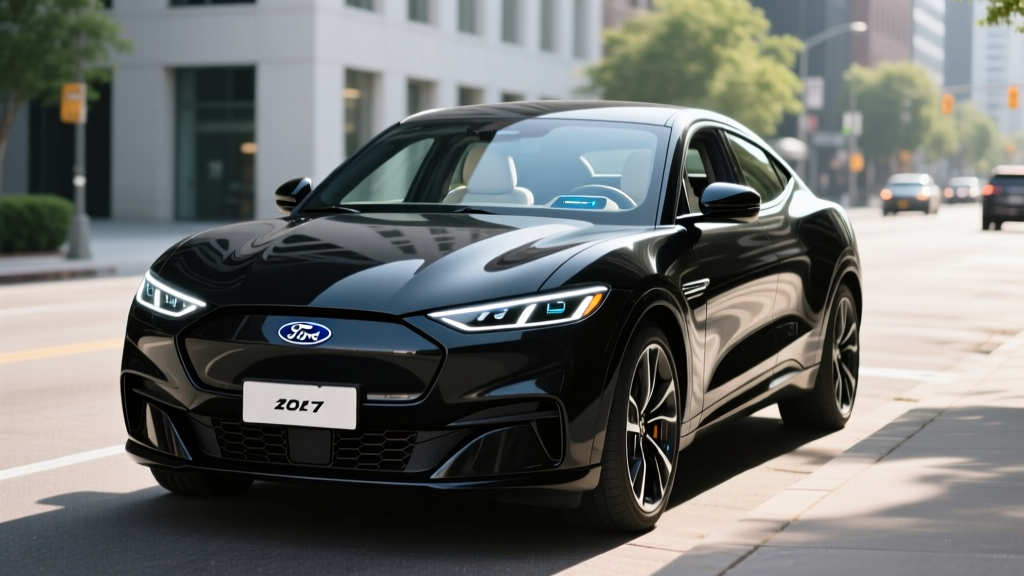
If you've been asking "is the Mustang Mach-E electric?" the short answer is yes — it's a battery-electric crossover with no gasoline engine. Ford introduced the Mach-E as a zero-tailpipe-emission alternative to the gas Mustang, and it's now in its fifth model year with meaningful updates to battery capacity and charging speed. Here's what you need to know before buying one in 2026.
Quick Verdict: The Mustang Mach-E Is a True BEV
The Ford Mustang Mach-E is a battery electric vehicle (BEV) — not a hybrid, not a plug-in hybrid. It runs entirely on electricity stored in a lithium-ion battery pack, with no internal combustion engine onboard. Ford offers it in rear-wheel drive (RWD) and all-wheel drive (AWD) configurations across multiple trims, with EPA-estimated ranges from roughly 250 to 320 miles depending on the battery and drivetrain you choose.
EPA stickers are a starting point, not a guarantee. In highway driving at 70+ mph, expect 10-15% less than the EPA figure. In cold weather (below 30°F), range can drop 20-30% due to battery chemistry and cabin heating demands. A 320-mile EPA Mach-E might deliver 260-280 miles on a warm highway run, or 220-250 miles in freezing conditions.
Battery, Range & Efficiency Specs
The 2026 Mustang Mach-E uses nickel-manganese-cobalt (NMC) lithium-ion battery chemistry, which offers higher energy density than LFP but requires more careful state-of-charge management for long-term longevity. Ford offers two battery sizes:
| Spec | Standard Range | Extended Range |
|---|---|---|
| Battery Capacity (usable) | 72 kWh | 91 kWh |
| Chemistry | NMC | NMC |
| EPA Range (RWD) | ~250 mi | ~320 mi |
| EPA Range (AWD) | ~230 mi | ~290 mi |
| Efficiency (MPGe combined) | 101 MPGe | 101 MPGe |
| kWh per 100 miles | 33 kWh | 33 kWh |
Efficiency is competitive with rivals like the Tesla Model Y and Hyundai Ioniq 5, though the Mach-E's aerodynamic profile and thermal management system help it maintain respectable efficiency at highway speeds. According to fueleconomy.gov, the Extended Range RWD model delivers 101 MPGe combined, which translates to roughly 33 kWh per 100 miles.
Charging Speed: DC Fast & Home Level 2
Charging speed is where the Mach-E has improved significantly since its 2021 launch. The 2026 model supports DC fast charging at up to 150 kW peak (Standard Range) or 170 kW peak (Extended Range) on CCS1 connectors. Ford has also added NACS compatibility via an adapter for Tesla Supercharger access.
| Charging Type | Standard Range | Extended Range |
|---|---|---|
| DC Fast Charge (peak kW) | 150 kW | 170 kW |
| 10-80% Time (DC fast) | ~33 minutes | ~36 minutes |
| Level 2 Home Charge (kW) | 10.5 kW | 10.5 kW |
| Miles Added per Hour (Level 2) | ~32 mi/hr | ~32 mi/hr |
Charging curve reality: Peak kW is not sustained kW. The Mach-E hits its maximum charge rate only between roughly 10-40% state of charge, then tapers progressively. From 80-100%, charging slows dramatically to protect the battery — this is normal for NMC chemistry and why most EV owners charge to 80% for daily use. For road trips, plan your stops around 10-80% sessions to minimize time at the charger.
Performance: 0-60, Horsepower & Drivetrain
The Mach-E delivers respectable performance across trims, with the GT variant offering sports-car acceleration. All models use a single-speed reduction gear (no multi-speed transmission) and regenerative braking with one-pedal driving capability.
| Trim | Drivetrain | Horsepower | 0-60 mph |
|---|---|---|---|
| Select (RWD) | Rear-Wheel Drive | 266 hp | 6.1 sec |
| Premium (AWD) | Dual-Motor AWD | 346 hp | 5.1 sec |
| GT (AWD) | Dual-Motor AWD | 480 hp | 3.5 sec |
The GT trim's 3.5-second 0-60 time puts it in Porsche Cayenne territory, though the standard RWD models prioritize efficiency over outright speed. All trims feel quick off the line thanks to instant electric torque, and the dual-motor AWD system provides confident traction in rain and light snow.
Pricing, Trims & Federal Tax Credit Eligibility
The 2026 Mustang Mach-E starts at $42,995 for the Select RWD with Standard Range battery. Fully loaded GT models can exceed $65,000. Federal tax credit eligibility under IRS §30D is complex and depends on multiple factors.
| Trim | Base MSRP | Tax Credit Eligible? |
|---|---|---|
| Select RWD (Std Range) | $42,995 | Potentially up to $7,500 |
| Premium AWD (Ext Range) | $52,995 | Potentially up to $7,500 |
| GT AWD (Ext Range) | $59,995 | Potentially up to $7,500 |
IRS §30D tax credit rules (2026): To qualify for the full $7,500 federal credit, you must meet income caps ($150k single / $300k joint AGI), the vehicle MSRP must be under $80,000 for SUVs (all Mach-E trims qualify), and the battery must meet critical-mineral and battery-component sourcing requirements that tighten annually. The credit is now available as a point-of-sale transfer, reducing your purchase price at the dealer rather than waiting for tax filing. Always verify current eligibility on irs.gov before purchasing, as sourcing rules change frequently.
Cargo Space, Interior & Tech Features
The Mach-E offers practical crossover utility with a hatchback cargo area and a small front trunk (frunk). Interior space is competitive with the Tesla Model Y, though rear legroom is slightly tighter than some rivals.
- Cargo volume (behind rear seats): 29.7 cu ft
- Cargo volume (rear seats folded): 59.7 cu ft
- Frunk (front trunk): 4.7 cu ft, drainable for ice/drinks
- Rear legroom: 38.9 inches
- Infotainment: 15.5-inch vertical touchscreen with SYNC 4A, wireless Apple CarPlay/Android Auto
- Driver assistance: Ford BlueCruise (SAE Level 2) with hands-free highway driving on pre-mapped divided roads
Warranty Coverage
Ford backs the Mach-E with competitive warranty coverage, particularly for the high-voltage battery — a key concern for EV buyers worried about long-term ownership costs.
- Battery warranty: 8 years / 100,000 miles (retains at least 70% capacity)
- Powertrain warranty: 5 years / 60,000 miles
- Bumper-to-bumper: 3 years / 36,000 miles
The 70% capacity retention threshold is industry-standard. If your battery degrades below that within the warranty period, Ford will repair or replace it. Real-world data from early Mach-E owners suggests typical degradation of 5-8% over the first 100,000 miles with proper charging habits (avoiding frequent 100% charges and DC fast charging when possible).
Pros & Cons: Is the Mach-E Worth Buying?
- Competitive 250-320 mi EPA range
- Strong acceleration, especially GT trim
- BlueCruise hands-free highway driving
- Practical cargo space with frunk
- Eligible for up to $7,500 federal tax credit
- Available NACS adapter for Tesla Supercharger access
- DC fast charging slower than Hyundai Ioniq 5 / Kia EV6
- Rear legroom tighter than Tesla Model Y
- Touchscreen-heavy interface, few physical buttons
- Higher starting price than some rivals
- NMC battery requires more careful SoC management than LFP
Who Should Buy the Mustang Mach-E?
The Mach-E suits buyers who want a practical electric crossover with strong performance credentials and don't mind paying a premium for the Ford badge. It's ideal for:
- Commuters: 250+ mile range handles most daily driving with home charging
- Small families: Adequate cargo and passenger space for two adults + two kids
- Performance enthusiasts: GT trim delivers sports-car acceleration with EV efficiency
- Road trippers: BlueCruise reduces fatigue on long highway stretches
If you prioritize the fastest possible DC charging, the Hyundai Ioniq 5 (800V architecture, 10-80% in ~18 min) is a better fit. If you need maximum cargo space, the Tesla Model Y offers more room. But if you want a well-rounded EV with Ford dealer support and competitive specs, the Mach-E is a solid choice.
FAQ: Mustang Mach-E Electric Questions
Is the Mustang Mach-E fully electric or a hybrid?
The Mustang Mach-E is a fully electric vehicle (BEV) with no gasoline engine. It is not a hybrid or plug-in hybrid.
What's the real-world range of the Mustang Mach-E?
EPA estimates range from 230-320 miles depending on battery size and drivetrain. Real-world highway driving typically delivers 10-15% less, and cold weather can reduce range by 20-30%.
How fast does the Mach-E charge at home?
With a Level 2 home charger (10.5 kW), you'll add roughly 32 miles of range per hour. A full charge from empty takes 8-9 hours for the Extended Range battery.
Does the Mustang Mach-E qualify for the $7,500 federal tax credit?
Most Mach-E trims are potentially eligible for up to $7,500 under IRS §30D, but eligibility depends on your income, the vehicle's MSRP (must be under $80k for SUVs), and battery sourcing requirements. Check irs.gov for current rules.
Is BlueCruise self-driving?
No. BlueCruise is an SAE Level 2 driver-assist system that allows hands-free driving on compatible highways, but you must remain attentive and ready to take over. It is not autonomous.
How long will the Mach-E battery last?
Ford warranties the battery for 8 years / 100,000 miles with at least 70% capacity retention. Real-world data suggests typical degradation of 5-8% over 100,000 miles with proper charging habits.