Quick Verdict: Is the Honda Prologue One-Pay Lease Worth It?
The Honda Prologue one-pay lease has become one of the most talked-about EV deals since Honda introduced aggressive single-payment lease structures on its first dedicated battery-electric SUV. For buyers who want to drive an electric midsize crossover without committing to long-term ownership or worrying about residual values, the Prologue's one-pay lease can effectively stack the federal EV tax credit (passed through as a lease credit under the commercial clean vehicle rules) with Honda's own incentives — bringing the effective monthly cost to a surprisingly competitive level.
But the lease math only matters if the Prologue itself is a capable daily EV. With an EPA-estimated 296 miles of range on front-wheel-drive trims, 150 kW DC fast charging, and a spacious cabin borrowed from the GM Ultium platform, the Prologue is a genuine contender in the midsize electric SUV segment. It's not the fastest-charging or longest-range option, but it hits the sweet spot for suburban commuters and families who want Honda's brand trust wrapped in a practical electric package.
2026 Honda Prologue: Full Spec Sheet
| Specification | FWD (EX/LX) | AWD (EX-L/Touring) |
|---|---|---|
| EPA Range | 296 miles | 281 miles |
| Battery (Usable) | 85 kWh (NMC) | 85 kWh (NMC) |
| Horsepower | 212 hp | 288 hp |
| Torque | 236 lb-ft | 332 lb-ft |
| 0–60 mph | ~7.6 sec | ~6.2 sec |
| Drivetrain | FWD (single motor) | AWD (dual motor) |
| Max DC Fast Charge | 150 kW | 150 kW |
| 10–80% DC Charge | ~32 min | ~32 min |
| Level 2 Home Charge | 11.5 kW (~34 mi/hr) | 11.5 kW (~34 mi/hr) |
| MPGe (Combined) | 99 MPGe | 95 MPGe |
| Efficiency | 34 kWh/100 mi | 35 kWh/100 mi |
| Cargo (rear seats up) | 25.2 cu ft | 25.2 cu ft |
| Cargo (rear seats folded) | 57.7 cu ft | 57.7 cu ft |
| Rear Legroom | 38.6 in | 38.6 in |
| Battery Warranty | 8 years / 100,000 miles | |
| Base MSRP (2026) | $47,400 (EX FWD) | $50,400 (EX-L AWD) |
Real-World Range: What to Actually Expect
Real-World Highway (70 mph, mild weather): ~245–265 miles
Real-World City/Suburban Mixed: ~270–290 miles
Cold Weather (below 32°F, highway): ~200–230 miles
The Prologue's 85 kWh NMC (nickel manganese cobalt) battery pack — sourced from GM's Ultium platform — delivers competitive EPA range numbers. But as with every EV, the sticker figure assumes a mix of city and highway driving at moderate temperatures.
In our experience with Ultium-based vehicles, highway driving at sustained 70–75 mph speeds typically reduces range by 10–15% versus the EPA combined estimate. The Prologue's relatively tall crossover profile and 4,500+ lb curb weight work against it on the highway compared to lower-slung sedans like the Hyundai Ioniq 6. In cold weather, expect a more significant 20–25% reduction due to battery resistance and cabin heating demands — though the Prologue does include a heat pump on Touring trims, which helps mitigate HVAC energy draw.
For most suburban commuters driving 30–50 miles round-trip, the Prologue easily covers a full work week on a single charge. Road trippers should plan stops every 220–240 miles in moderate weather to stay within a comfortable 10–80% charging window.
Charging Speed: DC Fast Charging and Home Setup
| Charging Level | Power | Speed | Typical Use |
|---|---|---|---|
| Level 1 (120V) | 1.4 kW | ~4 miles/hour | Emergency / overnight trickle |
| Level 2 (240V, 48A) | 11.5 kW | ~34 miles/hour | Home daily charging |
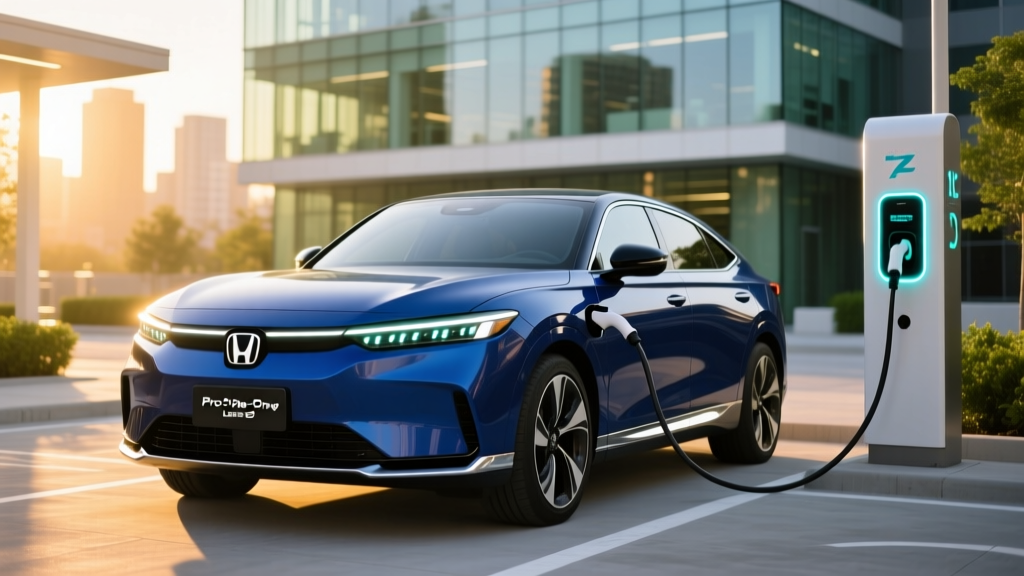
| DC Fast Charge | Peak 150 kW | 10–80% in ~32 min | Road trips / public stations |
The Prologue peaks at 150 kW on DC fast chargers, which is adequate but trails competitors like the Hyundai Ioniq 5 (240 kW peak) and Kia EV6 (240 kW). The 10–80% charge in roughly 32 minutes is respectable for the battery size, though you'll notice the charge curve taper significantly above 80% — a full 80–100% top-off can add another 20+ minutes due to cell-balancing protocols on the Ultium platform.
On a Level 2 home charger at 11.5 kW (48 amps on a 60-amp circuit), the Prologue recovers about 34 miles of range per hour. A full 10–100% charge takes roughly 8.5 hours, making overnight charging on a standard Level 2 setup practical. Honda includes a dual-level charge cord with the vehicle that handles both 120V and 240V outlets, though most owners will want a dedicated wall-mounted Level 2 unit for daily use.
The Prologue uses the standard CCS1 connector on 2024–2025 models. Honda has confirmed that 2026 and later Prologues will adopt the NACS (Tesla-style) connector, granting native access to Tesla Supercharger stations without an adapter. If you're considering a 2025 model year, factor in the need for a CCS-to-NACS adapter for Supercharger access — Honda has offered these at no cost to early Prologue buyers.
Understanding the One-Pay Lease Structure
The "one-pay lease" (also called a single-pay lease) is a lease structure where you pay the entire lease obligation upfront in one lump sum rather than making monthly payments. Here's why this matters for the Prologue specifically:
How the tax credit works in a lease: Under IRS §30D rules, the $7,500 federal EV tax credit is available to the buyer — but when you lease, the lessor (Honda Financial Services) is technically the buyer. Under the "commercial clean vehicle" loophole (IRC §45W), the lessor can claim the credit and pass it through as a capitalized-cost reduction. This has been a major advantage for EV lessees because it bypasses the MSRP caps, buyer income limits, and battery-sourcing requirements that apply to direct purchases under §30D.
One-pay advantage: By prepaying the lease in full, you eliminate the money factor (interest) charges entirely. Combined with the $7,500 lease credit and any Honda dealer incentives, the effective monthly cost on a 36-month one-pay Prologue lease can drop significantly below the equivalent purchase payment.
Example math (illustrative, varies by dealer and region):
| Line Item | Amount |
|---|---|
| 2026 Prologue EX FWD MSRP | $47,400 |
| Lease cash / capital cost reduction (from commercial credit) | -$7,500 |
| Honda incentive (varies by region) | -$1,000 to -$2,000 |
| Adjusted capitalized cost | ~$37,900–$38,900 |
| Residual value (36 months, ~55%) | ~$26,070 |
| Depreciation over 36 months | ~$11,830–$12,830 |
| Money factor (one-pay = $0 interest) | $0 |
| Effective monthly (36 months) | ~$329–$356/mo |
| Total one-pay amount (excl. tax, fees, registration) | ~$11,830–$12,830 + fees |
This is illustrative — actual terms depend on your dealer, credit tier, state taxes, and current Honda Financial programs. Always request a formal lease quote with all fees itemized before committing.
Pricing, Trims, and Tax Credit Eligibility
The 2026 Honda Prologue is available in three trims:
- EX (FWD): $47,400 — 19-inch wheels, 11.3-inch infotainment, wireless Apple CarPlay/Android Auto, heated front seats
- EX-L (FWD or AWD): $50,400–$53,400 — Leather seats, power liftgate, Bose premium audio, available AWD
- Touring (AWD): ~$57,900 — 21-inch wheels, panoramic roof, head-up display, heat pump, hands-free driving assist
If you purchase (not lease): The §30D tax credit for purchases requires meeting several criteria, including battery component and critical-mineral sourcing thresholds that phase in more strictly each year. The Prologue, built on GM's Ultium platform with battery cells manufactured in the U.S., has generally qualified for the full $7,500 credit when purchased — but the buyer must also meet income caps ($150K single / $300K joint modified AGI) and the vehicle must be under the MSRP cap ($80,000 for SUVs, which the Prologue clears). Always verify current-year eligibility on IRS.gov and consult a tax professional before relying on the credit.
If you lease: The commercial credit pass-through has fewer buyer-side restrictions, making the one-pay lease an attractive option for higher-income buyers who wouldn't qualify for the §30D purchase credit.
Interior, Tech, and Daily Livability
The Prologue's cabin is a pleasant surprise — it's spacious, well-organized, and feels more upscale than Honda's typical mainstream offerings. The 11.3-inch touchscreen runs a Google-built-in infotainment system (on Touring) or a Honda-developed interface (EX/EX-L) with wireless smartphone integration. Physical knobs for climate control are retained — a welcome choice for drivers who dislike menu-diving while driving.
Passenger space is generous, with 38.6 inches of rear legroom that outpaces the Toyota RAV4 and matches the Hyundai Ioniq 5. The flat floor (no transmission tunnel) makes the middle rear seat genuinely usable for adults on shorter trips.
Cargo volume stands at 25.2 cubic feet behind the rear seats and 57.7 cubic feet with them folded. There's no front trunk (frunk), which is a missed opportunity given the Ultium platform's packaging potential — Honda chose to use that space for HVAC and power electronics instead.
Driver assistance: The Prologue includes Honda Sensing with adaptive cruise control, lane-keeping assist, and automatic emergency braking. The Touring trim adds a hands-free driving system (SAE Level 2) for highway use — similar in concept to GM's Super Cruise but limited to fewer mapped roads. This is not self-driving; you must remain attentive and ready to take over at any time.
Pros and Cons
Pros
- Competitive 296-mile EPA range (FWD)
- Spacious cabin with excellent rear legroom
- Honda brand reliability and dealer network
- One-pay lease stacks tax credit without income caps
- Comfortable ride quality, quiet cabin
- Physical climate controls retained
Cons
- 150 kW peak DC charging trails Hyundai/Kia rivals
- No front trunk (frunk)
- AWD range drops to 281 miles
- Touring trim pushes $58K
- Infotainment less polished than competitors
- Regen braking not strong enough for true one-pedal driving
Who Should Lease the Prologue?
The Honda Prologue one-pay lease is best suited for:
- Suburban families who need a practical, spacious SUV for school runs, grocery trips, and weekend activities — and who can charge at home overnight.
- Brand-loyal Honda buyers who want to go electric without switching to a Tesla or unfamiliar brand, and who value their local Honda dealer for service.
- Higher-income buyers who don't qualify for the §30D purchase credit due to income caps but can access the $7,500 through the lease commercial-credit pass-through.
- Commitment-wary EV newcomers who want to experience electric driving for 36 months without worrying about long-term battery depreciation or resale value.
It's less ideal for road-trip-heavy drivers (the 150 kW charge rate means longer stops than an Ioniq 5 or EV6) or anyone who needs towing capability (the Prologue is rated for only 1,500 lbs).
Frequently Asked Questions
What is the real-world range of the Honda Prologue?
The EPA rates the FWD Prologue at 296 miles and the AWD at 281 miles. In real-world highway driving at 70 mph, expect roughly 245–265 miles (FWD). In cold weather below freezing, plan for 200–230 miles of usable range before needing to charge.
How fast does the Prologue charge at home and on road trips?
At home on a Level 2 charger (11.5 kW), the Prologue adds about 34 miles of range per hour — a full overnight charge is easy. On DC fast chargers, it peaks at 150 kW and charges from 10–80% in approximately 32 minutes. Expect longer times above 80% due to charge-curve tapering.
How much does the Honda Prologue cost after tax credits?
Through a one-pay lease, the $7,500 commercial clean vehicle credit is typically passed through as a cap-cost reduction, bringing the effective cost of a Prologue EX FWD to roughly $329–$356/month equivalent on a 36-month term (before tax, fees, and registration). Purchase pricing after the §30D credit starts around $39,900 for eligible buyers. Verify current eligibility at fueleconomy.gov.
Does the Honda Prologue qualify for the $7,500 federal EV tax credit?
For purchases, the Prologue has generally qualified for the full $7,500 under §30D thanks to U.S.-manufactured Ultium battery cells — but buyer income caps ($300K joint / $150K single) and MSRP caps ($80K for SUVs) apply. For leases, the commercial credit pass-through typically has no buyer income restriction. Always confirm current-year rules with the IRS and your tax advisor.
Is the Honda Prologue worth it vs. the Hyundai Ioniq 5 or Kia EV6?
The Prologue wins on cabin space, brand familiarity, and one-pay lease value. The Ioniq 5 and EV6 win on charging speed (240 kW vs. 150 kW), slightly sportier driving dynamics, and available frunk. If fast road-trip charging is a priority, look at the Korean options. If you want a comfortable, spacious family hauler with a strong lease deal, the Prologue is compelling.
What happens at the end of a one-pay Prologue lease?
At lease-end, you return the vehicle to the dealer (or exercise the purchase option at the predetermined residual price). Since you paid the full lease upfront, you owe nothing further beyond any excess mileage or wear charges. You don't receive any refund for unused lease time — so drive it for the full term.