The Disadvantages of Electric Cars, Summarized
Electric cars still carry real trade-offs in 2026, even as the tech has matured. The core disadvantages are: higher upfront purchase price (average EV transaction price ~$53,000 vs. ~$47,000 for gas vehicles), charging time and access gaps (10-80% DC fast charges still take 18-40 minutes; rural corridors remain underserved), cold-weather range loss of 20-40%, higher insurance premiums (typically 15-25% more than gas equivalents), and apartment/renter charging barriers. Battery replacement outside warranty remains a $10,000-$20,000 exposure. On the flip side, fuel and maintenance savings of $1,200-$2,000/year often offset these within 4-7 years for home-charging owners. The right choice depends on your housing, climate, mileage, and budget — not ideology.
Upfront Cost: The Sticker Shock Is Real (But Narrowing)
The biggest single disadvantage of electric cars is still the purchase price. While sub-$35,000 models like the Chevrolet Equinox EV and Nissan Leaf exist, most mainstream EVs cluster between $42,000 and $60,000 before incentives. A comparably equipped gas compact SUV — say, a Toyota RAV4 XLE at ~$33,000 — undercuts an IONIQ 5 SEL (~$47,000) by roughly $14,000.
The federal §30D tax credit can knock up to $7,500 off qualifying new EVs, but IRS rules impose strict limits:
- Buyer AGI caps: $150,000 single / $300,000 joint
- MSRP caps: $55,000 for sedans, $80,000 for SUVs/pickups
- Battery critical-mineral and component sourcing requirements (tightening annually through 2030)
- Point-of-sale transfer available, so you don't need to wait until tax season
Many popular trims exceed the MSRP cap, and sourcing rules have disqualified several 2025-2026 models that previously qualified. Always verify eligibility on fueleconomy.gov for the exact VIN before signing.
Charging Time and Access: Where Gas Still Wins
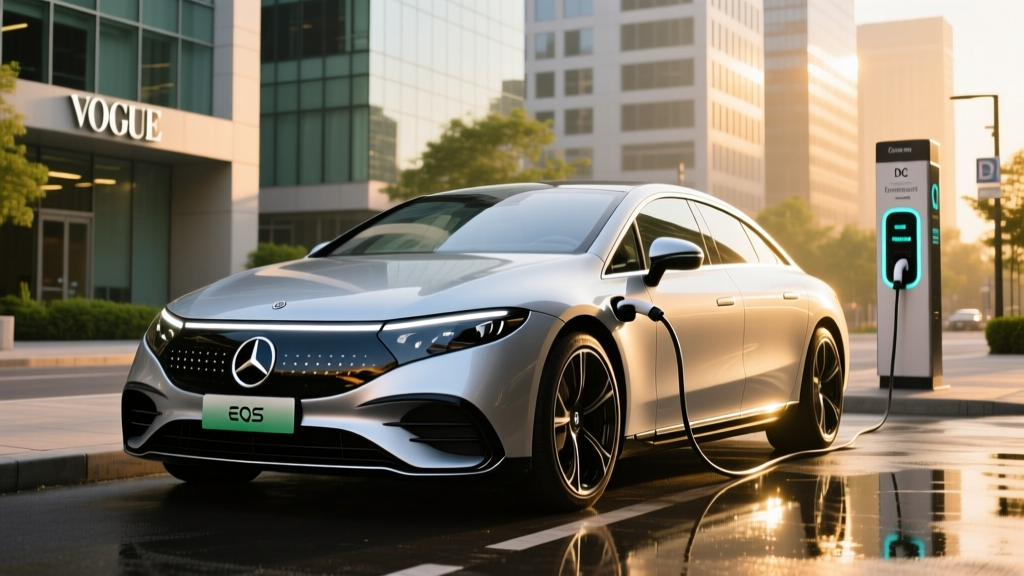
Refueling a gas car takes 4 minutes. Even the fastest 2026 EVs need 18-25 minutes to go from 10% to 80% on a 350 kW charger — and that's only if the battery is preconditioned, the ambient temperature is moderate, and the station actually delivers its rated power. Real-world DC fast charging sessions often stretch to 30-45 minutes when you include pull-in, authentication, and the slow taper above 80%.
| Metric | Gas Car (2026 avg) | Battery EV (2026 mainstream) |
|---|---|---|
| Refuel/recharge time (empty to ~80%) | 4-5 minutes | 18-40 minutes DC fast |
| Station density (US) | ~145,000 gas stations | ~75,000 public charging ports (DC+L2) |
| Range per fill/charge (EPA) | 350-450 miles | 240-340 miles typical |
| Highway range real-world | ~95% of sticker | ~80-85% of EPA sticker |
| Cold-weather range (20°F) | ~90% of sticker | ~60-80% of EPA sticker |
| Cost per mile (fuel/energy) | ~$0.13-$0.16 | ~$0.04 home / $0.12-$0.18 public DC |
Charging deserts persist on I-10 through West Texas, I-80 across Wyoming, and much of rural Appalachia. If your regular routes include these corridors, plan around Electrify America, Tesla Supercharger (now open to NACS-equipped non-Teslas), and EVgo spacing — typically 60-120 miles between reliable DC hubs in these regions.
Cold Weather and Real-World Range Loss
The EPA range sticker is measured on a dynamometer in mild conditions. In real-world highway driving at 70 mph, expect 80-85% of that number. In sub-freezing weather, losses compound dramatically.
Example: Hyundai IONIQ 5 Long Range AWD (84 kWh battery, NMC)
- EPA range: 290 miles
- 70°F highway (70 mph): ~245 miles
- 32°F highway: ~205 miles
- 10°F with cabin heat: ~170-185 miles
Cold saps range for three reasons: battery chemistry slows (higher internal resistance), cabin heating draws 2-5 kW continuously, and regenerative braking is limited until the pack warms. Heat pumps — standard on Tesla, Hyundai/Kia, and most 2026 EVs — recover 30-50% of that heating penalty versus resistive heaters, but don't eliminate it.
If you live in Minnesota, Maine, or the Mountain West and regularly drive 200+ miles in winter, this is a genuine operational disadvantage. Solutions include preconditioning while plugged in, choosing a trim with 320+ miles EPA, and budgeting an extra charging stop.
The True 5-Year Cost: EV vs. Gas vs. Hybrid
Where EVs claw back ground is total cost of ownership. Let's compare a 2026 Tesla Model Y Long Range AWD, a Toyota RAV4 gas, and a RAV4 Hybrid over 5 years and 75,000 miles, assuming home charging at $0.14/kWh and gas at $3.40/gallon.
| Cost Category | Tesla Model Y LR | RAV4 Gas AWD | RAV4 Hybrid AWD |
|---|---|---|---|
| MSRP (after §30D credit if eligible) | ~$42,000 | ~$34,000 | ~$36,500 |
| Fuel/energy (75k mi) | $2,800 | $9,200 | $6,400 |
| Maintenance (5 yr) | $1,400 | $3,600 | $3,400 |
| Insurance (5 yr avg) | $10,500 | $7,200 | $7,500 |
| Depreciation (est. 5 yr) | $19,000 | $14,000 | $15,000 |
| Total 5-year cost | $75,700 | $68,000 | $68,800 |
The EV wins on fuel and maintenance but loses on insurance and depreciation. If you qualify for the full $7,500 credit and drive 15,000+ miles/year, the math tilts EV-favorable. If you drive under 10,000 miles/year, park on the street (no home charging), or live in a state with high electricity rates, the hybrid often wins on pure economics.
Sources: fueleconomy.gov for MPGe and kWh/100mi; III.org for insurance averages.
Insurance, Repairs, and the Battery Sword of Damocles
EV insurance premiums run 15-25% higher than gas equivalents. The reasons are actuarial, not conspiratorial: EVs have higher repair costs after collisions (specialized high-voltage safety procedures, expensive sensor recalibration, and battery-pack damage that often totals the vehicle at relatively low impact speeds).
Out-of-warranty battery replacement is the specter that haunts used-EV buyers. In 2026, a new pack runs roughly:
- Nissan Leaf (40-60 kWh): $8,000-$12,000
- Tesla Model 3/Y (75-82 kWh): $12,000-$16,000
- Ford F-150 Lightning / large packs (100+ kWh): $18,000-$25,000
Federally mandated battery warranties cover 8 years/100,000 miles minimum, with most manufacturers warranting 70% capacity retention over that term. Real-world degradation data from Geotab's fleet studies shows average annual loss of 1.5-2.5%, meaning most packs retain 85-90% after 8 years. Catastrophic failures outside warranty are rare but financially devastating — which is why extended battery warranties or certified-pre-owned programs matter on used purchases.
Apartment Dwellers, Renters, and the Home-Charging Gap
Home Level 2 charging is the single biggest quality-of-life advantage of EV ownership — and the single biggest barrier if you can't install it. Roughly 35% of US households rent or live in multi-unit buildings without dedicated parking. For these owners, EV life means:
- Reliance on public Level 2 (3-19 kW) or DC fast charging (50-350 kW)
- Paying 2-4x the per-kWh cost of home electricity
- Time cost: 30-60 minutes of weekly charging errands
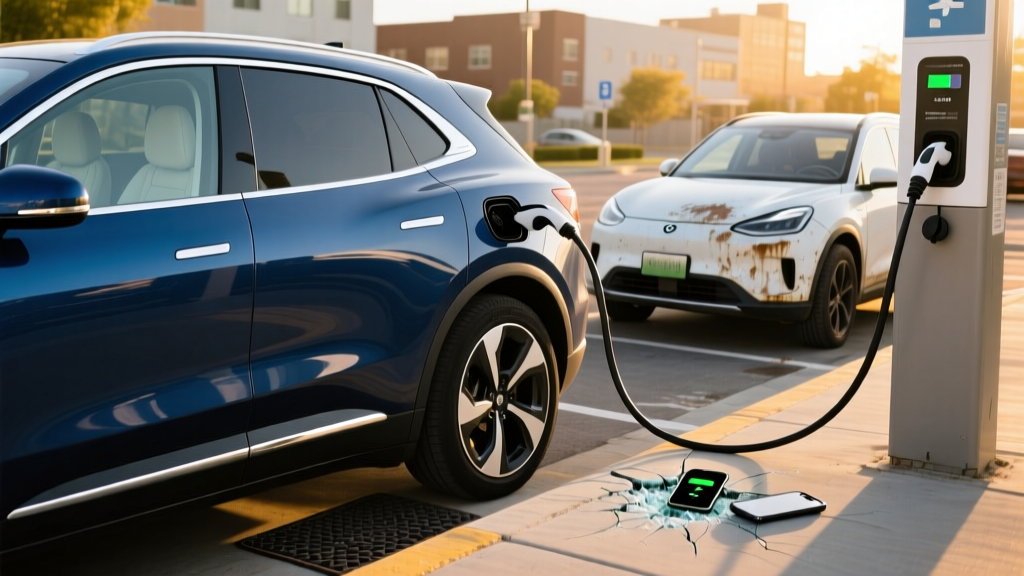
- Broken-station frustration — 2025 studies still show 15-25% downtime on some non-Tesla networks
If you can't charge at home overnight, a plug-in hybrid (PHEV) with 30-40 miles of electric range plus a gas tank is usually the more pragmatic choice. You'll electrify daily commutes without range or charging-access risk.
Decision Framework: Is an EV Actually Right for You?
Choose a BEV (full electric) if:
- You can install Level 2 at home or have reliable workplace charging
- Your daily driving is under 200 miles round-trip
- You qualify for the §30D credit or are buying used with the $4,000 used-EV credit
- You live in a moderate climate, or accept winter range loss with route planning
- You want the lowest per-mile operating cost and minimal maintenance
Choose a PHEV (plug-in hybrid) if:
- You rent or can't install home charging
- You regularly take 300+ mile road trips and don't want to plan around chargers
- Your daily commute is 20-40 miles (covered on electric) but weekends vary
- You live in extreme cold and want gas backup
Stick with a conventional hybrid (HEV) if:
- You have zero charging access anywhere
- You drive under 10,000 miles/year (EV fuel savings won't offset higher purchase price)
- You're on a strict sub-$35,000 budget
Wait on EVs if:
- You tow heavy trailers frequently (EV range drops 40-60% under tow)
- Your routes routinely cross known charging deserts
- You plan to keep the vehicle 12+ years and worry about long-term battery economics
Common Misconceptions, Corrected
| Myth | Fact |
|---|---|
| "EV batteries need replacing every 5 years" | Modern NMC and LFP packs routinely last 15+ years with 80%+ capacity retention; 8-yr/100k-mi warranties are standard. |
| "EVs are worse for the environment because of mining" | Lifecycle analyses (ICCT, Union of Concerned Scientists) show EVs break even on emissions within 1-2 years of driving in most US grids, even accounting for battery manufacturing. |
| "The grid can't handle mass EV adoption" | Most charging happens overnight during off-peak hours; utilities are upgrading distribution, and V2G/V2H tech is emerging as a grid asset. |
| "EVs are slow in the cold" | Performance is fine; range is what drops. Preconditioning while plugged in mitigates most of the issue. |
| "Charging an EV takes hours" | Level 2 home charging adds 25-45 miles per hour — plenty for overnight. DC fast charging adds 150-300 miles in 20-30 minutes. |
What First-Time EV Buyers Must Know Before Signing
- Verify §30D eligibility on the exact VIN — sourcing rules change annually, and a model that qualified in 2025 may not in 2026.
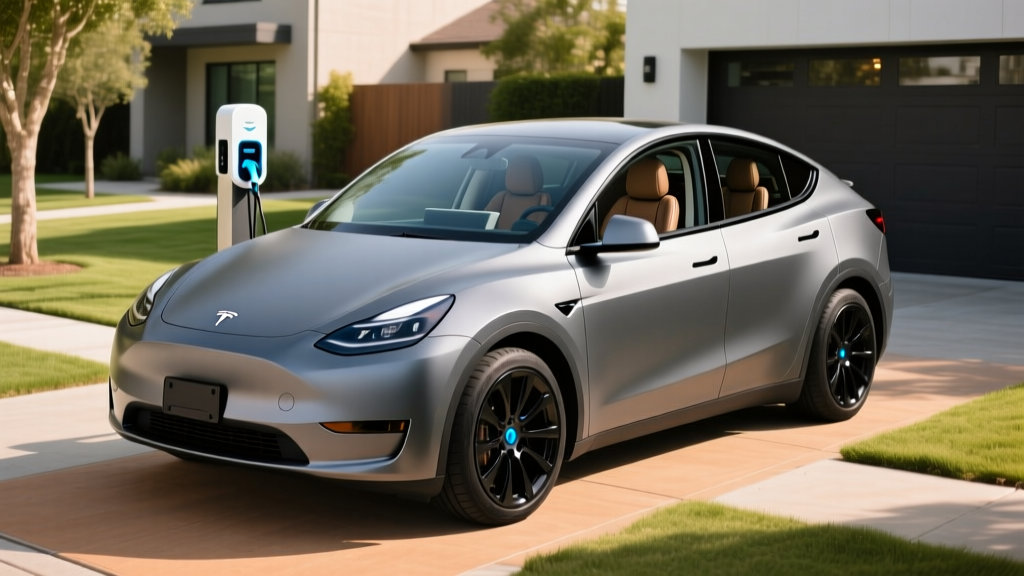
- Get an electrical panel quote before buying. A 240V/48A Level 2 install runs $800-$2,500 if your panel has capacity. A 200A panel upgrade adds $1,500-$3,500.
- Test your actual commute range. Demo the EV on your real route at highway speed, not just around the block.
- Shop insurance quotes before purchase. Some EVs cost 30% more to insure; others are nearly parity.
- Understand the charge curve. A "250 kW peak" charger only delivers peak rate between ~10-40% SoC. Above 80%, speeds drop sharply — don't plan trips around peak numbers.
- Consider LFP chemistry if available on your model (Tesla Model 3 RWD, some Ford and Rivian trims). LFP batteries tolerate 100% daily charging and typically outlast NMC, though with slightly lower energy density.
FAQ: Disadvantages of Electric Cars
Are electric cars actually more expensive to own than gas cars?
Not usually over 5+ years if you can charge at home and qualify for the §30D credit. The higher purchase price and insurance are offset by dramatically lower fuel and maintenance costs. Without home charging or incentives, a hybrid often wins on pure cost.
What happens if my EV battery dies out of warranty?
Replacement costs $10,000-$25,000 depending on pack size. In practice, catastrophic failure after 8 years is uncommon — most packs simply lose 15-20% of capacity over a decade. Third-party refurbishment and module-level repair options are expanding.
Do EVs really lose that much range in winter?
Yes. Expect 20-40% loss at freezing and below, depending on the vehicle, whether it has a heat pump, and how aggressively you use cabin heat. Preconditioning while plugged in recovers much of this penalty.
Is public charging reliable enough for road trips?
On major interstates (I-5, I-95, I-80 west of Reno, I-70 through Colorado), yes — Tesla Superchargers and Electrify America hubs are spaced 80-150 miles apart. In rural corridors, planning with apps like A Better Routeplanner is essential, and a PHEV may be safer.
Why do EVs cost more to insure?
Higher repair costs after collisions (high-voltage safety protocols, sensor recalibration, battery damage thresholds), higher vehicle values, and a smaller pool of trained body shops all contribute. Shop multiple carriers — Tesla Insurance, Progressive, and GEICO vary significantly by model.