The Kia EV9 remains one of the few three-row electric SUVs on the market in 2026, and aggressive lease deals have become a primary way buyers get into one. But a low monthly payment only tells part of the story. To evaluate whether a 2026 Kia EV9 lease actually saves you money, you need a full picture: federal incentive eligibility, real-world charging costs, insurance premiums, maintenance savings, and the depreciation hit that EVs — particularly large SUVs — have taken in recent years.
This guide walks through every cost layer of owning or leasing a 2026 Kia EV9 over five years, with exact figures and the current IRS §30D rules that determine whether you qualify for up to $7,500 in federal incentives.
2026 Kia EV9: Quick Specs Before the Math
Before we get into ownership costs, here are the numbers that define what you're leasing or buying. The 2026 EV9 continues on the E-GMP platform with two battery options and rear- or all-wheel-drive configurations.
| Spec | Light (Standard Range) RWD | Wind / Land / GT-Line AWD |
|---|---|---|
| Usable Battery | 76.1 kWh (NMC) | 99.8 kWh (NMC) |
| EPA Range | 230 miles | 270–280 miles (trim dependent) |
| Real-World Range (highway, moderate climate) | ~190–210 miles | ~225–250 miles |
| Horsepower | 215 hp | 379 hp |
| 0–60 mph | 7.7 sec | 5.0 sec |
| Peak DC Fast Charge | ~175 kW | ~236 kW |
| 10–80% DC Fast Charge | ~24 min | ~20 min |
| Level 2 (240V) Charge Rate | 10.9 kW | 10.9 kW |
| MPGe (combined) | 85 MPGe | 83–87 MPGe |
| Base MSRP | $54,900 | $59,900–$73,900 |
| Battery/Powertrain Warranty | 10 years / 100,000 miles | |
How 2026 Kia EV9 Lease Deals Actually Work
Kia has used lease incentives heavily to move EV9 inventory, and 2026 is no exception. Here's why leasing has become the preferred path for many EV9 buyers — and the catch that comes with it.
The Lease Loophole and Point-of-Sale Credit
Under current IRS rules, the §30D federal tax credit for purchased EVs is subject to strict battery-sourcing and critical-mineral requirements. Many EVs that previously qualified for the full $7,500 have seen their eligibility reduced or eliminated as sourcing rules tightened. However, when you lease a vehicle, the leasing company (the lessor) is technically the buyer. Under the commercial clean vehicle credit (§45W), the lessor can claim a credit of up to $7,500 and pass it through as a "lease cash" incentive — often without the same battery-sourcing restrictions that apply to retail purchases.
Kia has consistently offered lease cash on the EV9, sometimes $5,000–$7,500, which is applied as a capitalized-cost reduction. This directly lowers your monthly payment. A typical 2026 EV9 lease structure might look like this:
- EV9 Wind AWD — MSRP $63,900, 36-month lease, 10,000 miles/year, $3,999 due at signing, ~$549/month (with $7,500 lease cash applied)
- EV9 Land AWD — MSRP $69,900, 36-month lease, 10,000 miles/year, $4,999 due at signing, ~$619/month (with $7,500 lease cash applied)
These figures vary by region, dealer, and current Kia Motors Finance programs. Always confirm the exact lease cash amount and whether it's being applied to your cap cost or held by the dealer.
Lease vs. Buy: The Depreciation Factor
Leasing also shields you from EV depreciation risk. Large electric SUVs have seen steeper-than-average resale value declines, and the EV9 is no exception. By leasing, the residual value is Kia's problem, not yours. If you plan to keep the vehicle long-term, buying may make more sense — but only if you qualify for the purchase credit.
Do You Qualify for the Federal EV Tax Credit?
If you're considering purchasing rather than leasing, the §30D clean vehicle credit is the key incentive. For 2026, the rules are stringent. Here's the full eligibility checklist:
- Credit Amount: Up to $7,500 ($3,750 for battery components + $3,750 for critical minerals)
- MSRP Cap: SUVs, pickups, and vans must have an MSRP ≤ $80,000; sedans ≤ $55,000
- Buyer Income Limits (Modified AGI): $300,000 joint filers / $225,000 head of household / $150,000 single
- Battery Component Sourcing: Battery components must be manufactured or assembled in North America (phase-in percentages increase yearly)
- Critical Minerals: A percentage of critical minerals must be sourced from the U.S. or FTA partners (threshold rises annually)
- Foreign Entity of Concern (FEOC): Vehicles with battery components or critical minerals from a FEOC (including certain Chinese suppliers) are disqualified
- Point-of-Sale Transfer: Eligible buyers can transfer the credit to the dealer at purchase for an immediate price reduction (effective since Jan 2024)
Source: IRS Clean Vehicle Credit. Rules are subject to change — verify current eligibility on irs.gov before purchasing. Consult a tax professional for your specific situation.
The Kia EV9's MSRP falls under the $80,000 SUV cap on most trims, but battery-sourcing compliance is the variable. Kia sources battery cells from SK On, which has U.S. manufacturing, but critical-mineral sourcing compliance shifts as thresholds increase each year. Check the IRS eligible-vehicles list for the specific 2026 EV9 trim you're considering before assuming full credit eligibility.
5-Year Total Cost of Ownership: EV9 vs. Gas Three-Row SUV
To put 2026 Kia EV9 lease deals in context, we need to compare the full cost of running an EV9 against a typical gas-powered three-row SUV — in this case, the Kia Telluride, which is the closest internal-combustion alternative at a similar price point.
Assumptions
- 15,000 miles/year (75,000 miles total)
- Electricity cost: $0.16/kWh (national average; home charging)
- Gasoline cost: $3.50/gallon
- Telluride combined fuel economy: 22 MPG
- EV9 efficiency: ~38 kWh/100 miles (AWD large battery)
Charging vs. Gas: Cost Per Mile
| Metric | EV9 AWD (Large Battery) | Telluride AWD |
|---|---|---|
| Energy per 100 miles | 38 kWh | 4.55 gallons |
| Cost per 100 miles | $6.08 (home, $0.16/kWh) | $15.93 ($3.50/gal) |
| Cost per mile | $0.061 | $0.159 |
| Annual fuel/energy (15k mi) | $912 | $2,385 |
| 5-Year fuel/energy total | $4,560 | $11,925 |
That's a $7,365 fuel savings over five years when charging primarily at home. If you rely heavily on DC fast charging at public stations ($0.35–$0.50/kWh), your per-mile cost rises to $0.13–$0.19/mile, erasing much of the advantage. Home charging access is the single biggest variable in EV operating economics.
Full 5-Year TCO Breakdown
| Cost Category | 2026 EV9 Wind AWD | 2026 Telluride SX AWD |
|---|---|---|
| Purchase/Lease (net of incentives) | $56,400 (after $7,500 credit) | $48,500 |
| Energy/Fuel (5 yr) | $4,560 | $11,925 |
| Insurance (5 yr, est.) | $13,500 ($2,700/yr avg) | $10,500 ($2,100/yr avg) |
| Maintenance (5 yr) | $1,800 | $4,200 |
| Estimated Depreciation | $28,200 (50%) | $19,400 (40%) |
| 5-Year Total Cost | $76,260 | $75,125 |
The totals are remarkably close. The EV9's higher purchase price, insurance premiums, and steeper depreciation largely offset its fuel and maintenance savings over five years. However, this analysis is sensitive to several variables: your local electricity rate, whether you qualify for the full federal credit, your insurance profile, and how the EV9's residual value evolves.
Maintenance Savings: Where the EV9 Pulls Ahead
Electric vehicles eliminate a long list of routine maintenance items. Over five years and 75,000 miles, the savings add up meaningfully.
| Service Item | EV9 | Telluride (Gas) |
|---|---|---|
| Oil Changes | $0 (none needed) | $750–$1,000 (8–10 changes) |
| Transmission Fluid | $0 (sealed reduction gear) | $200–$350 |
| Brake Pads/Rotors | $0–$300 (regen extends life 2–3×) | $800–$1,200 |
| Engine Air Filter | $0 (no engine) | $150–$200 |
| Spark Plugs | $0 | $200–$400 |
| Coolant Flush | $0–$150 (long-interval EV thermal system) | $200–$300 |
| Cabin Air Filter | $150–$200 | $150–$200 |
| Tire Rotation/Replacement | $1,200–$1,500 (EVs wear tires faster due to weight + torque) | $1,000–$1,200 |
| Estimated 5-Yr Total | $1,500–$2,150 | $3,450–$4,650 |
Net maintenance savings of roughly $2,000–$2,500 over five years is realistic. The biggest caveat: EVs are heavier (the EV9 AWD tips the scales at around 5,300 lbs) and deliver instant torque, both of which accelerate tire wear. Budget for one extra set of tires over the ownership period compared to a gas SUV.
Insurance Costs: The Uncomfortable Reality
EV insurance premiums remain higher than comparable gas vehicles, and the EV9 is no exception. Based on aggregated 2026 quote data, expect to pay $2,400–$3,000 per year for full coverage on an EV9, compared to $1,800–$2,400 for a Telluride — a premium of roughly 20–30%.
Why the gap?
- Higher repair costs: EV battery packs and power electronics are expensive to replace after collision damage. Even minor rear-end impacts can trigger battery-safety inspections that add thousands to a claim.
- Limited repair network: Fewer body shops are certified for high-voltage EV repairs, which drives up labor rates and cycle times.
- Vehicle price: The EV9's higher MSRP means higher comprehensive and collision coverage costs.
- Total-loss thresholds: Insurers are more likely to declare an EV a total loss if the battery is damaged, increasing payout exposure.
Some insurers have begun narrowing the EV premium gap as repair data matures and more technicians earn EV certification. Shop at least three quotes — companies like Geico, Progressive, and specialty EV insurers like Plug In America partners have varied widely on EV9 pricing by zip code and driver profile.
EV Depreciation and Resale Value Trends
Depreciation is the single largest hidden cost of vehicle ownership, and EVs have depreciated faster than gas vehicles in the 2023–2025 period. According to iSeeCars data, average 3-year EV depreciation has hovered around 45–55%, compared to 35–40% for comparable gas SUVs.
The EV9 faces several depreciation headwinds:
- Rapid EV tech advancement: Newer models with faster charging, longer range, or lower prices make earlier EVs less desirable on the used market.
- Tesla price cuts ripple effect: When Tesla slashes Model X or Model Y pricing, it pulls down used values for all large electric SUVs.
- Battery health uncertainty: Used EV buyers are wary of out-of-warranty battery replacement costs, even though the EV9's 10-year/100,000-mile warranty provides substantial coverage.
- Lease returns flooding the market: High lease volumes mean a surge of 3-year-old EV9s hitting the used market around 2027–2028, which will pressure resale values.
Our estimate: expect a 2026 EV9 to retain roughly 45–50% of its transaction price after five years, compared to 55–60% for a Telluride. On a $63,900 EV9, that's approximately $28,000–$32,000 in depreciation — roughly $8,000–$10,000 more than the gas alternative.
This is precisely why leasing can be attractive: you lock in a residual value at signing, and Kia absorbs the risk if actual resale values fall further.
State, Local, and Utility Incentives
Beyond the federal credit, many states, municipalities, and electric utilities offer additional rebates and incentives. These change frequently and vary by jurisdiction. Always check official sources for current programs in your area.
- California: Up to $2,000–$7,000 via the Clean Fuel Reward and CVRP (income-dependent)
- Colorado: Up to $5,000 state tax credit for EVs (income and price caps apply)
- New York: Drive Clean Rebate up to $2,000 (point-of-sale)
- Utility rebates: Many utilities offer $500–$1,500 for home Level 2 charger installation, or reduced electricity rates for EV charging (off-peak TOU plans)
- HOV lane access: Several states grant EVs single-occupant carpool lane access — a non-monetary but highly valuable perk in congested metro areas
Check AFDC's state and local incentive database for programs in your zip code.
Stacking federal, state, and utility incentives can bring the effective cost of an EV9 down by $10,000–$15,000 in the most incentive-rich states. In states with no EV incentives, your savings are limited to the federal credit (if eligible) and fuel/maintenance reductions.
Home Charging Setup: The Hidden Upfront Cost
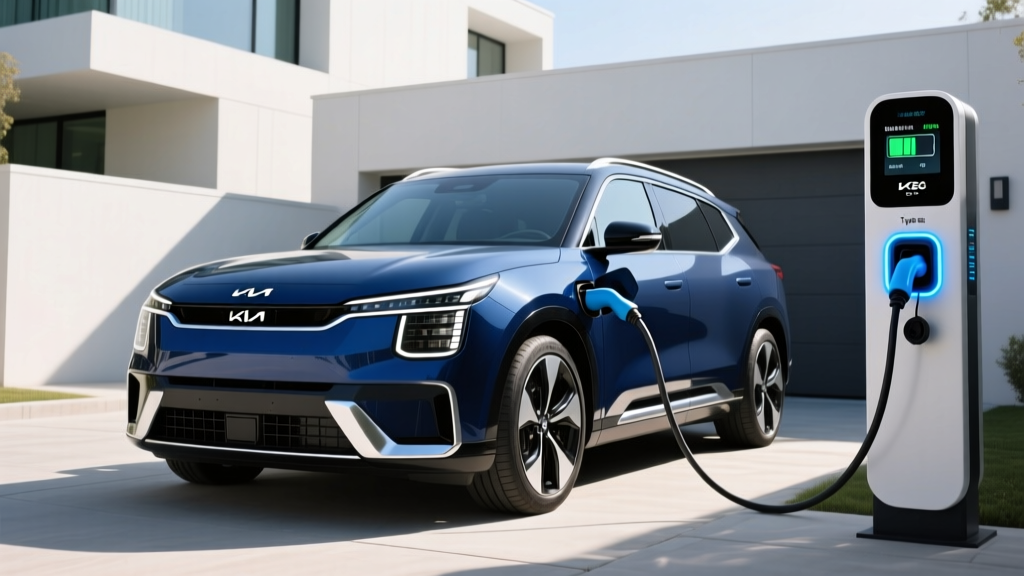
No ownership cost analysis is complete without accounting for home charging infrastructure. The EV9's 10.9 kW Level 2 onboard charger means you'll want a 48-amp Level 2 home station (requiring a 60-amp circuit) for overnight charging.
| Component | Cost Range |
|---|---|
| Level 2 Charger (48A, hardwired, e.g., ChargePoint Home Flex, Emporia Vue) | $400–$700 |
| Electrician labor (240V circuit, 60A breaker, ~40 ft run) | $800–$2,000 |
| Permit and inspection | $100–$300 |
| Electrical panel upgrade (if needed — older homes with 100A service) | $1,500–$3,500 |
| Total (no panel upgrade) | $1,300–$3,000 |
| Total (with panel upgrade) | $2,800–$6,500 |
The EV9's 99.8 kWh battery takes roughly 9–10 hours to charge from 10% to 100% on a 10.9 kW Level 2 connection — ideal for overnight charging. On a standard 120V Level 1 outlet, expect about 3–4 miles of range per hour of charging, which is impractical for daily use on a vehicle this size.
Most EV9 owners will need a professional Level 2 installation. Factor $1,500–$3,000 into your first-year cost unless your home already has a suitable 240V circuit (e.g., a dryer outlet near the garage, which some chargers can adapt to).
Frequently Asked Questions
How much does it really cost to own a 2026 Kia EV9 over 5 years?
Based on our analysis, the 5-year total cost of ownership for an EV9 Wind AWD is approximately $76,000, including purchase (net of federal credit), energy, insurance, maintenance, and depreciation. This is comparable to a similarly equipped Kia Telluride at ~$75,000. The EV9 costs more upfront and depreciates faster, but saves significantly on fuel and maintenance. Your actual cost depends heavily on your electricity rate, incentive eligibility, insurance profile, and annual mileage.
Do I qualify for the $7,500 federal tax credit on the EV9?
It depends on four factors: your modified adjusted gross income (must be under $300K joint / $150K single), the vehicle's MSRP (must be under $80K for SUVs — most EV9 trims qualify), battery-sourcing compliance (which changes annually as thresholds tighten), and your tax liability. The point-of-sale transfer option lets you apply the credit as an immediate discount at the dealer. Always verify the specific trim's eligibility on the IRS eligible vehicles list before purchasing.
How much do I save on fuel and maintenance with the EV9?
At $0.16/kWh and 15,000 miles/year, expect to spend about $912/year on electricity vs. $2,385/year on gasoline for a Telluride — a savings of ~$1,473/year or $7,365 over five years. Maintenance savings add another $2,000–$2,500 over five years (no oil changes, fewer brake replacements, no spark plugs). Combined: roughly $9,500–$10,000 in operating savings over five years.
Are EVs more expensive to insure?
Yes. Expect to pay 20–30% more for full-coverage insurance on an EV9 compared to a gas SUV, primarily due to higher repair costs, battery replacement expense, and the vehicle's higher MSRP. Budget $2,400–$3,000/year for EV9 insurance. Shop multiple quotes — the EV insurance premium varies significantly by insurer and zip code.
How well does the Kia EV9 hold its value?
EV depreciation has been steeper than gas vehicles in recent years. Expect the EV9 to retain roughly 45–50% of its transaction price after five years, compared to 55–60% for a Telluride. This translates to roughly $8,000–$10,000 more in depreciation cost over five years. Leasing transfers this risk to the lessor and is worth considering if resale value uncertainty concerns you.
Is leasing the EV9 better than buying in 2026?
For many buyers, yes — primarily because lease cash incentives (often $5,000–$7,500) can exceed the purchase tax credit you'd actually qualify for, and leasing eliminates depreciation risk. The downside: you don't build equity, you're limited to 10,000–15,000 miles/year, and you'll face disposition fees or a new car decision at lease end. If you drive more than 15,000 miles/year or want to keep the vehicle 7+ years, buying may be more economical.
What happens to the EV9 battery long-term?
Kia covers the EV9's battery pack for 10 years or 100,000 miles against defects and capacity loss below 70%. NMC chemistry in the EV9's thermal-managed pack should retain 85–90% capacity at 100,000 miles based on current E-GMP platform data. For lease holders, battery degradation is irrelevant — you'll return the vehicle before it becomes a concern. For buyers planning 10+ years of ownership, the warranty provides strong protection.