If you're researching EV car history to decide whether an electric vehicle makes sense for your next purchase, here's the practical takeaway: modern EVs in 2026 deliver 250–400+ miles of EPA-rated range, charge from 10–80% in 18–35 minutes at DC fast chargers rated 150–350 kW, and cost roughly $0.04–$0.06 per mile to fuel at home versus $0.12–$0.16 per mile for a comparable gas car. The technology that once limited electric cars to 40-mile ranges and 65-mph top speeds has been fundamentally solved by lithium-ion battery chemistry, thermal management systems, and a maturing NACS/CCS charging infrastructure. The real question in 2026 isn't whether EVs work — it's whether your driving pattern, home charging access, and budget align with current offerings.
The Short Answer on EV Car History for Buyers
Electric vehicles aren't new — they predate gasoline cars by decades. But the modern EV era effectively began in 2010 with the Nissan Leaf (73-mile range) and Tesla Roadster (244-mile range). By 2026, mainstream models like the Hyundai Ioniq 6 (361 mi EPA), Tesla Model 3 Long Range (363 mi EPA), and Chevrolet Equinox EV (319 mi EPA) have made range anxiety largely obsolete for daily driving. The battery cost curve has dropped from ~$1,200/kWh in 2010 to roughly $115–130/kWh in 2026, making sub-$35,000 long-range EVs a reality.
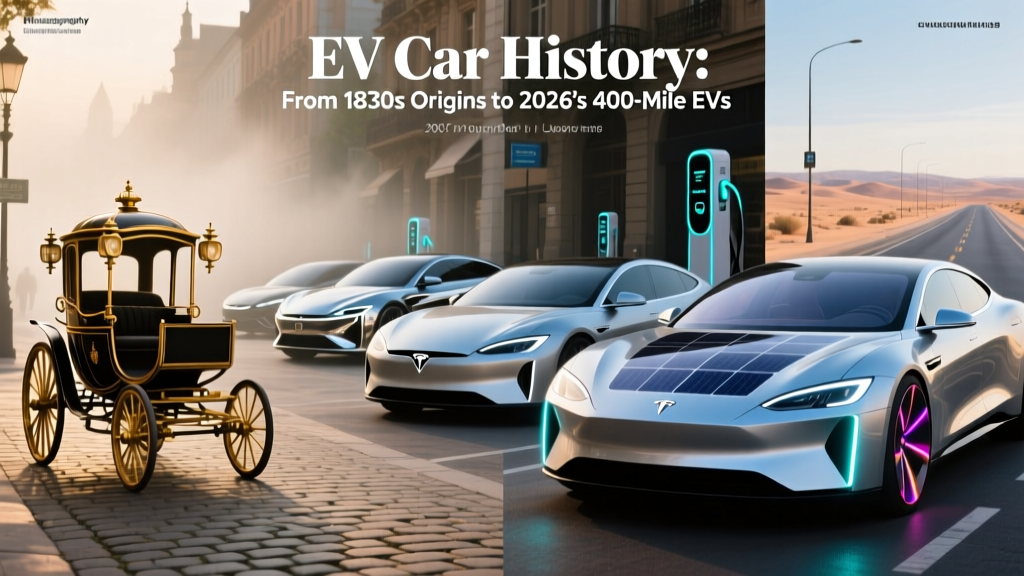
How We Got Here: Key Milestones in EV Car History
The story of the electric car is one of early dominance, near-total extinction, and a technology-driven comeback. Understanding this arc helps explain why today's EVs are designed the way they are — and where the remaining limitations come from.
1830s–1890s: The First Electric Vehicles. Inventors in Scotland, the Netherlands, and the United States built crude electric carriages using non-rechargeable primary cells. By the 1890s, rechargeable batteries made practical electric cars possible. In 1899 and 1900, electric vehicles outsold gasoline and steam-powered cars in the United States, favored for their quiet operation, ease of use (no hand-cranking), and zero exhaust.
1908–1930s: The Model T Kills the Electric Car. Henry Ford's mass-produced Model T, priced at $650 by 1912 versus $1,750 for a typical electric car, made gasoline vehicles affordable. The electric starter (1912) eliminated hand-cranking, and cheap Texas crude oil sealed the deal. By the mid-1930s, electric passenger cars had effectively vanished from American roads.
1960s–1990s: Niche Revivals. Oil crises and early environmental regulation sparked intermittent interest. The 1990 General Motors EV1 — a purpose-built electric coupe with ~80 miles of range on lead-acid batteries, later ~140 miles on nickel-metal hydride — became the most famous modern-era EV experiment. GM recalled and crushed most EV1s by 2003, an event that galvanized EV advocacy.
2008–2012: The Modern Era Begins. The 2008 Tesla Roadster (244-mile EPA range, lithium-ion battery) proved that EVs could be desirable performance vehicles. The 2010 Nissan Leaf launched as the first mass-market, affordable BEV with a 73-mile EPA range and a ~$33,000 MSRP. The Chevrolet Volt (a plug-in hybrid with 35 miles electric-only) bridged the gap for drivers without reliable charging access.
2017–2022: Scale and Mainstream Adoption. The Tesla Model 3 (starting at $35,000, 220–310+ mile range) forced the industry to take BEVs seriously. Legacy automakers responded: Volkswagen launched the ID.4, Ford introduced the Mustang Mach-E, Hyundai/Kia rolled out the Ioniq 5 and EV6 on their 800V E-GMP platform capable of 350 kW DC fast charging. Battery costs fell below $150/kWh for the first time.
2023–2026: Convergence. The industry standardized on the Tesla NACS connector for North American charging, opening the Supercharger network to Ford, GM, Rivian, Hyundai/Kia, and Volvo/Polestar vehicles. LFP (lithium iron phosphate) battery chemistry became mainstream in base trims, offering 100% daily charging capability and longer cycle life at lower energy density. Sub-$30,000 EVs with 250+ miles of range entered showrooms.
Modern EV Specs vs. Gas Cars: The Numbers That Matter
History is interesting, but what matters for your purchase decision is how today's EVs stack up against the gas vehicles they replace. Here's a 2026 comparison using current mainstream models:
| Metric | 2026 Tesla Model 3 LR AWD | 2026 Toyota Camry LE (Gas) | 2026 Hyundai Ioniq 6 SEL | 2026 Honda Accord LX (Gas) |
|---|---|---|---|---|
| Powertrain | BEV (75 kWh usable, NMC/LFP by trim) | 2.5L I-4 Gas | BEV (77.4 kWh, NMC) | 1.5L Turbo I-4 Gas |
| EPA Range / Tank Range | 363 mi | ~448 mi (13.2 gal × 34 mpg) | 361 mi | ~435 mi (14.8 gal × 30 mpg combined) |
| Fuel/Energy Cost per Mile (Home) | ~$0.045 (at $0.14/kWh) | ~$0.13 (at $3.50/gal) | ~$0.046 | ~$0.13 |
| 0–60 mph | 4.2 sec | 7.6 sec | 5.1 sec (RWD) | 7.1 sec |
| Starting MSRP | ~$42,630 | ~$29,995 | ~$42,600 | ~$29,290 |
| Federal Tax Credit (§30D) | Up to $7,500 (eligibility varies) | None | Up to $7,500 (eligibility varies) | None |
| Effective Price After Max Credit | ~$35,130 | ~$29,995 | ~$35,100 | ~$29,290 |
| Maintenance (Annual Avg) | ~$300–400 | ~$600–900 | ~$300–400 | ~$600–900 |
Sources: fueleconomy.gov, manufacturer MSRP listings. Tax credit eligibility depends on buyer income, vehicle MSRP caps, and battery-component/critical-mineral sourcing per IRS §30D rules. Consult a tax professional.
The Real Costs and Savings: 5-Year Ownership Breakdown
The higher sticker price of an EV is the single biggest barrier — and the single most misleading number if you ignore operating costs. Here's a realistic 5-year/75,000-mile ownership comparison for a midsize EV sedan versus a midsize gas sedan, assuming 15,000 miles/year, home Level 2 charging at $0.14/kWh, and gas at $3.50/gallon:
| Cost Category | EV (e.g., Model 3 LR after $7,500 credit) | Gas Sedan (e.g., Camry LE) |
|---|---|---|
| Purchase Price (after incentives) | $35,130 | $29,995 |
| Fuel/Energy (5 years) | $3,375 (75,000 mi × $0.045/mi) | $9,750 (75,000 mi × $0.13/mi) |
| Maintenance (5 years) | $1,750 | $3,750 |
| Insurance (5-year avg) | $8,500 (~$1,700/yr avg) | $7,000 (~$1,400/yr avg) |
| Home Charger Install (Level 2) | $800–2,000 (one-time) | $0 |
| Estimated Depreciation (5 yr) | ~$14,000 | ~$11,000 |
| Total 5-Year Cost | ~$63,555–$64,755 | ~$61,495 |
| Cost Per Mile (All-In) | ~$0.85–$0.86 | ~$0.82 |
The gap narrows dramatically when you factor in fuel and maintenance savings. At 75,000 miles, the EV saves roughly $8,375 in fuel and maintenance — enough to offset most of the upfront price premium and the Level 2 charger installation. Beyond year 5, the EV's cost advantage grows as the gas car's maintenance costs accelerate (timing chain, transmission service, exhaust components) while the EV's drivetrain remains largely maintenance-free.
Key caveat on insurance: EVs typically carry 15–25% higher insurance premiums due to higher repair costs (specialized body-shop equipment, battery-pack replacement risk, and limited aftermarket parts). Get quotes before buying — the difference can be $200–$500/year depending on your carrier and state.
Common EV Misconceptions: Myths vs. Facts in 2026
A lot of EV skepticism is rooted in data that was accurate in 2015 but is outdated today. Here's a reality check:
| Myth | 2026 Reality |
|---|---|
| "EV batteries need replacing every few years and cost $20,000." | Modern NMC and LFP packs are warrantied for 8 years/100,000 miles at 70%+ capacity retention (fueleconomy.gov). Average degradation is 1–2% per year. Full replacement is rare; module-level repair is increasingly available. A new pack today costs $5,000–$15,000 depending on the model — and prices continue falling. |
| "EVs are worse in cold weather." | Partially true: cold weather reduces range by 15–30% depending on temperature, use of cabin heat, and whether the vehicle has a heat pump. A 360-mile EPA EV might deliver 260–300 miles in 20°F weather. But cold-weather ICE vehicles also lose fuel efficiency (~10–15%). Preconditioning while plugged in mitigates most EV range loss. |
| "There aren't enough charging stations." | As of 2026, the U.S. has over 70,000 public charging ports including 40,000+ DC fast chargers. The Tesla Supercharger network (now open to NACS-equipped non-Tesla EVs) alone has 6,000+ stations. Rural charging deserts still exist, but 80%+ of charging happens at home. |
| "EVs are worse for the environment because of battery mining." | Lifecycle analyses consistently show EVs produce fewer total emissions than gas cars over their lifetime, even accounting for battery manufacturing. The grid is decarbonizing: U.S. electricity is ~40% renewable/nuclear as of 2026, improving the equation every year. Gas car emissions are fixed at the tailpipe. |
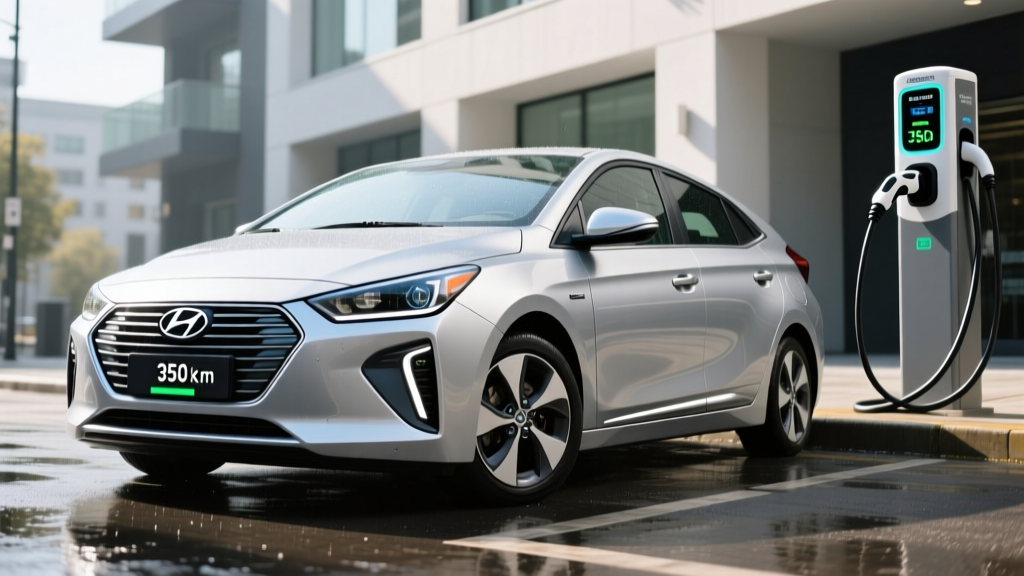
| "Charging takes too long." | At a 350 kW DC fast charger, modern 800V-architecture EVs (Hyundai Ioniq 5/6, Kia EV6/GT, Porsche Taycan) charge 10–80% in 18–22 minutes. At a 150 kW charger, expect 25–35 minutes. Level 2 home charging adds 25–44 miles per hour of charging — more than enough to fully replenish overnight. |
What First-Time EV Buyers Must Know Before Purchasing
The transition from gas to electric is straightforward but has a few non-obvious requirements that catch new buyers off guard:
1. Home Charging Is the Foundation
Approximately 80–85% of EV charging happens at home. If you have a garage or dedicated parking spot with access to a 240V circuit (or the ability to install one), an EV will integrate seamlessly into your life. A Level 2 home charger (typically 32–48 amps, delivering 7.7–11.5 kW) costs $500–$800 for the unit and $500–$2,000 for professional installation depending on whether your electrical panel needs an upgrade. A 200-amp panel is generally sufficient; older 100-amp panels may require a $1,500–$3,000 upgrade. Always consult a licensed electrician for a site assessment before purchasing.
If you cannot charge at home (apartment without EV infrastructure, street parking only), EV ownership is significantly harder. You'll rely on public DC fast charging and workplace charging, which costs more ($0.30–$0.50/kWh at public DC stations vs. $0.10–$0.18/kWh at home) and requires time planning. A PHEV (plug-in hybrid) may be a better fit in this scenario.
2. Understand Your Actual Range Needs
The average American drives 37 miles per day (~13,500 miles/year, per FHWA data). A 250-mile EPA-range EV covers a week of commuting with margin. But you need to plan for your worst-case drive, not your average:
- Highway driving at 75+ mph reduces range by 10–15% versus EPA combined estimates
- Cold weather (below 32°F) reduces range by 15–30% depending on heat pump availability
- Mountain driving and towing can reduce range by 30–50%
- DC fast charging taper: peak charge rates (e.g., 250 kW) only apply at low states of charge. Expect the 10–80% time to be 2–3× longer than 80–100%. Plan road-trip stops to 80%, not 100%.
3. Federal Tax Credit Rules Are Complex
The §30D Clean Vehicle Credit offers up to $7,500, but eligibility depends on multiple factors that change annually:
- MSRP caps: $55,000 for sedans; $80,000 for SUVs, trucks, and vans
- Buyer income caps: $150,000 single / $225,000 head of household / $300,000 joint (AGI)
- Battery sourcing requirements: Increasingly strict critical-mineral and battery-component sourcing rules that disqualify some models each year
- Point-of-sale transfer: As of 2024+, you can transfer the credit to the dealer for an upfront price reduction rather than waiting to claim it on your tax return
Check the current qualified vehicle list on fueleconomy.gov and review IRS guidance before assuming eligibility.
EV vs. Gas vs. Hybrid: Decision Framework
The history of EVs shows that the technology has matured to the point where the right choice depends on your specific situation, not the technology's readiness. Here's a practical decision framework:
Choose a BEV (Battery Electric Vehicle) If:
- You can install a Level 2 charger at home or have reliable workplace charging
- Your daily driving is under 150 miles round-trip
- You take road trips 1–4 times per year and can plan DC fast-charging stops
- You want the lowest per-mile operating cost and minimal maintenance
- You qualify for the §30D tax credit, narrowing the price gap with gas cars
Choose a PHEV (Plug-In Hybrid) If:
- You can charge at home but frequently drive 200+ miles in a day
- You want electric-only commuting (25–50 miles) without any range anxiety on road trips
- You live in an area with limited DC fast-charging infrastructure
- You tow regularly and need the combined range of battery + gas tank
Choose a Gas/HEV (Conventional Hybrid) If:
- You have no access to home or workplace charging
- You drive in extreme cold regularly and cover very long distances daily
- Your budget is under $25,000 and you need maximum vehicle options
- You live in a rural area far from any public charging infrastructure
What EV Car History Tells Us About Where Things Are Headed
The arc of EV car history points toward continued convergence of cost, range, and infrastructure. Battery prices are projected to reach $80–100/kWh by 2028–2030, which would make EVs cheaper to manufacture than gas cars at equivalent size — the long-awaited "price parity" milestone. Solid-state batteries, currently in limited production by Toyota and others, promise higher energy density and faster charging in the latter half of this decade.
But the practical lesson from history is that technology adoption is non-linear and infrastructure-dependent. The EV1 failed not because the technology was bad, but because the charging ecosystem didn't exist. Today's buyers benefit from 15+ years of infrastructure buildout, battery chemistry refinement, and manufacturing scale that simply didn't exist even five years ago.
The best EV for you in 2026 is the one that fits your charging situation, your driving pattern, and your budget after incentives. The technology is ready — the question is whether your specific use case is.
When was the first electric car invented?
The first crude electric vehicles appeared in the 1830s (Robert Anderson, Scotland, and Professor Sibrandus Stratingh, Netherlands). The first practical, rechargeable-battery electric car is generally credited to Thomas Davenport (U.S., 1834) or Gustave Trouvé (France, 1881), depending on how you define "practical." Electric cars outsold gas cars in the U.S. in 1899–1900.
Why did electric cars disappear in the early 1900s?
Three factors: the Ford Model T's dramatically lower price ($650 vs. $1,750+ for electric cars), the invention of the electric starter in 1912 (eliminating dangerous hand-cranking of gas engines), and the discovery of cheap Texas oil that made gasoline affordable and widely available.
What was the first modern mass-market EV?
The 2010 Nissan Leaf is widely considered the first modern mass-market BEV, with a 24 kWh battery, 73-mile EPA range, and ~$33,000 MSRP. The Tesla Model S (2012) proved long-range luxury EVs were viable at 265 miles. The Tesla Model 3 (2017) was the first long-range, relatively affordable BEV to achieve mass production scale.
How much has EV range improved over time?
The 2010 Nissan Leaf offered 73 EPA miles. The 2017 Chevy Bolt offered 238 miles. The 2026 Hyundai Ioniq 6 delivers 361 miles, and the Lucid Air Grand Touring achieves 516 miles — a 7× increase in 16 years. Average new-EV range in 2026 is approximately 270–300 miles across all models sold.
Are today's EV batteries reliable long-term?
Yes. Data from fleet operators and consumer reports show average battery degradation of 1–2% per year for NMC chemistry and even less for LFP. At 10 years/150,000 miles, most EVs retain 80–90% of original capacity. All major manufacturers warrant batteries for 8 years/100,000 miles at a minimum of 70% capacity retention. Complete battery failure is statistically rare.
How does the 2026 EV charging network compare to the past?
In 2012, there were roughly 3,500 public charging ports in the U.S., almost all Level 2. In 2026, there are 70,000+ ports including 40,000+ DC fast chargers. The adoption of the NACS connector as the North American standard has unified the ecosystem: Ford, GM, Rivian, Hyundai/Kia, and Volvo/Polestar EVs can all access Tesla Superchargers via native NACS ports or adapters. Charging reliability remains a pain point at some non-Tesla networks, but Plug & Charge payment and improved uptime are closing the gap.