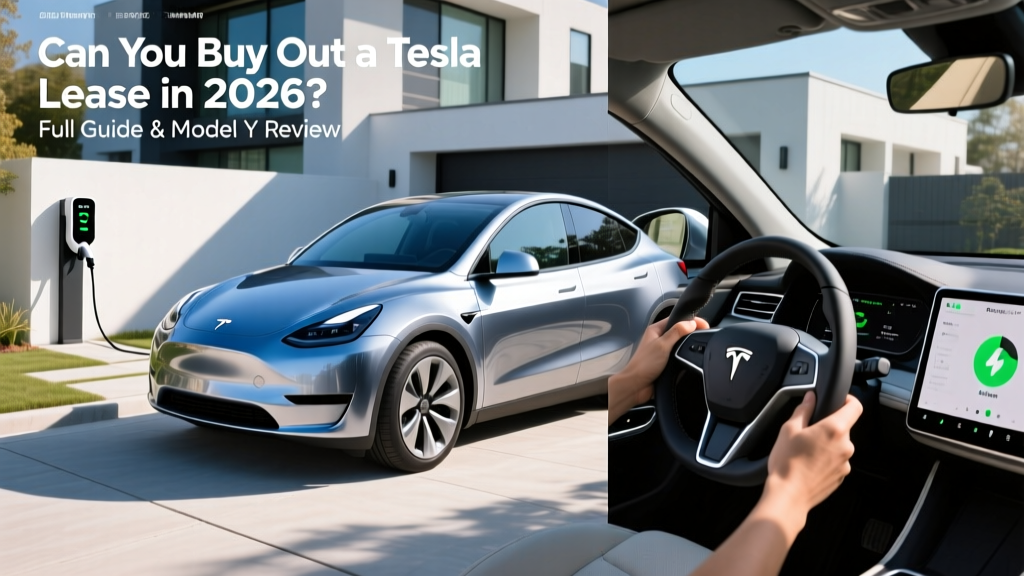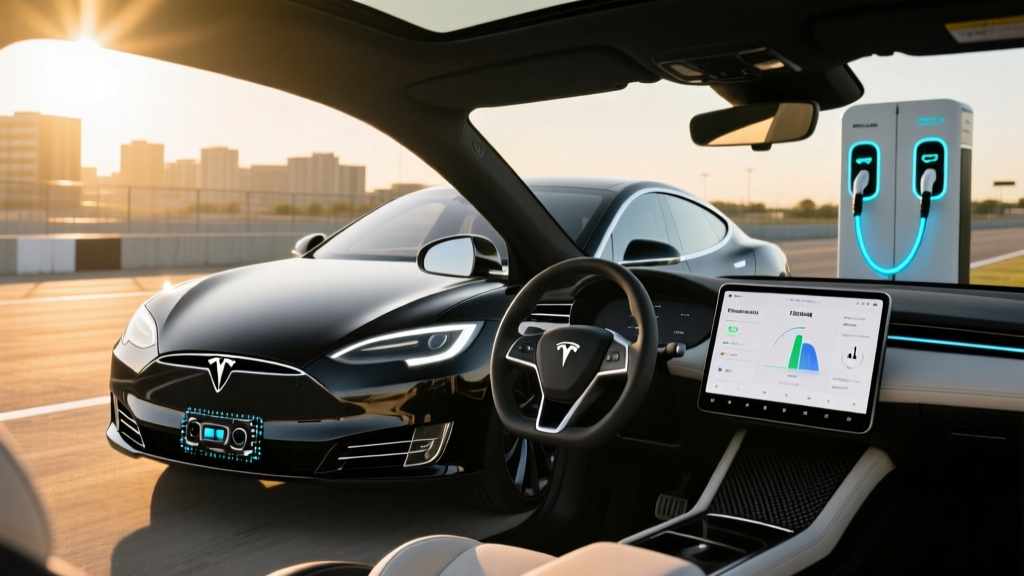
Tesla's Hardware 5 (HW5) computer — officially designated AI5 by the company — represents the most significant overhaul to Tesla's onboard Autopilot/FSD compute platform since Hardware 3 debuted in 2019. Rolling out first in the refreshed 2026 Model Y (codenamed "Juniper") and expected across the Model 3 lineup, HW5 isn't just about self-driving aspirations: it changes the sensor suite, power consumption, and ultimately the real-world ownership experience of every Tesla equipped with it.
This profile examines what HW5 means for buyers in practical terms — range, charging, pricing, driver-assist capability, and how it stacks up against competing ADAS platforms from Ford, GM, and Hyundai. We'll separate confirmed specs from Tesla's forward-looking claims, because in the EV space, that distinction matters.
What Is Tesla Hardware 5 (AI5)?
Hardware 5 is Tesla's fifth-generation onboard computer that processes data from the vehicle's cameras, runs neural networks for Autopilot and Full Self-Driving (Supervised), and manages the infotainment system. According to Tesla CEO Elon Musk, AI5 delivers roughly 10x the compute performance of Hardware 4 (HW4/AI4) while consuming approximately 2x the power draw under peak load.
Key architectural changes in HW5 include:
- Higher-resolution cameras: Upgraded sensor suite with improved low-light and high-dynamic-range performance across all exterior cameras.
- Dedicated neural-network accelerator: Custom silicon designed specifically for transformer-based vision models, moving beyond the convolution-heavy architecture of HW3/HW4.
- Increased memory bandwidth: Enables processing of higher-resolution video feeds simultaneously from 8+ cameras.
- No radar or ultrasonic sensors: Tesla continues its pure-vision approach (Tesla Vision), relying entirely on cameras and neural-net inference rather than lidar, radar, or ultrasonic proximity sensors.
Despite the "Full Self-Driving" name, Tesla FSD (Supervised) with HW5 remains an SAE Level 2 driver-assistance system. The driver must remain fully engaged, monitor the road, and be prepared to take over at any moment. This is fundamentally different from Level 4 robotaxi services like Waymo, which operate without a human driver in geofenced areas. Never treat FSD as a substitute for attentive driving.
Vehicle Specs: 2026 Model Y Long Range with HW5
The 2026 Tesla Model Y Long Range AWD is the first widely available vehicle shipping with Hardware 5. Below are the confirmed and EPA-reported specifications.
| Specification | 2026 Model Y Long Range AWD (HW5) |
|---|---|
| EPA Range | 320 miles |
| Battery Capacity | ~78 kWh usable (NMC chemistry) |
| Drivetrain | Dual Motor AWD |
| Horsepower | 384 hp (combined) |
| 0–60 mph | 4.8 seconds |
| MPGe (combined) | 111 MPGe |
| Efficiency | 30 kWh/100 mi |
| Max DC Fast Charge | 250 kW (peak) |
| 10–80% DC Charge Time | ~25 minutes |
| Level 2 Home Charge Rate | 11.5 kW (~44 mi/hr) |
| Cargo Volume | 30.2 cu ft (rear seats up) / 72.1 cu ft (folded) |
| Rear Legroom | 41.6 inches |
| Battery Warranty | 8 years / 120,000 miles |
| Base MSRP | $46,630 |
Source: fueleconomy.gov and Tesla Model Y specs.
Real-World Range: What EPA Doesn't Tell You
EPA Sticker: 320 miles
Highway (70–80 mph, 72°F): ~265–280 miles
Cold Weather (32°F, highway): ~220–245 miles
City / Mixed Commute (moderate climate): ~290–310 miles
The EPA range figure assumes a blended driving cycle. In real-world testing, highway driving at sustained speeds above 70 mph typically yields 12–18% less range than the sticker. Cold weather compounds this: battery chemistry becomes less efficient, cabin heating draws significant power (even with a heat pump), and regenerative braking is limited until the pack warms up.
One factor specific to HW5: Tesla has acknowledged that the AI5 chip draws more power than HW4 — roughly an additional 30–50 watts under sustained FSD operation. Over a 300-mile drive with FSD engaged, this translates to approximately 1–2% additional range loss compared to HW4-equipped vehicles. For most owners, this is negligible, but it's a measurable difference that Tesla's engineering team has traded for significantly improved inference capability.
Charging Speed: DC Fast and Home Level 2
The 2026 Model Y with HW5 retains the same 250 kW peak DC fast-charge capability as its HW4 predecessor, utilizing the NACS (North American Charging Standard) connector native to all Tesla vehicles. Tesla's V4 Supercharger stalls can deliver this peak rate, though sustained charge speed depends on the battery's state of charge and thermal preconditioning.
| Charging Level | Power (kW) | Speed (miles/hour) | Notes |
|---|---|---|---|
| Level 1 (120V) | ~1.4 kW | ~4 mi/hr | Emergency / overnight trickle only |
| Level 2 (240V, 48A) | 11.5 kW | ~44 mi/hr | Home Wall Connector — full charge in ~7 hrs |
| DC Fast (Supercharger V3/V4) | 250 kW peak | Up to ~1,000 mi/hr (peak) | 10–80% in ~25 min; tapers sharply above 80% |
Charging curve reality check: The 250 kW figure is a peak, not a sustained rate. In practice, the Model Y LR charges at or near 250 kW only between roughly 10–30% state of charge. From 30–60%, expect ~150–180 kW. Above 80%, the rate drops to under 50 kW to protect battery longevity. Always precondition the battery (navigate to a Supercharger in the Tesla app or in-car nav) to achieve optimal charge speeds — skipping preconditioning in cold weather can cut peak charge rates by 50% or more.
FSD (Supervised) with HW5: Capabilities and Limits
Hardware 5 was designed primarily to enable more capable neural-net-based driving. Tesla's FSD (Supervised) software running on HW5 uses end-to-end neural networks trained on billions of miles of real-world driving data. The system handles:
- Lane keeping, lane changes, and highway merging
- Traffic light and stop sign recognition and response
- Unprotected left turns and complex intersections
- Parking lot navigation and automatic parking
- Point-to-point navigation on city streets and highways
- It does not drive autonomously — you are the driver and are legally responsible.
- It does not handle all construction zones, unmapped roads, or extreme weather reliably.
- It does not replace the need for insurance, attention, or hands-on-wheel readiness.
- It does not qualify as SAE Level 3 or above in any jurisdiction.
The HW5 advantage over HW4 is primarily in edge-case handling: better performance in rain, dusk/dawn lighting, partially occluded lane markings, and complex multi-lane intersections. Whether this translates to fewer disengagements per mile remains to be validated by independent testing — Tesla does not publish standardized disengagement data comparable to NHTSA reporting frameworks used by Waymo and Cruise.
FSD (Supervised) costs $8,000 as a one-time purchase or $99/month as a subscription (pricing as of early 2026). Basic Autopilot — which includes Traffic-Aware Cruise Control and Autosteer on highways — remains included at no additional cost with every Tesla.
Pricing, Trims, and Federal Tax Credit
| Trim | MSRP | Est. After §30D Credit | HW5 Included? |
|---|---|---|---|
| Model Y Long Range AWD | $46,630 | ~$39,130* | Yes |
| Model Y Performance AWD | $51,490 | ~$43,990* | Yes |
| Model 3 Long Range AWD | $42,380 | ~$34,880* | Yes (2026 production) |
*Tax credit estimates assume full eligibility. See checklist below.
The federal EV tax credit under IRS §30D offers up to $7,500 for qualifying new EVs, and as of 2024, this can be transferred to the dealer at point of sale as an immediate price reduction. However, eligibility is not universal — it depends on several factors that change periodically.
- ✅ MSRP Cap: SUVs (including Model Y) must be under $80,000; sedans (Model 3) under $55,000. Both Model Y and Model 3 trims qualify.
- ✅ Buyer Income Cap: Modified AGI must not exceed $150,000 (single), $225,000 (head of household), or $300,000 (joint filing).
- ⚠️ Battery Sourcing: Critical minerals and battery components must meet phased-in domestic/free-trade-partner sourcing requirements. Tesla has made significant progress in North American battery sourcing, but exact eligibility can shift — verify at IRS.gov before purchasing.
- ✅ Assembly: Vehicle must undergo final assembly in North America. All US-market Teslas qualify (Fremont, TX, and Austin Gigafactory).
How HW5 Compares to Competing ADAS Platforms
Tesla's HW5 + FSD doesn't exist in a vacuum. Here's how it stacks up against the most capable driver-assistance systems available in 2026:
| Feature | Tesla HW5 / FSD | GM Super Cruise | Ford BlueCruise 2.0 |
|---|---|---|---|
| SAE Level | Level 2 | Level 2 (hands-free on mapped roads) | Level 2 (hands-free on mapped roads) |
| Hands-Free? | No (hands-on-wheel required) | Yes (on ~750,000 mi of mapped highways) | Yes (on ~130,000+ mi of divided highways) |
| City Streets? | Yes (Supervised) | Limited (expanding) | No |
| Sensor Approach | Vision-only (cameras) | Cameras + radar + lidar (HD maps) | Cameras + radar |
| Cost | $8,000 or $99/mo | Included on trims; ~$25/mo after trial | $2,100 (650A pkg) + $75/yr after trial |
The key tradeoff: Tesla's FSD covers the widest geographic area (any road, any city) but requires hands-on-wheel engagement. GM's Super Cruise and Ford's BlueCruise offer true hands-free driving but only on pre-mapped limited-access highways. Which approach suits you depends entirely on your driving patterns.
Pros and Cons of Tesla HW5
- Most advanced neural-net inference hardware in any consumer vehicle
- Continuously improving FSD software via OTA updates
- Access to Tesla Supercharger network (17,000+ stalls in North America)
- Class-leading efficiency (30 kWh/100 mi)
- Over-the-air updates mean HW5 capabilities will grow over time
- Strong resale value relative to EV market average
- FSD (Supervised) still requires full driver attention — not autonomous
- Vision-only approach can struggle in heavy rain, fog, or direct sun glare
- Higher power draw from AI5 chip marginally reduces range vs. HW4
- No ultrasonic sensors means parking proximity relies on vision estimation
- $8,000 FSD purchase is expensive for a Level 2 system
- Insurance premiums for Teslas remain above segment average
Who Should Buy a Tesla with HW5?
- You drive varied routes (city streets, rural roads, highways) and want the broadest ADAS coverage.
- You value continuous software improvement and OTA feature additions.
- You have access to home Level 2 charging and want to leverage the Supercharger network for road trips.
- You're comfortable with a vision-only sensor approach and hands-on-wheel requirement.
🔄 Consider alternatives if:
- You primarily drive mapped highways and want true hands-free driving (look at GM Super Cruise or Ford BlueCruise).
- You frequently drive in heavy fog, snow, or rain where radar/lidar sensor redundancy matters to you.
- You want a lower-cost ADAS system without an $8,000 add-on.
Frequently Asked Questions
What is the real-world range of a Tesla Model Y with HW5?
The EPA rates the 2026 Model Y Long Range AWD at 320 miles. In real-world highway driving at 70–80 mph, expect 265–280 miles. In cold weather (below freezing), range can drop to 220–245 miles due to battery efficiency loss and cabin heating demands. The HW5 chip's additional ~30–50W power draw has a minor effect — roughly 1–2% range reduction compared to HW4.
How fast does the HW5 Model Y charge at home and on DC fast chargers?
On a Tesla Wall Connector (Level 2, 240V/48A), the Model Y charges at 11.5 kW, adding roughly 44 miles of range per hour — a full charge takes about 7 hours. On a V3 or V4 Supercharger, it peaks at 250 kW and charges from 10–80% in approximately 25 minutes. Always use battery preconditioning (navigate to the charger in-car) for optimal DC charge speeds.
How much does a Tesla with HW5 cost after tax credits?
The 2026 Model Y Long Range AWD starts at $46,630 MSRP. If you qualify for the full $7,500 federal §30D credit (income caps, battery sourcing, and MSRP caps apply), the effective price drops to approximately $39,130. The credit can be applied at point of sale as an instant discount. Verify your eligibility on IRS.gov before purchasing.
Is Tesla HW5 worth buying vs. competitors like GM Super Cruise or Ford BlueCruise?
It depends on your priorities. HW5 + FSD offers the widest geographic coverage (works on any road) but requires hands-on-wheel engagement. GM Super Cruise and Ford BlueCruise offer hands-free driving but only on pre-mapped highways. If you value versatility and continuous improvement, Tesla wins. If you value hands-free comfort on long highway commutes, GM or Ford may suit you better.
Does the Tesla Model Y with HW5 qualify for the federal EV tax credit?
Yes, the Model Y qualifies for up to $7,500 under §30D, subject to buyer income limits ($150K single / $300K joint), the $80,000 SUV MSRP cap (all trims clear this), and battery component/critical mineral sourcing requirements. Tesla manufactures in the US and has shifted significant battery sourcing to North America, but always confirm current eligibility before purchase.
Can HW5 be retrofitted to older Teslas?
No. Tesla has not offered hardware retrofit programs from HW3/HW4 to HW5. The AI5 chip requires different board layouts, power delivery, and camera harnesses that are not backward-compatible. If HW5 capability matters to you, you'll need a new 2026+ vehicle.