The Quick Answer: Should You Buy an Electric Pickup Truck?
Bottom line: A 2026 electric pickup truck makes financial sense if you can charge at home, drive under 250 miles daily, and qualify for the §30D federal tax credit (up to $7,500 point-of-sale). Expect 230–340 miles of EPA range, 10–80% DC fast charges in 18–40 minutes depending on the model, and fuel savings of $1,500–$2,500/year versus a gas V6 half-ton. The trade-offs: higher upfront MSRP ($55K–$100K+), heavier insurance premiums (+10–20%), cold-weather range loss (15–30%), and a towing range penalty that can cut EPA figures by 40–50%.
Electric pickup trucks have matured past the early-adopter phase. The 2026 lineup — led by the Ford F-150 Lightning, Rivian R1T, Chevrolet Silverado EV, and Tesla Cybertruck — covers work trucks, lifestyle adventurers, and luxury tow rigs. But the gap between EPA stickers and real-world utility is wider here than in any other EV segment, thanks to aerodynamics, weight, and towing physics. This guide gives you the numbers to decide whether going electric is a win for your driveway.
2026 Electric Pickup Trucks: Spec-by-Spec Breakdown
Let's start with hard data. The table below compares the mainstream models on the metrics that actually matter for truck buyers: usable battery capacity, EPA range, peak DC fast-charge power, real-world 10–80% charge time, 0–60 acceleration, max towing, and starting MSRP before any incentives.
| Model (2026) | Battery / Chem. | EPA Range | Peak DC kW | 10–80% Time | 0–60 mph | Max Tow | Base MSRP |
|---|---|---|---|---|---|---|---|
| Ford F-150 Lightning (Std Range) | ~98 kWh / NMC | ~240 mi | 150 kW | ~41 min | ~6.0s | 7,700 lb | ~$55,000 |
| Ford F-150 Lightning (Ext Range) | ~131 kWh / NMC | ~320 mi | 150 kW | ~44 min | ~5.0s | 10,000 lb | ~$72,000 |
| Rivian R1T Dual-Motor (Max Pack) | ~141 kWh / NMC | ~352 mi | ~220 kW | ~28 min | ~4.5s | 11,000 lb | ~$92,000 |
| Chevy Silverado EV 4WT | ~200 kWh / NMC | ~450 mi | ~350 kW | ~25 min | ~6.5s | 10,000 lb | ~$75,000 |
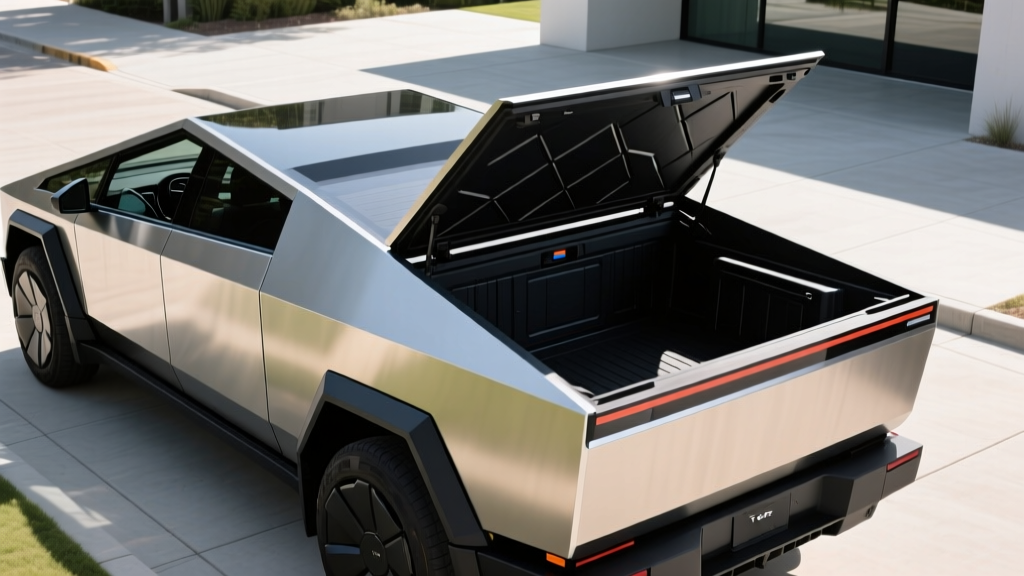
| Tesla Cybertruck AWD | ~123 kWh / NMC | ~340 mi | ~250 kW | ~18 min | ~4.1s | 11,000 lb | ~$80,000 |
| GMC Sierra EV Denali | ~200 kWh / NMC | ~440 mi | ~350 kW | ~26 min | ~4.5s | 12,000 lb | ~$98,000 |
Sources: fueleconomy.gov, manufacturer spec pages. All figures represent 2025–2026 model-year data; confirm with dealer at purchase.
Electric Pickup Trucks vs Gas Trucks: Cost Comparison
Sticker price tells one story. Five-year total cost of ownership (TCO) tells the real one. Below is a head-to-head between a 2026 Ford F-150 Lightning Extended Range (~$72K MSRP) and a comparably equipped gas F-150 3.5L EcoBoost 4WD (~$58K MSRP), assuming 15,000 miles/year, $3.40/gal gas, $0.16/kWh home electricity, and 80% home / 20% public DC charging mix.
| Cost Category (5 yr) | F-150 Lightning EV | F-150 Gas EcoBoost |
|---|---|---|
| Purchase price (after §30D credit) | $64,500 | $58,000 |
| Fuel / electricity | $3,800 | $12,750 |
| Maintenance (oil, filters, brakes) | $1,800 | $4,500 |
| Insurance (avg premium) | $11,200 | $9,400 |
| Depreciation (est. 55% EV / 50% gas) | $35,475 | $29,000 |
| 5-Year Total Cost | $116,775 | $113,650 |
At these assumptions, the EV's fuel and maintenance savings (~$11,650 combined) nearly offset its higher purchase price and insurance, but depreciation on electric pickup trucks still runs hotter than gas counterparts. Break-even typically lands around year 6–7 — or sooner if you drive more miles, pay higher gas prices, or have cheap overnight electricity (under $0.12/kWh). Commercial fleets running daily short routes and depot charging see payback in 3–4 years.
What First-Time Electric Pickup Truck Buyers Must Know
If you're coming from a gas truck, the ownership experience has real learning curves. Here's what the spec sheets don't tell you.
Home Charging Is Non-Negotiable for Most Owners
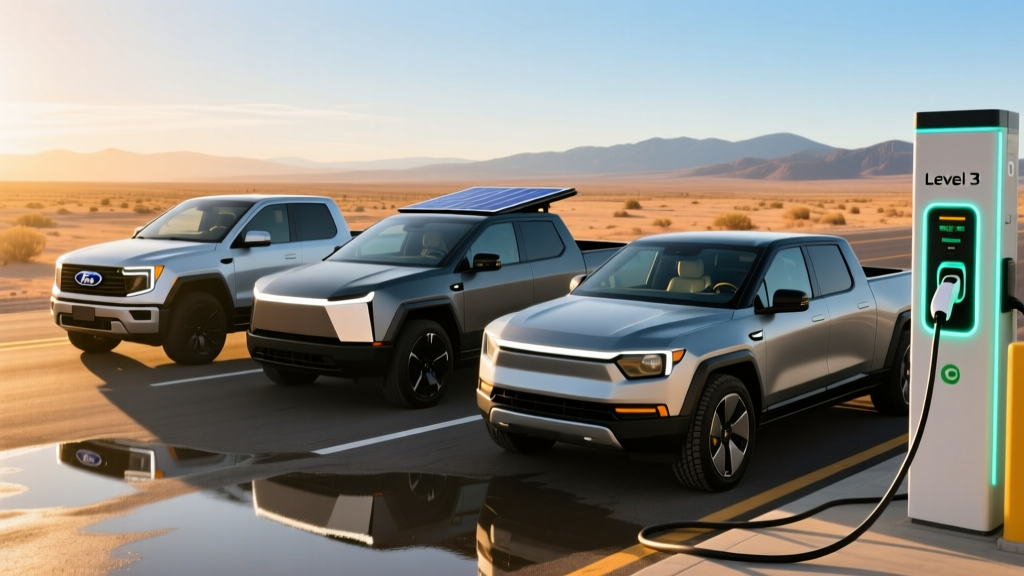
Public DC fast charging an electric pickup is viable for road trips but punishing as a daily habit — expensive ($0.35–$0.55/kWh), time-consuming, and hard on battery longevity. Plan on a Level 2 home charger delivering 11.5 kW (48A) to 19.2 kW (80A). The Silverado EV's 200 kWh battery, for example, needs roughly 10–17 hours from empty on Level 2. Budget $1,200–$2,500 for the charger and professional installation; add $1,500–$4,000 more if your home needs a 200A service panel upgrade.
kW vs kWh — Don't Confuse Them
Battery capacity is measured in kWh (energy stored — think gas tank size). Charging power is measured in kW (rate of flow — think hose diameter). A 150 kW charger doesn't fill a 131 kWh battery in under an hour; the charge curve tapers hard past 80% state-of-charge to protect the cells, which is why 10–80% times are the honest metric.
Towing Kills Range — Physics Doesn't Negotiate
Expect a 40–50% range hit towing 5,000+ lbs at highway speed. The Rivian R1T Max Pack's 352-mile EPA rating drops to roughly 180–200 miles real-world with a loaded camper. If towing is central to your use case, plan charging stops every 150 miles or look at diesel still.
Federal Tax Credit: §30D Is Not Automatic
The §30D credit tops out at $7,500 and, per IRS rules, requires meeting all of these:
- Vehicle MSRP under $80,000 for pickups/SUVs (many trims exceed this)
- Buyer AGI under $150K single / $300K joint
- Battery critical-mineral and component sourcing thresholds (updated annually)
- Final assembly in North America
- Point-of-sale transfer available from participating dealers
Confirm eligibility on the IRS clean vehicle credit page and with a tax professional before signing — rules shift yearly and vary by battery build date.
Common Myths About Electric Pickup Trucks, Debunked
| Myth | Fact |
|---|---|
| "Electric trucks can't tow." | They tow well — Cybertruck and R1T max out at 11,000 lbs. The issue is range while towing, not capability. |
| "Batteries need replacing every few years." | Modern NMC packs are warrantied 8 years/100,000 miles to retain ≥70% capacity. NHTSA data and fleet studies show most degrade 10–15% over 150K miles. |
| "Charging takes all day." | Level 2 overnight charging fully replenishes any pack while you sleep. DC fast charging adds 150–250 miles in 20–30 minutes on 2026 trucks with 200+ kW peaks. |
| "They're worse in winter." | Range drops 15–30% in deep cold, but electric motors don't struggle to start, cabin preconditioning is instant, and heated seats/steering use far less energy than heating the whole cabin. |
| "Electricity is just coal in disguise." | U.S. grid mix is ~40% renewables + nuclear as of 2025. Even on coal-heavy grids, an EV pickup emits 30–50% less CO₂/mile than a gas equivalent over its lifetime. |
Decision Framework: Which Electric Pickup Truck Fits You?
- Choose the Ford F-150 Lightning if you want a familiar full-size truck experience, need Pro Power Onboard (up to 9.6 kW V2L for job-site tools), and can live with ~240–320 miles of range.
- Choose the Rivian R1T if you prioritize adventure capability (gear tunnel, tank turns, quad-motor option), longest EPA range in class (352 mi Max Pack), and don't mind a $90K+ entry price.
- Choose the Chevy Silverado EV if range and fast-charge speed top your list — 450 miles EPA and 350 kW peak is segment-leading — and your budget clears the $75K+ MSRP.
- Choose the Tesla Cybertruck if you want the quickest 10–80% charge (~18 min on V4 Superchargers), Supercharger network access, and tolerate the polarizing design.
- Stick with gas or wait if you regularly tow over 6,000 lbs more than 200 miles, lack reliable home charging, live in a charging desert, or need sub-$50K pricing.
Real-World Ownership: Climate, Charging, and Daily Use
Electric pickup trucks reward predictable routines and punish improvisation. A homeowner with a Level 2 charger in temperate California who commutes 40 miles daily and tows a boat twice a year is in the sweet spot — home electricity under $0.20/kWh, minimal public charging, and the towing penalty only matters on a handful of trips. A renter in rural Montana with no garage outlet, a 90-mile highway commute, and frequent -10°F mornings should seriously consider a hybrid (Ford F-150 PowerBoost or Ram 1500 Ramcharger EREV) as a bridge.
Insurance remains a friction point: electric pickup trucks carry 10–20% higher premiums than gas equivalents, driven by higher repair costs for battery enclosures and aluminum body panels. Get quotes before you buy — the savings math collapses if insurance eats $150/month more than your gas truck.
Finally, battery warranty is your peace of mind. Every mainstream 2026 electric pickup carries at least 8 years/100,000 miles on the high-voltage pack, with a guaranteed capacity retention floor (typically 70%). Out-of-warranty replacement runs $15,000–$30,000 depending on pack size — rare, but not zero.
Frequently Asked Questions
What electric pickup truck has the longest range in 2026?
The Chevrolet Silverado EV and GMC Sierra EV lead with ~440–450 miles EPA on their largest (~200 kWh) packs. Real-world highway driving typically yields 340–380 miles.
Can I use an electric pickup truck as a backup generator?
Yes. Ford's Pro Power Onboard offers up to 9.6 kW of vehicle-to-load (V2L) and vehicle-to-home (V2H) capability with the right bi-directional charger — enough to run essential home circuits during an outage for several days.
How much does it cost to charge an electric pickup truck at home?
At the U.S. average of ~$0.16/kWh, fully recharging a 131 kWh F-150 Lightning Extended Range costs roughly $21 — equivalent to about 6 gallons of gas and enough for ~300 real-world miles.
Are electric pickup trucks good in snow and cold?
Traction is excellent thanks to low center of gravity and heavy battery weight over the axles. Range drops 15–30% in sub-freezing weather, mitigated by preconditioning the battery while plugged in and using seat/steering heat instead of cabin air heat.
Do electric pickup trucks qualify for the $7,500 tax credit?
Some do, some don't — and it varies by trim and battery build date. Verify current eligibility at fueleconomy.gov's tax credit tool and cross-check the IRS sourcing requirements before purchase.