Quick Answer: Is the 2021 Electric Mustang (Mach-E) Worth It in 2026?
The 2021 Ford Mustang Mach-E — the first model year of Ford's "electric Mustang" — remains a compelling used EV buy in 2026. The Select trim delivers an EPA-estimated 230 miles of range (Standard Range RWD), while the California Route 1 and Premium Extended Range AWD push to 305 and 270 miles respectively. On the used market, expect to pay between $18,000 and $28,000 depending on trim and mileage. DC fast charging peaks at 150 kW (10–80% in roughly 45 minutes for Extended Range models). As a used EV, it does not qualify for the federal §30D new-vehicle credit, but it may be eligible for the up-to-$4,000 used EV credit if you buy from a dealer and meet income caps.
What the 2021 Electric Mustang Actually Is
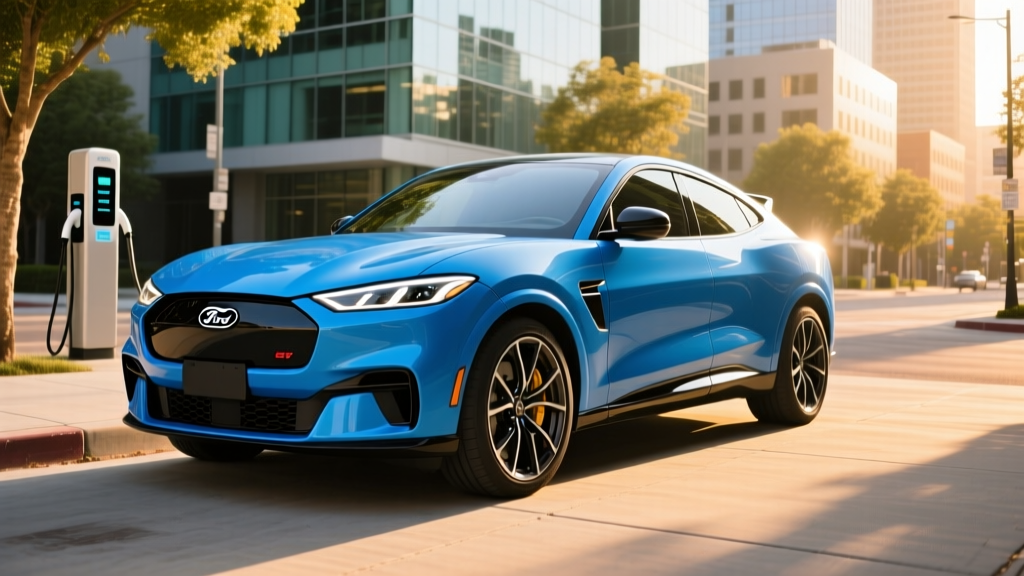
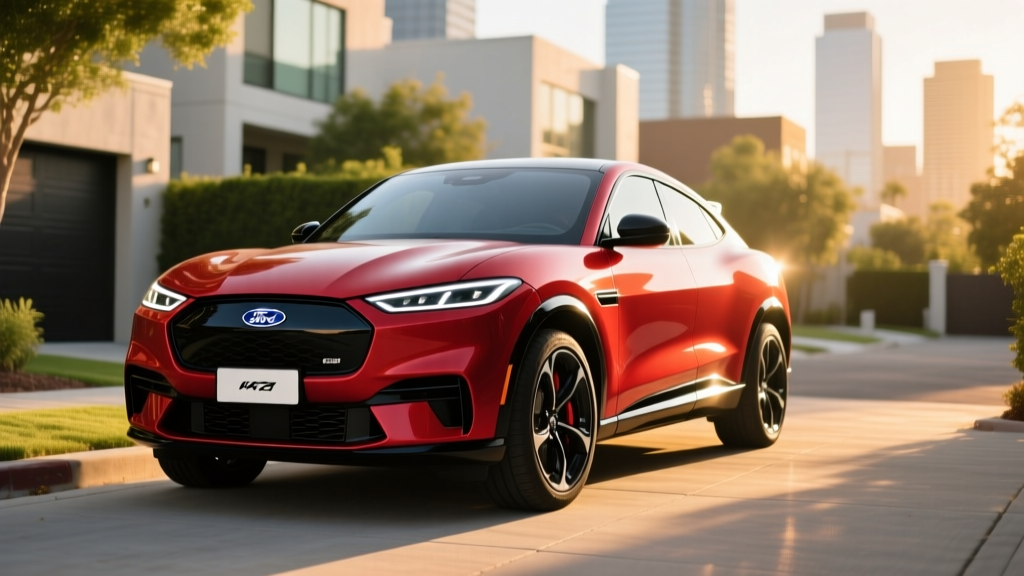
When Ford attached the Mustang badge to an all-electric crossover for the 2021 model year, it drew polarized reactions. But the Mach-E is a legitimate EV built on Ford's dedicated Global Electrified Platform (GE1), not a converted gas car. It seats five, offers a frunk (front trunk) with 4.7 cu ft of drainable storage, and competes directly with the Tesla Model Y, Hyundai Ioniq 5, and Volkswagen ID.4.
The 2021 lineup included four trims: Select, Premium, California Route 1, and the performance-oriented GT (which arrived late in the model year). Battery options were a 70 kWh usable Standard Range pack (LFP chemistry was not offered in 2021; all trims used NMC lithium-ion) and a 91 kWh usable Extended Range pack.
| Trim / Config | Battery (kWh usable) | EPA Range | MPGe (Combined) | 0–60 mph | Horsepower | Original MSRP |
|---|---|---|---|---|---|---|
| Select RWD (SR) | 70 | 230 mi | 101 | 5.8 sec | 266 | $43,995 |
| Premium RWD (ER) | 91 | 300 mi | 101 | 5.2 sec | 290 | $50,600 |
| Premium AWD (ER) | 91 | 270 mi | 93 | 4.8 sec | 346 | $53,100 |
| CA Route 1 RWD (ER) | 91 | 305 mi | 104 | 5.2 sec | 290 | $48,100 |
| GT AWD (ER) | 91 | 260 mi | 90 | 3.5 sec | 459 | $61,000 |
Source: EPA fueleconomy.gov
Real-World Range: What the EPA Sticker Doesn't Tell You
EPA 305 mi (CA Route 1 RWD ER) → Expect roughly 250–275 mi in mixed real-world driving at 65–75 mph. In cold weather (below 32°F), plan for 190–220 mi of usable range. The 2021 Mach-E lacks a heat pump (added in later model years), so cabin heating draws directly from the traction battery, causing 20–30% range loss in freezing conditions.
Highway efficiency is where the Mach-E Extended Range shows its limits. At sustained 80 mph on flat interstate, independent testing has recorded consumption around 310–330 Wh/mi, which translates to roughly 275–290 miles from the 91 kWh pack — close to EPA for the Premium AWD but below the CA Route 1 sticker. If your commute is primarily highway at 75+ mph, budget 10–15% below the EPA figure.
City and suburban driving with regenerative braking engaged (one-pedal mode available on all trims) can actually exceed the EPA estimate, with some owners reporting 320+ miles in mild weather at speeds under 45 mph.
Charging Speed and Infrastructure: The Mach-E in 2026
The 2021 Mach-E uses a CCS1 connector for DC fast charging and a J1772 inlet for Level 2 AC. Ford equipped it with a maximum DC charge rate of 150 kW on Extended Range models and roughly 115 kW on Standard Range. Here's what that means in practice:
| Level | Power (kW) | Connector | Speed (mi/hr added) | Notes |
|---|---|---|---|---|
| Level 1 (120V) | 1.4 kW | J1772 / NEMA 5-15 | ~3–4 mi/hr | Emergency/trickle only |
| Level 2 (240V, 32A) | 7.7 kW | J1772 | ~22–25 mi/hr | Ford Mobile Charger included |
| Level 2 (240V, 48A) | 11.5 kW | J1772 | ~33–36 mi/hr | Requires Ford Connected Charge Station or equivalent |
| DC Fast (peak) | 150 kW (ER) | CCS1 | ~10–80% in ~45 min | Charge curve tapers hard above 80% |
Charging curve reality: The 150 kW peak on Extended Range models holds only between roughly 10–55% State of Charge (SoC). From 55–80%, the rate drops to 80–100 kW, and above 80% it falls below 40 kW. This is why Ford and most EV analysts quote 10–80% times rather than 0–100%. If you're road-tripping, plan stops to charge from 15% to 80% — adding that last 20% takes nearly as long as the first 65%.
As of 2026, Ford EVs have access to Tesla Supercharger stations via a Ford-provided NACS adapter (Ford began providing adapters to Mach-E owners in 2024). This dramatically expands the fast-charging network, adding over 15,000 Supercharger stalls nationwide to the Electrify America and EVgo networks Ford originally partnered with.
2021 Mach-E vs. Gas Mustang vs. Gas Crossover: Cost Breakdown
The 2021 gas Ford Mustang (EcoBoost) started around $28,000 and gets an EPA 24 MPG combined. A comparable gas crossover like the Ford Edge AWD averages about 23 MPG. Here's how five-year costs stack up against the Mach-E bought on the used market in 2026:
| Category | 2021 Mach-E Premium ER (Used ~$24K) | 2021 Mustang EcoBoost (Used ~$22K) | 2021 Ford Edge AWD (Used ~$20K) |
|---|---|---|---|
| Purchase Price | $24,000 | $22,000 | $20,000 |
| Fuel / Energy (5 yr) | $3,200 (home L2, $0.14/kWh avg) | $10,900 ($3.50/gal, 24 MPG) | $11,400 ($3.50/gal, 23 MPG) |
| Maintenance (5 yr) | $1,200 | $3,800 | $4,200 |
| Insurance (5 yr avg) | $9,500 | $7,200 | $6,800 |
| Estimated Depreciation | $7,000 | $8,500 | $8,000 |
| Total 5-Year Cost | $44,900 | $52,400 | $50,400 |
Assumes 70% home charging at $0.14/kWh, 30% public DC at $0.35/kWh. Gas at $3.50/gal national avg. Insurance varies significantly by zip code and driver profile. Source: fueleconomy.gov for efficiency data.
The Mach-E's advantage is clear in fuel and maintenance savings — roughly $7,700 less in energy and $2,600 less in maintenance over five years. However, EV insurance premiums run 15–30% higher than gas equivalents due to repair cost data and battery replacement risk. That $2,300 insurance gap eats into the savings, but the Mach-E still comes out $5,500–$7,500 ahead overall.
Used EV Tax Credit and Incentives (2026 Rules)
Buying a 2021 Mach-E from a licensed dealer in 2026 may qualify you for the Used Clean Vehicle Credit under IRS §25E — up to $4,000 or 30% of the sale price, whichever is lower. Key requirements:
- Income caps: Modified AGI ≤ $75,000 (single), $112,500 (head of household), $150,000 (joint)
- Price cap: Sale price must be $25,000 or less
- Dealer sale only: Private-party purchases don't qualify
- Vehicle age: Must be at least 2 model years old (2021 qualifies in 2026)
- One-time use per buyer: You can only claim this credit once every 3 years
Source: IRS.gov Used Clean Vehicle Credit. Tax eligibility depends on individual circumstances — consult a tax professional.
If you find a 2021 Mach-E Premium Extended Range for $24,000 from a qualifying dealer and your income falls under the cap, the $4,000 credit effectively brings your cost to $20,000 — a compelling entry point into a 300-mile EPA-range EV.
Battery Longevity, Warranty, and What to Check
The 2021 Mach-E's high-voltage battery is covered by Ford's 8-year / 100,000-mile warranty against defects and capacity loss below 70% of original capacity. For a 2021 model, that warranty extends through at least 2029 or 100,000 miles — meaning most used examples in 2026 still carry meaningful battery coverage.
NMC battery degradation data from early Mach-E owners (tracked via apps like Grizzl-E and FORScan OBD-II tools) shows typical capacity loss of 5–8% after 60,000 miles and 3–4 years. This is within the normal NMC degradation curve and well above the 70% warranty threshold. However, vehicles that were frequently DC fast-charged in extreme heat (Arizona, Texas summers) may show slightly higher degradation.
What to inspect on a used 2021 Mach-E:
- Request a State of Health (SoH) reading from a Ford dealer — the BMS logs capacity retention
- Check for any open recalls (Ford issued recalls for certain 2021 Mach-E models related to high-voltage battery contactors — verify completion via NHTSA.gov)
- Verify the FordPass app transfers correctly to a new owner (some 2021 units had modem connectivity issues resolved via OTA updates)
- Inspect the 12V auxiliary battery — early Mach-Es had parasitic drain issues that could kill the 12V if left unplugged for extended periods
Decision Framework: Is the 2021 Electric Mustang Right for You?
Choose the 2021 Mach-E if:
- You have access to Level 2 home charging (240V garage or driveway install)
- Your daily round-trip commute is under 80 miles and you road-trip 2–4 times per year
- You want a 270–305 mile EPA range without paying Tesla prices
- You value Supercharger access (via adapter) plus Electrify America redundancy
- You qualify for the $4,000 used EV credit, bringing effective price under $20K–$24K
Look elsewhere if:
- You live in an apartment or lack reliable home/workplace charging — public-only charging adds $1,500–$2,500/year in cost and significant time
- You regularly drive in sub-20°F winters and need 300+ real-world miles — the Mach-E's lack of a heat pump means severe range loss; consider a 2023+ Hyundai Ioniq 5 or Tesla Model Y with standard heat pump
- You need towing — the 2021 Mach-E is not rated for towing (Ford added a 2,200-lb tow rating in later years for specific trims)
- You want the latest ADAS — the 2021 Mach-E's BlueCruise is SAE Level 2 hands-free on divided highways, but it lacks lane-change assist and requires driver monitoring; newer systems from GM (Super Cruise) and Ford's 2024+ BlueCruise 1.3+ are more capable
BlueCruise on the 2021 Mach-E is SAE Level 2. It allows hands-free driving on pre-mapped divided highways (~130,000 miles of compatible roads), but the driver must remain attentive, keep eyes on the road (monitored via infrared camera), and be ready to take over instantly. This is not autonomous or self-driving. Only Level 4 services like Waymo operate without a human driver.
Common Misconceptions About the 2021 Mach-E
| Myth | Fact |
|---|---|
| "It's not a real Mustang" | It shares no platform with the gas Mustang, but Ford engineered it with performance intent. The GT does 0–60 in 3.5 seconds — faster than a 2021 Mustang GT V8 (4.1 sec). The badge is marketing; the performance is real. |
| "The battery will need replacing soon" | NMC batteries in the Mach-E are showing 92–97% capacity retention at 50K–60K miles. At that rate, most packs will retain 80%+ at 150K miles. A full pack replacement (out of warranty) runs $15,000–$20,000, but is rarely needed. |
| "You can't road-trip in it" | With 150 kW DC fast charging and Supercharger adapter access, 200+ mile road trips require one 30–40 minute charge stop every 2.5–3 hours. It's slower than gassing up, but entirely practical with route planning via ABRP or FordPass. |
| "EVs cost more to own" | The Mach-E saves $7,000–$8,000 in fuel and maintenance over 5 years vs. a gas crossover, even after accounting for higher insurance. The break-even vs. a used gas car is typically 2–3 years. |
| "It qualifies for the $7,500 federal credit" | The §30D new-vehicle credit does not apply to used purchases. Only the §25E used credit (up to $4,000) may apply, with income and price caps. |
First-Time EV Buyer Checklist for the 2021 Mach-E
If this is your first electric vehicle, here's what you need in place before signing the paperwork:
- Home charging plan: Budget $500–$1,500 for a Level 2 (240V/48A) home charger installation. If your electrical panel is 100A or older, a panel upgrade to 200A can add $1,500–$3,000. Get a quote from a licensed electrician before purchasing the car.
- Utility rate check: Many utilities offer off-peak EV charging rates (as low as $0.06–$0.09/kWh overnight). Enrolling can cut your charging cost by 40% vs. standard rates.
- Download FordPass and ABRP: FordPass handles remote preconditioning, charge scheduling, and BlueCruise enrollment. A Better Route Planner (ABRP) is essential for road-trip route optimization with the Mach-E's specific charge curve.
- Precondition before fast charging: The 2021 Mach-E does not automatically precondition the battery for DC fast charging unless you navigate to a charger via the built-in navigation. Use the nav system to route to your next charge stop — this warms the battery and enables peak 150 kW speeds. Skip this step and you may arrive at a cold battery limited to 80–100 kW.
- Insurance quotes first: Get EV-specific insurance quotes before buying. Some insurers (GEICO, Progressive, State Farm) offer EV discounts, while others charge 25%+ premiums. This can swing your 5-year cost by $1,500+.
Frequently Asked Questions
How long does it take to charge the 2021 Mach-E at home?
From 10% to 100% on a 48A Level 2 charger (11.5 kW), the Extended Range (91 kWh) pack takes roughly 8.5 hours. The Standard Range (70 kWh) pack takes about 6.5 hours. Most owners plug in overnight and wake up fully charged — you rarely need a full 0–100% cycle in daily use.
Does the 2021 Mach-E have a frunk?
Yes. The front trunk offers 4.7 cubic feet of storage with a drain plug, making it useful for ice and beverages or wet gear. Combined cargo volume (rear seats folded) is 59.6 cu ft, competitive with the Tesla Model Y (76 cu ft) but smaller due to the Mach-E's sloping roofline.
Can I use Tesla Superchargers with the 2021 Mach-E?
Yes, as of 2024 Ford began distributing NACS adapters to Mach-E owners. The adapter converts the vehicle's CCS1/J1772 inlet to the Tesla NACS connector, enabling access to V3 Superchargers (up to 150 kW, which is the Mach-E's peak anyway). You'll need to activate the adapter through FordPass and the Tesla app.
What's the real-world range in winter?
In sustained temperatures below 32°F, expect a 20–30% reduction from EPA range. A Premium Extended Range AWD rated at 270 miles EPA will deliver roughly 190–215 miles in freezing conditions. The 2021 Mach-E uses resistive cabin heating (no heat pump), which is the primary range killer. Preconditioning while plugged in mitigates this significantly.
Is the 2021 Mach-E safe?
The 2021 Mach-E earned the IIHS Top Safety Pick award with Good ratings in all crashworthiness tests. NHTSA gave it 5 stars overall. Standard safety equipment includes automatic emergency braking, lane-keeping assist, blind-spot monitoring, and rear cross-traffic alert. Source: IIHS.org.
Should I buy a 2021 or wait for a newer Mach-E?
The 2021 model lacks a heat pump, has slower DC charging (150 kW peak vs. 2024+ models at higher rates in some trims), and runs older BlueCruise software. If you can stretch to a 2023+ model, you gain heat pump efficiency, improved OTA features, and potentially better battery chemistry. But at $18K–$28K used (and potentially $4K less with the §25E credit), the 2021 Mach-E delivers 270–305 miles of range and Supercharger access at a price no new EV can match.