Quick Verdict: The 2024 Mach-E Finds Its Footing
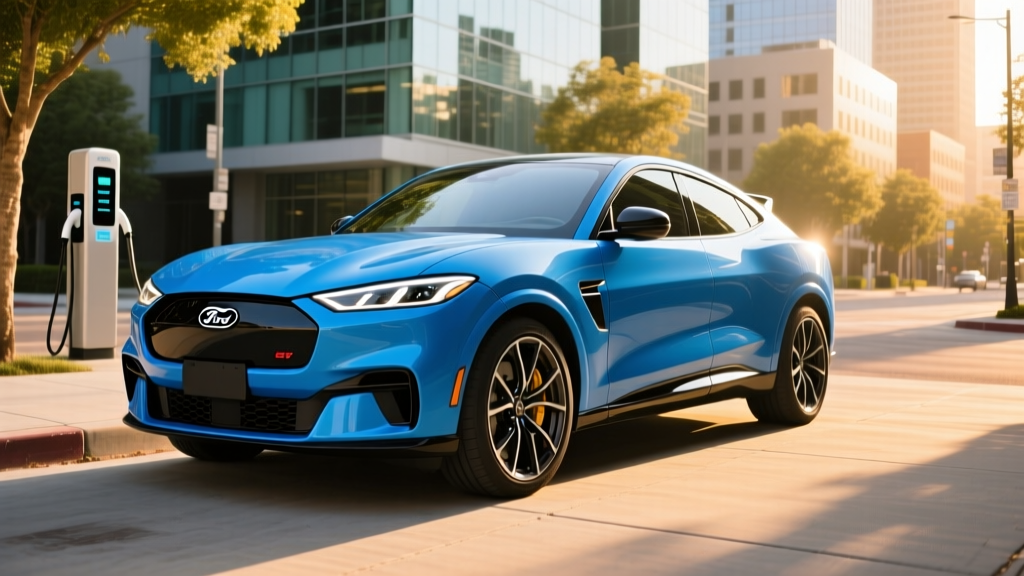
Ford's 2024 Mustang Mach-E arrives with a critical mid-cycle refresh that addresses its biggest early criticism: battery chemistry and charging speed. The addition of a lithium iron phosphate (LFP) battery option on the Select trim lowers the entry price, while the Extended Range models retain nickel-manganese-cobalt (NMC) packs for maximum distance. With EPA range spanning 230 to 320 miles depending on configuration, a NACS charge port granting native Tesla Supercharger access, and a starting MSRP of $39,995, the 2024 Mach-E is one of the most versatile electric crossovers in its class — provided you pick the right trim.
This review covers every configuration, real-world range expectations, exact charging speeds, and whether the 2024 Mach-E qualifies for the federal §30D tax credit under current IRS rules.
| Spec | Select RWD (Std Range) | Premium RWD (Ext Range) | GT AWD (Ext Range) | Rally AWD (Ext Range) |
|---|---|---|---|---|
| EPA Range | 230 mi | 320 mi | 280 mi | 265 mi |
| Battery (usable) | 70 kWh (LFP) | 91 kWh (NMC) | 91 kWh (NMC) | 91 kWh (NMC) |
| Horsepower | 266 hp | 290 hp | 480 hp | 480 hp |
| 0-60 mph | 6.3 sec | 5.8 sec | 3.8 sec | 3.8 sec |
| Drivetrain | RWD | RWD | Dual-motor AWD | Dual-motor AWD |
| Max DC Charge | 115 kW | 150 kW | 150 kW | 150 kW |
| 10-80% DC Time | ~33 min | ~36 min | ~36 min | ~36 min |
| MPGe (combined) | 100 MPGe | 101 MPGe | 84 MPGe | 86 MPGe |
| Base MSRP | $39,995 | $46,995 | $59,995 | $59,995 |
Source: EPA fueleconomy.gov, Ford Motor Company
Real-World Range: What the EPA Sticker Doesn't Tell You
- EPA sticker: 320 miles
- Real-world highway (70 mph, 65°F): ~260-280 miles
- Real-world city/mixed (moderate climate): ~285-305 miles
- Cold weather (below 32°F, highway): ~210-240 miles (30-35% loss)
The 320-mile EPA figure on the Extended Range RWD is legitimate but optimistic for highway-heavy driving. The EPA test cycle includes significant low-speed and city driving, where regenerative braking recovers energy. At sustained 70-75 mph highway speeds, expect roughly 260-280 miles before needing a charge in temperate conditions.
The Standard Range LFP pack on the Select trim rates at 230 miles EPA. In practice, this translates to roughly 185-200 miles of real-world highway driving — adequate for daily commuting but tight for road trips without careful planning. LFP chemistry also means you can (and should) charge to 100% daily without degradation concerns, effectively giving you the full 230 miles every morning, unlike NMC packs where Ford recommends an 80-90% daily limit.
Cold weather is the Mach-E's Achilles heel, as it is for most EVs. The liquid-cooled battery pack lacks a dedicated heat pump (Ford uses resistive cabin heating supplemented by a waste-heat system). Below freezing, expect a 25-35% range reduction on highway trips. Preconditioning while plugged in mitigates some of this loss.
Charging Speed: DC Fast, Level 2, and the NACS Advantage
The 2024 Mach-E marks Ford's transition to the North American Charging Standard (NACS) port, giving it native access to Tesla's Supercharger network — the most reliable DC fast-charging infrastructure in the U.S. This is a significant practical advantage over CCS-equipped competitors that still require adapters.
| Charging Level | Power / Rate | Miles Added per Hour | Notes |
|---|---|---|---|
| Level 1 (120V household) | ~1.4 kW | ~3-4 mi/hr | Emergency/top-up only |
| Level 2 (240V home, 32A) | 7.7 kW | ~22-25 mi/hr | Full charge in ~10-12 hours (Ext Range) |
| Level 2 (240V home, 48A) | 10.5 kW | ~30-33 mi/hr | Ford Connected Charge Station; ~8-9 hours |
| DC Fast (Std Range) | Peak 115 kW | ~180 mi/hr (peak) | 10-80% in ~33 minutes |
| DC Fast (Ext Range) | Peak 150 kW | ~230 mi/hr (peak) | 10-80% in ~36 minutes |
Charging curve reality check: The Extended Range Mach-E peaks at 150 kW only between roughly 15-35% State of Charge. Above 50%, the rate tapers to approximately 90-110 kW, and above 80% it drops further to around 40-50 kW. This is why Ford quotes 10-80% times rather than full-charge times — pushing past 80% at a DC fast charger is time-inefficient. Plan road-trip stops around 10-80% charges and move on.
For home charging, Ford offers the Connected Charge Station Pro (48-amp hardwired unit) at approximately $800 for the hardware. A typical Level 2 home installation with a 240V/50A circuit runs $800-$2,000 for electrician labor and permits, depending on your panel's proximity to the garage. Total home charging setup: roughly $1,600-$2,800. Always have a licensed electrician assess your panel capacity — a 200-amp service is generally sufficient, but older 100-amp panels may require an upgrade ($1,500-$3,000 additional).
Performance and Drivetrain: From Commuter to Corner Carver
The 2024 Mach-E lineup spans a wide performance envelope. The base Select RWD delivers 266 horsepower and a 6.3-second 0-60 time — more than adequate for highway merging and daily driving. The Premium Extended Range RWD bumps output to 290 hp with a 5.8-second sprint.
The GT trim is where the Mach-E earns its Mustang badge. With 480 horsepower and 600 lb-ft of torque from its dual-motor AWD setup, it hits 60 mph in 3.8 seconds. The GT also includes MagneRide adaptive dampers, a sport-tuned suspension, and Brembo front brakes. The Rally variant adds raised suspension, underbody protection, and rally-inspired styling, though it shares the GT's powertrain.
All trims feature one-pedal driving mode with strong regenerative braking, though Ford also offers a "Whisper" drive mode that softens throttle response and regen for a more traditional driving feel. The Mach-E's low center of gravity (battery pack under the floor) gives it composed handling that belies its crossover ride height.
Pricing, Tax Credit Eligibility, and Total Cost
The 2024 Mach-E's pricing structure reflects Ford's effort to compete with the Tesla Model Y and Hyundai Ioniq 5. Here's the trim-by-trim breakdown with federal tax credit context:
| Trim | Base MSRP | §30D Credit Eligible? | Effective Price (if eligible) |
|---|---|---|---|
| Select RWD (Std Range) | $39,995 | Partial or full — depends on battery sourcing | ~$32,495-$39,995 |
| Premium RWD (Ext Range) | $46,995 | Partial or full — depends on battery sourcing | ~$39,495-$46,995 |
| Premium AWD (Ext Range) | $49,995 | Partial or full — depends on battery sourcing | ~$42,495-$49,995 |
| GT (Ext Range AWD) | $59,995 | Subject to sourcing + MSRP cap | ~$52,495-$59,995 |
| Rally (Ext Range AWD) | $59,995 | Subject to sourcing + MSRP cap | ~$52,495-$59,995 |
Critical §30D eligibility rules for the 2024 Mach-E (per IRS.gov):
- MSRP cap: SUVs/crossovers must have an MSRP at or below $80,000 — all Mach-E trims qualify on MSRP alone.
- Buyer income cap: Modified AGI must not exceed $150,000 (single), $225,000 (head of household), or $300,000 (joint filing).
- Battery sourcing: The credit splits into two halves — $3,750 for critical minerals sourcing and $3,750 for battery component manufacturing. The Mach-E's eligibility for each half depends on the specific battery pack and production date. Ford has confirmed partial eligibility, but the exact amount varies by build month and pack origin.
- Point-of-sale transfer: Starting 2024, buyers can transfer the credit to the dealer at purchase, reducing the upfront price rather than waiting for a tax refund.
- Consult a tax professional to confirm your specific eligibility based on income, filing status, and the vehicle's VIN-specific sourcing data.
Note: Tax credit rules change frequently. Verify current eligibility on fueleconomy.gov and IRS.gov before purchasing.
Interior, Cargo, and Technology
The Mach-E's interior is a study in minimalism, centered around a 15.5-inch vertically oriented touchscreen running Ford's SYNC 4A infotainment system. The screen handles nearly all vehicle controls — there are very few physical buttons. A 10.2-inch digital instrument cluster sits behind the steering wheel.
Cargo and passenger dimensions:
- Cargo (behind rear seats): 29.7 cu ft
- Cargo (rear seats folded): 59.7 cu ft
- Front trunk (frunk): 4.7 cu ft with a drain plug (doubles as a cooler)
- Front legroom: 43.3 inches
- Rear legroom: 38.9 inches
The frunk is a practical differentiator versus the Tesla Model Y, and the drain plug makes it genuinely useful for tailgating. Rear seat space is comfortable for two adults on longer trips, though the panoramic glass roof (standard on Premium and above) slightly reduces headroom compared to vehicles with conventional roofs.
Driver assistance: Ford Co-Pilot360 Assist 2.0 is standard, including adaptive cruise control with stop-and-go, lane centering, evasive steering assist, and intersection assist. The available BlueCruise system (subscription-based, ~$75/month or $2,100 for a 4-year plan after the initial trial) enables hands-free driving on over 130,000 miles of pre-mapped divided highways.
BlueCruise is a Level 2 driver-assistance system. The driver must remain attentive, keep eyes on the road (monitored by an infrared camera), and be prepared to take over at any time. This is not autonomous or self-driving capability. SAE Level 4 driverless operation (no human attention required) is currently limited to geofenced robotaxi services like Waymo.
Warranty and Long-Term Ownership
Ford backs the 2024 Mach-E with the following warranty coverage:
- Bumper-to-bumper: 3 years / 36,000 miles
- Powertrain: 5 years / 60,000 miles
- EV battery: 8 years / 100,000 miles (capacity retention above 70% of original)
- Corrosion perforation: 5 years / unlimited miles
The 8-year/100,000-mile battery warranty is industry-standard, matching the federal minimum. Ford's 70% capacity retention threshold means the battery is covered if it degrades below 70% of its original kWh capacity within the warranty period. Real-world data from early 2021-2022 Mach-E owners suggests NMC packs lose approximately 5-8% capacity in the first 50,000 miles, with degradation slowing significantly afterward. LFP packs (Standard Range) historically show even slower degradation, often losing less than 5% over 100,000 miles.
One ownership concern worth noting: Ford issued a recall on certain 2021-2022 Mach-E Extended Range and GT models for a high-voltage battery contactor issue that could cause sudden power loss. The 2024 model year includes the updated contactor design. Verify any used 2021-2023 Mach-E has had this recall performed before purchasing.
Pros and Cons
Pros
- NACS charge port — native Tesla Supercharger access, no adapter needed
- LFP battery option lowers entry price and allows daily 100% charging
- Up to 320 miles EPA range (Extended Range RWD)
- Practical 29.7 cu ft cargo + 4.7 cu ft frunk with drain plug
- GT trim offers genuine sports-car acceleration (3.8 sec 0-60)
- BlueCruise hands-free highway driving on 130,000+ mapped miles
- Competitive pricing with available federal tax credit
Cons
- Standard Range DC fast charging limited to 115 kW — slower than rivals
- No heat pump — cold-weather range loss is significant (25-35%)
- BlueCruise requires ongoing subscription after trial period
- Minimal physical controls — nearly everything runs through the touchscreen
- Extended Range 150 kW peak charge rate trails Hyundai/Kia's 240-350 kW
- Rear visibility compromised by sloping roofline and small rear window
Who Should Buy the 2024 Mach-E?
- Your daily commute is under 80 miles round-trip
- You can charge at home every night
- You want the lowest entry price and can charge to 100% daily with the LFP pack
- Road trips are infrequent (once or twice a year)
- You regularly drive 200+ miles between charges
- You want maximum range (320 mi EPA) without paying GT premiums
- You take road trips several times a year and want DC fast charging at 150 kW
- Performance is a priority — 480 hp and 3.8-sec 0-60
- You need AWD for snow/rain traction
- You value MagneRide adaptive suspension and sport-tuned dynamics
- You need the fastest DC charging — Hyundai Ioniq 5 peaks at 240 kW (10-80% in ~18 min)
- You need three rows of seating — look at the Kia EV9
- Cold-weather efficiency is critical — a heat-pump-equipped EV (Ioniq 5, Model Y) will lose less range below freezing
Frequently Asked Questions
What is the real-world range of the 2024 Mach-E?
The Extended Range RWD rates at 320 miles EPA, but expect approximately 260-280 miles in real-world highway driving at 70 mph, and 210-240 miles in cold weather (below 32°F). The Standard Range LFP model rates at 230 miles EPA with roughly 185-200 miles of real-world highway range. City and mixed driving will be closer to the EPA sticker thanks to regenerative braking.
How fast does the 2024 Mach-E charge?
Extended Range models peak at 150 kW on DC fast chargers, achieving a 10-80% charge in approximately 36 minutes. The Standard Range peaks at 115 kW with a 10-80% time of about 33 minutes. At home on a 48-amp Level 2 charger (10.5 kW), the Extended Range pack charges from empty to full in roughly 8-9 hours, adding about 30-33 miles of range per hour.
Does the 2024 Mach-E qualify for the federal EV tax credit?
Potentially — it depends on your income, the vehicle's battery sourcing, and the specific build date. The Mach-E's MSRP is below the $80,000 SUV cap, so it clears that hurdle. Buyer income must be under $150,000 (single) or $300,000 (joint). The credit splits into two $3,750 halves based on critical minerals sourcing and battery component manufacturing requirements. Check your specific VIN on fueleconomy.gov and consult a tax professional before relying on the credit.
Is the 2024 Mach-E worth buying vs. the Tesla Model Y or Hyundai Ioniq 5?
The Mach-E holds its own in this competitive segment. It offers more cargo versatility than the Ioniq 5 (frunk with drain plug, more total cargo volume), native Supercharger access via NACS (matching the Model Y), and a lower entry price than either. However, the Ioniq 5 charges significantly faster (240 kW peak), and the Model Y has a slightly more efficient drivetrain and broader Supercharger access. If charging speed is your top priority, the Ioniq 5 wins. If you want a more traditional crossover feel with strong range and Supercharger access, the Mach-E is an excellent choice.
Does the Mach-E have a heat pump?
No. The 2024 Mach-E uses resistive cabin heating supplemented by a waste-heat recovery system from the powertrain. This results in greater cold-weather range loss (25-35% below freezing) compared to EVs equipped with a dedicated heat pump, such as the Tesla Model Y and Hyundai Ioniq 5. Preconditioning the cabin and battery while plugged in helps mitigate this loss.
Can I charge the 2024 Mach-E at Tesla Superchargers?
Yes. The 2024 Mach-E comes equipped with a native NACS (North American Charging Standard) charge port, meaning it can plug directly into Tesla Superchargers without an adapter. Access requires linking your Ford account to the Tesla app for payment. This gives Mach-E owners access to over 17,000 Supercharger stalls across North America — the largest and most reliable fast-charging network available.