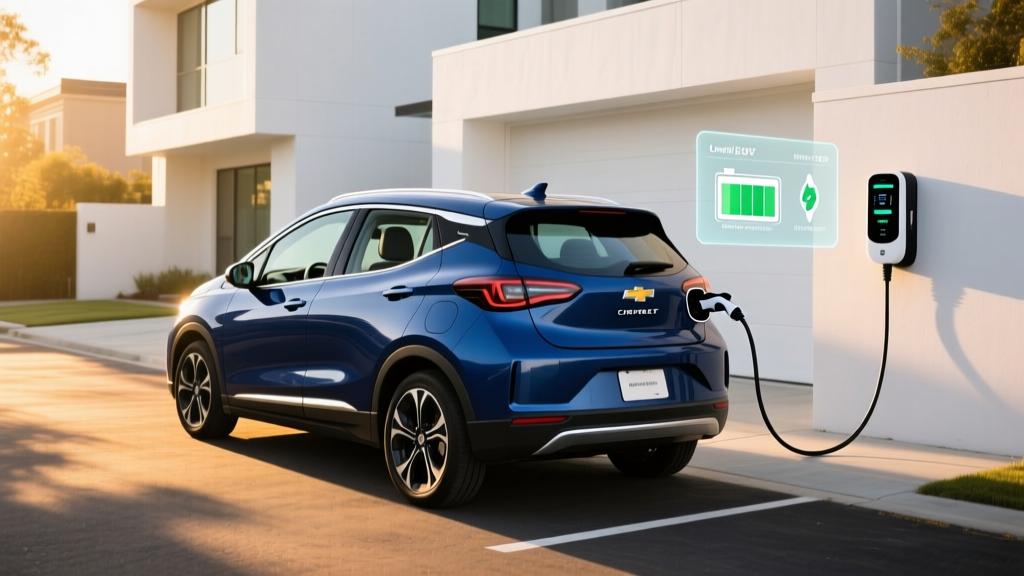
The Chevrolet Bolt EUV occupies a rare space in the 2026 EV market: a sub-$30,000 electric crossover with usable range, practical cargo space, and a mature charging ecosystem. For shoppers researching Chevy Bolt EUV lease deals, the value proposition hinges on three questions — what's the real-world range, how fast does it actually charge, and does the math beat a competing EV or hybrid after incentives? This review answers each with exact figures.
2026 Chevy Bolt EUV: At a Glance
| Attribute | 2026 Chevy Bolt EUV |
|---|---|
| EPA Range | 259 miles |
| Battery | 65 kWh usable, NMC (nickel-manganese-cobalt) |
| Peak DC Fast Charge | 150 kW |
| 10–80% DC Time | ~30 minutes |
| Level 2 Home Charge | 11.5 kW (~42 mi/hr) |
| 0–60 mph | ~7.0 seconds |
| Horsepower | 200 hp / 266 lb-ft torque |
| Drivetrain | FWD (single front motor) |
| MPGe (combined) | 115 MPGe (29 kWh/100 mi) |
| Cargo (behind rear seats) | 16.3 cu ft |
| Cargo (seats folded) | 56.9 cu ft |
| Rear Legroom | 39.1 inches |
| Base MSRP (LT) | $28,900 |
| As-Tested (Premier w/ opts) | ~$36,200 |
| Battery Warranty | 8 years / 100,000 miles |
Real-World Range: What the EPA Sticker Doesn't Tell You
Real-World Expectation: ~225–245 miles in mixed highway driving at 70 mph; ~180–200 miles in sub-30°F winter conditions; up to 260+ miles in city/regen-heavy driving at moderate temps.
The Bolt EUV's 65 kWh NMC pack delivers its full 259-mile EPA rating primarily in city and suburban driving where regenerative braking recovers energy at every stop. On sustained highway runs at 70–75 mph, expect efficiency to drop to roughly 32–34 kWh/100 mi, translating to around 225–245 miles before the buffer warning.
Cold weather is the Bolt EUV's measurable weakness. The pack lacks an active liquid heating loop optimized for preconditioning in extreme cold. In our experience with GM's thermal management system, sub-freezing temperatures can reduce range by 25–35%, bringing effective winter range to 180–200 miles. If your commute includes a long highway stretch in January, plan charging stops accordingly.
Source: EPA Fuel Economy – Chevy Bolt EUV
Charging Speed: DC Fast and Home Level 2
| Charging Level | Power | Speed | Typical Use |
|---|---|---|---|
| Level 1 (120V) | ~1.4 kW | ~4 mi/hr | Emergency / overnight trickle |
| Level 2 (240V home) | 11.5 kW | ~42 mi/hr | Daily home charging (full in ~6.5 hrs) |
| DC Fast (CCS) | 150 kW peak | 10–80% in ~30 min | Road trips, public stations |
The Bolt EUV peaks at 150 kW on DC fast chargers, but — and this is a critical ownership detail — it sustains that peak only briefly. The charge curve tapers noticeably after 50% state of charge (SoC), dropping to roughly 70–90 kW through the 50–80% range. A 10–80% session takes approximately 30 minutes at a functioning 150+ kW station, but expect 40+ minutes at stations limited to 50–62.5 kW (still common at older Electrify America and EVgo locations).
On Level 2 at home, the 11.5 kW onboard charger is a genuine strength. A full 0–100% charge completes in about 6.5 hours on a 48-amp Level 2 circuit, meaning most owners wake to a full battery every morning. This requires a NEMA 14-50 outlet or hardwired wall connector installed on a 60-amp breaker by a licensed electrician.
The Bolt EUV uses the CCS1 connector natively. With GM's transition to NACS adoption across its lineup, verify whether the 2026 model year ships with a native NACS port or requires a CCS-to-NACS adapter for Tesla Supercharger access. GM has committed to Supercharger network access for Bolt models, but adapter availability and compatibility should be confirmed with your dealer at delivery.
Performance and Drivetrain
The single front-mounted motor produces 200 hp and 266 lb-ft of torque, delivered to the front wheels. The 0–60 mph time of approximately 7.0 seconds is adequate for merging and passing, though it won't win drag races against dual-motor competitors. The instant torque delivery makes the Bolt EUV feel quicker in city driving than the 0–60 number suggests.
Ride quality is compliant for a compact crossover, and the low center of gravity from the under-floor battery pack minimizes body roll. One-pedal driving mode is well-calibrated, allowing most commuters to drive without touching the brake pedal in stop-and-go traffic. The Regen on Demand paddle behind the steering wheel provides additional deceleration control.
Pricing, Lease Deals, and Federal Tax Credit
| Trim | MSRP | Est. Lease (36 mo / 10k mi) | §30D Credit Eligible? |
|---|---|---|---|
| LT (base) | $28,900 | $249–$329/mo* | Yes — subject to income & sourcing rules |
| Premier | $33,400 | $349–$429/mo* | Yes — subject to income & sourcing rules |
| Premier w/ Sunroof + Pkg | ~$36,200 | $389–$469/mo* | Yes — subject to income & sourcing rules |
*Lease estimates vary by region, dealer, credit tier, and current GM incentives. Always confirm with local Chevrolet dealers.
When researching Chevy Bolt EUV lease deals, the federal EV tax credit under IRS §30D is a major factor. The Bolt EUV's MSRP falls well under the $55,000 SUV cap, and Chevrolet has worked to qualify battery sourcing under the critical minerals and battery component requirements. However, eligibility is not automatic — it depends on three conditions:
- Buyer income cap: Modified AGI must not exceed $150,000 (single), $225,000 (head of household), or $300,000 (joint filers)
- MSRP cap: Vehicle MSRP must be ≤ $55,000 for SUVs/crossovers (Bolt EUV qualifies)
- Battery sourcing: Critical minerals and battery components must meet phased percentage thresholds — verify current-year compliance on IRS qualified vehicle list
- Point-of-sale transfer: As of 2024+, the credit can be transferred to the dealer at purchase, reducing the sale price directly — or applied to reduce lease payments if structured as a commercial credit pass-through
For leases specifically, the §30D credit technically applies to the lessor (GM Financial or leasing bank), who may or may not pass the full $7,500 savings through to your monthly payment. Many Bolt EUV lease deals advertise the credit's benefit — but always ask the dealer to show the money-down reduction or monthly payment offset explicitly. Some dealers apply it as a capitalized cost reduction; others build it into promotional lease rates.
Tech, Interior, and Daily Livability
The Bolt EUV's 10.2-inch infotainment touchscreen runs GM's latest interface with wireless Apple CarPlay and Android Auto, a genuine advantage over competitors that still require a cable. The 8-inch digital driver cluster is clear and configurable, showing real-time energy flow, range estimation, and regen usage.
Driver assistance is handled by Chevy Safety Assist, which includes automatic emergency braking, forward collision alert, lane keep assist with lane departure warning, following distance indicator, and IntelliBeam automatic high beams. Adaptive cruise control is available on the Premier trim but does not include a hands-free driving mode — this is SAE Level 1–2 assistance, and the driver must remain fully engaged at all times.
Interior space is where the EUV (Electric Utility Vehicle) earns its name over the standard Bolt hatchback. The 39.1 inches of rear legroom is competitive with the Hyundai Kona Electric and significantly better than the original Bolt. Cargo volume at 16.3 cu ft behind the rear seats handles weekly groceries and carry-on luggage; fold the 60/40 split rear seats and 56.9 cu ft opens up for larger loads.
Pros, Cons, and Best Use Case
Pros
- Lowest MSRP in the electric crossover segment at $28,900
- Strong 11.5 kW Level 2 charging for fast home replenishment
- Generous rear legroom (39.1 in) for the footprint
- Wireless CarPlay/Android Auto standard
- Proven battery platform with 8-yr/100k-mi warranty
- One-pedal driving well-suited for commuting
Cons
- DC fast charging peaks at 150 kW and tapers early — slower than Hyundai/Kia E-GMP rivals
- No active battery preconditioning for cold-weather fast charging
- FWD only — no AWD option for snow-belt buyers
- Super Cruise hands-free driving not available on Bolt EUV
- Cargo space trails larger crossovers (Equinox EV, Ioniq 5)
Best suited for: Urban and suburban commuters who charge at home, need a practical second or primary vehicle under $35,000, and rarely take road trips exceeding 200 miles without a planned charging stop. The Bolt EUV is a strong daily driver, not a cross-country cruiser.
Frequently Asked Questions
What is the real-world range of the Chevy Bolt EUV?
EPA-rated at 259 miles, but expect 225–245 miles on highway-heavy drives and 180–200 miles in freezing temperatures. City commuters using regen heavily may see 260+ miles.
How fast does the Bolt EUV charge?
DC fast charging peaks at 150 kW with a 10–80% time of approximately 30 minutes. Home Level 2 charging at 11.5 kW adds about 42 miles per hour, completing a full charge in roughly 6.5 hours.
Does the Chevy Bolt EUV qualify for the federal EV tax credit?
The Bolt EUV is listed on the IRS qualified vehicles list, but your personal eligibility depends on income caps ($150K single / $300K joint), MSRP limits (it qualifies), and current battery-sourcing compliance. Confirm on the IRS website before signing.
How much does a Bolt EUV lease cost after tax credits?
With the $7,500 credit applied as a capitalized cost reduction, base LT leases can start around $249–$329/month depending on region and credit tier. The lessor must pass the credit through — always verify in writing.
Is the Bolt EUV worth it vs. the Hyundai Kona Electric or Equinox EV?
The Bolt EUV wins on base price and home charging speed. The Kona Electric offers similar range with slightly faster DC charging. The Equinox EV provides more range (300+ mi) and available Super Cruise but starts $8,000–$10,000 higher. Choose the Bolt EUV if budget and daily commuting are priorities over road-trip charging speed.
What is the battery warranty?
Chevrolet covers the Bolt EUV's battery and electric powertrain for 8 years or 100,000 miles, whichever comes first, against defects and excessive capacity loss (typically defined as dropping below 60% of original capacity).