The 2023 Fisker Ocean One launched as the flagship trim of Henrik Fisker's second automotive venture — a premium all-electric SUV promising class-leading range, solar-assisted charging, and a vegan interior at a price undercutting European rivals. As the top-tier launch edition, the Ocean One packed every available feature standard, including the Hyper Range battery, dual-motor AWD, and the California Mode open-air roof system. But with Fisker Inc. having filed for bankruptcy in mid-2024, the 2023 Ocean One now occupies a unique position: a capable EV with impressive specs but serious ownership questions. Here's everything buyers and current owners need to know.
2023 Fisker Ocean One: Quick Verdict
The Fisker Ocean One delivers genuinely competitive range (360 miles EPA), respectable DC fast-charging speeds, and a distinctive design that still turns heads. Its 113 kWh battery is among the largest ever fitted to a production SUV, and the dual-motor powertrain produces 564 horsepower in Hyperboost mode. However, Fisker's bankruptcy means limited parts availability, uncertain software support, and steep depreciation that has reshaped the used-market calculus. If you're considering one on the secondary market, the value proposition has shifted dramatically — but the ownership risks are real.
| Spec | Value |
|---|---|
| EPA Range | 360 miles |
| Battery (Usable) | ~113 kWh (NMC lithium-ion) |
| Drivetrain | Dual-motor AWD |
| Horsepower | 564 hp (Hyperboost) / 275 hp (Earth mode) |
| 0-60 mph | 3.7 seconds (Hyperboost) |
| Max DC Fast Charge | 250 kW (peak) |
| 10-80% DC Charge Time | ~35 minutes (estimated) |
| Level 2 Charge Rate | 11 kW onboard charger |
| MPGe (Combined) | 92 MPGe (EPA est.) |
| Efficiency | ~36 kWh/100 mi |
| Cargo Volume | 32.7 cu ft (rear seats up) / 68.8 cu ft (folded) |
| Base MSRP (2023) | $68,999 (+ $1,200 destination = $70,199) |
| Battery/Powertrain Warranty | 8 years / 100,000 miles (original; now uncertain) |
Range and Efficiency: EPA vs. Real World
Real-World Expectation: Plan for approximately 280–320 miles on mixed highway driving at 70-75 mph. In cold weather (below 32°F), expect a 20–30% reduction, dropping effective range to roughly 250–290 miles. The Ocean One's large 113 kWh pack provides a substantial buffer, but its heavy curb weight (~5,400 lbs) and boxy aerodynamics hurt highway efficiency compared to sleeker rivals like the Tesla Model Y or BMW iX.
The 360-mile EPA figure placed the Ocean One near the top of the electric SUV segment at launch, trailing only the Lucid Gravity's higher trims and edging out the Rivian R1S (Large Pack, 352 miles) and the Tesla Model X (348 miles). According to fueleconomy.gov, the Ocean One's combined efficiency rating is approximately 92 MPGe, translating to about 36 kWh per 100 miles — reasonable for a vehicle this size but less efficient per-mile than lighter competitors.
The Hyper Range battery uses NMC (nickel manganese cobalt) chemistry supplied by CATL. NMC offers higher energy density than LFP, which is necessary to hit the 360-mile target in a heavy SUV, but it also means you should avoid routinely charging to 100% or letting the pack sit at very low states of charge for extended periods. For daily driving, an 80% charge limit yields roughly 288 EPA-equivalent miles — still plenty for most commutes.
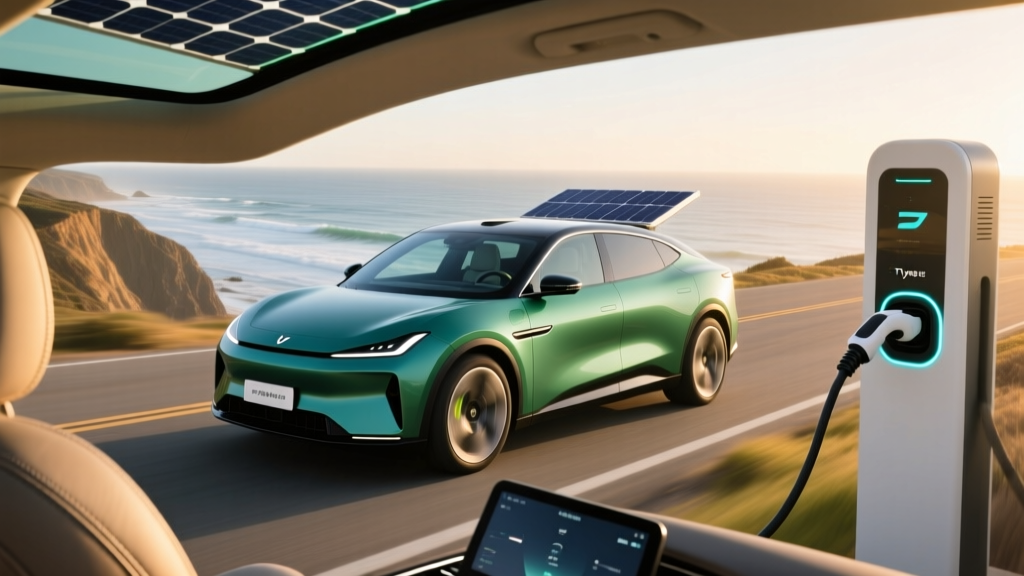
The Fisker Ocean One also features the Solar Roof, which Fisker claimed could add up to 1,500 miles of range per year under ideal conditions. In practice, real-world solar contribution is modest — roughly 3–5 miles per day of parked, sunny charging. It's a nice supplement but not a meaningful range extender for daily use.
Charging Speed: DC Fast and Home Level 2
| Charging Level | Power / Rate | Estimated Time or Miles/Hour |
|---|---|---|
| Level 1 (120V household) | ~1.4 kW | ~4 miles per hour of charging |
| Level 2 (240V home/public) | 11 kW (onboard max) | ~33 miles per hour; full charge in ~11 hours |
| DC Fast Charge (CCS1) | 250 kW peak | 10-80% in ~35 minutes |
The Ocean One uses the CCS1 connector standard. Note that Fisker did not equip the Ocean with a NACS (Tesla) port, meaning you'll need a CCS-to-NACS adapter to access Tesla Superchargers that don't offer Magic Dock. Adapters from reputable brands like Lectron or A2Z are widely available for $150–$250.
On DC fast charging, the 250 kW peak rate is competitive on paper, but real-world charging curves tell a more nuanced story. The Ocean One sustains its peak rate for a relatively short window (roughly 10–30% state of charge), then tapers progressively. From 10–80%, expect approximately 35 minutes at a capable 350 kW charger. At a 150 kW Electrify America or EVgo station, plan for closer to 45–50 minutes. This is adequate for road trips but slower than the Hyundai Ioniq 5's 18-minute 10-80% sprint, thanks to that car's 800V architecture.
For home charging, the 11 kW onboard charger is a strong point. On a 48-amp Level 2 circuit (the most common home install), you'll add roughly 33 miles of range per hour, meaning an overnight charge from 20% to 80% takes about 6–7 hours. This is perfectly suited for daily top-up routines.
Performance and Driving Dynamics
The Ocean One's dual-motor all-wheel-drive powertrain delivers 564 horsepower and an estimated 564 lb-ft of torque when Hyperboost mode is engaged. The result is a 3.7-second 0-60 mph time — genuinely quick for a 5,400-pound SUV and competitive with the BMW iX M60 and Rivian R1S Dual-Motor.
In Earth mode (the efficiency-oriented drive setting), output drops to 275 hp, which is still adequate for highway merging and daily driving while extending range. The transition between modes is seamless, and the regenerative braking offers multiple levels of intensity, though the Ocean One does not offer true one-pedal driving that brings the car to a complete stop without brake application.
Ride quality is firm but composed, with the 22-inch wheels on the Ocean One transmitting more road imperfections than smaller wheel options on lower trims. Steering is weighted appropriately but lacks the precision of a Porsche Cayenne EV or BMW iX. This is a comfortable cruiser, not a sports SUV — and that's fine for its intended audience.
Interior, Cargo, and Technology
The Ocean One's cabin is defined by its vegan materials, recycled fabrics, and the headline feature: the California Mode. This system opens the rear hatch glass, the rear quarter windows, and the solar roof panel simultaneously, creating an open-air experience unlike any other SUV. It's genuinely impressive on warm days and sets the Fisker apart visually and experientially.
Cargo space is competitive: 32.7 cubic feet behind the second row and 68.8 cubic feet with the rear seats folded. There is no front trunk (frunk), which is a missed opportunity in a vehicle this size and is partly due to the HVAC and electronics packaging under the hood. Rear-seat legroom is generous at approximately 40.4 inches, comfortably fitting adults on longer trips.
The infotainment system centers on a 17.1-inch rotating touchscreen (the "Revolve" screen) that toggles between a full-screen "Hollywood" mode for media and a reduced "Limo" mode for driving. The interface was criticized at launch for being sluggish and buggy, and while over-the-air updates improved things somewhat, the system never reached the polish of Tesla's or BMW's iDrive. Wireless Apple CarPlay and Android Auto are supported.
Driver assistance features include adaptive cruise control, lane-keeping assist, blind-spot monitoring, and automatic emergency braking. These operate at SAE Level 2, meaning the driver must remain fully engaged at all times. The system is functional but not class-leading — it lacks the hands-free highway capability of GM's Super Cruise or Ford's BlueCruise.
Pricing, Tax Credits, and Used Market Reality
| Item | Amount |
|---|---|
| Original MSRP (incl. destination) | $70,199 |
| Federal §30D Tax Credit (new, 2023) | Up to $7,500 (subject to eligibility) |
| Effective Price After Credit (if eligible) | ~$62,699 |
| Typical Used Price (2026 market) | $25,000–$40,000 (varies by mileage/condition) |
| Used EV Tax Credit (§25E) | Up to $4,000 (30% of sale price, max $4,000) |
At its original $70,199 MSRP, the Ocean One exceeded the IRS §30D MSRP cap of $80,500 for SUVs, so it technically qualified for the new-vehicle federal tax credit — provided the buyer met income limits ($300,000 joint / $150,000 single modified AGI) and the vehicle met critical-mineral and battery-component sourcing requirements. Per IRS guidance, the Fisker Ocean's CATL-sourced battery raised sourcing-compliance questions that evolved throughout 2023-2024.
On the used market, Fisker's bankruptcy has caused severe depreciation. Well-equipped Ocean One models now trade between $25,000 and $40,000 depending on mileage and condition — a fraction of the original MSRP. Buyers may qualify for the §25E used clean vehicle credit (up to $4,000, or 30% of the sale price, whichever is less), subject to income caps and dealer registration requirements. Consult a tax professional to confirm eligibility for your situation.
Ownership Considerations: The Bankruptcy Factor
Fisker Inc. filed for Chapter 11 bankruptcy in June 2024. For current owners and prospective used buyers, this raises several practical concerns:
- Parts availability: Body panels, trim pieces, and proprietary components are increasingly scarce. Collision repair can involve long wait times.
- Software support: Over-the-air updates have largely ceased. The infotainment system and driver-assist features are frozen at their last update state.
- Warranty coverage: The original 8-year/100,000-mile battery and powertrain warranty is effectively unbacked. Third-party extended warranties may be available but vary in coverage scope.
- Service network: Fisker relied on a mix of mobile service technicians and third-party shops. The network has thinned significantly post-bankruptcy.
- Insurance: Some insurers have raised premiums or limited coverage options for Fisker vehicles due to parts uncertainty.
Despite these challenges, the Ocean One's core EV hardware — the CATL battery pack, the Bosch-supplied motors, and standard suspension components — are built by major Tier 1 suppliers. Routine maintenance (brake pads, tires, cabin filters) can be handled by independent EV-aware shops. The risk is concentrated in Fisker-proprietary body and electronics parts.
Pros
- Class-leading 360-mile EPA range (at launch)
- Distinctive design and California Mode open-air experience
- Large 113 kWh battery provides range security
- 564 hp dual-motor performance
- Spacious cabin with generous rear legroom and cargo space
- Significant used-market discount from original MSRP
- Solar roof adds modest supplemental range
Cons
- Fisker bankruptcy creates parts and service uncertainty
- Infotainment system is dated and no longer receiving updates
- No NACS port — requires adapter for Tesla Supercharger access
- Heavy weight hurts efficiency vs. lighter competitors
- 22-inch wheels compromise ride quality
- No front trunk (frunk)
- Warranty coverage effectively voided post-bankruptcy
- Driver-assist features lag behind GM Super Cruise / Ford BlueCruise
Who Should Buy the 2023 Fisker Ocean One?
Choose the Fisker Ocean One if:
- You find one at a steep used-market discount ($30K–$35K) and accept the parts/service risk
- You prioritize maximum range for long commutes or frequent road trips
- You value distinctive design and the open-air California Mode experience
- You have access to reliable local EV service and can self-advocate on parts sourcing
Look elsewhere if:
- You want guaranteed warranty coverage and dealer support
- You need hands-free highway driving (choose GM Super Cruise or Ford BlueCruise vehicles)
- You want seamless Tesla Supercharger access without adapters
- You prefer a proven, ongoing brand with established parts supply chains
The strongest alternatives in this price range (used market) include the Tesla Model Y Long Range (better charging network, stronger software), the Rivian R1S (better off-road capability, active manufacturer support), and the Hyundai Ioniq 5 (faster charging, full warranty if CPO). Each trades range for ownership peace of mind.
Frequently Asked Questions
What is the real-world range of the 2023 Fisker Ocean One?
The EPA rates the Ocean One at 360 miles. In real-world mixed highway driving at 70-75 mph, expect 280–320 miles. In cold weather (below freezing), plan for 250–290 miles. The large 113 kWh battery gives a comfortable buffer, but the heavy curb weight and boxy aero reduce efficiency at sustained highway speeds.
How fast does the Fisker Ocean One charge?
On DC fast charging, the Ocean One peaks at 250 kW and achieves a 10-80% charge in approximately 35 minutes at a 350 kW-capable station. At a 150 kW charger, plan for 45–50 minutes. On Level 2 home charging (11 kW onboard), a full charge takes about 11 hours, adding roughly 33 miles of range per hour.
Does the 2023 Fisker Ocean One qualify for the federal EV tax credit?
For new purchases in 2023, the Ocean One could qualify for up to $7,500 under §30D, subject to buyer income limits and battery-sourcing requirements that were evolving at the time. On the used market today, buyers may qualify for the §25E used EV credit (up to $4,000). Always verify current eligibility on irs.gov and consult a tax professional.
Is the Fisker Ocean One worth buying in 2026?
At heavily discounted used prices ($25K–$40K), the Ocean One offers substantial range and performance for the money. However, Fisker's bankruptcy means limited warranty backing, uncertain parts supply, and no ongoing software updates. It suits risk-tolerant buyers who can manage service logistics and who value range and design over ownership certainty.
What is the battery warranty on the Fisker Ocean One?
Fisker originally warranted the battery and powertrain for 8 years or 100,000 miles (whichever came first), with a capacity retention threshold of 70%. However, following Fisker's June 2024 bankruptcy, this warranty is effectively unbacked by the manufacturer. Third-party warranty extensions may be available but vary in scope and provider reliability.
Can the Fisker Ocean One use Tesla Superchargers?
Not natively. The Ocean One has a CCS1 charge port, while Tesla Superchargers use the NACS connector. You'll need a CCS-to-NACS adapter ($150–$250) to access Superchargers equipped with Magic Dock or those open to non-Tesla vehicles via adapter. Most Electrify America, EVgo, and ChargePoint DC fast chargers work without an adapter.