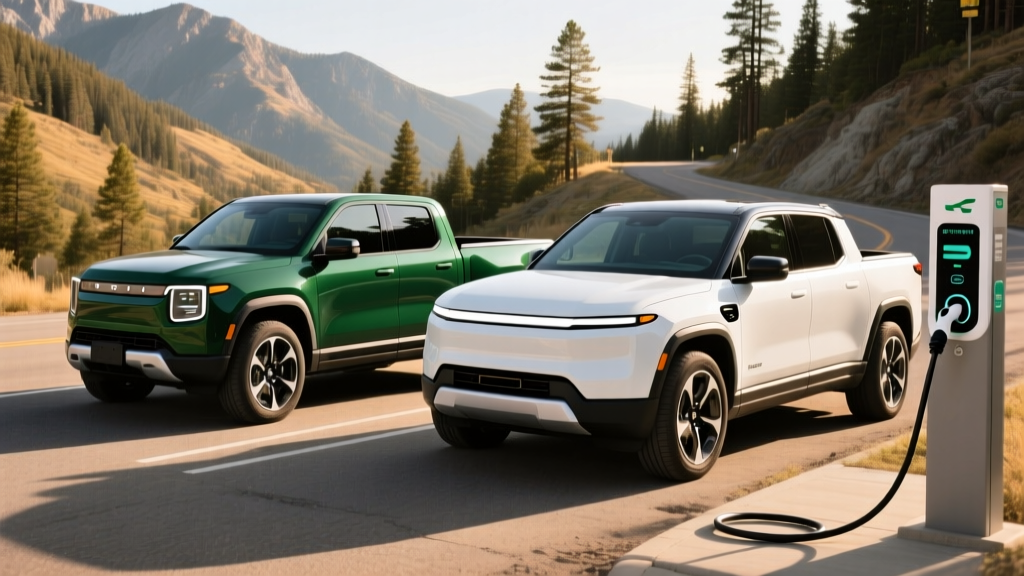
The 2022 Rivian R1T pickup and R1S SUV were the first vehicles from the Irvine-based startup to reach driveways, kicking off deliveries in late 2021 and ramping through 2022. Now that these trucks have accumulated hundreds of millions of real-world miles, we have a clear picture of what early adopters actually experience — from highway range degradation to DC fast-charging curves, battery degradation, and long-term ownership costs. This review focuses on the 2022 model-year Dual-Motor variants with the Large battery pack, the most common configuration on the used market today.
2022 Rivian R1T & R1S Core Specifications
| Spec | R1T (Dual-Motor, Large Pack) | R1S (Dual-Motor, Large Pack) |
|---|---|---|
| EPA Range | 328 miles | 316 miles |
| Battery Capacity (usable) | ~128.9 kWh (NMC) | ~128.9 kWh (NMC) |
| Max DC Fast Charge | ~200 kW peak | ~200 kW peak |
| 10–80% DCFC Time | ~42 minutes | ~42 minutes |
| Level 2 Home Charging | 11.5 kW (~25 mi/hr) | 11.5 kW (~25 mi/hr) |
| 0–60 mph | ~5.0 seconds | ~5.0 seconds |
| Horsepower / Torque | 533 hp / 610 lb-ft | 533 hp / 610 lb-ft |
| Drivetrain | Dual-Motor AWD | Dual-Motor AWD |
| MPGe (combined) | 70 MPGe | 69 MPGe |
| Efficiency | 48 kWh/100 mi | 49 kWh/100 mi |
| Towing Capacity | 11,000 lbs | 7,700 lbs |
| Original Base MSRP (2022) | $73,000 | $78,000 |
| Battery/Powertrain Warranty | 8 years / 175,000 miles | 8 years / 175,000 miles |
Sources: EPA fueleconomy.gov, Rivian owner's manual.
Real-World Range: What the EPA Sticker Doesn't Tell You
EPA Estimated Range: R1T 328 mi · R1S 316 mi (Dual-Motor, Large Pack)
Real-World Expectation: Plan for 260–290 miles on a flat highway at 70 mph in mild weather. In cold conditions (below 32°F), expect a further 15–25% reduction, dropping effective range to roughly 210–240 miles. Towing near max capacity cuts range by 40–50%.
The 2022 Rivian's 128.9 kWh usable NMC battery is one of the largest ever fitted to a production consumer EV. That capacity is genuinely useful, but the R1T's boxy aerodynamics and 5,900+ lb curb weight impose a steep efficiency tax. At 48 kWh per 100 miles, the R1T consumes roughly 70% more energy per mile than a Tesla Model Y. On the highway at sustained speeds above 70 mph, the energy penalty from wind resistance becomes pronounced — owners consistently report 2.0–2.3 mi/kWh on interstate road trips, compared to the EPA-rated ~2.1 mi/kWh combined.
Cold weather compounds the issue. NMC chemistry loses efficiency at low temperatures, and while the R1T/R1S have active thermal management and a heat pump, preconditioning the battery still draws from the pack unless plugged in. In sub-freezing testing, real-world range typically lands between 210 and 250 miles before needing a charge — adequate for most commutes but something to plan around on winter road trips.
Charging Performance: DC Fast, Level 2, and the Curve Reality
| Charging Level | Power / Rate | Miles Added per Hour | Notes |
|---|---|---|---|
| Level 1 (120V) | ~1.4 kW | ~3 mi/hr | Emergency/trickle only |
| Level 2 (240V, 48A) | 11.5 kW | ~25 mi/hr | Full charge in ~13 hours |
| DC Fast Charge | Peak ~200 kW | ~140 mi in first 20 min | 10–80% in ~42 min |
The 2022 Rivian's DC fast-charging capability is its most discussed limitation relative to newer competitors. Peak charge rate tops out around 200 kW on the Large Pack, and the charge curve tapers significantly above 60% state of charge. In real-world DCFC sessions at Electrify America or Tesla Supercharger stations (via the NACS adapter Rivian now provides), expect the following pattern:
- 10–40% SoC: Sustained ~180–200 kW — fast and useful
- 40–60% SoC: Tapers to ~130–150 kW
- 60–80% SoC: Drops further to ~80–100 kW
- 80%+ SoC: Under 50 kW — don't wait around for this
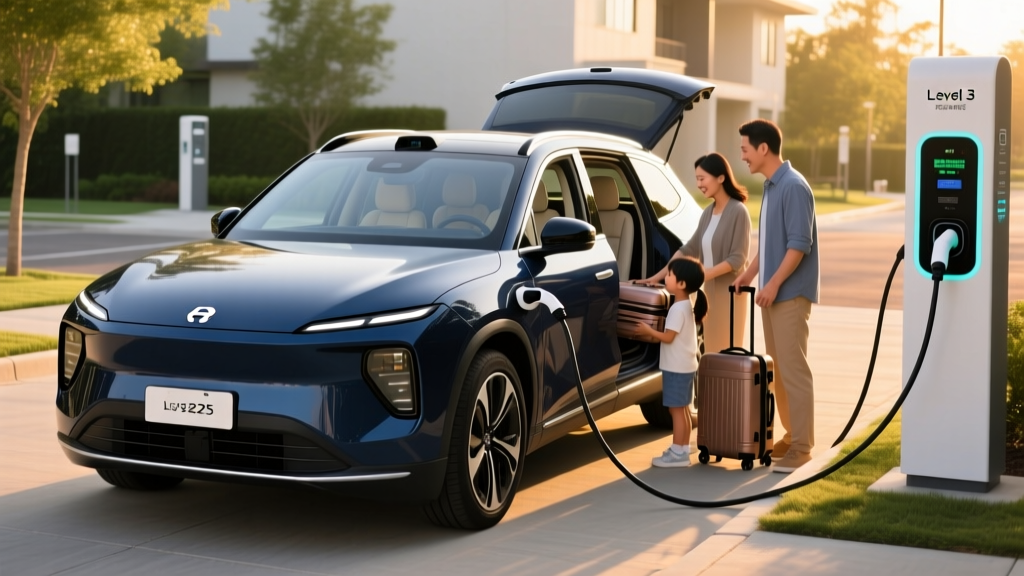
That 10–80% session takes roughly 42 minutes at a capable 350 kW charger. It's adequate for road-trip stops but noticeably slower than the Hyundai Ioniq 5 (18 minutes) or the newer Rivian Gen 2 architecture with its improved charge curve. For home charging, the onboard 11.5 kW AC charger is generous — a Wall Connector or Rivian Wall Charger on a 60A circuit replenishes the massive pack in about 13 hours from empty, which works well for overnight top-ups.
kW vs. kWh reminder: kW (kilowatts) measures the rate of charging — think of it as how fast water flows through a hose. kWh (kilowatt-hours) measures the battery's total energy capacity — the size of the tank. The R1T's battery holds ~128.9 kWh of energy and can accept charge at up to ~200 kW.
Performance, Drivetrain, and Driving Dynamics
The 2022 Dual-Motor R1T delivers 533 horsepower and 610 lb-ft of torque through a two-motor AWD system (one motor per axle). The 0–60 mph sprint takes approximately 5.0 seconds — quick for a 5,900-lb truck and more than adequate for highway merging and passing. The Quad-Motor variant (introduced later) pushes output to 1,025 hp and a 3.0-second 0–60, but the Dual-Motor is the volume configuration.
Ride quality benefits from Rivian's electro-hydraulic roll control system, which eliminates traditional anti-roll bars and allows impressive body control both on-road and off. The air suspension offers adjustable ride height from 7.9 to 14.9 inches of ground clearance, making the R1T genuinely capable on trails. The R1S shares the same platform but adds a third row, seating up to seven, though third-row legroom (30.4 inches) is tight for adults on longer trips.
Cargo and Passenger Space
- R1T bed length: 4.5 feet (extends to ~6 feet with the Gear Tunnel and tailgate down)
- R1T Gear Tunnel: 11.7 cu ft of enclosed, lockable cross-truck storage — a signature feature
- R1S cargo (behind 3rd row): 21.5 cu ft
- R1S cargo (2nd row folded): 58.2 cu ft
- R1S cargo (all rows folded): 104.7 cu ft
- R1T/R1S front headroom: 41.3 inches
- R1T/R1S rear legroom: 38.6 inches
Pricing, Trims, and Federal Tax Credit Eligibility
The 2022 Rivian R1T launched with a base MSRP of $73,000 for the Explore trim (Dual-Motor, Large Pack), while the Adventure trim added $5,500 for premium interior finishes and additional off-road features. The R1S started at $78,000. By 2022, most buyers paid between $75,000 and $90,000 as-tested depending on configuration.
On the used market in 2026, expect to find 2022 R1T models priced between $48,000 and $65,000 depending on mileage and condition.
| Scenario | Price Range | Tax Credit Potential |
|---|---|---|
| New 2022 (original MSRP) | $73,000–$90,000 | $7,500 (if eligible) |
| Used 2022 R1T (2026 market) | $48,000–$65,000 | Up to $4,000 (used EV credit, §25E) |
Does the 2022 Rivian Qualify for the Federal EV Tax Credit?
For new purchases in 2022: The R1T and R1S originally qualified for the full $7,500 federal tax credit under pre-IRA rules (the 200,000-vehicle manufacturer cap had not been reached). However, buyers needed to have sufficient tax liability to claim the non-refundable credit.
For used purchases in 2026 (§25E Used Clean Vehicle Credit): A used 2022 Rivian may qualify for up to $4,000 (30% of sale price, capped at $4,000) if all of the following apply per IRS §25E rules:
- Sale price is $25,000 or less (this is a challenge — most 2022 Rivians still exceed this threshold)
- Buyer's adjusted gross income is ≤$75,000 (single), $112,500 (head of household), or $150,000 (joint)
- Vehicle is purchased from a licensed dealer
- Buyer has not claimed a used EV credit in the prior 3 years
- Vehicle is for personal use, primarily in the U.S.
Practical reality: Most 2022 Rivians on the used market in 2026 are priced above the $25,000 cap, meaning the used-EV credit is unlikely to apply. Buyers should consult a tax professional and verify current IRS §30D and §25E guidance before relying on any credit amount.
Battery Longevity, Warranty, and Degradation
Rivian equips the 2022 R1T and R1S with an NMC (nickel manganese cobalt) lithium-ion battery pack supplied primarily by Samsung SDI. The battery warranty covers 8 years or 175,000 miles (whichever comes first) against defects and capacity loss below 70% of original capacity. This is more generous in mileage than most competitors' 100,000-mile thresholds.
Based on early fleet data, 2022 Rivians show approximately 3–5% degradation after 50,000 miles, which is typical for NMC packs with active liquid thermal management. Owners who routinely charge to 100% and let the vehicle sit at full state of charge in hot weather may see accelerated degradation. Best practice: set daily charge limit to 80–90% and use preconditioning before DC fast charging.
A full battery replacement, if needed out of warranty, is estimated at $20,000–$28,000 based on current pack pricing — a significant potential long-term cost that buyers of high-mileage used examples should factor into their decision.
Tech, Driver Assistance, and Standout Features
The 2022 Rivian runs a proprietary infotainment system on a 15.6-inch center display with a 12.3-inch digital instrument cluster. The interface is responsive and well-organized, with native route planning that integrates charging stops and preconditioning. Apple CarPlay and Android Auto were notably absent at launch; wireless CarPlay was added via OTA update in 2023.
Driver+ (ADAS)
SAE Automation Level: Level 2
Rivian's Driver+ system combines adaptive cruise control with lane-centering on divided highways. It is a driver-assist system — not self-driving. The driver must remain attentive, keep hands on or near the wheel, and be prepared to take over at any time. This is the same SAE Level 2 classification as Tesla Autopilot, GM Super Cruise, and Ford BlueCruise.
What Driver+ Does NOT Do:
- Navigate city streets or handle complex intersections autonomously
- Allow the driver to sleep, read, or look away from the road
- Operate on non-divided or poorly marked roads
- Replace the need for active driver supervision
Standout features unique to the 2022 Rivian include the Gear Tunnel (R1T), a powered tonneau cover, camp kitchen accessory that slides from the tunnel, integrated air compressor, and a built-in Bluetooth speaker (the Rivian Camp Speaker) that detaches from the door panel for tailgate use.
Pros, Cons, and the Verdict
Pros
- Genuine off-road capability with 14.9" ground clearance and quad-corner air suspension
- 11,000-lb towing capacity (R1T) — class-leading for electric pickups
- Gear Tunnel is a genuinely innovative storage solution
- Strong build quality for a startup's first production vehicle
- 8-yr/175,000-mi battery warranty exceeds most competitors
- Active OTA updates continue to improve the vehicle
Cons
- High energy consumption (48 kWh/100 mi) limits road-trip efficiency
- ~200 kW peak DCFC is slow vs. 800V competitors at 250–350 kW
- No Apple CarPlay at launch (added later via OTA)
- Service center network still limited in rural areas
- High insurance premiums — $2,500–$4,000/year is common
- Used prices remain elevated; tax credit eligibility is limited
Who the 2022 Rivian Suits Best
Buy the 2022 Rivian R1T if: You need a capable truck for towing, off-roading, or adventure gear hauling, you have reliable home Level 2 charging, and you value unique features like the Gear Tunnel and camp kitchen integration.
Buy the 2022 Rivian R1S if: You want a three-row electric SUV with genuine off-road chops and don't mind the efficiency penalty vs. a Tesla Model X or the newer Rivian R1S Gen 2.
Look elsewhere if: You primarily highway-commute long distances (the efficiency and DCFC speed are pain points), you need the lowest cost-per-mile EV, or you don't have home charging access and rely solely on public DCFC.
Frequently Asked Questions
What is the real-world range of the 2022 Rivian R1T?
The EPA rates the 2022 R1T Dual-Motor Large Pack at 328 miles. In real-world highway driving at 70 mph in moderate temperatures, expect 260–290 miles. In cold weather (below freezing), plan for 210–250 miles. Towing near the 11,000-lb max can cut range to 150–180 miles.
How fast does the 2022 Rivian charge at home and on the road?
On a Level 2 home charger (11.5 kW), the R1T adds roughly 25 miles of range per hour, fully charging in about 13 hours. On a DC fast charger, it peaks at ~200 kW and charges from 10–80% in approximately 42 minutes. The charge curve tapers noticeably above 60% SoC, so 80–100% top-offs are slow.
Does the 2022 Rivian qualify for the $7,500 federal tax credit in 2026?
For new purchases in 2022, the R1T/R1S qualified for the full $7,500 credit. In 2026, a new 2022 Rivian (if any remain) would need to meet current §30D battery sourcing, MSRP cap ($80,000 for trucks/SUVs), and buyer income limits. For used purchases, the §25E credit caps at $4,000 and requires a sale price of $25,000 or less — most 2022 Rivians exceed this. Always verify with a tax professional and the IRS.
Is the 2022 Rivian worth buying vs. a Ford F-150 Lightning or Tesla Cybertruck?
The R1T wins on off-road capability, build quality, and the Gear Tunnel. The F-150 Lightning offers more interior space, a larger frunk, and lower pricing. The Cybertruck has faster charging (on newer 800V architecture) and sharper efficiency. If off-roading and adventure features are priorities, the R1T holds up well. If you primarily need a work truck or value lowest cost-per-mile, the Lightning is the stronger value play.
What are the biggest complaints from 2022 Rivian owners?
The most common owner-reported issues include slow DC fast charging relative to newer EVs, limited service center availability in some regions, higher-than-expected energy consumption on highway trips, and early software quirks (many resolved via OTA). Some owners also note elevated tire wear due to the vehicle's weight and instant torque delivery.
How long will the 2022 Rivian battery last?
The battery is warranted for 8 years or 175,000 miles against degradation below 70% capacity. Early fleet data suggests 3–5% degradation at 50,000 miles with normal charging habits. With proper care (avoiding routine 100% charges, using preconditioning before DCFC), NMC packs in thermally managed systems commonly retain 85–90% capacity at 100,000 miles.
For the latest EPA data, see fueleconomy.gov. For current federal tax credit rules, consult IRS.gov §30D guidance. Rivian specifications from the Rivian owner portal.