The Short Answer: There Is No BMW X6 Electric Car — Yet
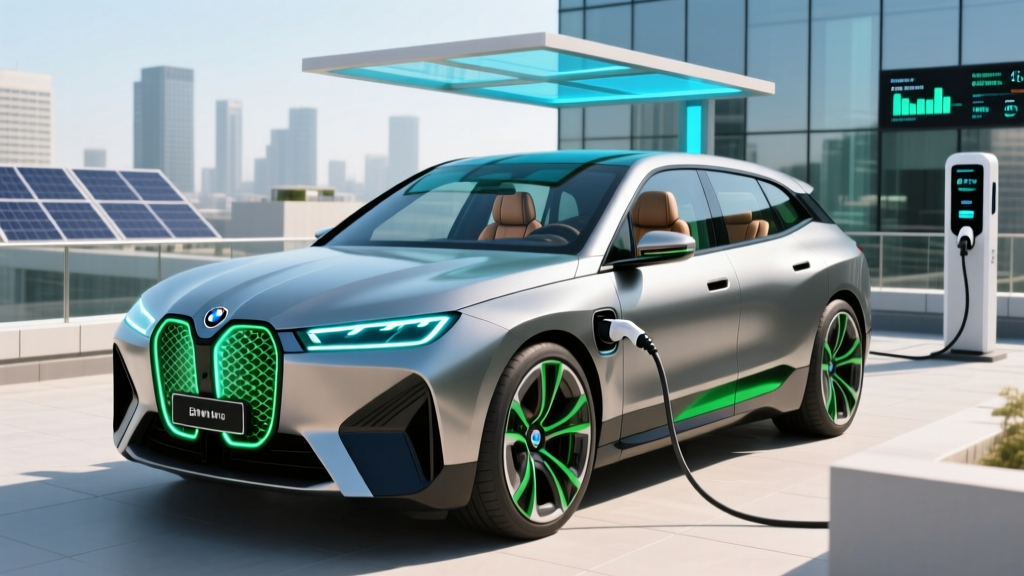
As of the 2026 model year, BMW does not sell an electric version of the X6 coupe SUV. If you want the BMW X6 electric car experience — a premium, all-electric BMW SUV in a similar size and price bracket — the closest equivalent is the BMW iX xDrive50 (starting around $87,250), which slots between the X5 and X6 in footprint but delivers 324 miles of EPA range, 516 hp, and DC fast charging up to 195 kW. The X6 itself remains a mild-hybrid/gasoline-only nameplate through 2026. If BMW electrifies the X6 under the upcoming Neue Klasse platform, it will not arrive before the 2027–2028 timeframe.
Why the iX Is the Real BMW X6 Electric Car Alternative
BMW's naming convention can confuse shoppers. The X6 is a "Sports Activity Coupe" built on the same CLAR platform as the X5, featuring a sloped roofline and a starting MSRP near $75,000 for the gas xDrive40i. The iX, meanwhile, is BMW's dedicated electric midsize SUV — built on a bespoke EV architecture — and it occupies the same showroom space that an "iX6" would, if BMW made one.
For buyers specifically searching for a BMW X6 electric car, the iX xDrive50 is the practical stand-in. It offers similar cargo volume (35.5 cu ft behind the second row vs. the X6's 27.4 cu ft), more power, and zero tailpipe emissions. The tradeoff? The iX lacks the X6's aggressive coupe roofline and the sportier driving dynamics that define the X6's brand identity.
| Spec | BMW iX xDrive50 (EV) | BMW X6 xDrive40i (Gas/MHEV) |
|---|---|---|
| Powertrain | Dual-motor AWD, 111.5 kWh battery (NMC) | 3.0L turbo I-6 + 48V mild hybrid |
| Horsepower | 516 hp | 375 hp |
| 0–60 mph | 4.4 seconds | 5.2 seconds |
| EPA Range / Fuel Economy | 324 mi / 86 MPGe combined | ~23 MPG combined |
| Max DC Fast Charge | 195 kW (10–80% in ~31 min) | N/A |
| Level 2 Charge Rate | 11 kW (~30 mi/hr) | N/A |
| Cargo (behind 2nd row) | 35.5 cu ft | 27.4 cu ft |
| Starting MSRP | $87,250 | $75,100 |
| Federal §30D Tax Credit | Not eligible (battery sourcing) | Not eligible (not a PHEV/BEV) |
| Battery/Powertrain Warranty | 8 yr / 100,000 mi (battery) + 4 yr / 50,000 mi (vehicle) | 4 yr / 50,000 mi |
Sources: EPA fueleconomy.gov, BMW USA
Real-World Range: What 324 EPA Miles Actually Means
EPA Sticker: 324 miles (iX xDrive50 with 20" wheels)
Real-World Highway (70 mph, 70°F): Expect ~275–290 miles
Cold Weather (below 30°F, highway): Expect ~220–250 miles
Cold + highway + headwind: Plan stops at ~200 miles to stay above 10% SoC
The iX's 111.5 kWh battery pack (approximately 105.2 kWh usable) uses NMC (nickel manganese cobalt) chemistry, which prioritizes energy density over the cycle-life advantages of LFP. In real-world driving, the iX is one of the more efficient large luxury EVs, averaging roughly 2.0–2.2 kWh/mile on the highway thanks to its heat pump and active aero. However, like all NMC packs, expect 10–20% range loss in sustained sub-freezing temperatures — the heat pump helps, but battery chemistry is physics.
The charge curve also matters on road trips. The iX peaks at 195 kW but only sustains that rate briefly between roughly 10–30% state of charge. Above 50% SoC, the rate drops to around 100–120 kW, and above 80% it tapers sharply to under 50 kW. This means the advertised "10–80% in 31 minutes" is realistic at a functioning 200+ kW charger, but charging from 50–80% alone takes almost as long as 10–50%.
Cost of Ownership: iX Electric vs. X6 Gas Over 5 Years
One of the most common questions from BMW X6 electric car seekers is whether going electric actually saves money. The answer depends heavily on your electricity rate, annual mileage, and whether you can charge at home. Below is a 5-year/75,000-mile comparison assuming $0.16/kWh home charging (national average) and $4.00/gallon premium fuel.
| Cost Category | BMW iX xDrive50 (EV) | BMW X6 xDrive40i (Gas) |
|---|---|---|
| Purchase Price (MSRP) | $87,250 | $75,100 |
| Federal Tax Credit (§30D) | $0 (sourcing rules) | $0 |
| Fuel / Energy (75k mi) | $2,520 (home L2) | $13,043 (premium gas) |
| Maintenance (5 yr) | ~$1,800 | ~$4,200 |
| Insurance (avg. 5 yr) | ~$14,500 | ~$12,000 |
| Depreciation (est.) | ~$38,000 | ~$30,000 |
| Est. Total Cost of Ownership | ~$106,070 | ~$104,343 |
Key takeaways: The iX saves roughly $10,500 in fuel and $2,400 in maintenance over five years. However, those savings are largely offset by the higher purchase price, steeper depreciation (luxury EVs depreciate faster than ICE equivalents in the current market), and ~$2,500 more in insurance premiums. The iX breaks even on operating costs around year 4–5 if you charge exclusively at home. If you rely on public DC fast charging at $0.40–0.60/kWh, the fuel savings shrink to roughly $5,000–6,000 over five years, and the iX becomes more expensive to own.
For a deeper look at current IRS §30D clean vehicle credit rules, note that the iX currently does not qualify for the $7,500 federal credit due to battery component and critical-mineral sourcing requirements. Some states offer additional rebates — check your local DMV or energy office for specifics.
Charging at Home: What You Need Before You Buy
Home charging access is the single biggest determinant of EV satisfaction. If you're considering the iX (or any BMW X6 electric car alternative), assess your home setup first.
| Level | Power (kW) | Miles Added per Hour | Typical Use |
|---|---|---|---|
| Level 1 (120V outlet) | ~1.4 kW | ~3–4 mi/hr | Emergency/top-off only |
| Level 2 (240V, 48A) | 11 kW | ~30 mi/hr | Daily home charging (full overnight) |
| DC Fast Charge | Up to 195 kW | ~650 mi/hr (peak) | Road trips, 10–80% in ~31 min |
Home installation reality: A Level 2 home charger (like the BMW Wallbox or a ChargePoint Home Flex) requires a 240V/60A circuit. Installation costs range from $800–$2,500 if your electrical panel has capacity, or $3,000–$5,000+ if you need a panel upgrade from 100A to 200A service. Always get a quote from a licensed electrician before committing to the vehicle.
If you live in an apartment or condo without charging access, the iX becomes significantly harder to live with. Public DC fast charging works, but relying on it exclusively means paying 2–3× more per mile than home charging and spending 30–45 minutes per session 2–3 times per week.
Common Misconceptions About the BMW X6 Electric Car
| Myth | Fact |
|---|---|
| "The BMW X6 has an electric version I can buy." | As of 2026, the X6 is gasoline/mild-hybrid only. The iX is BMW's electric SUV in this class. |
| "The iX qualifies for the $7,500 federal tax credit." | The iX does not currently meet §30D battery sourcing requirements. Always verify on IRS.gov before purchasing. |
| "324 miles of range means I'll get 324 miles." | Expect 275–290 mi highway, 220–250 mi in cold weather. Plan conservatively. |
| "I don't need home charging — public chargers are everywhere." | Public DC charger uptime varies. Electrify America and EVgo average ~85–90% uptime. Home charging is 3× cheaper and far more convenient. |
| "EV batteries need replacement after 100,000 miles." | BMW warranties the iX battery for 8 years/100,000 miles against dropping below 70% capacity. Most NMC packs retain 85–90% capacity at 100k miles based on current fleet data. |
Decision Framework: Should You Buy the iX or Wait?
Buy the BMW iX xDrive50 Now If:
- You want a premium electric BMW SUV today and don't need a coupe roofline
- You have home Level 2 charging (or can install it)
- You drive under 300 miles per day and take road trips 4–6 times per year
- You value 516 hp, silent acceleration, and lower running costs over sporty coupe styling
- You're comfortable with ~$87k+ before options and accept that the §30D credit likely won't apply
Wait (or Look Elsewhere) If:
- You specifically want the X6's coupe-SUV design — no electric BMW fills that niche yet
- You cannot install home charging and your area lacks reliable DC fast chargers
- You want federal tax credit eligibility — consider the Tesla Model X, Rivian R1S, or Cadillac Escalade IQ (check current IRS eligibility)
- You want BMW's next-gen Neue Klasse EV platform (expected 2027+), which promises improved efficiency and potentially NACS native charging
- You live in an extreme cold climate and regularly drive 250+ miles in winter — range loss will require careful planning
First-Time EV Buyer Essentials
If the BMW X6 electric car search is your entry point into EVs, here's what you need to internalize before signing a lease or purchase agreement:
- kW vs. kWh: kW (kilowatts) measures charging power — how fast energy flows into the battery. kWh (kilowatt-hours) measures battery capacity — how much energy the battery holds. The iX has a 111.5 kWh battery and charges at up to 195 kW. Think of kWh as the size of the gas tank and kW as the thickness of the fuel hose.
- Preconditioning matters: Before DC fast charging, the iX will warm or cool the battery to optimal temperature if you navigate to the charger in the infotainment system. Skip this step in cold weather and your peak charge rate could drop from 195 kW to under 80 kW.
- The 80% rule: On road trips, plan to charge from 10–80%, not 10–100%. The final 20% takes nearly as long as the first 70% due to charge-curve tapering. Charge, then drive.
- Tire costs are real: The iX weighs over 5,600 lbs and delivers instant torque. Expect to replace tires every 25,000–35,000 miles, at $300–$450 per tire for OEM-spec rubber.
- Insurance is higher: EV insurance premiums run 15–25% above equivalent gas vehicles due to repair costs and battery replacement risk. Get quotes before buying.
Frequently Asked Questions
Will BMW make an electric X6 (iX6)?
BMW has not officially announced an iX6 or electric X6. Under BMW's Neue Klasse strategy, future X-models may receive dedicated EV variants, but no electric X6 is expected before 2027–2028. The iX remains the closest all-electric equivalent in BMW's current lineup.
How does the iX compare to the Tesla Model X?
The iX xDrive50 ($87,250) offers a quieter, more traditionally luxurious interior and comparable range (324 mi vs. Model X's ~335 mi). The Model X charges faster on Tesla's Supercharger network (250 kW, 10–80% in ~25 min) and qualifies for the $7,500 federal credit if current sourcing rules are met. The iX has better build quality and a more refined ride; the Model X has more tech features and falcon-wing rear doors. Cargo space favors the Model X (behind the second row: ~37 cu ft expandable).
Does the BMW iX use NACS or CCS for charging?
For the 2026 model year, the iX uses the CCS1 connector for DC fast charging in North America. BMW has committed to adopting the NACS (Tesla) connector for future models, and a NACS adapter is available for Tesla Supercharger access. Confirm adapter availability and compatibility with your local BMW dealer.
What is the real cost to charge the iX at home?
Charging the iX's ~105 kWh usable battery from 10–90% at the national average residential rate of $0.16/kWh costs roughly $13.44. That provides about 260 real-world miles — equivalent to roughly $45 in premium gasoline for the X6 xDrive40i. Over 15,000 miles per year, home charging costs approximately $500–$550 annually vs. $2,600+ in gas for the X6.
Is the iX a good first EV?
The iX is an excellent luxury EV, but it's a high-cost entry point for a first-time EV buyer. If you have reliable home charging, understand the real-world range limitations, and are prepared for the premium purchase price and insurance costs, it's a compelling daily driver. If you're new to EVs and budget-conscious, consider starting with a more affordable model to learn the ownership rhythm before stepping up to the iX.