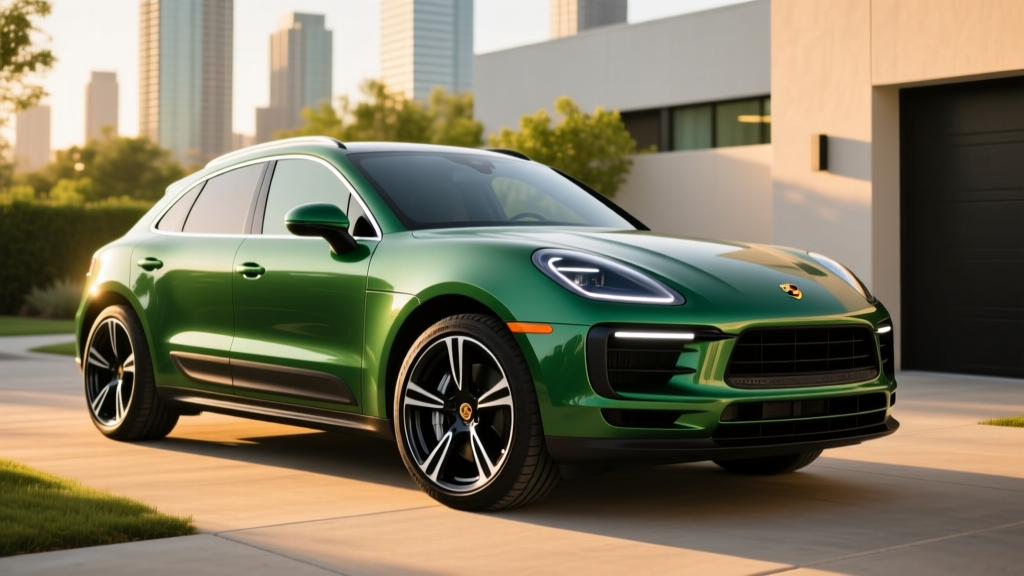
Should You Buy the Porsche Electric Macan?
If you're researching the Porsche Electric Macan, here's the direct answer: it's a compelling luxury compact EV SUV with real Porsche dynamics, EPA-estimated range up to 308 miles (Macan 4), and DC fast charging that peaks at 270 kW. But it starts around $78,800 before options, doesn't qualify for the federal §30D tax credit due to its MSRP and German battery sourcing, and its real-world highway range drops closer to 240–260 miles. It's best for buyers who prioritize driving engagement and 800-volt charging architecture over maximum interior space or federal incentives.
Quick Verdict
Buy it if: You want a performance EV SUV with Porsche handling, ultra-fast DC charging, and premium build quality — and you have reliable home Level 2 charging.
Pass if: You need the $7,500 federal tax credit, prioritize cargo space, or live in an area with sparse DC fast-charging infrastructure.
Porsche Electric Macan Specs: What the Numbers Say
The 2025–2026 Porsche Macan Electric rides on the PPE (Premium Platform Electric) architecture co-developed with Audi, featuring an 800-volt system that enables class-leading DC charge rates. Here are the official figures for the two main trims currently available:
| Spec | Macan 4 Electric | Macan Turbo Electric |
|---|---|---|
| Battery (usable) | 95 kWh (NMC) | 95 kWh (NMC) |
| EPA Range | 308 mi | 288 mi |
| Horsepower | 402 hp | 630 hp |
| 0–60 mph | 4.9 sec | 3.1 sec |
| Peak DC Charge Rate | 270 kW | 270 kW |
| 10–80% DC Charge | ~21 min | ~21 min |
| Level 2 Charge Rate | 11 kW (AC) | 11 kW (AC) |
| MPGe (combined) | 95 MPGe | 87 MPGe |
| Base MSRP | $78,800 | $104,900 |
| Battery Warranty | 8 yr / 100,000 mi | 8 yr / 100,000 mi |
Source: fueleconomy.gov and Porsche USA specifications.
Real-World Range Expectations
The EPA sticker says 308 miles for the Macan 4. In practice, expect:
- Mixed driving (55–70 mph, mild weather): ~270–290 miles
- Sustained highway (75+ mph): ~240–260 miles
- Cold weather (below 32°F): ~210–240 miles (20–30% loss typical for NMC chemistry without consistent preconditioning)
The Macan Electric includes a heat pump, which helps mitigate cold-weather losses compared to EVs without one, but NMC batteries still suffer measurable range reduction in freezing temps. Always precondition the battery via the Porsche app before fast charging in cold conditions — this warms the pack and allows the 270 kW peak rate to actually engage.
Charging the Macan Electric: Home and Public
The Macan's 800-volt architecture is its biggest practical advantage. At a 350 kW-capable DC fast charger (like Electrify America or Ionity stations), the Macan can accept up to 270 kW, meaning a 10–80% session takes roughly 21 minutes. However, like all EVs, the charge curve tapers significantly above 80%. Charging from 80–100% can add another 15–20 minutes, so plan to leave sessions at 80% unless you absolutely need the full pack.
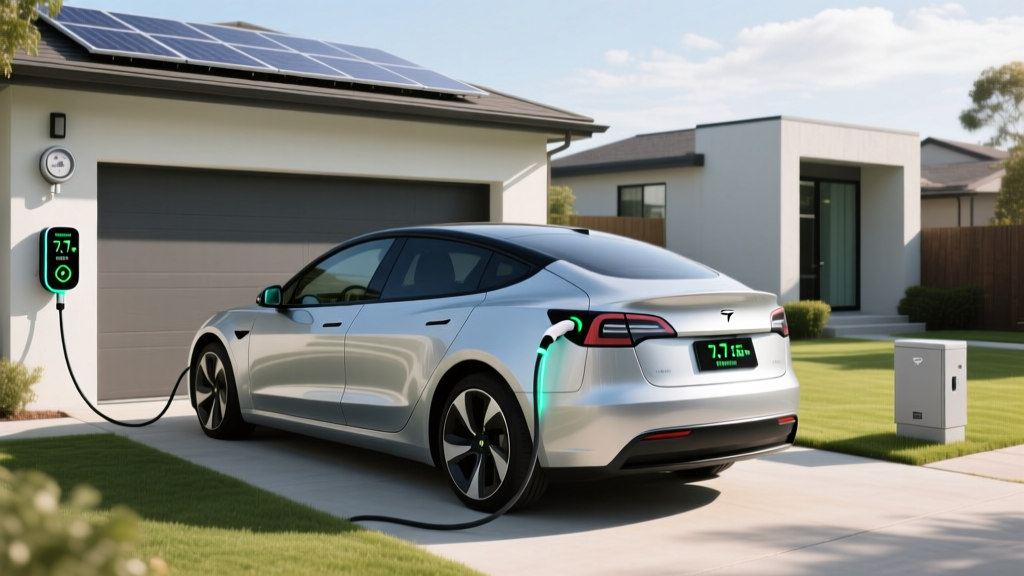
For home charging, the Macan accepts up to 11 kW on Level 2 (240V, 48A). A full 0–100% charge at home takes roughly 9–10 hours. If your home electrical panel supports a 60A circuit (allowing a 48A continuous draw), you'll add approximately 30–35 miles of range per hour of charging.
| Level | Power | Miles Added/Hour | Full Charge Time |
|---|---|---|---|
| Level 1 (120V) | ~1.4 kW | ~4–5 mi/hr | ~65+ hours |
| Level 2 (240V, 48A) | 11 kW | ~30–35 mi/hr | ~9–10 hours |
| DC Fast (peak) | 270 kW | ~170 mi in 10 min | 10–80% in ~21 min |
The Macan Electric uses the NACS (Tesla-style) connector for newer deliveries in North America, following Porsche's adoption of the standard. Earlier 2025 models shipped with CCS1; Porsche provides adapters, and the Supercharger network is now accessible. Confirm your specific vehicle's connector at purchase.
Electric Macan vs. Gas Macan: Cost Comparison
The gas-powered Porsche Macan (which continues alongside the electric version for now) starts around $62,900 for the base model. Here's how a realistic 5-year ownership comparison looks, assuming 12,000 miles/year, home charging at $0.14/kWh, and premium gasoline at $4.50/gallon:
| Cost Category | Macan 4 Electric | Gas Macan (Base) |
|---|---|---|
| Base MSRP | $78,800 | $62,900 |
| Federal Tax Credit (§30D) | $0 (exceeds MSRP cap, sourcing) | $0 |
| Fuel/Energy (5 yr / 60k mi) | ~$4,200 | ~$10,800 |
| Maintenance (5 yr) | ~$1,800 | ~$4,500 |
| Insurance (5 yr avg) | ~$12,500 | ~$10,200 |
| Estimated Depreciation | ~$32,000 | ~$28,000 |
| Total 5-Year Cost | ~$129,300 | ~$116,400 |
The electric Macan costs more upfront and doesn't benefit from the federal credit, but saves roughly $6,600 in fuel and $2,700 in maintenance over five years. Insurance runs higher due to repair costs and EV-specific coverage. The gap narrows if your electricity rate is lower or if you use free/included charging programs, but the gas Macan still wins on pure 5-year economics at current pricing. The EV makes financial sense primarily if you value the performance differential, lower daily running costs, and plan to keep the car beyond 5 years.
Federal Tax Credit: Why the Macan Electric Doesn't Qualify
The IRS §30D clean vehicle credit offers up to $7,500 for qualifying new EVs, but the Porsche Macan Electric fails multiple eligibility requirements:
§30D Eligibility Checklist
- MSRP Cap: SUVs must be under $80,000. The Macan 4 starts at $78,800 — technically under the cap, but any options push it over.
- Battery Sourcing: Battery components must be manufactured or assembled in North America (phasing in percentages annually). The Macan's battery is produced in Europe/Asia, failing this requirement.
- Critical Minerals: A percentage of critical minerals must be sourced from the US or FTA partners. Porsche has not certified the Macan as meeting this threshold.
- Buyer Income Cap: AGI must not exceed $300,000 (joint) / $150,000 (individual). Many Porsche buyers exceed this.
As of 2026, Porsche does not list the Macan Electric as eligible for the §30D credit on the IRS qualified vehicles list. Check irs.gov for the most current qualified vehicle list before purchasing. Do not rely on dealer verbal assurances — only the IRS list is definitive.
Real-World Ownership: What First-Time EV Buyers Should Know
The Macan Electric is a premium vehicle with premium ownership requirements. Here's what to plan for:
Home Charging Is Essentially Mandatory
Public DC fast charging at $0.35–$0.50/kWh erases most of the fuel-cost advantage. At those rates, a full Macan charge costs $33–$48. Home charging at $0.14/kWh costs about $13 for a full charge. If you can't install a Level 2 charger at home (apartment living, older electrical panels requiring a $2,000–$5,000 panel upgrade), the economic case weakens considerably. Budget $500–$1,500 for a quality Level 2 home charger (like a ChargePoint Home Flex or Emporia V2) plus $500–$2,500 for electrician installation, depending on panel proximity.
Maintenance Is Minimal but Not Zero
EVs eliminate oil changes, spark plugs, and transmission fluid. You'll still need cabin air filters (~$80–$120/yr), brake fluid checks (regenerative braking saves pad life dramatically — expect 80,000+ miles on original pads), tire rotations, and wiper fluid. Porsche's first scheduled service is typically at 10,000 miles or 1 year. Budget ~$300–$500/year for routine EV maintenance at a Porsche dealer.
Tires Wear Faster
The Macan Electric weighs approximately 5,300 lbs (nearly 1,000 lbs more than the gas Macan) and delivers instant torque. Expect tire replacement at 25,000–35,000 miles rather than the 40,000–50,000 miles typical for lighter vehicles. A set of four Michelin Pilot Sport EV tires runs $1,200–$1,600 installed.
Insurance Costs More
EV insurance premiums average 15–25% higher than comparable gas vehicles due to higher repair costs, specialized parts, and battery replacement risk. Get a quote before committing — for a $78,800 Macan 4, expect $200–$280/month depending on your profile and state.
Common Misconceptions About the Macan Electric
| Myth | Fact |
|---|---|
| "It qualifies for the $7,500 tax credit" | The Macan Electric fails §30D battery-sourcing requirements and frequently exceeds the $80,000 MSRP cap once optioned. It does not currently qualify. |
| "270 kW charging means it always charges that fast" | Peak 270 kW only occurs between roughly 10–40% SoC under ideal thermal conditions. Above 80%, the rate drops to ~50 kW or less. Average rate for a 10–80% session is closer to 150–170 kW. |
| "The battery will need replacing in 5 years" | NMC batteries in modern EVs with active thermal management (like the Macan's liquid-cooled pack) typically retain 85–90% capacity at 100,000 miles. Porsche warranties the battery for 8 years / 100,000 miles with a 70% capacity retention threshold. |
| "It handles nothing like a real Porsche" | Independent testing and reviews consistently note the Macan Electric's low center of gravity and rear-biased torque delivery produce handling that exceeds the gas Macan in cornering stability, despite the extra weight. |
| "You can't road-trip an EV" | With 21-minute 10–80% DC charging and access to the Tesla Supercharger network (via NACS), the Macan Electric can cover 500+ mile days with two 20-minute stops — comparable to gas-car rest stops. |
Decision Framework: Is the Porsche Electric Macan Right for You?
Choose the Macan Electric if:
- You have (or can install) home Level 2 charging
- You want a luxury compact SUV that genuinely drives like a Porsche
- 300 miles of EPA range covers your daily driving with margin (most Americans drive <40 miles/day)
- You value ultra-fast DC charging for road trips (800V architecture is still rare in this segment)
- You don't need the federal tax credit to make the math work
Consider the Gas Macan or a Competitor if:
- You live in an apartment or condo without charging access
- You regularly drive in extreme cold (below 0°F) where range loss compounds
- You need maximum cargo space (the Macan Electric's trunk is ~18.4 cu ft, smaller than many competitors)
- You want to offset purchase cost with the $7,500 federal credit — look at the Tesla Model Y, Ford Mustang Mach-E, or Hyundai Ioniq 5 instead
- You tow frequently (the Macan Electric is rated for 4,409 lbs, but towing cuts range by 30–50%)
Frequently Asked Questions
Does the Porsche Macan Electric use NACS or CCS?
Newer 2025–2026 deliveries use the NACS (Tesla-style) connector. Early 2025 models shipped with CCS1. Porsche provides adapters, and NACS-equipped Macans can charge at Tesla Superchargers. Confirm your specific vehicle's connector at the time of purchase.
How long does the Macan Electric battery last?
Porsche warranties the high-voltage battery for 8 years or 100,000 miles, guaranteeing at least 70% capacity retention. Real-world data from similar 800V PPE-platform vehicles suggests 85–92% retention at 100,000 miles under normal use. A full battery replacement, if needed out of warranty, would likely cost $15,000–$22,000 based on current Porsche parts pricing.
Can I charge the Macan Electric at Tesla Superchargers?
Yes, if your vehicle has the NACS port (standard on newer deliveries). CCS-equipped models require a Porsche-approved adapter. The Supercharger network now offers over 25,000 stalls in North America, significantly expanding road-trip charging options.
How does the Macan Electric compare to the Audi Q6 e-tron?
Both ride on the same PPE 800V platform with similar battery sizes. The Macan prioritizes sportier tuning and Porsche brand cachet; the Q6 e-tron offers more interior space and a slightly lower starting price (~$65,000). Both share the 270 kW peak DC charge capability. Choose based on driving dynamics vs. practicality preference.
Is the Macan Electric all-wheel drive?
Yes. Both the Macan 4 and Macan Turbo use dual-motor all-wheel drive. The rear motor handles most cruising for efficiency, with the front motor engaging under acceleration or low-traction conditions. The system can also perform torque vectoring for sharper cornering.
What's the real cost per mile to drive?
At the EPA-rated 95 MPGe and a national average electricity rate of $0.14/kWh, the Macan 4 Electric costs approximately $0.04–$0.05 per mile to fuel at home. The gas Macan at 21 MPG combined and $4.50/gallon premium costs about $0.21 per mile. That's a $0.16–$0.17/mile savings — or roughly $1,920/year at 12,000 miles.
Sources: fueleconomy.gov, Porsche USA, IRS §30D Clean Vehicle Credits.