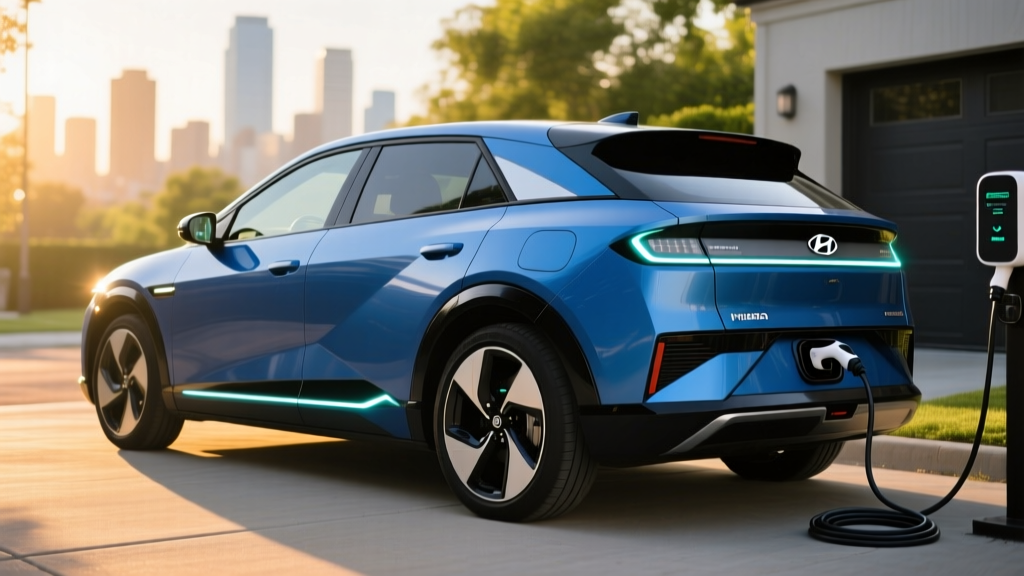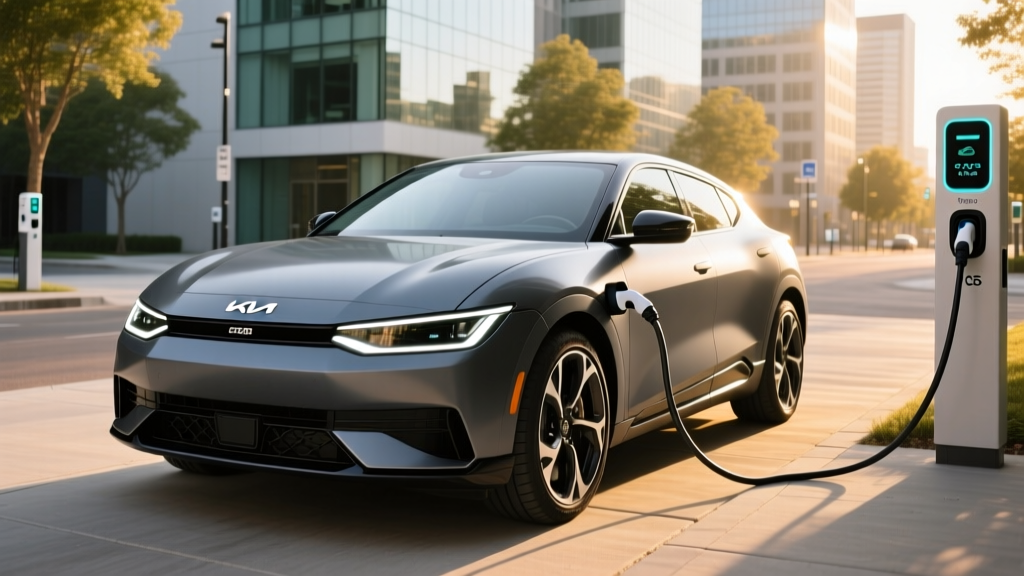
The 2025 Kia EV6 Light is the entry point into Kia's 800-volt electric crossover lineup — and it's a compelling one. Built on the Hyundai Motor Group's E-GMP platform, the EV6 Light trades the larger battery and all-wheel-drive options of higher trims for a lower starting price and impressive fast-charging hardware that punches well above its weight class. If you're a daily commuter who wants rapid DC charging without paying a premium, this trim deserves a close look.
But the Light trim also comes with trade-offs: a smaller battery pack, reduced EPA range, and the omission of some driver-assist features found on Wind and GT-Line models. Below, we break down every number that matters — from real-world highway range to the exact cost after potential federal incentives — so you can decide whether the EV6 Light fits your driving life.
Quick Verdict: Who the EV6 Light Is For
Range & Efficiency: EPA Numbers vs. the Real World
The 2025 EV6 Light comes equipped with a 58 kWh usable battery pack (Standard Range) paired with a single rear-mounted motor. The EPA rates it at 232 miles of combined range.
The EPA's 232-mile figure is a combined estimate. In real-world highway driving at 70-75 mph, expect roughly 195-210 miles before needing to plug in. In cold weather (below 32°F), range can drop an additional 20-30%, bringing effective winter range down to approximately 160-180 miles. City driving with regenerative braking engaged can push range closer to or slightly above the EPA sticker. The EV6's heat pump (standard on all trims) helps mitigate cold-weather losses compared to EVs without active thermal management, but physics still wins in deep freezes.
Efficiency is rated at 117 MPGe combined (120 city / 113 highway), which translates to roughly 29 kWh per 100 miles. That's competitive with the Hyundai Ioniq 5 Standard Range and slightly behind the Tesla Model Y RWD, but the EV6's 800-volt architecture compensates with charging speed.
Battery & Charging: The 800-Volt Advantage
The EV6 Light uses an NMC (nickel-manganese-cobalt) lithium-ion battery with a usable capacity of 58 kWh. While some competitors have moved to LFP chemistry for base trims to reduce cost and extend cycle life, Kia has stuck with NMC here for its higher energy density — important given the smaller pack size.
The real story is charging. The E-GMP platform's native 800-volt architecture allows the EV6 Light to accept DC fast charging at rates that rival vehicles costing $20,000 more.
| Charging Level | Power | Speed / Time | Connector |
|---|---|---|---|
| Level 1 (120V household) | ~1.4 kW | ~4 mi/hr | NACS (2025+) |
| Level 2 (240V home) | 10.9 kW | ~32 mi/hr (full charge ~6 hrs) | NACS (2025+) |
| DC Fast Charge (peak) | 180 kW peak | 10-80% in ~18 minutes | NACS (2025+) |
Charging curve reality: The 180 kW figure is a peak, not a sustained rate. In practice, the EV6 Light ramps quickly to ~175 kW between 10-40% state of charge, then tapers progressively through 50-60%, and drops sharply above 80%. Charging from 10-80% in 18 minutes is achievable at a properly functioning 350 kW CCS/NACS station (such as Electrify America or Tesla Superchargers with the integrated NACS port). At older 50-150 kW stations, expect 10-80% times closer to 30-40 minutes.
For the 2025 model year, Kia has adopted the NACS (North American Charging Standard) port natively, giving the EV6 direct access to Tesla's Supercharger network without an adapter — a significant advantage over the 2024 model's CCS1 connector.
Performance & Drivetrain
The EV6 Light is a single-motor, rear-wheel-drive configuration producing 167 horsepower and 258 lb-ft of torque. The 0-60 mph time clocks in at approximately 7.7 seconds. That's not sports-car territory, but the instant torque delivery makes it feel quicker in stoplight-to-stoplight city driving than the number suggests.
Because the Light trim uses the Standard Range 58 kWh battery, AWD is not available — you'll need to step up to the Wind or GT-Line trims (which use the 77.4 kWh Long Range pack) for dual-motor all-wheel drive. If you live in a region with heavy snow or frequently drive on unpaved roads, this is a key limitation.
Ride quality is firm but well-damped. The EV6's low center of gravity (battery pack mounted under the floor) keeps body roll minimal in corners. Steering is precise if slightly numb — typical for the segment. Regenerative braking offers multiple levels adjustable via steering-wheel paddles, including a full one-pedal driving mode (i-Pedal) that can bring the car to a complete stop without touching the brake pedal.
Interior, Tech & Cargo Space
Inside, the EV6 Light features a dual-screen panoramic display: a 12.3-inch digital instrument cluster and a 12.3-inch infotainment touchscreen running Kia's latest Connect system with wireless Apple CarPlay and Android Auto. The flat floor (a benefit of the dedicated EV platform) creates an airy, spacious cabin feel.
Passenger space is generous for the crossover's footprint:
- Front headroom: 39.6 inches
- Rear legroom: 39.4 inches
- Rear headroom: 37.8 inches
Cargo volume:
- Behind rear seats: 24.4 cu ft
- Rear seats folded: 50.2 cu ft
- Front trunk (frunk): 0.7 cu ft (minimal — houses electrical components on RWD models)
The frunk on the RWD Light is essentially a small cubby for a charging cable, not usable storage for a bag or groceries. If cargo versatility is a priority, the Hyundai Ioniq 5 offers slightly more rear cargo space, and the Tesla Model Y's frunk is substantially larger.
Driver-Assist Technology
The Light trim includes Kia's Highway Driving Assist (HDA) — a Level 2 driver-assistance system combining adaptive cruise control with lane-centering on divided highways. It also includes forward collision-avoidance assist, blind-spot monitoring, rear cross-traffic alert, and safe exit assist.
Highway Driving Assist requires the driver to keep hands on the wheel and eyes on the road at all times. It is not a self-driving system. Kia does not offer hands-off driving on the EV6; competitors like GM's Super Cruise (on the Cadillac Lyriq) and Ford's BlueCruise offer hands-free operation on pre-mapped highways, though both remain Level 2 systems requiring driver supervision.
Notable omission on the Light trim: Highway Driving Assist 2 (HDA2), which adds lane-change assist and machine-learning-based driving style adaptation, is reserved for the Wind and above. Navigation-based smart cruise control (which slows for curves and toll gates) is also not included on the Light.
Pricing, Trims & Federal Tax Credit
| Trim | MSRP | Est. After §30D Credit* | Drivetrain |
|---|---|---|---|
| Light (Standard Range RWD) | $37,900 | ~$30,400 | RWD |
| Light Long Range RWD | $42,400 | ~$34,900 | RWD |
| Wind AWD | $48,700 | ~$41,200 | AWD |
| GT-Line AWD | $53,200 | ~$45,700 | AWD |
*Federal tax credit estimates assume full eligibility. Actual credit varies. Destination charge ($1,375) not included in MSRP figures above.
Federal EV Tax Credit (§30D) Eligibility
The 2025 Kia EV6 is assembled in West Point, Georgia, which is a critical requirement for §30D eligibility. However, qualifying for the full $7,500 credit depends on several factors that change annually:
- MSRP cap: The EV6 qualifies (SUV/van cap is $80,000; all trims are well under).
- Buyer income cap: Modified AGI must not exceed $150,000 (single), $225,000 (head of household), or $300,000 (joint filing).
- Battery sourcing requirements: For 2025, a percentage of critical minerals must be sourced from the US or FTA-partner countries, and battery components must meet domestic-content thresholds. Kia has worked to localize supply chains for the Georgia-built EV6, but the exact credit amount ($3,750 or $7,500) can vary by production batch. Always verify current eligibility at IRS.gov or confirm with your dealer at point of sale.
- Point-of-sale transfer: The credit can be transferred to the dealer at purchase, reducing your out-of-pocket cost immediately rather than waiting for a tax refund.
For the most current and authoritative sourcing data, consult the Department of Energy's EV tax credit tool on fueleconomy.gov.
EV6 Light vs. Key Competitors
| Spec | Kia EV6 Light | Hyundai Ioniq 5 SE Std Range | Tesla Model Y RWD |
|---|---|---|---|
| EPA Range | 232 mi | 220 mi | 320 mi |
| Battery (usable) | 58 kWh (NMC) | 58 kWh (NMC) | ~60 kWh (LFP) |
| DC Fast Charge (10-80%) | ~18 min | ~18 min | ~25 min |
| 0-60 mph | 7.7 sec | 7.9 sec | 6.6 sec |
| Cargo (rear seats up) | 24.4 cu ft | 27.2 cu ft | 30.2 cu ft |
| Base MSRP | $37,900 | $39,400 | $44,990 |
| NACS Port (native) | Yes (2025+) | Yes (2025+) | Yes |
- You want the lowest entry price with 800V fast charging
- You value Kia's 10-year/100,000-mile powertrain warranty
- Styling and interior design matter to you
- Range is your top priority (320 mi vs. 232 mi)
- You need maximum cargo space
- You want the largest Supercharger network (though NACS closes this gap)
- You prefer retro-futuristic styling
- Slightly more cargo room matters
- You want V2L (vehicle-to-load) capability as standard
Warranty & Ownership Costs
Kia backs the EV6 with one of the strongest warranty packages in the EV segment:
- Battery: 10 years / 100,000 miles (capacity retention guaranteed above 70%)
- Powertrain: 10 years / 100,000 miles
- Bumper-to-bumper: 5 years / 60,000 miles
- Roadside assistance: 5 years / 60,000 miles
This outpaces Tesla's 8-year/120,000-mile battery warranty in duration (though Tesla offers more miles) and significantly beats the 3-year/36,000-mile basic warranties from many legacy automakers. For buyers who plan to keep the vehicle long-term, the 10-year coverage provides meaningful peace of mind against battery degradation.
Insurance costs for the EV6 Light average approximately $1,800-$2,200 annually depending on your state, driving record, and coverage level — moderately higher than a comparable gas-powered Kia Sportage but in line with EV segment averages. Always get personalized quotes before purchasing.
Pros & Cons
Pros
- 800V architecture enables 10-80% DC charging in ~18 min
- Native NACS port for direct Tesla Supercharger access
- Lowest entry price in the EV6 lineup
- Class-leading 10-year/100,000-mile battery warranty
- Spacious rear legroom (39.4 in) for the segment
- Standard heat pump for cold-weather efficiency
- Wireless Apple CarPlay and Android Auto
Cons
- 232-mi EPA range limits road-trip practicality
- RWD only — no AWD option on Light trim
- Tiny 0.7 cu ft frunk is nearly useless
- HDA2 and nav-based cruise control not included
- Less cargo space than Model Y and Ioniq 5
- 167 HP feels modest at highway merging speeds
- Cold-weather range can drop to ~160 mi
Frequently Asked Questions
What is the real-world range of the 2025 Kia EV6 Light?
The EPA rates it at 232 miles combined. Expect about 195-210 miles in real-world highway driving, and as low as 160-180 miles in freezing temperatures. City driving with regen braking can match or slightly exceed the EPA number.
How fast does the EV6 Light charge?
On a 350 kW DC fast charger, it peaks at 180 kW and charges from 10-80% in approximately 18 minutes. On a home Level 2 charger (240V, 48A), it charges at 10.9 kW, adding about 32 miles per hour — a full charge takes roughly 6 hours.
How much does the EV6 Light cost after the federal tax credit?
The base MSRP is $37,900 (plus $1,375 destination). If you qualify for the full $7,500 §30D credit and transfer it at point of sale, the effective price drops to approximately $30,400. Eligibility depends on income caps, battery sourcing, and MSRP limits — verify at IRS.gov before purchasing.
Does the 2025 Kia EV6 qualify for the federal EV tax credit?
Yes, the EV6 is assembled in Georgia and falls under the $80,000 SUV MSRP cap, making it potentially eligible for up to $7,500 under IRS §30D. However, the exact credit depends on battery critical-mineral sourcing and buyer income limits. Check fueleconomy.gov for the latest eligibility data.
Is the EV6 Light worth buying vs. the Ioniq 5 or Model Y?
If budget and fast-charging speed are your priorities, the EV6 Light offers the lowest price point with 800V charging. If range and cargo space matter more, the Tesla Model Y RWD (320 mi EPA) is the stronger pick despite costing ~$7,000 more before incentives. The Ioniq 5 sits between them with similar 800V hardware, slightly more cargo room, and V2L capability.
Can I tow with the EV6 Light?
The 2025 EV6 Light is rated for up to 2,300 pounds of towing capacity (with the optional towing package). That's enough for a small utility trailer or a pair of jet skis, but not a camper or boat. Note that towing will reduce range by 30-50%.
What charger connector does the 2025 EV6 use?
The 2025 model year switches to the NACS (North American Charging Standard) connector, providing native access to Tesla Superchargers without an adapter. This replaces the CCS1 port used on 2022-2024 models.