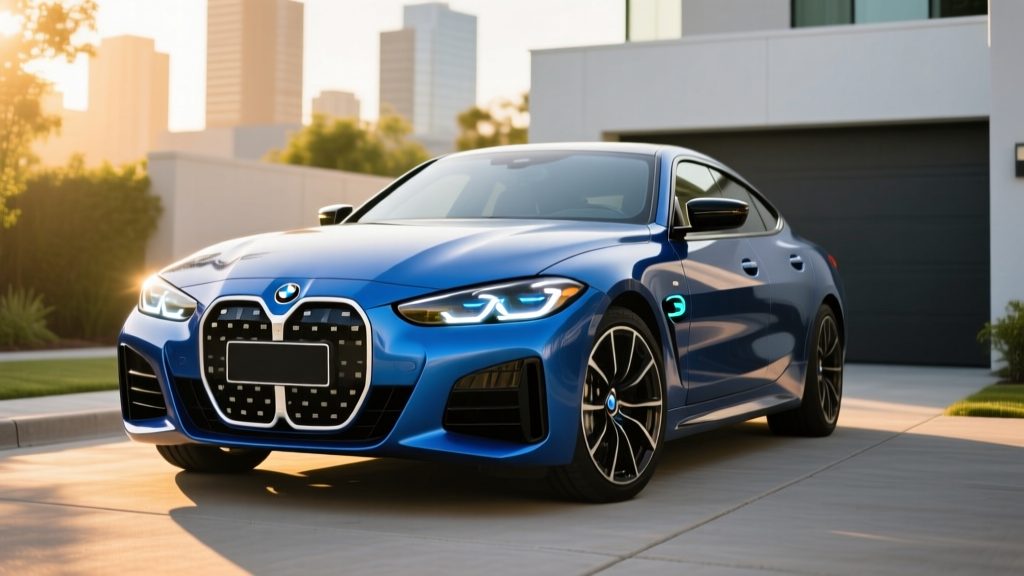
Quick Verdict: Is the BMW i4 Worth Leasing in 2026?
The BMW i4 remains one of the sharpest-driving electric sedans on the market, pairing BMW's trademark chassis tuning with a practical 81.5 kWh NMC battery and class-competitive DC fast charging. For 2026, the i4 lineup spans the single-motor eDrive40 (EPA 318 miles) to the dual-motor M50 (EPA 276 miles), with the xDrive40 AWD model slotting between them at 279 miles. Lease shoppers should pay close attention to how federal tax credits flow through the lessor, real-world range in cold climates, and the 205 kW peak charge rate that makes road-trip stops genuinely short.
This profile covers every number a lease buyer needs: real-world range reconciliation, charging-curve behavior, 2026 MSRP by trim, §30D tax-credit mechanics, and how the i4 stacks up against the Tesla Model 3, Hyundai Ioniq 6, and Polestar 2.
2026 BMW i4 Specs at a Glance
| Spec | eDrive40 | xDrive40 | M50 |
|---|---|---|---|
| EPA Range | 318 mi | 279 mi | 276 mi |
| Battery (usable) | 81.5 kWh (NMC) | 81.5 kWh (NMC) | 81.5 kWh (NMC) |
| Drivetrain | RWD, single motor | AWD, dual motor | AWD, dual motor |
| Horsepower | 335 hp | 402 hp | 536 hp |
| 0–60 mph | 5.5 sec | 4.6 sec | 3.7 sec |
| Peak DC Charge Rate | 205 kW | 205 kW | 205 kW |
| 10–80% DC Time | ~31 min | ~31 min | ~31 min |
| Level 2 (11 kW) | ~27 mi/hr | ~27 mi/hr | ~27 mi/hr |
| MPGe (combined) | 109 MPGe | 98 MPGe | 97 MPGe |
| kWh/100 mi | 31 | 34 | 35 |
| Base MSRP (2026) | $57,900 | $62,900 | $70,700 |
| Battery Warranty | 8 yr / 100,000 mi | 8 yr / 100,000 mi | 8 yr / 100,000 mi |
Range: EPA Numbers vs. Real-World Reality
The eDrive40's EPA rating of 318 miles is a strong headline figure, but EV range is never a single number. Real-world results depend on speed, elevation, temperature, and climate-control usage.
- Mild-weather city/suburban: 300–330 mi (regen braking recovers energy in stop-and-go)
- Highway (70–80 mph sustained): 255–280 mi (aerodynamic drag dominates)
- Cold weather (below 32°F): 220–260 mi (battery heating + cabin HVAC cut usable capacity ~15–25%)
- Cold + highway combined: 200–230 mi (plan charging stops accordingly)
The i4 uses an NMC (nickel manganese cobalt) lithium-ion pack, which offers higher energy density than LFP chemistry but is more sensitive to sustained 100% state-of-charge storage. For daily driving, BMW recommends an 80–90% charge limit, which effectively yields ~255 usable miles on the eDrive40 before you need to plug in. The heat pump (standard on 2026 models) mitigates cold-weather losses compared to earlier i4 model years, but expect at least a 15% reduction in freezing temperatures.
Charging Speed: DC Fast, Level 2, and the Curve
Charging speed is where many EV shoppers get misled by peak-kW marketing numbers. The i4 peaks at 205 kW on a DC fast charger, but like all EVs, it follows a charge curve that tapers significantly as the battery fills.
| Charging Level | Power (kW) | Speed (mi/hr added) | Typical Use Case |
|---|---|---|---|
| Level 1 (120V outlet) | ~1.4 kW | ~3–4 mi/hr | Overnight trickle; emergency top-up |
| Level 2 (240V, 48A home) | 11 kW (onboard max) | ~27 mi/hr | Daily home charging; full overnight fill |
| DC Fast Charge (peak) | 205 kW | ~600 mi/hr (at peak) | Road trips; 10–80% in ~31 min |
| DC Fast (80–100% taper) | ~50–70 kW avg | ~150 mi/hr | Final 20% takes ~20+ additional min |
On a 350 kW Electrify America or Tesla Supercharger (with NACS adapter, which BMW includes for 2026), the i4 will sustain roughly 175–200 kW between 10–50% SoC, then taper to ~120 kW by 65%, and drop sharply past 80%. The 10–80% sprint takes approximately 31 minutes under ideal thermal conditions. Preconditioning is essential: use the BMW Connected app or navigation to route to a charger, and the car will warm the battery to optimal temperature for maximum charge acceptance. Without preconditioning in cold weather, expect peak rates closer to 120–140 kW and a 10–80% time of 40+ minutes.
Home charging on a Level 2 Wallbox or ChargePoint unit at 48 amps (11.5 kW) will add about 27 miles of range per hour, fully replenishing the 81.5 kWh pack in roughly 8 hours. The i4's 11 kW onboard charger is the bottleneck here — even on a 19.2 kW charger, the car won't accept more than 11 kW.
Performance and Driving Dynamics
The i4 rides on BMW's CLAR platform (shared with the 4 Series Gran Coupé), which gives it a structural rigidity and weight distribution advantage over dedicated EV skateboards. The result is a sedan that genuinely rewards enthusiastic driving.
The eDrive40 (335 hp, RWD) hits 60 mph in 5.5 seconds — brisk for daily commuting and highway merging. The rear-biased single motor delivers the kind of progressive power delivery that BMW's inline-six engines used to define. The xDrive40 (402 hp, AWD) drops 0–60 to 4.6 seconds and adds all-weather traction, making it the pragmatic choice for snowbelt states. The M50 (536 hp) is the performance flagship: 3.7 seconds to 60, adaptive M suspension, and a synthetic engine sound that's polarizing but engaging.
All trims feature BMW's Driving Assistant Professional (SAE Level 2), which includes adaptive cruise with stop-and-go, lane-centering steering assist, and automatic emergency braking. This is a hands-on-wheel system — it does not drive itself. The Highway Assistant feature allows brief hands-off periods on divided highways at speeds above 40 mph, but the driver-monitoring camera requires your eyes on the road at all times.
Interior, Cargo, and Technology
The i4's cabin is built around BMW's Curved Display: a 12.3-inch instrument cluster seamlessly joined to a 14.9-inch central touchscreen running iDrive 8.5. The system supports wireless Apple CarPlay, Android Auto, and over-the-air updates. Physical climate controls are absent — HVAC adjustments live in the touchscreen or via voice command, which some drivers find frustrating during winter commutes when glove use is common.
| Dimension | Measurement |
|---|---|
| Front Legroom | 41.5 in |
| Rear Legroom | 34.5 in |
| Cargo Volume (rear seats up) | 16.6 cu ft |
| Cargo Volume (rear seats folded) | 45.6 cu ft |
| Frunk | None (motor and electronics occupy the space) |
The hatchback-style liftback trunk is a major practicality win over traditional sedans — the wide opening swallows golf bags, strollers, and luggage more easily than the Tesla Model 3's conventional trunk. However, rear-seat headroom (37.4 in) is tighter than the Model 3 or Ioniq 6, and the sloping roofline compromises visibility for taller passengers on longer trips. There is no front trunk (frunk), as BMW uses that space for power electronics and the HVAC compressor.
Pricing, Lease Offers, and Tax-Credit Impact
Understanding how the federal EV tax credit works in a lease is critical. Under current IRS §30D rules, the $7,500 federal tax credit has strict requirements: buyer income caps ($150K single / $300K joint), vehicle MSRP caps ($55,000 for sedans), and battery-sourcing/critical-mineral thresholds. The BMW i4 sedan exceeds the $55,000 MSRP cap on all trims, which means buyers purchasing outright do not qualify for the $7,500 credit.
However, there is a lease loophole. When BMW Financial Services (the lessor) claims the §45W commercial clean vehicle credit, they can pass savings to the lessee as a capitalized-cost reduction — effectively lowering your monthly payment. BMW has historically passed through $7,500 in lease cash on the i4, though this is a manufacturer decision, not a guaranteed right.
| Trim | Base MSRP | As-Tested (typical options) | Est. Lease w/ $7,500 Pass-Through |
|---|---|---|---|
| eDrive40 | $57,900 | $62,000–$65,000 | ~$550–$620/mo (36 mo, $4,500 down) |
| xDrive40 | $62,900 | $67,000–$72,000 | ~$620–$700/mo (36 mo, $4,500 down) |
| M50 | $70,700 | $78,000–$85,000 | ~$750–$850/mo (36 mo, $5,000 down) |
- Sedan MSRP cap for §30D purchase credit: $55,000 — i4 does not qualify for purchase credit
- Lease: lessor (BMW FS) may claim §45W commercial credit and pass through as cap-cost reduction
- Lease pass-through is at BMW's discretion — confirm current incentive with dealer
- Point-of-sale transfer applies to purchase credits only, not leases
- State/local incentives vary — check AFDC incentive database for your jurisdiction
Efficiency, Warranty, and Ownership Costs
The eDrive40 returns an EPA-rated 109 MPGe combined (31 kWh/100 mi), placing it in the upper tier of electric sedans for efficiency. At the US average electricity rate of $0.17/kWh, that translates to roughly $5.27 per 100 miles of driving — compared to $12–$15 per 100 miles for a 30 MPG gas sedan at $3.50/gallon.
BMW's warranty coverage is solid:
- Battery: 8 years / 100,000 miles (covers capacity loss below 70% of original)
- Powertrain: 8 years / 100,000 miles
- Basic vehicle: 4 years / 50,000 miles
- Corrosion: 12 years / unlimited miles
Insurance premiums for the i4 tend to run 15–25% higher than the equivalent gas 4 Series Gran Coupé, reflecting higher repair costs for battery-adjacent damage. Shop quotes before signing.
BMW i4 vs. the Competition
The i4 competes in a tight segment. Here's how it stacks up on the numbers that matter:
| Attribute | BMW i4 eDrive40 | Tesla Model 3 LR | Hyundai Ioniq 6 SEL | Polestar 2 LR SM |
|---|---|---|---|---|
| EPA Range | 318 mi | 341 mi | 361 mi | 320 mi |
| Battery | 81.5 kWh (NMC) | ~79 kWh (NMC) | 77.4 kWh (NMC) | 82 kWh (NMC) |
| Peak DC Charge | 205 kW | 250 kW | 240 kW | 205 kW |
| 10–80% Time | ~31 min | ~25 min | ~18 min | ~30 min |
| 0–60 mph | 5.5 sec | 4.2 sec | 6.1 sec | 5.9 sec |
| Base MSRP | $57,900 | $47,740 | $42,600 | $51,300 |
| Cargo (seats up) | 16.6 cu ft | 23 cu ft | 12.3 cu ft | 14.4 cu ft |
| §30D Purchase Credit | No (over MSRP cap) | Up to $7,500 | Up to $7,500 | No (over MSRP cap) |
The Model 3 and Ioniq 6 both undercut the i4 on price and qualify for the full purchase credit — making them significantly cheaper to buy outright. Where the i4 wins is driving refinement, build quality, cabin materials, and the hatchback liftback utility. If you prioritize interior luxury and chassis dynamics over lowest cost per mile, the i4 justifies its premium, especially through a lease where the credit pass-through narrows the gap.
Pros and Cons
- Engaging driving dynamics rare in EVs; RWD balance on eDrive40
- Hatchback liftback with 45.6 cu ft cargo (seats folded) — more versatile than Model 3 trunk
- Premium interior materials, excellent NVH (noise/vibration/harshness) isolation
- iDrive 8.5 is responsive, wireless CarPlay/Android Auto standard
- Lease loophole may unlock $7,500 in savings despite MSRP cap
- Heat pump standard for better cold-weather range retention
- Base MSRP above $55K sedan cap — no §30D purchase credit
- 205 kW peak charge rate lags Ioniq 6 (240 kW) and Model 3 (250 kW)
- No front trunk (frunk) — lost storage and cable organization
- Rear headroom tight for passengers over 6 feet
- No physical climate controls — touchscreen-only HVAC is distracting
- Insurance premiums run higher than gas 4 Series equivalent
Who Should Lease the BMW i4?
- You want a premium electric sedan with genuine driving engagement, not just efficiency
- You value hatchback cargo versatility for gear, pets, or travel luggage
- You prefer leasing (and can capture the $7,500 pass-through) over purchasing
- You prioritize cabin quietness, build quality, and brand prestige over lowest monthly cost
- You want to buy outright and need the full $7,500 §30D purchase credit (choose Model 3 or Ioniq 6)
- Maximum range and fastest DC charging are your top priorities (Ioniq 6 wins both)
- You need generous rear-seat headroom for tall passengers regularly
- Budget is the primary driver — the i4's premium is significant over competitors
Frequently Asked Questions
What is the real-world range of the BMW i4?
The eDrive40 is EPA-rated at 318 miles, but expect 255–280 miles on sustained highway driving at 70–80 mph, and 220–260 miles in freezing temperatures. City driving with regenerative braking can match or slightly exceed the EPA figure in mild weather.
How fast does the BMW i4 charge?
On a DC fast charger, the i4 peaks at 205 kW and reaches 10–80% in approximately 31 minutes with battery preconditioning. On a Level 2 home charger at 11 kW, it adds about 27 miles per hour, filling the battery overnight in ~8 hours.
Does the BMW i4 qualify for the federal EV tax credit?
Not for outright purchase — the i4's MSRP exceeds the $55,000 sedan cap under IRS §30D. However, when leased through BMW Financial Services, the lessor may claim the §45W commercial credit and pass up to $7,500 to you as a cap-cost reduction, lowering monthly payments. Confirm current lease incentives with your dealer.
Is the BMW i4 worth leasing vs. buying?
Leasing is the financially smarter path for the i4 in 2026. Since the car doesn't qualify for the purchase credit due to its MSRP, buying means paying full sticker. Leasing lets BMW Financial capture the commercial credit and pass savings through, effectively discounting the car by $7,500. You also avoid long-term battery depreciation risk.
How does the i4 compare to the Tesla Model 3?
The Model 3 Long Range offers more EPA range (341 mi), faster DC charging (250 kW), a lower base price ($47,740), and qualifies for the full $7,500 purchase credit. The i4 counters with superior build quality, a more engaging chassis, a practical hatchback trunk, and a quieter cabin. If cost is king, Model 3 wins. If refinement matters more, the i4 earns its premium.
What is the BMW i4 battery warranty?
BMW covers the i4's high-voltage battery for 8 years or 100,000 miles against capacity loss below 70% of original. This is industry-standard and matches Tesla, Hyundai, and most competitors.